Ingredients
Scale
For the Perfectly Cooked Rice (Crucial for Fried Rice!):
-
- 3 cups Cooked Short-Grain Japanese Rice (Day-old, refrigerated): This is paramount for achieving the right texture. Day-old, refrigerated rice is drier and less sticky, which is essential for fried rice. Freshly cooked rice will be too moist and will result in mushy fried rice. Short-grain Japanese rice (like sushi rice or Calrose rice) is ideal because it has the right starch content and texture.
-
- Water for Cooking Rice (if starting from uncooked): Follow the package instructions for your specific brand of Japanese rice to cook it perfectly. Typically, it’s a 1:1 to 1:1.2 ratio of rice to water.
For the Flavorful Stir-Fry:
-
- 2 tablespoons Vegetable Oil (or Sesame Oil for extra flavor): A neutral oil like vegetable oil, canola oil, or peanut oil works well for stir-frying. For a more pronounced nutty and aromatic flavor, you can use sesame oil, or a combination of both (vegetable oil for cooking, and a drizzle of sesame oil at the end).
-
- 1 small Onion, finely diced: Onion provides a foundational savory flavor base and aromatic depth to the fried rice. Yellow or white onions are suitable.
-
- 2 cloves Garlic, minced: Garlic is essential for adding pungent and savory notes that enhance the overall flavor profile. Freshly minced garlic is always best.
-
- 1 inch Ginger, minced: Fresh ginger adds warmth, spice, and a subtle citrusy aroma that is characteristic of Japanese cuisine.
-
- 1 Carrot, finely diced: Carrot adds sweetness, color, and a slight crunch. Diced carrots cook quickly and evenly in the stir-fry.
-
- 1/2 cup Frozen Peas, thawed: Frozen peas add sweetness, a pop of color, and a tender-crisp texture. Thawing them beforehand ensures they cook quickly without making the fried rice watery.
-
- 1/2 cup Frozen Corn, thawed: Frozen corn adds sweetness, a pleasant texture, and another element of color. Thawing ensures even cooking.
-
- 1/2 cup Shiitake Mushrooms, sliced (or other mushrooms like cremini or button): Mushrooms provide an umami-rich, savory flavor and a slightly meaty texture. Shiitake mushrooms offer a more intense flavor, but cremini or button mushrooms are also good substitutes. Fresh or rehydrated dried shiitake mushrooms can be used.
-
- Optional Vegetables: Feel free to add other vegetables you enjoy, such as:
-
- Bell Pepper (red, yellow, or green), diced: Adds sweetness and color.
-
- Broccoli florets, finely chopped: Adds a slightly bitter and earthy note.
-
- Asparagus, diced: Adds a delicate and slightly grassy flavor.
-
- Edamame (shelled): Adds protein and a nutty flavor.
-
- Zucchini or Summer Squash, diced: Adds a mild and slightly sweet flavor.
-
- Optional Vegetables: Feel free to add other vegetables you enjoy, such as:
For the Savory Japanese Seasoning:
-
- 3 tablespoons Soy Sauce (low sodium preferred): Soy sauce is the primary source of saltiness and umami in Japanese fried rice. Low sodium soy sauce allows you to control the salt level better.
-
- 2 tablespoons Mirin (Japanese sweet rice wine): Mirin adds sweetness, a subtle tang, and a characteristic Japanese flavor. It also helps to balance the saltiness of the soy sauce. If you don’t have mirin, you can substitute with a teaspoon of sugar or honey mixed with a tablespoon of dry sherry or rice vinegar.
-
- 1 tablespoon Sesame Oil: Sesame oil adds a distinctive nutty aroma and flavor that is essential for authentic Japanese fried rice. Toasted sesame oil is preferred for its more intense flavor.
-
- Optional – 1 teaspoon Rice Vinegar: A touch of rice vinegar can add a subtle tang and brightness to the flavor, balancing the richness of the other ingredients.
-
- Optional – Pinch of White Pepper: White pepper adds a subtle warmth and a slightly different flavor profile than black pepper, often used in Asian cuisine.
Instructions
-
- Prepare the Rice (if not already cooked): If you are starting with uncooked rice, cook the short-grain Japanese rice according to package directions. Once cooked, spread the rice out on a baking sheet or large plate to cool down and dry slightly. This helps prevent it from becoming sticky in the fried rice. Ideally, cook the rice a day ahead and refrigerate it overnight.
-
- Prepare the Vegetables: Wash and dice all your fresh vegetables – onion, carrot, garlic, ginger, and any other vegetables you are using (bell pepper, broccoli, etc.). Thaw the frozen peas and corn. Slice the shiitake mushrooms (if using fresh). Having all your vegetables prepped and ready before you start cooking will make the stir-frying process much faster and more efficient.
-
- Combine the Seasoning Sauce: In a small bowl, whisk together the soy sauce, mirin, and sesame oil (and rice vinegar and white pepper, if using). Set aside. Tasting the sauce at this point allows you to adjust the flavors to your liking. If you prefer it sweeter, add a touch more mirin. If you want it saltier, add a little more soy sauce.
-
- Stir-Fry Aromatics: Heat vegetable oil (and sesame oil, if using a combination) in a large wok or a large, deep skillet over medium-high heat. Make sure the wok or skillet is hot before adding the oil. Once the oil is hot and shimmering, add the diced onion and cook for 2-3 minutes, until softened and translucent. Then, add the minced garlic and ginger and stir-fry for another 30 seconds to 1 minute, until fragrant. Be careful not to burn the garlic and ginger.
-
- Stir-Fry Vegetables: Add the diced carrots and any other hard vegetables you are using (like broccoli or bell pepper) to the wok. Stir-fry for 2-3 minutes, until slightly softened but still crisp-tender. Next, add the sliced shiitake mushrooms and stir-fry for another 2-3 minutes, until they are softened and slightly browned. Finally, add the thawed peas and corn and stir-fry for about 1 minute, just until heated through.
-
- Add the Rice: Push the vegetables to one side of the wok to create space in the center. Add the cooked, day-old rice to the center of the wok. Break up any clumps of rice with your spatula or spoon. Stir-fry the rice for 1-2 minutes, until it is heated through and slightly separated.
-
- Pour in the Seasoning Sauce: Pour the prepared seasoning sauce over the rice and vegetables in the wok. Quickly and thoroughly toss everything together, ensuring that the rice and vegetables are evenly coated with the sauce. Continue to stir-fry for another 2-3 minutes, allowing the sauce to be absorbed by the rice and vegetables and for the flavors to meld together. Stir-fry until the rice is heated through and slightly fragrant.
-
- Taste and Adjust Seasoning: Taste the fried rice and adjust seasoning if needed. You may want to add a little more soy sauce for saltiness, mirin for sweetness, or sesame oil for aroma.
-
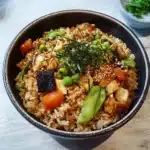
- Serve and Garnish: Remove the Vegetarian Japanese Fried Rice from the heat and transfer it to a serving platter or individual bowls. Garnish generously with sliced green onions and toasted sesame seeds. If desired, sprinkle with shredded nori seaweed. Serve immediately while hot and enjoy!
Nutrition
- Serving Size: one normal portion
- Calories: 350-450
- Sugar: 5-10g
- Sodium: 500-700mg
- Fat: 10-15g
- Saturated Fat: 1-2g
- Carbohydrates: 50-60g
- Fiber: 4-6g
- Protein: 8-12g