Ingredients
Scale
For the Rice:
- 2 cups short-grain white rice (sushi rice or Korean rice): This type of rice has the right sticky texture.
- 2 ½ cups water (or as per your rice cooker/package instructions)
- 1 teaspoon sesame oil (optional, for flavor when cooking rice)
For the Vegetables (Namul) – Use 4-6 varieties from this list or your favorites:
- Spinach (Sigeumchi Namul):
- 10 oz (280g) fresh spinach
- 1 teaspoon soy sauce
- 1 teaspoon sesame oil
- ½ teaspoon minced garlic
- Pinch of sesame seeds
- Carrots (Danggeun Bokkeum):
- 2 medium carrots, julienned
- ½ teaspoon salt
- 1 teaspoon cooking oil (e.g., vegetable or canola)
- Pinch of sesame seeds (optional)
- Zucchini (Hobak Bokkeum):
- 1 medium zucchini, julienned
- ½ teaspoon salt
- 1 teaspoon cooking oil
- Pinch of sesame seeds (optional)
- Bean Sprouts (Sukju Namul):
- 8 oz (225g) mung bean sprouts
- 1 teaspoon soy sauce (or salt to taste)
- 1 teaspoon sesame oil
- ½ teaspoon minced garlic (optional)
- Pinch of sesame seeds
- Shiitake Mushrooms (Pyogo Beoseot Bokkeum):
- 4–6 dried shiitake mushrooms, rehydrated (or 8 oz fresh shiitake, sliced)
- 1 tablespoon soy sauce
- 1 teaspoon sugar (or maple syrup)
- ½ teaspoon minced garlic
- 1 teaspoon sesame oil
- 1 teaspoon cooking oil
- Other Vegetable Options: Julienned bell peppers (sautéed), lightly pickled daikon radish (musaengchae), blanched fernbrake (gosari, if you can find it).
For the Protein:
- Tofu:
- 1 block (14-16 oz) firm or extra-firm tofu, pressed
- 1 tablespoon soy sauce
- 1 teaspoon sesame oil
- 1 tablespoon cooking oil for frying
- OR Eggs (Optional, for non-vegan):
- 4 large eggs (one per serving)
- Pinch of salt and pepper
- Cooking oil for frying
For the Bibimbap Sauce (Gochujang Sauce):
- ¼ cup (60ml) gochujang (Korean chili paste): Adjust to your spice preference.
- 2 tablespoons sesame oil
- 2 tablespoons water (or rice cooking water)
- 1 tablespoon soy sauce
- 1 tablespoon sugar or honey (or maple syrup for vegan): Adjust sweetness to taste.
- 1 tablespoon rice vinegar
- 1 teaspoon minced garlic
- 1 teaspoon toasted sesame seeds
For Garnish (Optional):
- Toasted sesame seeds
- Shredded roasted seaweed (gim)
- Extra sesame oil to drizzle
Instructions
1. Cook the Rice:
- Rinse the short-grain rice several times under cold water until the water runs mostly clear.
- Add the rinsed rice and 2 ½ cups of water (and optional 1 tsp sesame oil) to a rice cooker or a medium saucepan.
- If using a saucepan: Bring to a boil, then reduce heat to low, cover, and simmer for 15-20 minutes, or until all water is absorbed and rice is tender. Do not lift the lid during simmering.
- Once cooked, let the rice sit, covered, for 10 minutes to steam. Fluff with a fork.
2. Prepare the Vegetables (Namul) – Cook each vegetable separately:
- Spinach (Sigeumchi Namul):
- Blanch spinach in boiling water for 30-60 seconds, just until wilted.
- Immediately transfer to an ice bath (bowl of ice water) to stop cooking and retain color.
- Squeeze out as much water as possible.
- In a bowl, combine blanched spinach with 1 tsp soy sauce, 1 tsp sesame oil, ½ tsp minced garlic, and a pinch of sesame seeds. Mix well. Set aside.
- Carrots (Danggeun Bokkeum):
- Julienne the carrots. You can optionally sprinkle them with ½ tsp salt, let sit for 10 minutes, then squeeze out excess moisture (this makes them more pliable and seasons them).
- Heat 1 tsp cooking oil in a skillet over medium heat. Add carrots and stir-fry for 2-4 minutes until tender-crisp.
- Season with a pinch of sesame seeds if desired. Set aside.
- Zucchini (Hobak Bokkeum):
- Julienne the zucchini. Sprinkle with ½ tsp salt and let sit for 10-15 minutes. Squeeze out excess moisture.
- Heat 1 tsp cooking oil in a skillet over medium heat. Add zucchini and stir-fry for 2-3 minutes until tender-crisp.
- Pinch of sesame seeds if desired. Set aside.
- Bean Sprouts (Sukju Namul):
- Blanch bean sprouts in boiling water for 1-2 minutes until tender-crisp.
- Drain well (can also refresh in an ice bath).
- In a bowl, combine blanched bean sprouts with 1 tsp soy sauce (or salt), 1 tsp sesame oil, ½ tsp minced garlic (optional), and a pinch of sesame seeds. Mix well. Set aside.
- Shiitake Mushrooms (Pyogo Beoseot Bokkeum):
- If using dried shiitake: Rehydrate in warm water for at least 30 minutes (or according to package instructions). Squeeze out excess water, remove stems, and slice thinly. Reserve mushroom soaking liquid for other uses if desired.
- If using fresh shiitake: Simply remove stems and slice thinly.
- Heat 1 tsp cooking oil in a skillet over medium heat. Add sliced mushrooms and ½ tsp minced garlic. Sauté for 2-3 minutes.
- Add 1 tbsp soy sauce, 1 tsp sugar, and 1 tsp sesame oil. Stir-fry for another 2-3 minutes until mushrooms are tender and glazed. Set aside.
3. Prepare the Protein:
- Tofu:
- Press tofu for at least 30 minutes to remove excess water. Cut into ½-inch cubes or thin rectangles.
- In a small bowl, toss tofu with 1 tbsp soy sauce and 1 tsp sesame oil.
- Heat 1 tbsp cooking oil in a non-stick skillet over medium-high heat. Add tofu and pan-fry until golden brown and slightly crispy on all sides (about 5-7 minutes). Set aside.
- Eggs (if using):
- Heat a little oil in a non-stick skillet over medium heat. Crack eggs into the pan.
- Fry sunny-side up (or to your desired doneness), seasoning with a pinch of salt and pepper. The runny yolk is traditional for mixing into the rice.
4. Make the Bibimbap Sauce (Gochujang Sauce):
- In a small bowl, whisk together ¼ cup gochujang, 2 tbsp sesame oil, 2 tbsp water, 1 tbsp soy sauce, 1 tbsp sugar (or honey/maple syrup), 1 tbsp rice vinegar, 1 tsp minced garlic, and 1 tsp toasted sesame seeds until well combined and smooth. Taste and adjust seasoning if needed (more gochujang for spice, more sugar for sweetness).
5. Assemble the Bibimbap Bowls:
- Divide the cooked rice among 4 serving bowls.
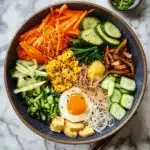
- Artfully arrange a portion of each prepared vegetable (spinach, carrots, zucchini, bean sprouts, mushrooms) and the tofu in separate sections on top of the rice. Try to alternate colors for visual appeal.
- If using, place a fried egg in the center of each bowl.
- Garnish with extra toasted sesame seeds and shredded roasted seaweed (gim), if desired.
- Serve immediately with the bibimbap sauce on the side, allowing each person to add as much as they like.
Nutrition
- Serving Size: one normal portion
- Calories: 500-650