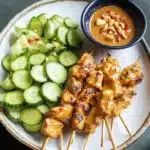
Ingredients
Scale
-
- 1.5 lbs (about 680g) boneless, skinless chicken thighs (preferred for flavour and moisture) or chicken breasts, cut into 1-inch cubes or thin strips suitable for threading onto skewers
-
- 1/4 cup (60ml) low-sodium soy sauce (or tamari for gluten-free)
-
- 2 tablespoons (30ml) vegetable oil (or other neutral oil like canola or grapeseed)
-
- 2 tablespoons (30ml) lime juice, freshly squeezed (from about 1 lime)
-
- 1 tablespoon fish sauce (adds essential umami depth)
-
- 1 tablespoon brown sugar (or coconut sugar)
-
- 2 cloves garlic, minced
-
- 1 tablespoon grated fresh ginger
-
- 1 teaspoon ground coriander
-
- 1/2 teaspoon ground cumin
-
- 1/4 to 1/2 teaspoon cayenne pepper or red pepper flakes (adjust to your spice preference)
-
- Wooden or metal skewers (if using wooden, soak in water for at least 30 minutes before grilling to prevent burning)
For the Spicy Peanut Sauce:
-
- 1 cup (240ml) unsweetened, full-fat coconut milk (shake can well before opening)
-
- 1/2 cup (128g) creamy peanut butter (natural style preferred, unsweetened)
-
- 1/4 cup (60ml) water (or more, to reach desired consistency)
-
- 3 tablespoons (45ml) low-sodium soy sauce (or tamari)
-
- 2 tablespoons (30ml) lime juice, freshly squeezed
-
- 1–2 tablespoons brown sugar (or maple syrup, agave, or coconut sugar, adjust to taste)
-
- 1–2 tablespoons chili garlic sauce or Sriracha (adjust heat level to preference)
-
- 1 tablespoon fish sauce
-
- 1 clove garlic, minced
-
- 1 teaspoon grated fresh ginger
-
- Optional: Pinch of red pepper flakes for extra heat
For the Cooling Cucumber Salad:
-
- 2 large cucumbers (English or Persian cucumbers work well – fewer seeds, thinner skin)
-
- 1/4 cup red onion, very thinly sliced
-
- 1/4 cup (60ml) rice vinegar (unseasoned preferred)
-
- 1 tablespoon granulated sugar (or adjust to taste)
-
- 1/2 teaspoon salt
-
- 1/4 teaspoon black pepper, freshly ground
-
- Optional: 1 small red chili, thinly sliced (for a touch of heat within the coolness)
-
- Optional: 1 tablespoon chopped fresh cilantro or mint leaves
Ingredient Deep Dive – Understanding the Choices:
-
- Chicken Thighs vs. Breasts: Thighs are highly recommended for satay. Their higher fat content keeps them moist and flavourful during grilling or pan-searing, making them more forgiving than chicken breasts, which can dry out easily. If using breasts, cut them into slightly thicker pieces and watch the cooking time carefully.
-
- Soy Sauce (Low Sodium) / Tamari: Provides the salty, umami base for both the marinade and the peanut sauce. Low sodium allows better control over the final saltiness. Tamari is a gluten-free alternative.
-
- Fish Sauce: A cornerstone of Southeast Asian cooking. It adds a unique, savory depth (umami) that soy sauce alone cannot replicate. Don’t skip it if possible! Red Boat is a popular high-quality brand.
-
- Lime Juice: Essential for brightness and acidity in both the marinade (helps tenderize) and the peanut sauce (cuts through the richness). Freshly squeezed is always best.
-
- Brown Sugar / Coconut Sugar: Adds a touch of caramel sweetness to balance the salty and tangy elements.
-
- Garlic & Ginger: Aromatic powerhouses providing foundational flavour. Fresh is far superior to powdered versions here.
-
- Spices (Coriander, Cumin, Cayenne): These form the aromatic backbone of the marinade, giving the chicken that characteristic satay scent and flavour profile. Adjust cayenne/red pepper flakes based on your heat tolerance.
-
- Coconut Milk (Full-Fat, Unsweetened): Creates the creamy, luxurious base for the peanut sauce. Full-fat provides the best texture and richness. Avoid “lite” coconut milk if possible.
-
- Peanut Butter (Natural, Creamy): The star of the sauce. Natural peanut butter (just peanuts and maybe salt) provides the purest peanut flavour without added sugars or oils found in some conventional brands. Creamy ensures a smooth sauce.
-
- Chili Garlic Sauce / Sriracha: Your source of heat for the peanut sauce. Start with less and add more to reach your desired spice level. Different chili sauces offer slightly different flavour profiles.
-
- Cucumbers (English/Persian): These varieties have thin skins (no need to peel unless desired) and fewer watery seeds, making them ideal for salads where you want maximum crunch.
-
- Red Onion: Adds a pungent bite and colour to the salad. Slicing it paper-thin is key. Soaking slices in ice water for 10 minutes can mellow their flavour if preferred.
-
- Rice Vinegar: Provides the clean, slightly sweet tang for the cucumber salad dressing. Unseasoned rice vinegar gives you more control over the sugar and salt content compared to seasoned versions. Apple cider vinegar or white wine vinegar can be substituted in a pinch.
Instructions
-
- Prepare the Chicken: If using chicken thighs or breasts, pat them dry with paper towels. Cut the chicken into uniform 1-inch cubes or thin, long strips (about 1/2 inch thick and 3-4 inches long). Uniformity ensures even cooking. Place the cut chicken into a medium-sized bowl or a large resealable plastic bag.
-
- Mix the Marinade: In a small bowl, whisk together all the marinade ingredients: low-sodium soy sauce, vegetable oil, lime juice, fish sauce, brown sugar, minced garlic, grated ginger, ground coriander, ground cumin, and cayenne pepper/red pepper flakes.
-
- Marinate the Chicken: Pour the marinade over the chicken pieces in the bowl or bag. Toss or massage the bag gently to ensure every piece of chicken is well-coated.
-
- Chill (Optional but Recommended): Cover the bowl or seal the bag and refrigerate for at least 30 minutes to allow the flavours to penetrate the chicken. For best results and deeper flavour, marinate for 2-4 hours. You can marinate overnight, but the acidity from the lime juice might start to slightly alter the texture if left too long (it can become slightly mushy). Do not marinate for more than 24 hours.
-
- Soak Skewers: If using wooden skewers, place them in a shallow dish filled with water while the chicken marinates. Ensure they are fully submerged. Soaking for at least 30 minutes helps prevent them from burning completely during cooking.
Part 2: Making the Spicy Peanut Sauce
-
- Combine Ingredients: In a small saucepan, combine the coconut milk, peanut butter, water, soy sauce (or tamari), lime juice, brown sugar (start with 1 tbsp), chili garlic sauce or Sriracha (start with 1 tbsp), fish sauce, minced garlic, and grated ginger.
-
- Heat Gently: Place the saucepan over medium-low heat. Whisk the ingredients together constantly as the mixture heats up. The peanut butter will melt, and the sauce will start to combine and thicken.
-
- Simmer and Thicken: Bring the sauce to a gentle simmer (do not let it boil vigorously). Continue whisking and let it simmer for 3-5 minutes, or until it has thickened slightly to a consistency that coats the back of a spoon. Be careful not to scorch the bottom – keep the heat low and stir often.
-
- Adjust Consistency and Flavour: If the sauce is too thick, whisk in a little more water, one tablespoon at a time, until it reaches your desired consistency. Remember it will thicken slightly more as it cools. Taste the sauce. Now is the time to adjust:
-
- Need more sweetness? Add more brown sugar.
-
- Need more tang? Add a squeeze more lime juice.
-
- Need more saltiness/umami? Add a dash more soy sauce or fish sauce (use sparingly).
-
- Need more heat? Add more chili garlic sauce/Sriracha or a pinch of red pepper flakes.
-
- Adjust Consistency and Flavour: If the sauce is too thick, whisk in a little more water, one tablespoon at a time, until it reaches your desired consistency. Remember it will thicken slightly more as it cools. Taste the sauce. Now is the time to adjust:
-
- Serve: Once the flavour and consistency are perfect, remove the sauce from the heat. Transfer it to a serving bowl. It can be served warm or at room temperature. If it thickens too much upon cooling, gently reheat with a splash of water or coconut milk.
Part 3: Assembling and Cooking the Satay
-
- Thread the Chicken: Remove the marinated chicken from the refrigerator. Thread the chicken pieces onto the soaked wooden skewers (or metal skewers). If using cubes, thread 3-4 pieces per skewer. If using strips, weave them onto the skewer accordion-style. Don’t pack the chicken too tightly; leave a tiny bit of space between pieces for even cooking. Discard any leftover marinade.
-
- Choose Your Cooking Method:
-
- Grilling (Recommended): Preheat your outdoor grill or indoor grill pan to medium-high heat. Lightly oil the grill grates to prevent sticking. Place the skewers on the hot grill. Grill for about 3-5 minutes per side, turning occasionally, until the chicken is cooked through (internal temperature reaches 165°F or 74°C) and has nice char marks. Cooking time will vary based on the thickness of the chicken and the heat of your grill.
-
- Pan-Searing: Heat a tablespoon of vegetable oil in a large skillet or cast-iron pan over medium-high heat. Once hot, place the skewers in the pan (work in batches if necessary to avoid overcrowding). Cook for 3-5 minutes per side, turning occasionally, until golden brown, cooked through, and slightly charred in spots.
-
- Broiling: Preheat your oven broiler with the rack positioned about 6 inches from the heat source. Line a baking sheet with foil (for easy cleanup). Arrange the skewers in a single layer on the baking sheet. Broil for 4-6 minutes per side, watching carefully to prevent burning, until cooked through and lightly charred.
-
- Choose Your Cooking Method:
-
- Rest the Chicken: Once cooked, transfer the chicken satay skewers to a clean platter. Let them rest for a few minutes before serving. This allows the juices to redistribute, resulting in more tender chicken.
Part 4: Preparing the Cooling Cucumber Salad
-
- Prepare Cucumbers and Onion: Wash the cucumbers. You can peel them entirely, partially peel them in stripes for visual appeal, or leave the skin on (especially if using English or Persian cucumbers). Slice the cucumbers thinly (about 1/8 inch thick). A mandoline slicer works great for uniform slices, but a sharp knife is fine too. Thinly slice the red onion. Place the cucumber and onion slices in a medium bowl. If using optional red chili, add it now.
-
- Make the Dressing: In a small bowl, whisk together the rice vinegar, granulated sugar, salt, and black pepper until the sugar and salt are dissolved.
-
- Combine and Chill (Briefly): Pour the dressing over the cucumbers and onions. Toss gently to coat everything evenly.
-
- Serve: For the best texture (maximum crunch), serve the cucumber salad shortly after dressing it. If making slightly ahead, you can cover and refrigerate it for up to 30 minutes. If using optional cilantro or mint, stir it in just before serving. The cucumbers will release water over time, so avoid dressing it hours in advance.
Nutrition
- Serving Size: one normal portion
- Calories: 550-750