
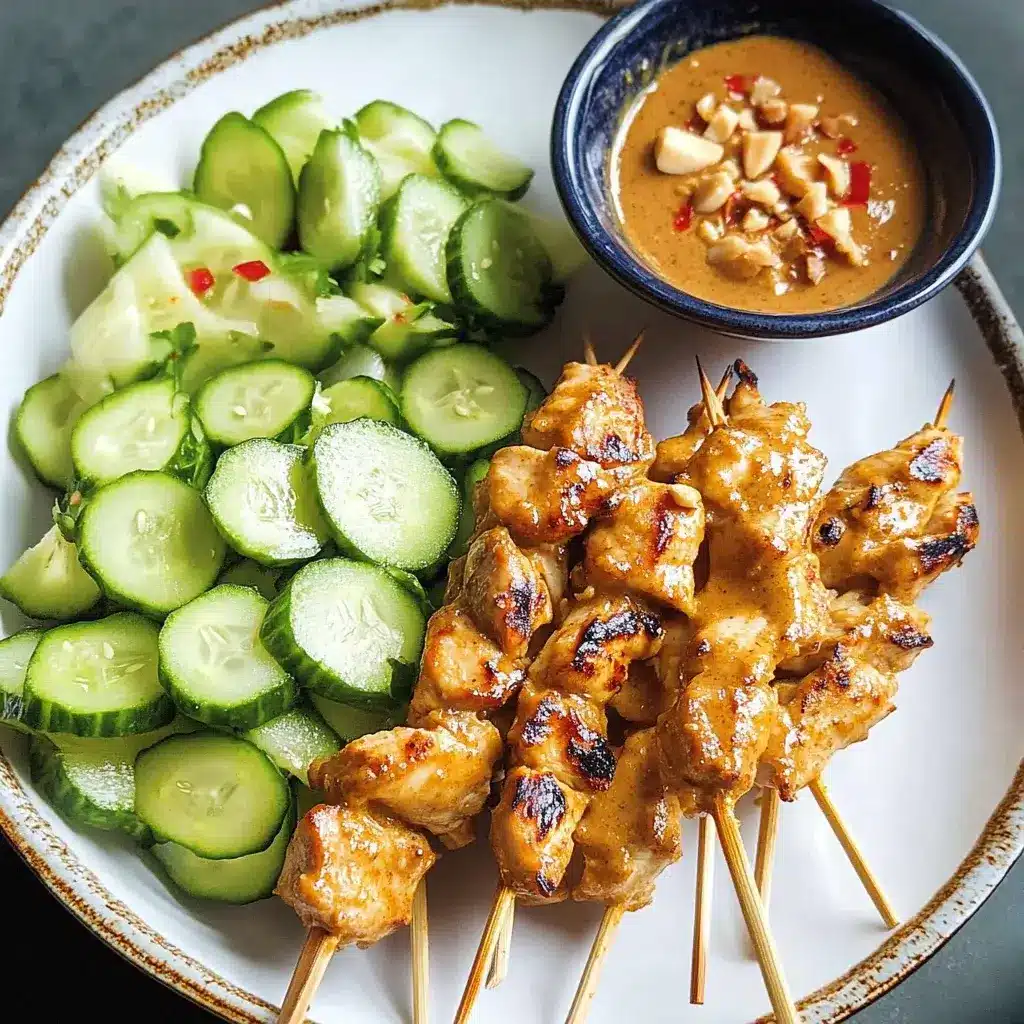

Some flavour combinations are just electric, and the pairing of spicy, savory peanut sauce with tender grilled chicken and a crisp, cooling cucumber salad is one of my absolute favourites. I first encountered authentic satay during a trip through Southeast Asia, and the memory of those smoky, perfectly charred skewers dipped in rich, complex peanut sauce stayed with me long after I returned home. Recreating that magic became a bit of an obsession. This recipe for Spicy Peanut Chicken Satay with Cucumber Salad is the result of countless batches, tweaking the marinade for maximum flavour infusion, perfecting the balance of sweet, spicy, salty, and tangy in the peanut sauce, and finding the ideal counterpoint in a simple yet refreshing cucumber salad. When I make this for friends or family, the reaction is always the same – eyes widen, appreciative noises are made, and the platter empties remarkably quickly. It’s become my go-to dish for summer barbecues, easy weeknight dinners that feel special, and whenever I want to impress guests with vibrant, bold flavours that transport you straight to a bustling street food market. The contrast between the warm, spicy chicken and the cool, crunchy salad is simply irresistible.
Spicy Peanut Chicken Satay with Cooling Cucumber Salad: An Irresistible Combination
This recipe breaks down how to create incredibly flavourful chicken satay skewers, marinated for tenderness and taste, served with a homemade spicy peanut dipping sauce that hits all the right notes, and accompanied by a quick-pickled cucumber salad that provides a refreshing contrast. It’s a complete flavour explosion designed to satisfy cravings for something exciting and delicious.
Yields: 4 main course servings or 6-8 appetizer servings
Prep time: 40 minutes (plus optional marinating time)
Cook time: 10-15 minutes
Total time: Approximately 55 minutes (plus optional marinating time)
Ingredients You’ll Need
Accuracy in ingredients is key to achieving the authentic balance of flavours. We’ve broken them down by component:
For the Spicy Peanut Chicken Satay (Marinade & Skewers):
- 1.5 lbs (about 680g) boneless, skinless chicken thighs (preferred for flavour and moisture) or chicken breasts, cut into 1-inch cubes or thin strips suitable for threading onto skewers
- 1/4 cup (60ml) low-sodium soy sauce (or tamari for gluten-free)
- 2 tablespoons (30ml) vegetable oil (or other neutral oil like canola or grapeseed)
- 2 tablespoons (30ml) lime juice, freshly squeezed (from about 1 lime)
- 1 tablespoon fish sauce (adds essential umami depth)
- 1 tablespoon brown sugar (or coconut sugar)
- 2 cloves garlic, minced
- 1 tablespoon grated fresh ginger
- 1 teaspoon ground coriander
- 1/2 teaspoon ground cumin
- 1/4 to 1/2 teaspoon cayenne pepper or red pepper flakes (adjust to your spice preference)
- Wooden or metal skewers (if using wooden, soak in water for at least 30 minutes before grilling to prevent burning)
For the Spicy Peanut Sauce:
- 1 cup (240ml) unsweetened, full-fat coconut milk (shake can well before opening)
- 1/2 cup (128g) creamy peanut butter (natural style preferred, unsweetened)
- 1/4 cup (60ml) water (or more, to reach desired consistency)
- 3 tablespoons (45ml) low-sodium soy sauce (or tamari)
- 2 tablespoons (30ml) lime juice, freshly squeezed
- 1-2 tablespoons brown sugar (or maple syrup, agave, or coconut sugar, adjust to taste)
- 1-2 tablespoons chili garlic sauce or Sriracha (adjust heat level to preference)
- 1 tablespoon fish sauce
- 1 clove garlic, minced
- 1 teaspoon grated fresh ginger
- Optional: Pinch of red pepper flakes for extra heat
For the Cooling Cucumber Salad:
- 2 large cucumbers (English or Persian cucumbers work well – fewer seeds, thinner skin)
- 1/4 cup red onion, very thinly sliced
- 1/4 cup (60ml) rice vinegar (unseasoned preferred)
- 1 tablespoon granulated sugar (or adjust to taste)
- 1/2 teaspoon salt
- 1/4 teaspoon black pepper, freshly ground
- Optional: 1 small red chili, thinly sliced (for a touch of heat within the coolness)
- Optional: 1 tablespoon chopped fresh cilantro or mint leaves
Ingredient Deep Dive – Understanding the Choices:
- Chicken Thighs vs. Breasts: Thighs are highly recommended for satay. Their higher fat content keeps them moist and flavourful during grilling or pan-searing, making them more forgiving than chicken breasts, which can dry out easily. If using breasts, cut them into slightly thicker pieces and watch the cooking time carefully.
- Soy Sauce (Low Sodium) / Tamari: Provides the salty, umami base for both the marinade and the peanut sauce. Low sodium allows better control over the final saltiness. Tamari is a gluten-free alternative.
- Fish Sauce: A cornerstone of Southeast Asian cooking. It adds a unique, savory depth (umami) that soy sauce alone cannot replicate. Don’t skip it if possible! Red Boat is a popular high-quality brand.
- Lime Juice: Essential for brightness and acidity in both the marinade (helps tenderize) and the peanut sauce (cuts through the richness). Freshly squeezed is always best.
- Brown Sugar / Coconut Sugar: Adds a touch of caramel sweetness to balance the salty and tangy elements.
- Garlic & Ginger: Aromatic powerhouses providing foundational flavour. Fresh is far superior to powdered versions here.
- Spices (Coriander, Cumin, Cayenne): These form the aromatic backbone of the marinade, giving the chicken that characteristic satay scent and flavour profile. Adjust cayenne/red pepper flakes based on your heat tolerance.
- Coconut Milk (Full-Fat, Unsweetened): Creates the creamy, luxurious base for the peanut sauce. Full-fat provides the best texture and richness. Avoid “lite” coconut milk if possible.
- Peanut Butter (Natural, Creamy): The star of the sauce. Natural peanut butter (just peanuts and maybe salt) provides the purest peanut flavour without added sugars or oils found in some conventional brands. Creamy ensures a smooth sauce.
- Chili Garlic Sauce / Sriracha: Your source of heat for the peanut sauce. Start with less and add more to reach your desired spice level. Different chili sauces offer slightly different flavour profiles.
- Cucumbers (English/Persian): These varieties have thin skins (no need to peel unless desired) and fewer watery seeds, making them ideal for salads where you want maximum crunch.
- Red Onion: Adds a pungent bite and colour to the salad. Slicing it paper-thin is key. Soaking slices in ice water for 10 minutes can mellow their flavour if preferred.
- Rice Vinegar: Provides the clean, slightly sweet tang for the cucumber salad dressing. Unseasoned rice vinegar gives you more control over the sugar and salt content compared to seasoned versions. Apple cider vinegar or white wine vinegar can be substituted in a pinch.
Step-by-Step Instructions
Follow these detailed steps for satay success:
Part 1: Preparing the Chicken and Marinade
- Prepare the Chicken: If using chicken thighs or breasts, pat them dry with paper towels. Cut the chicken into uniform 1-inch cubes or thin, long strips (about 1/2 inch thick and 3-4 inches long). Uniformity ensures even cooking. Place the cut chicken into a medium-sized bowl or a large resealable plastic bag.
- Mix the Marinade: In a small bowl, whisk together all the marinade ingredients: low-sodium soy sauce, vegetable oil, lime juice, fish sauce, brown sugar, minced garlic, grated ginger, ground coriander, ground cumin, and cayenne pepper/red pepper flakes.
- Marinate the Chicken: Pour the marinade over the chicken pieces in the bowl or bag. Toss or massage the bag gently to ensure every piece of chicken is well-coated.
- Chill (Optional but Recommended): Cover the bowl or seal the bag and refrigerate for at least 30 minutes to allow the flavours to penetrate the chicken. For best results and deeper flavour, marinate for 2-4 hours. You can marinate overnight, but the acidity from the lime juice might start to slightly alter the texture if left too long (it can become slightly mushy). Do not marinate for more than 24 hours.
- Soak Skewers: If using wooden skewers, place them in a shallow dish filled with water while the chicken marinates. Ensure they are fully submerged. Soaking for at least 30 minutes helps prevent them from burning completely during cooking.
Part 2: Making the Spicy Peanut Sauce
- Combine Ingredients: In a small saucepan, combine the coconut milk, peanut butter, water, soy sauce (or tamari), lime juice, brown sugar (start with 1 tbsp), chili garlic sauce or Sriracha (start with 1 tbsp), fish sauce, minced garlic, and grated ginger.
- Heat Gently: Place the saucepan over medium-low heat. Whisk the ingredients together constantly as the mixture heats up. The peanut butter will melt, and the sauce will start to combine and thicken.
- Simmer and Thicken: Bring the sauce to a gentle simmer (do not let it boil vigorously). Continue whisking and let it simmer for 3-5 minutes, or until it has thickened slightly to a consistency that coats the back of a spoon. Be careful not to scorch the bottom – keep the heat low and stir often.
- Adjust Consistency and Flavour: If the sauce is too thick, whisk in a little more water, one tablespoon at a time, until it reaches your desired consistency. Remember it will thicken slightly more as it cools. Taste the sauce. Now is the time to adjust:
- Need more sweetness? Add more brown sugar.
- Need more tang? Add a squeeze more lime juice.
- Need more saltiness/umami? Add a dash more soy sauce or fish sauce (use sparingly).
- Need more heat? Add more chili garlic sauce/Sriracha or a pinch of red pepper flakes.
- Serve: Once the flavour and consistency are perfect, remove the sauce from the heat. Transfer it to a serving bowl. It can be served warm or at room temperature. If it thickens too much upon cooling, gently reheat with a splash of water or coconut milk.
Part 3: Assembling and Cooking the Satay
- Thread the Chicken: Remove the marinated chicken from the refrigerator. Thread the chicken pieces onto the soaked wooden skewers (or metal skewers). If using cubes, thread 3-4 pieces per skewer. If using strips, weave them onto the skewer accordion-style. Don’t pack the chicken too tightly; leave a tiny bit of space between pieces for even cooking. Discard any leftover marinade.
- Choose Your Cooking Method:
- Grilling (Recommended): Preheat your outdoor grill or indoor grill pan to medium-high heat. Lightly oil the grill grates to prevent sticking. Place the skewers on the hot grill. Grill for about 3-5 minutes per side, turning occasionally, until the chicken is cooked through (internal temperature reaches 165°F or 74°C) and has nice char marks. Cooking time will vary based on the thickness of the chicken and the heat of your grill.
- Pan-Searing: Heat a tablespoon of vegetable oil in a large skillet or cast-iron pan over medium-high heat. Once hot, place the skewers in the pan (work in batches if necessary to avoid overcrowding). Cook for 3-5 minutes per side, turning occasionally, until golden brown, cooked through, and slightly charred in spots.
- Broiling: Preheat your oven broiler with the rack positioned about 6 inches from the heat source. Line a baking sheet with foil (for easy cleanup). Arrange the skewers in a single layer on the baking sheet. Broil for 4-6 minutes per side, watching carefully to prevent burning, until cooked through and lightly charred.
- Rest the Chicken: Once cooked, transfer the chicken satay skewers to a clean platter. Let them rest for a few minutes before serving. This allows the juices to redistribute, resulting in more tender chicken.
Part 4: Preparing the Cooling Cucumber Salad
- Prepare Cucumbers and Onion: Wash the cucumbers. You can peel them entirely, partially peel them in stripes for visual appeal, or leave the skin on (especially if using English or Persian cucumbers). Slice the cucumbers thinly (about 1/8 inch thick). A mandoline slicer works great for uniform slices, but a sharp knife is fine too. Thinly slice the red onion. Place the cucumber and onion slices in a medium bowl. If using optional red chili, add it now.
- Make the Dressing: In a small bowl, whisk together the rice vinegar, granulated sugar, salt, and black pepper until the sugar and salt are dissolved.
- Combine and Chill (Briefly): Pour the dressing over the cucumbers and onions. Toss gently to coat everything evenly.
- Serve: For the best texture (maximum crunch), serve the cucumber salad shortly after dressing it. If making slightly ahead, you can cover and refrigerate it for up to 30 minutes. If using optional cilantro or mint, stir it in just before serving. The cucumbers will release water over time, so avoid dressing it hours in advance.
Nutritional Information (Approximate)
These values are estimates per serving, assuming the recipe makes 4 main course servings (including satay, sauce, and salad). Actual values depend heavily on specific ingredients (chicken cut, peanut butter brand, amount of sugar/oil used) and portion sizes.
- Servings: 4 main course servings
- Calories per Serving: Approximately 550-750 calories
Breakdown:
- Chicken Satay: Primarily contributes protein and some fat (especially if using thighs). Marinade adds minimal calories but significant flavour.
- Peanut Sauce: Contributes significantly to calories, fat (from peanut butter and coconut milk), and carbohydrates (from sugar and peanut butter). Also provides some protein.
- Cucumber Salad: Very low in calories, primarily contributing carbohydrates (from sugar in dressing) and micronutrients/fiber from the vegetables.
This dish offers a good source of protein from the chicken. The peanut sauce adds healthy fats (monounsaturated from peanuts) but also saturated fat (from coconut milk) and potentially significant sugar depending on how much is added. The cucumber salad provides hydration and freshness. Enjoy it as part of a balanced diet.
Preparation & Cook Time Breakdown
Efficient planning makes this flavour-packed meal achievable even on busy days.
- Active Preparation Time: 40 minutes
- Cutting chicken: 10 minutes
- Mixing marinade & marinating chicken: 5 minutes
- Making peanut sauce: 10 minutes
- Preparing cucumber salad: 10 minutes
- Threading skewers: 5 minutes
- Marinating Time (Passive): 30 minutes (minimum) to 4 hours (recommended)
- Cook Time: 10-15 minutes (depending on cooking method and chicken thickness)
- Resting Time (Passive): 5 minutes
- Total Time (Minimum Marinating): Approximately 55 minutes + 30 minutes marinating = 1 hour 25 minutes
- Total Time (Recommended Marinating): Approximately 55 minutes + 2-4 hours marinating
Workflow Suggestion: Start by prepping and marinating the chicken. While it marinates, prepare the peanut sauce (it can sit) and prep the cucumber salad ingredients (slice cucumbers/onions, mix dressing separately), but don’t dress the salad until just before serving. Soak skewers during marinating time. Finally, thread and cook the chicken. Dress the salad while the chicken rests.
How to Serve Your Spicy Peanut Chicken Satay
This dish shines in various settings. Serve it hot off the grill/pan with the peanut sauce and cucumber salad alongside.
- As a Main Course:
- Serve 3-4 skewers per person.
- Accompany with steamed jasmine rice or coconut rice to soak up extra peanut sauce.
- Offer lime wedges on the side for squeezing over the chicken.
- Garnish the platter with chopped peanuts and fresh cilantro sprigs.
- As an Appetizer or Party Food:
- Serve 1-2 smaller skewers per person.
- Arrange skewers attractively on a platter with a central bowl of peanut sauce for dipping.
- Serve the cucumber salad in a separate bowl with a serving spoon.
- Consider providing small plates and napkins.
- In a Bowl Format:
- Serve skewers over a bed of rice or quinoa.
- Drizzle generously with peanut sauce.
- Top with a scoop of the cucumber salad.
- Add other toppings like shredded carrots, bean sprouts, or extra chopped peanuts.
- Lettuce Wraps:
- Provide large lettuce cups (like butter lettuce or romaine hearts).
- Allow guests to remove chicken from skewers, place it in a lettuce cup, drizzle with peanut sauce, and top with cucumber salad for a lighter, interactive meal.
Presentation Tips:
- Garnish: Sprinkle chopped roasted peanuts and/or fresh cilantro over the finished skewers and peanut sauce.
- Char Marks: Aim for visible char marks on the chicken for visual appeal and smoky flavour.
- Colour Contrast: The vibrant green of the cucumber salad and cilantro, the red of the optional chili, and the golden brown of the chicken create an appealing plate.
- Sauce Serving: Serve the peanut sauce in an attractive bowl. If it’s very thick, thin it slightly so it’s easily dippable or drizzlable.
Pro Tips for Perfect Satay and Salad
Elevate your dish from great to unforgettable with these expert pointers:
- Don’t Skip the Marinade Time: While 30 minutes works in a pinch, allowing the chicken to marinate for at least 2 hours (up to 4) makes a significant difference. The marinade not only flavours the chicken deeply but also helps tenderize it (thanks to the lime juice and salt), ensuring moist, flavourful bites.
- Control the Peanut Sauce Consistency: Peanut sauce can thicken considerably as it cools or if simmered too long. Aim for a slightly thinner consistency than you want the final result to be while it’s hot. You can always thin it later with warm water, coconut milk, or lime juice. Conversely, if it’s too thin, simmer gently for a few more minutes, whisking constantly. Achieving that perfect drizzly-yet-clingy texture is key.
- Avoid Overcooking the Chicken: This is crucial, especially if using chicken breast. Cook satay over medium-high heat to get a good sear quickly without drying out the interior. Use an instant-read thermometer to check for doneness (165°F/74°C in the thickest part). Remember carryover cooking will raise the temperature slightly after removing from heat. Tender chicken is the goal!
- Dress the Cucumber Salad Just Before Serving: Cucumbers release water when mixed with salt and vinegar (osmosis!). To maintain maximum crunch and prevent a watery salad, combine the sliced cucumbers/onions with the dressing only 5-15 minutes before you plan to eat. If prepping ahead, keep the vegetables and dressing separate until the last moment.
- Taste and Balance Everything: The magic of this dish lies in the balance of sweet, sour, salty, spicy, and savory (umami). Taste the marinade before adding chicken (if comfortable, or just trust the ratios). Critically taste the peanut sauce and adjust seasonings until it hits your perfect balance. Taste the cucumber salad dressing before adding it to the cucumbers. Small adjustments make a huge difference. Need more brightness? Lime juice. More depth? Fish sauce/soy sauce. More heat? Chili sauce. More sweetness? Sugar/brown sugar.
Frequently Asked Questions (FAQ)
Addressing common queries about making Spicy Peanut Chicken Satay:
1. How spicy is this recipe? Can I make it milder or spicier?
The spiciness comes primarily from the cayenne/red pepper flakes in the marinade and the chili garlic sauce/Sriracha in the peanut sauce. The recipe provides a moderate starting point (around 1/4 – 1/2 tsp cayenne, 1 tbsp chili sauce).
- To Make Milder: Reduce or omit the cayenne in the marinade. Start with only 1/2 tablespoon (or less) of chili sauce in the peanut sauce, taste, and add more only if desired. You can also use a milder chili sauce.
- To Make Spicier: Increase the cayenne in the marinade. Add more chili garlic sauce/Sriracha to the peanut sauce. You could also add finely minced fresh chili (like Thai bird’s eye chili) to the marinade or sauce, or add extra red pepper flakes to the sauce. Remember to add heat incrementally and taste as you go.
2. Can I use a different type of nut butter for the sauce?
Yes, while peanut butter is traditional for satay sauce, you can substitute other nut or seed butters if needed due to allergies or preference.
- Almond Butter: Works well, provides a slightly different nutty flavour. Ensure it’s smooth and unsweetened.
- Cashew Butter: Creates an incredibly creamy and slightly sweeter sauce.
- Sunflower Seed Butter (SunButter): A good option for nut allergies. It has a distinct flavour, so the final sauce will taste different but can still be delicious.
Ensure you use unsweetened, natural versions and you may need to adjust the liquid (water/coconut milk) slightly as different butters have varying thicknesses.
3. Can I make this recipe gluten-free?
Absolutely. The main sources of gluten are typically soy sauce and potentially some store-bought chili sauces.
- Use Tamari: Substitute tamari (a Japanese soy sauce brewed with little to no wheat) or a certified gluten-free soy sauce alternative for the regular soy sauce in both the marinade and the peanut sauce.
- Check Chili Sauce: Verify that your chosen chili garlic sauce or Sriracha is gluten-free (many are, but it’s wise to check labels).
- Fish Sauce: Most fish sauces are naturally gluten-free, but check the label to be certain.
All other ingredients (chicken, vegetables, spices, peanut butter, coconut milk, lime, sugar, etc.) are typically naturally gluten-free.
4. What’s the best way to cook the satay if I don’t have a grill?
While grilling provides the best smoky flavour, you have excellent alternatives:
- Stovetop Grill Pan: Mimics outdoor grilling by creating char marks. Use medium-high heat and cook in batches.
- Large Skillet/Cast Iron: Provides a great sear. Use medium-high heat with a little oil, cook in batches, turning for even browning.
- Oven Broiler: Positions the chicken close to the heat source, giving good charring. Watch carefully to prevent burning. Arrange skewers on a foil-lined baking sheet. This is often faster than pan-searing for large batches.
All these methods work well; just ensure the chicken reaches the safe internal temperature of 165°F (74°C).
5. Can I prepare components of this dish ahead of time?
Yes, this dish lends itself well to advance preparation:
- Chicken Marinade: Marinate the chicken up to 24 hours in advance (though 2-4 hours is often ideal for texture). Thread onto skewers a few hours before cooking if desired.
- Peanut Sauce: The sauce can be made 2-3 days in advance and stored in an airtight container in the refrigerator. Gently reheat on the stove or in the microwave before serving, adding a splash of water or coconut milk to adjust consistency if it has thickened too much.
- Cucumber Salad Components: Slice the cucumbers and red onion up to a day ahead and store them in an airtight container in the fridge. Mix the dressing ingredients and store separately. Combine the vegetables and dressing just before serving.
Doing these steps ahead makes assembly and cooking much quicker on the day you plan to serve.
Spicy Peanut Chicken Satay with Cucumber Salad recipe
Ingredients
-
- 1.5 lbs (about 680g) boneless, skinless chicken thighs (preferred for flavour and moisture) or chicken breasts, cut into 1-inch cubes or thin strips suitable for threading onto skewers
-
- 1/4 cup (60ml) low-sodium soy sauce (or tamari for gluten-free)
-
- 2 tablespoons (30ml) vegetable oil (or other neutral oil like canola or grapeseed)
-
- 2 tablespoons (30ml) lime juice, freshly squeezed (from about 1 lime)
-
- 1 tablespoon fish sauce (adds essential umami depth)
-
- 1 tablespoon brown sugar (or coconut sugar)
-
- 2 cloves garlic, minced
-
- 1 tablespoon grated fresh ginger
-
- 1 teaspoon ground coriander
-
- 1/2 teaspoon ground cumin
-
- 1/4 to 1/2 teaspoon cayenne pepper or red pepper flakes (adjust to your spice preference)
-
- Wooden or metal skewers (if using wooden, soak in water for at least 30 minutes before grilling to prevent burning)
For the Spicy Peanut Sauce:
-
- 1 cup (240ml) unsweetened, full-fat coconut milk (shake can well before opening)
-
- 1/2 cup (128g) creamy peanut butter (natural style preferred, unsweetened)
-
- 1/4 cup (60ml) water (or more, to reach desired consistency)
-
- 3 tablespoons (45ml) low-sodium soy sauce (or tamari)
-
- 2 tablespoons (30ml) lime juice, freshly squeezed
-
- 1–2 tablespoons brown sugar (or maple syrup, agave, or coconut sugar, adjust to taste)
-
- 1–2 tablespoons chili garlic sauce or Sriracha (adjust heat level to preference)
-
- 1 tablespoon fish sauce
-
- 1 clove garlic, minced
-
- 1 teaspoon grated fresh ginger
-
- Optional: Pinch of red pepper flakes for extra heat
For the Cooling Cucumber Salad:
-
- 2 large cucumbers (English or Persian cucumbers work well – fewer seeds, thinner skin)
-
- 1/4 cup red onion, very thinly sliced
-
- 1/4 cup (60ml) rice vinegar (unseasoned preferred)
-
- 1 tablespoon granulated sugar (or adjust to taste)
-
- 1/2 teaspoon salt
-
- 1/4 teaspoon black pepper, freshly ground
-
- Optional: 1 small red chili, thinly sliced (for a touch of heat within the coolness)
-
- Optional: 1 tablespoon chopped fresh cilantro or mint leaves
Ingredient Deep Dive – Understanding the Choices:
-
- Chicken Thighs vs. Breasts: Thighs are highly recommended for satay. Their higher fat content keeps them moist and flavourful during grilling or pan-searing, making them more forgiving than chicken breasts, which can dry out easily. If using breasts, cut them into slightly thicker pieces and watch the cooking time carefully.
-
- Soy Sauce (Low Sodium) / Tamari: Provides the salty, umami base for both the marinade and the peanut sauce. Low sodium allows better control over the final saltiness. Tamari is a gluten-free alternative.
-
- Fish Sauce: A cornerstone of Southeast Asian cooking. It adds a unique, savory depth (umami) that soy sauce alone cannot replicate. Don’t skip it if possible! Red Boat is a popular high-quality brand.
-
- Lime Juice: Essential for brightness and acidity in both the marinade (helps tenderize) and the peanut sauce (cuts through the richness). Freshly squeezed is always best.
-
- Brown Sugar / Coconut Sugar: Adds a touch of caramel sweetness to balance the salty and tangy elements.
-
- Garlic & Ginger: Aromatic powerhouses providing foundational flavour. Fresh is far superior to powdered versions here.
-
- Spices (Coriander, Cumin, Cayenne): These form the aromatic backbone of the marinade, giving the chicken that characteristic satay scent and flavour profile. Adjust cayenne/red pepper flakes based on your heat tolerance.
-
- Coconut Milk (Full-Fat, Unsweetened): Creates the creamy, luxurious base for the peanut sauce. Full-fat provides the best texture and richness. Avoid “lite” coconut milk if possible.
-
- Peanut Butter (Natural, Creamy): The star of the sauce. Natural peanut butter (just peanuts and maybe salt) provides the purest peanut flavour without added sugars or oils found in some conventional brands. Creamy ensures a smooth sauce.
-
- Chili Garlic Sauce / Sriracha: Your source of heat for the peanut sauce. Start with less and add more to reach your desired spice level. Different chili sauces offer slightly different flavour profiles.
-
- Cucumbers (English/Persian): These varieties have thin skins (no need to peel unless desired) and fewer watery seeds, making them ideal for salads where you want maximum crunch.
-
- Red Onion: Adds a pungent bite and colour to the salad. Slicing it paper-thin is key. Soaking slices in ice water for 10 minutes can mellow their flavour if preferred.
-
- Rice Vinegar: Provides the clean, slightly sweet tang for the cucumber salad dressing. Unseasoned rice vinegar gives you more control over the sugar and salt content compared to seasoned versions. Apple cider vinegar or white wine vinegar can be substituted in a pinch.
Instructions
-
- Prepare the Chicken: If using chicken thighs or breasts, pat them dry with paper towels. Cut the chicken into uniform 1-inch cubes or thin, long strips (about 1/2 inch thick and 3-4 inches long). Uniformity ensures even cooking. Place the cut chicken into a medium-sized bowl or a large resealable plastic bag.
-
- Mix the Marinade: In a small bowl, whisk together all the marinade ingredients: low-sodium soy sauce, vegetable oil, lime juice, fish sauce, brown sugar, minced garlic, grated ginger, ground coriander, ground cumin, and cayenne pepper/red pepper flakes.
-
- Marinate the Chicken: Pour the marinade over the chicken pieces in the bowl or bag. Toss or massage the bag gently to ensure every piece of chicken is well-coated.
-
- Chill (Optional but Recommended): Cover the bowl or seal the bag and refrigerate for at least 30 minutes to allow the flavours to penetrate the chicken. For best results and deeper flavour, marinate for 2-4 hours. You can marinate overnight, but the acidity from the lime juice might start to slightly alter the texture if left too long (it can become slightly mushy). Do not marinate for more than 24 hours.
-
- Soak Skewers: If using wooden skewers, place them in a shallow dish filled with water while the chicken marinates. Ensure they are fully submerged. Soaking for at least 30 minutes helps prevent them from burning completely during cooking.
Part 2: Making the Spicy Peanut Sauce
-
- Combine Ingredients: In a small saucepan, combine the coconut milk, peanut butter, water, soy sauce (or tamari), lime juice, brown sugar (start with 1 tbsp), chili garlic sauce or Sriracha (start with 1 tbsp), fish sauce, minced garlic, and grated ginger.
-
- Heat Gently: Place the saucepan over medium-low heat. Whisk the ingredients together constantly as the mixture heats up. The peanut butter will melt, and the sauce will start to combine and thicken.
-
- Simmer and Thicken: Bring the sauce to a gentle simmer (do not let it boil vigorously). Continue whisking and let it simmer for 3-5 minutes, or until it has thickened slightly to a consistency that coats the back of a spoon. Be careful not to scorch the bottom – keep the heat low and stir often.
-
- Adjust Consistency and Flavour: If the sauce is too thick, whisk in a little more water, one tablespoon at a time, until it reaches your desired consistency. Remember it will thicken slightly more as it cools. Taste the sauce. Now is the time to adjust:
-
- Need more sweetness? Add more brown sugar.
-
- Need more tang? Add a squeeze more lime juice.
-
- Need more saltiness/umami? Add a dash more soy sauce or fish sauce (use sparingly).
-
- Need more heat? Add more chili garlic sauce/Sriracha or a pinch of red pepper flakes.
-
- Adjust Consistency and Flavour: If the sauce is too thick, whisk in a little more water, one tablespoon at a time, until it reaches your desired consistency. Remember it will thicken slightly more as it cools. Taste the sauce. Now is the time to adjust:
-
- Serve: Once the flavour and consistency are perfect, remove the sauce from the heat. Transfer it to a serving bowl. It can be served warm or at room temperature. If it thickens too much upon cooling, gently reheat with a splash of water or coconut milk.
Part 3: Assembling and Cooking the Satay
-
- Thread the Chicken: Remove the marinated chicken from the refrigerator. Thread the chicken pieces onto the soaked wooden skewers (or metal skewers). If using cubes, thread 3-4 pieces per skewer. If using strips, weave them onto the skewer accordion-style. Don’t pack the chicken too tightly; leave a tiny bit of space between pieces for even cooking. Discard any leftover marinade.
-
- Choose Your Cooking Method:
-
- Grilling (Recommended): Preheat your outdoor grill or indoor grill pan to medium-high heat. Lightly oil the grill grates to prevent sticking. Place the skewers on the hot grill. Grill for about 3-5 minutes per side, turning occasionally, until the chicken is cooked through (internal temperature reaches 165°F or 74°C) and has nice char marks. Cooking time will vary based on the thickness of the chicken and the heat of your grill.
-
- Pan-Searing: Heat a tablespoon of vegetable oil in a large skillet or cast-iron pan over medium-high heat. Once hot, place the skewers in the pan (work in batches if necessary to avoid overcrowding). Cook for 3-5 minutes per side, turning occasionally, until golden brown, cooked through, and slightly charred in spots.
-
- Broiling: Preheat your oven broiler with the rack positioned about 6 inches from the heat source. Line a baking sheet with foil (for easy cleanup). Arrange the skewers in a single layer on the baking sheet. Broil for 4-6 minutes per side, watching carefully to prevent burning, until cooked through and lightly charred.
-
- Choose Your Cooking Method:
-
- Rest the Chicken: Once cooked, transfer the chicken satay skewers to a clean platter. Let them rest for a few minutes before serving. This allows the juices to redistribute, resulting in more tender chicken.
Part 4: Preparing the Cooling Cucumber Salad
-
- Prepare Cucumbers and Onion: Wash the cucumbers. You can peel them entirely, partially peel them in stripes for visual appeal, or leave the skin on (especially if using English or Persian cucumbers). Slice the cucumbers thinly (about 1/8 inch thick). A mandoline slicer works great for uniform slices, but a sharp knife is fine too. Thinly slice the red onion. Place the cucumber and onion slices in a medium bowl. If using optional red chili, add it now.
-
- Make the Dressing: In a small bowl, whisk together the rice vinegar, granulated sugar, salt, and black pepper until the sugar and salt are dissolved.
-
- Combine and Chill (Briefly): Pour the dressing over the cucumbers and onions. Toss gently to coat everything evenly.
-
- Serve: For the best texture (maximum crunch), serve the cucumber salad shortly after dressing it. If making slightly ahead, you can cover and refrigerate it for up to 30 minutes. If using optional cilantro or mint, stir it in just before serving. The cucumbers will release water over time, so avoid dressing it hours in advance.
Nutrition
- Serving Size: one normal portion
- Calories: 550-750