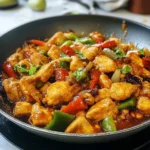
Ingredients
- Chicken (1.5 lbs boneless, skinless chicken thighs or breasts): The foundation of this dish is, of course, chicken. For the most tender and flavorful results, boneless, skinless chicken thighs are highly recommended. Thigh meat has a higher fat content than chicken breast, which keeps it moist and succulent during stir-frying and stands up well to the bold flavors of the Hunan sauce.
- Chicken Thighs vs. Chicken Breasts: While thighs are preferred, boneless, skinless chicken breasts can also be used. If using breasts, be mindful not to overcook them, as they can become dry. Cut chicken breasts into slightly larger pieces than you would thighs to help them retain moisture.
- Cutting the Chicken: Regardless of whether you choose thighs or breasts, cut the chicken into bite-sized pieces, about 1-inch cubes. Uniformly sized pieces will cook evenly in the stir-fry.
- Chicken Preparation (Optional but Recommended): For extra tender chicken, consider velveting the chicken. This involves marinating the chicken with cornstarch, egg white (optional), and Shaoxing wine or rice wine, then briefly blanching it in hot water or oil before stir-frying. This technique creates a silky smooth texture. For this recipe, a simpler marinade (detailed below) is sufficient for tender and flavorful chicken.
- Vegetables (Assortment of fresh vegetables, about 4-5 cups total, sliced or chopped): Fresh, crisp-tender vegetables are essential for Hunan Chicken, adding texture, flavor, and nutritional value. The beauty of stir-fries is their versatility, so feel free to mix and match your favorite vegetables.
- Classic Hunan Vegetables:
- Bell Peppers (2, any color, sliced): Bell peppers add sweetness and crunch. Red, green, yellow, or orange bell peppers all work well.
- Onions (1 medium, sliced): Yellow or white onions provide a savory base flavor.
- Broccoli Florets (1 head, cut into florets): Broccoli adds a hearty texture and absorbs the sauce beautifully.
- Mushrooms (8 oz, sliced): Shiitake, cremini, or white button mushrooms add an earthy umami flavor.
- Snap Peas or Snow Peas (1 cup): These add a delicate sweetness and a crisp snap.
- Carrots (2 medium, thinly sliced or julienned): Carrots add sweetness and color.
- Other Vegetable Options:
- Celery (2-3 stalks, sliced): Adds a refreshing crunch.
- Baby Corn (1 can, drained and halved): Adds sweetness and a unique texture.
- Water Chestnuts (1 can, drained and sliced): Adds a satisfying crunch.
- Zucchini or Summer Squash (1 medium, sliced): Adds a mild flavor and tender texture.
- Chinese Cabbage (Napa Cabbage) (2 cups, roughly chopped): Adds a mild, slightly sweet flavor and tender texture.
- Vegetable Preparation: Wash and chop all vegetables into bite-sized pieces. Ensure they are relatively uniform in size for even cooking in the stir-fry.
- Classic Hunan Vegetables:
- Aromatics (Fresh ginger, garlic, and scallions – the flavor backbone): Aromatics are crucial for building the complex flavor profile of Hunan Chicken. Freshness is key here.
- Fresh Ginger (2 tablespoons, minced): Ginger adds warmth, spice, and a distinctive aromatic note. Use fresh ginger for the best flavor. Peel the ginger before mincing.
- Fresh Garlic (3-4 cloves, minced): Garlic provides a pungent and savory base flavor. Use fresh garlic for the most robust flavor.
- Scallions (3-4, white and green parts separated and thinly sliced): Scallions add a mild oniony flavor and a fresh, vibrant finish. Separate the white and green parts; the white parts are stir-fried with the aromatics, while the green parts are used as a garnish at the end.
- Hunan Chili Paste (Laoganma Chili Crisp or Doubanjiang – the spice and depth): This is the heart of the “Hunan” flavor and the source of heat. Authentic Hunan cuisine often uses Doubanjiang (fermented broad bean chili paste), but Laoganma Chili Crisp is a popular and readily available alternative that provides a similar level of spice and umami.
- Laoganma Chili Crisp (2-3 tablespoons, or to taste): This chili oil with crispy chili flakes and soybeans adds intense flavor, spice, and texture. Start with 2 tablespoons and add more to taste, depending on your spice preference.
- Doubanjiang (Fermented Broad Bean Chili Paste) (1-2 tablespoons, or to taste): This is a more traditional Hunan chili paste. It is fermented and has a deeper, more complex umami flavor than chili crisp. It can be saltier, so adjust salt accordingly.
- Chili Garlic Sauce (Substitute – for less intense heat): If you prefer a milder dish or cannot find Hunan chili paste, chili garlic sauce (like Sambal Oelek) can be used as a less spicy substitute. You may need to add a touch more soy sauce or umami-rich ingredient if using chili garlic sauce as it lacks the fermented depth of Doubanjiang or Chili Crisp.
- Spice Level Adjustment: Hunan cuisine is known for its spiciness. Adjust the amount of chili paste to your spice tolerance. Start with a smaller amount and add more to taste. Remember, you can always add more spice, but it’s harder to take it away.
- Soy Sauce (3 tablespoons, low-sodium soy sauce preferred): Soy sauce provides saltiness and umami depth to the sauce. Low-sodium soy sauce is recommended to control the overall sodium content.
- Types of Soy Sauce: Light soy sauce is typically used in stir-fries for its saltiness and umami. Dark soy sauce can be added in a small amount for color and a slightly richer flavor, but it’s not essential for this recipe.
- Shaoxing Wine (2 tablespoons, Chinese cooking wine): Shaoxing wine adds a unique depth of flavor and aroma characteristic of Chinese cuisine.
- Substitutes for Shaoxing Wine: If you don’t have Shaoxing wine, dry sherry or dry white wine can be used as substitutes. Chicken broth or rice vinegar can also be used in a pinch, but they will lack the same complexity of flavor.
- Sesame Oil (1 teaspoon, toasted sesame oil): Toasted sesame oil adds a nutty aroma and flavor, used as a finishing oil to enhance the dish. Use toasted sesame oil, as regular sesame oil lacks the same intensity.
- Cornstarch (1 tablespoon): Cornstarch is used to thicken the sauce, creating a glossy and clingy coating for the chicken and vegetables.
- Cornstarch Slurry: Mix the cornstarch with 2 tablespoons of water to create a slurry before adding it to the stir-fry. This prevents clumps from forming.
- Sugar (1 teaspoon, granulated sugar or brown sugar): A touch of sugar balances the savory and spicy flavors, adding a subtle sweetness.
- Sugar Alternatives: Honey or maple syrup can be used as alternatives to granulated sugar, adding a slightly different flavor profile.
- Chicken Broth (1/2 cup, low-sodium chicken broth): Chicken broth adds moisture to the sauce and helps to bring all the flavors together. Low-sodium broth is preferred to control saltiness.
- Broth Variations: Vegetable broth or even water can be used as substitutes for chicken broth if needed.
- Cooking Oil (2-3 tablespoons, high-heat cooking oil): You’ll need a neutral, high-heat cooking oil for stir-frying.
- Suitable Oils: Vegetable oil, canola oil, peanut oil, or avocado oil are all good choices for stir-frying due to their high smoke points. Avoid olive oil, as it has a lower smoke point and can burn at high stir-fry temperatures.
- Optional Ingredients:
- Rice Vinegar (1 teaspoon): A touch of rice vinegar can add a subtle tang and brightness to the sauce.
- White Pepper (Pinch): White pepper adds a delicate heat and earthiness.
- Toasted Sesame Seeds (for garnish): Adds a nutty flavor and visual appeal.
- Roasted Peanuts or Cashews (for garnish): Adds crunch and nutty flavor, although not traditionally Hunan, they are a common addition in Americanized Chinese dishes.
Instructions
Step 1: Marinate the Chicken (At least 15-20 minutes, or up to 1 hour)
- Combine Marinade Ingredients: In a medium bowl, combine the bite-sized chicken pieces with 1 tablespoon of soy sauce, 1 tablespoon of Shaoxing wine (or substitute), and 1 teaspoon of cornstarch.
- Marinate the Chicken: Mix well with your hands or a spoon, ensuring the chicken is evenly coated in the marinade. Marinate for at least 15-20 minutes at room temperature, or for up to 1 hour in the refrigerator. Marinating tenderizes the chicken and infuses it with flavor.
Step 2: Prepare Vegetables and Aromatics (While chicken marinates)
- Prepare Vegetables: Wash and chop all your chosen vegetables into bite-sized pieces. Slice bell peppers, onions, mushrooms, carrots, celery, etc. Cut broccoli into florets, snap peas in half, etc. Have them ready to go in bowls, organized for easy access during stir-frying.
- Prepare Aromatics: Mince the fresh ginger and garlic. Thinly slice the scallions, separating the white and green parts. Keep the minced ginger, minced garlic, and white parts of scallions together in a small bowl. Keep the green parts of scallions aside for garnish.
Step 3: Make the Hunan Sauce (Quickly whisk together)
- Whisk Sauce Ingredients: In a small bowl, whisk together the remaining 2 tablespoons of soy sauce, 1 tablespoon of Shaoxing wine (or substitute), 2-3 tablespoons of Hunan chili paste (Laoganma or Doubanjiang), 1 teaspoon of sugar, 1/2 cup of chicken broth, and 1 teaspoon of sesame oil.
- Prepare Cornstarch Slurry: In a separate small bowl, whisk together 1 tablespoon of cornstarch with 2 tablespoons of water until smooth. This is your cornstarch slurry for thickening the sauce. Set aside.
Step 4: Stir-Fry the Chicken (High heat, quick cooking)
- Heat Wok or Skillet: Heat a wok or large skillet over high heat until it is very hot. You’ll know it’s ready when a drop of water evaporates almost instantly.
- Add Cooking Oil: Add 2-3 tablespoons of high-heat cooking oil to the hot wok or skillet. Swirl to coat the bottom and sides.
- Stir-Fry Chicken: Add the marinated chicken to the hot wok in a single layer (work in batches if necessary to avoid overcrowding). Stir-fry the chicken quickly, tossing and stirring constantly, until it is lightly browned and mostly cooked through, about 2-3 minutes. Remove the chicken from the wok and set aside. Don’t worry about cooking it completely at this stage, as it will finish cooking later with the vegetables and sauce.
Step 5: Stir-Fry Aromatics and Vegetables (Building flavor layers)
- Stir-Fry Aromatics: Add another tablespoon of cooking oil to the wok if needed. Add the minced ginger, minced garlic, and white parts of scallions to the hot wok. Stir-fry for about 30 seconds, until fragrant and slightly softened, being careful not to burn the garlic.
- Add Vegetables (in order of cooking time): Add the vegetables that take longer to cook first (like carrots, broccoli stems, onions). Stir-fry for 1-2 minutes. Then add the remaining vegetables (like bell peppers, broccoli florets, mushrooms, snap peas, etc.). Stir-fry for another 2-3 minutes, until the vegetables are crisp-tender – cooked through but still retaining some bite.
Step 6: Combine Chicken, Vegetables, and Sauce (Final stir-fry and thickening)
- Return Chicken to Wok: Return the stir-fried chicken to the wok with the vegetables.
- Pour in Hunan Sauce: Pour the prepared Hunan sauce over the chicken and vegetables. Stir-fry everything together, tossing to coat evenly with the sauce.
- Thicken the Sauce: Give the cornstarch slurry a quick whisk again (as cornstarch settles). Pour the cornstarch slurry into the wok. Stir-fry continuously for about 1-2 minutes, or until the sauce thickens and becomes glossy, coating the chicken and vegetables beautifully.
- Finish with Sesame Oil and Green Scallions: Stir in a final drizzle of sesame oil (about 1/2 teaspoon) for added aroma. Remove from heat and stir in most of the green parts of scallions (reserve some for garnish).
Step 7: Serve and Garnish (Enjoy immediately!)
- Serve Hot: Serve the Spicy Hunan Chicken immediately over hot cooked rice (white rice, brown rice, or jasmine rice) or noodles.
- Garnish: Garnish with the remaining green parts of scallions and, if desired, a sprinkle of toasted sesame seeds or roasted peanuts/cashews for extra texture and visual appeal.
Nutrition
- Serving Size: one normal portion
- Calories: 400-500
- Sugar: 5-8 grams
- Sodium: 800-1200 mg
- Fat: 30-40 grams
- Saturated Fat: 5-8 grams
- Carbohydrates: 20-30 grams
- Fiber: 4-6 grams
- Protein: 30-40 grams
- Cholesterol: 120-150 mg