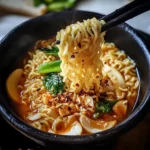
Ingredients
For the Broth Base:
- Sesame Oil: 1 tablespoon (toasted sesame oil preferred for its nutty aroma)
- Fresh Ginger: 2-inch piece, peeled and finely grated or minced
- Fresh Garlic: 4-6 cloves, minced
- Lemongrass (Optional but Recommended): 1 stalk, white and light green parts only, bruised and roughly chopped (or 1 teaspoon lemongrass paste)
- Red Curry Paste (Thai-style): 1-2 tablespoons (adjust to your spice preference and the brand’s heat level)
- Chili Garlic Sauce (e.g., Sambal Oelek or Sriracha): 1-2 teaspoons (adjust to your spice preference)
- Low-Sodium Chicken Broth or Vegetable Broth: 4 cups
- Full-Fat Coconut Milk: 1 can (13.5 – 14 ounces), well-shaken. Full-fat is crucial for creaminess.
- Soy Sauce (or Tamari for gluten-free): 2-3 tablespoons (low-sodium preferred)
- Lime Juice: 1-2 tablespoons, freshly squeezed (from about 1 lime)
- Brown Sugar or Maple Syrup (Optional): 1-2 teaspoons, to balance flavors if needed
For the Ramen & Protein:
- Dried Ramen Noodles: 2-3 packages (discard seasoning packets if using instant ramen, or use fresh ramen noodles)
- Protein of Choice (Optional):
- Chicken: 1 boneless, skinless chicken breast or thigh, thinly sliced
- Shrimp: 8-12 large shrimp, peeled and deveined
- Tofu: 1 block (14-16 ounces) extra-firm or firm tofu, pressed and cubed
- Eggs: 2-4 large eggs, for soft-boiled or ramen eggs
For Toppings & Garnishes (Customize to your heart’s content!):
- Fresh Spinach or Bok Choy: 2-3 cups, roughly chopped
- Mushrooms: ½ cup sliced (shiitake, cremini, or oyster mushrooms work well)
- Green Onions (Scallions): 2-3 stalks, thinly sliced (both white and green parts)
- Fresh Cilantro: ½ cup, chopped
- Red Bell Pepper: ½, thinly sliced
- Bean Sprouts: ½ cup
- Lime Wedges: For serving
- Sesame Seeds: Toasted, for garnish
- Crispy Chili Oil or Extra Chili Garlic Sauce: For drizzling
- Nori (Dried Seaweed Sheets): Cut into strips or squares
Instructions
- Prepare Your Ingredients (Mise en Place):
- Grate or mince the ginger and garlic. If using fresh lemongrass, bruise the stalk with the back of a knife and roughly chop it.
- Shake the can of coconut milk well.
- Prepare your chosen protein: thinly slice chicken, peel and devein shrimp, or press and cube tofu.
- Wash and chop/slice all your chosen vegetables and garnishes.
- This preparation will make the cooking process flow smoothly.
- Sauté Aromatics & Build Flavor Base:
- In a large pot or Dutch oven, heat the 1 tablespoon of sesame oil over medium heat.
- Add the grated ginger, minced garlic, and chopped lemongrass (if using). Sauté for 1-2 minutes until fragrant, stirring constantly to prevent burning.
- Stir in the red curry paste and chili garlic sauce. Cook for another 1-2 minutes, stirring continuously, until the pastes are fragrant and slightly darkened. This step “blooms” the spices and deepens their flavor.
- Create the Luscious Broth:
- Pour in the chicken or vegetable broth, scraping up any browned bits from the bottom of the pot.
- Add the well-shaken full-fat coconut milk and the soy sauce (or tamari).
- Bring the broth to a gentle simmer, then reduce the heat to low. Let it simmer gently for 10-15 minutes to allow the flavors to meld. Do not bring it to a rolling boil after adding coconut milk, as it can sometimes curdle (though less likely with full-fat).
- If using lemongrass stalks, you can remove them at this point if desired, or leave them in for more flavor (just remind diners to remove them before eating).
- Cook Protein (If Using):
- Chicken/Shrimp: While the broth simmers, you can cook your protein. If using thinly sliced chicken or shrimp, you can add it directly to the simmering broth and cook until the chicken is cooked through (about 5-7 minutes) or the shrimp turn pink and opaque (about 2-4 minutes). Remove with a slotted spoon and set aside, or leave in the broth.
- Tofu: For crispy tofu, pan-fry or bake the cubed tofu separately until golden brown while the broth simmers. You can also add uncooked tofu directly to the broth to simmer and absorb flavor.
- Eggs: If making soft-boiled or ramen eggs (Ajitsuke Tamago), prepare them according to your preferred method. This is often done in advance.
- Cook Ramen Noodles:
- In a separate pot, cook the ramen noodles according to package directions until just tender (al dente). Avoid overcooking, as they will continue to cook slightly in the hot broth.
- Drain the noodles well. You can toss them with a tiny bit of sesame oil to prevent sticking if not serving immediately. Do not cook the noodles directly in the ramen broth unless the package specifically instructs this, as it can make the broth starchy and overly thick.
- Add Final Touches to the Broth & Vegetables:
- Stir the fresh lime juice and optional brown sugar/maple syrup into the broth. Taste and adjust seasonings as needed – more soy sauce for saltiness/umami, more chili garlic sauce for spice, more lime for brightness, or a touch more sugar to balance.
- If using quick-cooking vegetables like spinach, bok choy, or mushrooms, add them to the hot broth in the last 2-3 minutes of simmering, just until they wilt or soften.
- Assemble Your Ramen Bowls:
- Divide the cooked ramen noodles among serving bowls.
- Ladle the hot, fragrant spicy coconut broth over the noodles.
- Arrange your cooked protein (chicken, shrimp, tofu, or sliced egg) on top of the noodles.
- Generously pile on your chosen fresh toppings and garnishes: sliced green onions, chopped cilantro, sliced red bell pepper, bean sprouts, sesame seeds, etc.
- Add a lime wedge to each bowl.
- Serve Immediately and Slurp Away!
- Serve the Spicy Coconut Ramen piping hot. Encourage diners to stir everything together and customize with extra chili oil or lime juice to their liking.
Nutrition
- Serving Size: one normal portion
- Calories: 550-750 calories.