
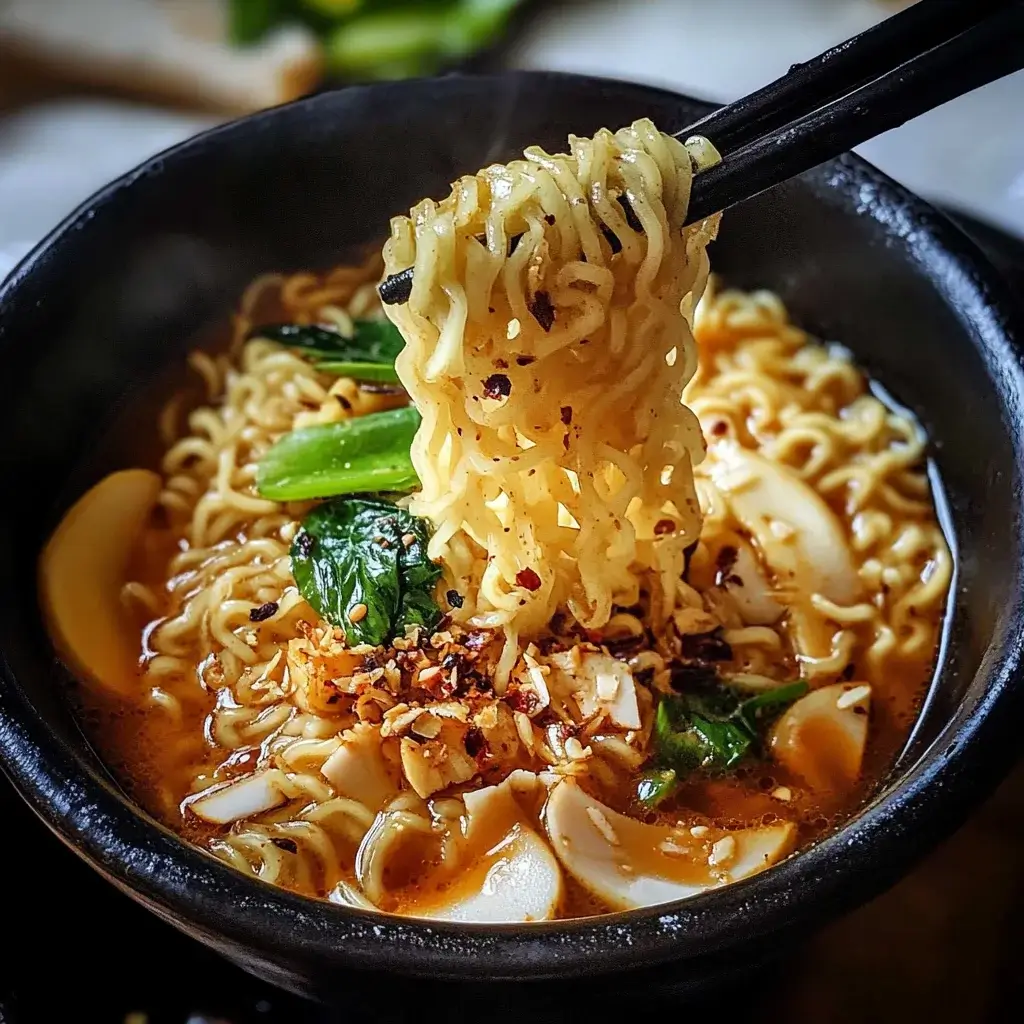

There are few things as comforting and utterly satisfying as a steaming bowl of ramen. But sometimes, you crave something with a bit more oomph, a bit more exotic flair. That’s exactly how this Spicy Coconut Ramen recipe came into my life. I was looking to elevate my usual instant ramen game, wanting a broth that was rich, creamy, spicy, and packed with umami. The fusion of coconut milk’s lusciousness with the fiery kick of chili garlic sauce and the aromatic depth of ginger and lemongrass was a revelation. The first time I made it, my kitchen filled with the most intoxicating aromas, and my family gathered around, bowls in hand, eager to try. The verdict? Unanimous love. The creamy, spicy broth coats the springy noodles perfectly, and the customizable toppings add layers of texture and freshness. It’s become our go-to for a quick yet incredibly flavorful weeknight dinner, a soul-soothing meal on a chilly day, and even an impressive dish for casual get-togethers. This isn’t just ramen; it’s an experience – a vibrant, flavor-packed journey in a bowl.
Ingredients for Fiery & Flavorful Spicy Coconut Ramen
To create this sensational Spicy Coconut Ramen, you’ll need a blend of aromatic spices, creamy coconut milk, and fresh ingredients that come together to create a truly memorable broth. Don’t be intimidated by the list; many items are pantry staples or easily found.
For the Broth Base:
- Sesame Oil: 1 tablespoon (toasted sesame oil preferred for its nutty aroma)
- Fresh Ginger: 2-inch piece, peeled and finely grated or minced
- Fresh Garlic: 4-6 cloves, minced
- Lemongrass (Optional but Recommended): 1 stalk, white and light green parts only, bruised and roughly chopped (or 1 teaspoon lemongrass paste)
- Red Curry Paste (Thai-style): 1-2 tablespoons (adjust to your spice preference and the brand’s heat level)
- Chili Garlic Sauce (e.g., Sambal Oelek or Sriracha): 1-2 teaspoons (adjust to your spice preference)
- Low-Sodium Chicken Broth or Vegetable Broth: 4 cups
- Full-Fat Coconut Milk: 1 can (13.5 – 14 ounces), well-shaken. Full-fat is crucial for creaminess.
- Soy Sauce (or Tamari for gluten-free): 2-3 tablespoons (low-sodium preferred)
- Lime Juice: 1-2 tablespoons, freshly squeezed (from about 1 lime)
- Brown Sugar or Maple Syrup (Optional): 1-2 teaspoons, to balance flavors if needed
For the Ramen & Protein:
- Dried Ramen Noodles: 2-3 packages (discard seasoning packets if using instant ramen, or use fresh ramen noodles)
- Protein of Choice (Optional):
- Chicken: 1 boneless, skinless chicken breast or thigh, thinly sliced
- Shrimp: 8-12 large shrimp, peeled and deveined
- Tofu: 1 block (14-16 ounces) extra-firm or firm tofu, pressed and cubed
- Eggs: 2-4 large eggs, for soft-boiled or ramen eggs
For Toppings & Garnishes (Customize to your heart’s content!):
- Fresh Spinach or Bok Choy: 2-3 cups, roughly chopped
- Mushrooms: ½ cup sliced (shiitake, cremini, or oyster mushrooms work well)
- Green Onions (Scallions): 2-3 stalks, thinly sliced (both white and green parts)
- Fresh Cilantro: ½ cup, chopped
- Red Bell Pepper: ½, thinly sliced
- Bean Sprouts: ½ cup
- Lime Wedges: For serving
- Sesame Seeds: Toasted, for garnish
- Crispy Chili Oil or Extra Chili Garlic Sauce: For drizzling
- Nori (Dried Seaweed Sheets): Cut into strips or squares
Step-by-Step Instructions to Ramen Nirvana
This Spicy Coconut Ramen comes together surprisingly quickly, making it perfect for a weeknight meal that feels like a special occasion. Follow these steps for a bowl of pure bliss:
- Prepare Your Ingredients (Mise en Place):
- Grate or mince the ginger and garlic. If using fresh lemongrass, bruise the stalk with the back of a knife and roughly chop it.
- Shake the can of coconut milk well.
- Prepare your chosen protein: thinly slice chicken, peel and devein shrimp, or press and cube tofu.
- Wash and chop/slice all your chosen vegetables and garnishes.
- This preparation will make the cooking process flow smoothly.
- Sauté Aromatics & Build Flavor Base:
- In a large pot or Dutch oven, heat the 1 tablespoon of sesame oil over medium heat.
- Add the grated ginger, minced garlic, and chopped lemongrass (if using). Sauté for 1-2 minutes until fragrant, stirring constantly to prevent burning.
- Stir in the red curry paste and chili garlic sauce. Cook for another 1-2 minutes, stirring continuously, until the pastes are fragrant and slightly darkened. This step “blooms” the spices and deepens their flavor.
- Create the Luscious Broth:
- Pour in the chicken or vegetable broth, scraping up any browned bits from the bottom of the pot.
- Add the well-shaken full-fat coconut milk and the soy sauce (or tamari).
- Bring the broth to a gentle simmer, then reduce the heat to low. Let it simmer gently for 10-15 minutes to allow the flavors to meld. Do not bring it to a rolling boil after adding coconut milk, as it can sometimes curdle (though less likely with full-fat).
- If using lemongrass stalks, you can remove them at this point if desired, or leave them in for more flavor (just remind diners to remove them before eating).
- Cook Protein (If Using):
- Chicken/Shrimp: While the broth simmers, you can cook your protein. If using thinly sliced chicken or shrimp, you can add it directly to the simmering broth and cook until the chicken is cooked through (about 5-7 minutes) or the shrimp turn pink and opaque (about 2-4 minutes). Remove with a slotted spoon and set aside, or leave in the broth.
- Tofu: For crispy tofu, pan-fry or bake the cubed tofu separately until golden brown while the broth simmers. You can also add uncooked tofu directly to the broth to simmer and absorb flavor.
- Eggs: If making soft-boiled or ramen eggs (Ajitsuke Tamago), prepare them according to your preferred method. This is often done in advance.
- Cook Ramen Noodles:
- In a separate pot, cook the ramen noodles according to package directions until just tender (al dente). Avoid overcooking, as they will continue to cook slightly in the hot broth.
- Drain the noodles well. You can toss them with a tiny bit of sesame oil to prevent sticking if not serving immediately. Do not cook the noodles directly in the ramen broth unless the package specifically instructs this, as it can make the broth starchy and overly thick.
- Add Final Touches to the Broth & Vegetables:
- Stir the fresh lime juice and optional brown sugar/maple syrup into the broth. Taste and adjust seasonings as needed – more soy sauce for saltiness/umami, more chili garlic sauce for spice, more lime for brightness, or a touch more sugar to balance.
- If using quick-cooking vegetables like spinach, bok choy, or mushrooms, add them to the hot broth in the last 2-3 minutes of simmering, just until they wilt or soften.
- Assemble Your Ramen Bowls:
- Divide the cooked ramen noodles among serving bowls.
- Ladle the hot, fragrant spicy coconut broth over the noodles.
- Arrange your cooked protein (chicken, shrimp, tofu, or sliced egg) on top of the noodles.
- Generously pile on your chosen fresh toppings and garnishes: sliced green onions, chopped cilantro, sliced red bell pepper, bean sprouts, sesame seeds, etc.
- Add a lime wedge to each bowl.
- Serve Immediately and Slurp Away!
- Serve the Spicy Coconut Ramen piping hot. Encourage diners to stir everything together and customize with extra chili oil or lime juice to their liking.
Nutrition Facts (Per Serving)
The nutritional profile of Spicy Coconut Ramen can vary significantly based on the type and amount of protein, noodles, and toppings used. Here’s an approximate breakdown for a reasonably portioned bowl:
- Servings: This recipe typically makes 2-3 generous servings or 4 smaller servings.
- Calories per serving (approximate, based on 3 servings with moderate toppings and chicken/tofu): 550-750 calories.
Key Nutritional Considerations:
- Fat: The full-fat coconut milk is a primary contributor to the fat content (mostly saturated fat from coconut). Sesame oil also adds fat.
- Carbohydrates: Primarily from the ramen noodles. Vegetables and any added sugar also contribute.
- Protein: Varies greatly depending on your choice. Chicken, shrimp, tofu, and eggs will significantly boost the protein content.
- Sodium: Can be high due to broth, soy sauce, and curry paste. Using low-sodium broth and soy sauce helps manage this.
- Vitamins & Minerals: Will depend on the vegetables and toppings chosen. Leafy greens, bell peppers, and mushrooms add valuable nutrients.
This dish can be quite balanced if loaded with vegetables and a lean protein source. The coconut milk provides richness and satiety.
Preparation Time: Surprisingly Quick for a Flavor Explosion
Despite its complex and layered flavors, this Spicy Coconut Ramen comes together with impressive speed, especially once you have your mise en place ready.
- Active Preparation Time (Mise en Place): 15-20 minutes (chopping vegetables, grating aromatics, preparing protein).
- Cooking Time: Approximately 20-30 minutes (sautéing aromatics, simmering broth, cooking noodles and protein).
- Total Time: Approximately 35-50 minutes from start to finish.
This makes it an excellent option for a weeknight dinner when you’re craving something special without spending hours in the kitchen.
How to Serve Your Sensational Spicy Coconut Ramen
Serving ramen is an art form in itself, allowing for personalization and visual appeal. Here’s how to make your Spicy Coconut Ramen experience truly top-notch:
- The Bowl Matters:
- Use large, deep ramen bowls if you have them. These allow ample space for broth, noodles, and a generous amount of toppings without spillage. Cereal bowls can work in a pinch, but ramen bowls enhance the experience.
- Layering is Key for Visual Appeal & Taste:
- Noodles First: Place a generous portion of cooked noodles at the bottom of the bowl.
- Broth Second: Carefully ladle the hot, fragrant spicy coconut broth over the noodles, ensuring they are well-submerged.
- Protein Third: Arrange your cooked protein (sliced chicken, shrimp, tofu, or halved soft-boiled egg) neatly on one side of the bowl.
- Vegetables & Greens: Place wilted spinach or bok choy, and any other cooked vegetables (like mushrooms) strategically around the protein.
- Fresh Garnishes Last: This is where you add pops of color and fresh flavor. Pile on:
- Thinly sliced green onions (scallions)
- Chopped fresh cilantro
- Thinly sliced red bell pepper
- Crisp bean sprouts
- Strips or squares of nori (dried seaweed)
- Toasted sesame seeds
- Condiments on the Side (The Customization Station):
- Lime Wedges: Always serve with extra lime wedges for a fresh spritz of acidity.
- Extra Chili Garlic Sauce or Crispy Chili Oil: For those who like it extra spicy.
- Soy Sauce/Tamari: For those who might want an extra touch of saltiness or umami.
- Toasted Sesame Oil: A tiny drizzle can enhance the nutty aroma.
- Utensils:
- Provide chopsticks for the noodles and toppings, and a large Asian-style soup spoon for the broth.
- Serving Temperature:
- Ramen is best served piping hot. Ensure the broth is very hot when ladled over the noodles.
- Make it an Event:
- If serving guests, consider setting up a “ramen bar” where everyone can customize their own toppings. Lay out all the prepared toppings in small bowls and let everyone build their perfect bowl.
The beauty of ramen is its versatility. Encourage everyone to mix their toppings into the broth and enjoy the combination of textures and flavors in every slurp!
Additional Tips for Perfecting Your Spicy Coconut Ramen
Elevate your Spicy Coconut Ramen from great to absolutely unforgettable with these five expert tips:
- Don’t Skimp on Aromatics & “Bloom” Your Spices:
- Fresh ginger, garlic, and lemongrass (if using) are foundational to the broth’s depth. Take the time to sauté them properly in sesame oil until fragrant.
- Crucially, “bloom” your red curry paste and chili garlic sauce by cooking them in the oil with the aromatics for a minute or two before adding liquids. This intensifies their flavor and color significantly.
- Use Full-Fat Coconut Milk for Creaminess:
- For that signature luscious, creamy broth, full-fat coconut milk is non-negotiable. Light coconut milk will result in a thinner, less satisfying broth. Shake the can very well before opening to ensure the cream and water are combined. Add it gently to the simmering broth and avoid a hard boil afterwards.
- Cook Noodles Separately & Don’t Overcook:
- Always cook your ramen noodles in a separate pot of boiling water according to package directions, aiming for al dente (slightly firm). If you cook them directly in the ramen broth, they can release too much starch, making the broth gluey and overly thick, and they are more likely to become mushy. Drain them well and add them to the bowls just before ladling over the hot broth.
- Taste and Adjust Broth Seasoning Religiously:
- The broth is the heart and soul of your ramen. After it has simmered and all main components (broth, coconut milk, soy sauce, curry paste) are in, taste it carefully. Does it need more saltiness (soy sauce)? More spice (chili garlic sauce)? More brightness (lime juice)? A touch of sweetness to balance (brown sugar/maple syrup)? Don’t be afraid to tweak it until it sings to your palate. Remember that different brands of curry paste and soy sauce vary in intensity.
- Go Wild with Toppings – Texture & Freshness are Key:
- Ramen is as much about the toppings as it is about the noodles and broth. Aim for a variety of textures and flavors:
- Crunchy: Bean sprouts, thinly sliced bell peppers, toasted sesame seeds.
- Fresh & Herbaceous: Cilantro, green onions.
- Umami Bombs: Soft-boiled ramen egg (Ajitsuke Tamago), nori.
- Leafy Greens: Spinach, bok choy.
- The contrast between the hot, savory broth and cool, crisp toppings is part of what makes ramen so addictive.
- Ramen is as much about the toppings as it is about the noodles and broth. Aim for a variety of textures and flavors:
Frequently Asked Questions (FAQ) about Spicy Coconut Ramen
Here are answers to some common questions you might have about crafting this delicious Spicy Coconut Ramen:
Q1: Can I make this ramen less spicy or more spicy?
A: Absolutely! The spice level is highly customizable.
* Less Spicy: Reduce the amount of red curry paste and chili garlic sauce significantly. You can start with just ½ tablespoon of mild red curry paste and a tiny dash (or omit) of chili garlic sauce. You can also choose a milder brand of red curry paste.
* More Spicy: Increase the amount of red curry paste and chili garlic sauce. You can also add a pinch of cayenne pepper, a few slices of fresh chili (like bird’s eye chili) when sautéing the aromatics, or serve with a potent chili oil on the side.
Q2: What kind of ramen noodles are best for this recipe?
A: You have several options:
* Dried Instant Ramen Noodles: These are widely available and work well. Just discard the seasoning packets that come with them.
* Fresh Ramen Noodles: Often found in the refrigerated section of Asian markets or larger grocery stores, these offer a superior texture and chewiness.
* Dried Straight Ramen Noodles (not instant): These are also a good option, often sold in bundles.
* Avoid using very thin vermicelli noodles or Italian pasta, as they won’t provide the classic ramen experience.
Q3: Can I make this Spicy Coconut Ramen vegan?
A: Yes, it’s very easy to make this ramen vegan:
* Broth: Use vegetable broth instead of chicken broth.
* Protein: Opt for tofu (pan-fried, baked, or simmered in the broth), edamame, or extra mushrooms.
* Fish Sauce (if your red curry paste contains it): Some red curry pastes contain shrimp paste or fish sauce. Check the label and choose a vegan brand. If your preferred brand isn’t vegan, you might need to add a little extra soy sauce or a dash of vegan fish sauce alternative for umami.
* Ensure all other ingredients (like soy sauce) are vegan-friendly.
Q4: How can I make a good soft-boiled egg (ramen egg) for topping?
A: For a classic ramen egg (Ajitsuke Tamago) with a jammy yolk:
1. Bring a pot of water to a rolling boil.
2. Gently lower large eggs (straight from the fridge) into the boiling water.
3. Boil for exactly 6 to 7 minutes (6 for runnier, 7 for jammier).
4. Immediately transfer the eggs to an ice bath for at least 5-10 minutes to stop the cooking process.
5. Peel carefully. For true Ajitsuke Tamago, you would then marinate the peeled eggs in a mixture of soy sauce, mirin, and sake (or water) for several hours or overnight, but even a plain soft-boiled egg is delicious.
Q5: Can I prepare parts of this ramen ahead of time?
A: Yes, several components can be prepped in advance to save time:
* Broth: The spicy coconut broth can be made up to 2-3 days in advance and stored in an airtight container in the refrigerator. Reheat gently on the stovetop.
* Protein: Cook chicken, shrimp, or tofu ahead of time. Ramen eggs can be made a day or two in advance and kept marinated.
* Vegetables & Garnishes: Chop most vegetables and garnishes a day ahead and store them in airtight containers in the fridge. Some delicate herbs like cilantro are best chopped just before serving.
* On serving day, you’ll just need to cook the noodles, reheat the broth (adding quick-cooking veggies then), and assemble the bowls.
Spicy Coconut Ramen recipe
Ingredients
For the Broth Base:
- Sesame Oil: 1 tablespoon (toasted sesame oil preferred for its nutty aroma)
- Fresh Ginger: 2-inch piece, peeled and finely grated or minced
- Fresh Garlic: 4-6 cloves, minced
- Lemongrass (Optional but Recommended): 1 stalk, white and light green parts only, bruised and roughly chopped (or 1 teaspoon lemongrass paste)
- Red Curry Paste (Thai-style): 1-2 tablespoons (adjust to your spice preference and the brand’s heat level)
- Chili Garlic Sauce (e.g., Sambal Oelek or Sriracha): 1-2 teaspoons (adjust to your spice preference)
- Low-Sodium Chicken Broth or Vegetable Broth: 4 cups
- Full-Fat Coconut Milk: 1 can (13.5 – 14 ounces), well-shaken. Full-fat is crucial for creaminess.
- Soy Sauce (or Tamari for gluten-free): 2-3 tablespoons (low-sodium preferred)
- Lime Juice: 1-2 tablespoons, freshly squeezed (from about 1 lime)
- Brown Sugar or Maple Syrup (Optional): 1-2 teaspoons, to balance flavors if needed
For the Ramen & Protein:
- Dried Ramen Noodles: 2-3 packages (discard seasoning packets if using instant ramen, or use fresh ramen noodles)
- Protein of Choice (Optional):
- Chicken: 1 boneless, skinless chicken breast or thigh, thinly sliced
- Shrimp: 8-12 large shrimp, peeled and deveined
- Tofu: 1 block (14-16 ounces) extra-firm or firm tofu, pressed and cubed
- Eggs: 2-4 large eggs, for soft-boiled or ramen eggs
For Toppings & Garnishes (Customize to your heart’s content!):
- Fresh Spinach or Bok Choy: 2-3 cups, roughly chopped
- Mushrooms: ½ cup sliced (shiitake, cremini, or oyster mushrooms work well)
- Green Onions (Scallions): 2-3 stalks, thinly sliced (both white and green parts)
- Fresh Cilantro: ½ cup, chopped
- Red Bell Pepper: ½, thinly sliced
- Bean Sprouts: ½ cup
- Lime Wedges: For serving
- Sesame Seeds: Toasted, for garnish
- Crispy Chili Oil or Extra Chili Garlic Sauce: For drizzling
- Nori (Dried Seaweed Sheets): Cut into strips or squares
Instructions
- Prepare Your Ingredients (Mise en Place):
- Grate or mince the ginger and garlic. If using fresh lemongrass, bruise the stalk with the back of a knife and roughly chop it.
- Shake the can of coconut milk well.
- Prepare your chosen protein: thinly slice chicken, peel and devein shrimp, or press and cube tofu.
- Wash and chop/slice all your chosen vegetables and garnishes.
- This preparation will make the cooking process flow smoothly.
- Sauté Aromatics & Build Flavor Base:
- In a large pot or Dutch oven, heat the 1 tablespoon of sesame oil over medium heat.
- Add the grated ginger, minced garlic, and chopped lemongrass (if using). Sauté for 1-2 minutes until fragrant, stirring constantly to prevent burning.
- Stir in the red curry paste and chili garlic sauce. Cook for another 1-2 minutes, stirring continuously, until the pastes are fragrant and slightly darkened. This step “blooms” the spices and deepens their flavor.
- Create the Luscious Broth:
- Pour in the chicken or vegetable broth, scraping up any browned bits from the bottom of the pot.
- Add the well-shaken full-fat coconut milk and the soy sauce (or tamari).
- Bring the broth to a gentle simmer, then reduce the heat to low. Let it simmer gently for 10-15 minutes to allow the flavors to meld. Do not bring it to a rolling boil after adding coconut milk, as it can sometimes curdle (though less likely with full-fat).
- If using lemongrass stalks, you can remove them at this point if desired, or leave them in for more flavor (just remind diners to remove them before eating).
- Cook Protein (If Using):
- Chicken/Shrimp: While the broth simmers, you can cook your protein. If using thinly sliced chicken or shrimp, you can add it directly to the simmering broth and cook until the chicken is cooked through (about 5-7 minutes) or the shrimp turn pink and opaque (about 2-4 minutes). Remove with a slotted spoon and set aside, or leave in the broth.
- Tofu: For crispy tofu, pan-fry or bake the cubed tofu separately until golden brown while the broth simmers. You can also add uncooked tofu directly to the broth to simmer and absorb flavor.
- Eggs: If making soft-boiled or ramen eggs (Ajitsuke Tamago), prepare them according to your preferred method. This is often done in advance.
- Cook Ramen Noodles:
- In a separate pot, cook the ramen noodles according to package directions until just tender (al dente). Avoid overcooking, as they will continue to cook slightly in the hot broth.
- Drain the noodles well. You can toss them with a tiny bit of sesame oil to prevent sticking if not serving immediately. Do not cook the noodles directly in the ramen broth unless the package specifically instructs this, as it can make the broth starchy and overly thick.
- Add Final Touches to the Broth & Vegetables:
- Stir the fresh lime juice and optional brown sugar/maple syrup into the broth. Taste and adjust seasonings as needed – more soy sauce for saltiness/umami, more chili garlic sauce for spice, more lime for brightness, or a touch more sugar to balance.
- If using quick-cooking vegetables like spinach, bok choy, or mushrooms, add them to the hot broth in the last 2-3 minutes of simmering, just until they wilt or soften.
- Assemble Your Ramen Bowls:
- Divide the cooked ramen noodles among serving bowls.
- Ladle the hot, fragrant spicy coconut broth over the noodles.
- Arrange your cooked protein (chicken, shrimp, tofu, or sliced egg) on top of the noodles.
- Generously pile on your chosen fresh toppings and garnishes: sliced green onions, chopped cilantro, sliced red bell pepper, bean sprouts, sesame seeds, etc.
- Add a lime wedge to each bowl.
- Serve Immediately and Slurp Away!
- Serve the Spicy Coconut Ramen piping hot. Encourage diners to stir everything together and customize with extra chili oil or lime juice to their liking.
Nutrition
- Serving Size: one normal portion
- Calories: 550-750 calories.