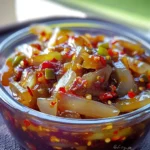
Ingredients
-
- Green Tomatoes: 4 cups, finely diced (about 2 lbs or 6-8 medium)
-
- Cabbage: 4 cups, finely shredded or chopped (about 1 small head)
-
- Onions: 2 cups, finely diced (about 2 large)
-
- Bell Peppers: 2 cups, finely diced (a mix of red and green for color, about 2 large)
-
- Spicy Peppers: ½ to 1 cup, finely minced (e.g., jalapeños, serranos; adjust to your spice preference; remove seeds and membranes for less heat)
-
- Canning or Pickling Salt: ¼ cup (do NOT use iodized table salt, as it can make the brine cloudy and affect flavor)
-
- Apple Cider Vinegar (5% acidity): 3 cups
-
- Granulated Sugar: 2 ½ cups (can adjust slightly to taste, but sugar is important for preservation and flavor balance)
-
- Mustard Seeds (Yellow): 2 tablespoons
-
- Celery Seeds: 1 tablespoon
-
- Turmeric Powder: 1 teaspoon (for color and earthy flavor)
-
- Ground Ginger: ½ teaspoon (optional, for a hint of warmth)
-
- Red Pepper Flakes: ½ teaspoon (optional, for extra visual spice and heat)
Instructions
-
- Chop the Vegetables: Wash all your vegetables thoroughly. Finely dice the green tomatoes, onions, and bell peppers. Finely shred or chop the cabbage. Mince the spicy peppers (wear gloves when handling hot peppers to avoid skin irritation!). Aim for a relatively uniform size so the relish cooks evenly and has a pleasant texture. A food processor can be used for chopping, but pulse carefully to avoid turning the vegetables into mush – you want distinct pieces.
-
- Salt the Vegetables: In a very large non-reactive bowl (glass, stainless steel, or ceramic), combine all the chopped green tomatoes, cabbage, onions, bell peppers, and spicy peppers.
-
- Add Salt: Sprinkle the ¼ cup of canning or pickling salt over the vegetables and toss gently but thoroughly to ensure the salt is evenly distributed.
-
- Rest and Drain: Cover the bowl with plastic wrap or a clean kitchen towel and let it sit at room temperature for at least 4-6 hours, or preferably overnight in the refrigerator. The salt will draw out excess moisture from the vegetables, which is essential for a crisp relish and proper preservation.
-
- Drain Thoroughly: After the resting period, you’ll notice a significant amount of liquid has accumulated in the bowl. Transfer the vegetables to a colander and rinse them very well under cold running water to remove the excess salt. Let them drain in the colander for at least 30 minutes, pressing gently to remove as much water as possible. Some people even wrap the vegetables in a cheesecloth or a clean kitchen towel and squeeze out more liquid. This step is vital for the final texture.
Part 2: Cooking and Canning the Relish
-
- Prepare Canning Jars (If Canning): If you are canning the relish for shelf-stability, wash your jars, lids, and bands in hot, soapy water. Rinse well. Keep the jars hot (e.g., in a simmering water bath, a low oven, or the dishwasher on a sanitize cycle) until ready to fill. Place the lids in a small saucepan with water and bring to a simmer (do not boil). Keep them hot.
-
- Make the Pickling Brine: In a large, heavy-bottomed stainless steel or enamel pot (do not use aluminum or copper, as they can react with the vinegar), combine the apple cider vinegar, granulated sugar, mustard seeds, celery seeds, turmeric powder, ground ginger (if using), and red pepper flakes (if using).
-
- Dissolve Sugar: Bring the brine mixture to a boil over medium-high heat, stirring frequently until the sugar is completely dissolved.
-
- Add Drained Vegetables: Add the thoroughly drained and rinsed vegetables to the boiling brine. Stir well to combine.
-
- Cook the Relish: Return the mixture to a boil, then reduce the heat to medium-low and simmer, uncovered, for about 20-30 minutes, or until the vegetables are tender-crisp and the relish has thickened slightly. Stir occasionally to prevent sticking. The exact cooking time will depend on how finely your vegetables are chopped and your desired tenderness. Avoid overcooking, as you don’t want mushy relish. Taste carefully (it will be hot!) and adjust sugar or spice if needed, though it’s best to make major spice adjustments with the raw peppers.
-
- Fill the Jars (If Canning):
-
- Carefully ladle the hot relish into the prepared hot jars, leaving ½-inch headspace (the space between the top of the relish and the rim of the jar). A canning funnel is very helpful here.
-
- Remove any air bubbles by sliding a non-metallic utensil (like a bubble remover tool or a thin wooden skewer) around the inside of the jar.
-
- Wipe the jar rims clean with a damp cloth to ensure a good seal.
-
- Center the hot lids on the jars and screw on the bands until fingertip tight (not too tight, as air needs to escape during processing).
-
- Fill the Jars (If Canning):
-
- Process in Boiling Water Bath (If Canning):
-
- Carefully place the filled jars onto a rack in a large pot with enough simmering water to cover the jars by at least 1-2 inches.
-
- Bring the water to a rolling boil. Once boiling, cover the pot and process pint jars for 10 minutes (adjust processing time based on your altitude if necessary).
-
- After processing, turn off the heat, remove the pot lid, and let the jars sit in the hot water for 5 minutes before removing.
-
- Carefully remove the jars using a jar lifter and place them upright on a towel-lined surface, leaving space between them to cool completely (12-24 hours). Do not disturb them during this time. You should hear the “pop” of the lids sealing.
-
- Process in Boiling Water Bath (If Canning):
-
- Check Seals and Store (If Canned): Once cooled, check the seals by pressing the center of each lid. If it doesn’t flex up and down, it’s sealed. If a jar hasn’t sealed, refrigerate it and use it within a few weeks. Label sealed jars and store them in a cool, dark, dry place for up to 1 year (or longer, though quality may diminish over time).
-
- For Refrigerator Relish (If Not Canning): If you choose not to process the relish in a boiling water bath, let the cooked relish cool slightly, then ladle it into clean jars or containers. Once completely cool, store it in the refrigerator. It will keep well for several weeks, often improving in flavor as it sits.
Nutrition
- Serving Size: one normal portion
- Calories: 20-40