Ingredients
-
- Spaghetti Squash: The star of the show, spaghetti squash provides the base for our noodle-like strands, offering a naturally sweet and subtly nutty flavor, along with a satisfying texture. Choose a mature spaghetti squash that feels heavy for its size and has a hard, smooth rind. Avoid squashes with soft spots or blemishes. You’ll need 1 medium-sized spaghetti squash (about 2-3 pounds). Look for squashes that are uniformly pale yellow in color, indicating ripeness.
-
- Assorted Vegetables for Roasting: The beauty of this recipe lies in its versatility – you can use a wide variety of vegetables for roasting, creating a rainbow of colors, flavors, and textures. Aim for a mix of root vegetables, cruciferous vegetables, and other favorites. Some excellent choices include:
- Bell Peppers: Choose 2-3 bell peppers of different colors (red, yellow, orange) for sweetness and visual appeal. They roast beautifully, becoming slightly sweet and tender.
- Red Onion: 1 large red onion adds a pungent and slightly sweet flavor when roasted. It caramelizes beautifully, adding depth to the dish.
- Broccoli Florets: 1 large head of broccoli, cut into florets, provides a slightly bitter and earthy flavor that balances the sweetness of other vegetables. Broccoli roasts to a tender-crisp texture.
- Carrots: 2-3 large carrots, peeled and chopped into rounds or sticks, add sweetness and a vibrant orange color. Carrots become tender and slightly caramelized when roasted.
- Zucchini or Yellow Squash: 2 medium zucchini or yellow squash, chopped, offer a mild flavor and tender texture. They roast quickly and add moisture to the vegetable mix.
- Cherry Tomatoes: 1 pint of cherry tomatoes (or grape tomatoes) burst in the oven, releasing their sweet and tangy juices. They add a burst of freshness and acidity.
- Mushrooms: 8 ounces of mushrooms (cremini, button, or a mix), sliced or quartered, add an earthy and umami-rich flavor. Mushrooms become tender and slightly browned when roasted.
- Eggplant: 1 small eggplant, cubed, provides a meaty texture and mild flavor that absorbs other flavors well. Eggplant roasts to a soft and creamy texture.
- Sweet Potatoes or Butternut Squash: For added sweetness and heartiness, you can include cubed sweet potatoes or butternut squash. Adjust roasting times accordingly as they may take longer to cook.
Choose 4-5 different types of vegetables for a balanced and flavorful mix, aiming for about 4-5 cups of chopped vegetables in total. Feel free to use seasonal vegetables or your personal favorites.
- Assorted Vegetables for Roasting: The beauty of this recipe lies in its versatility – you can use a wide variety of vegetables for roasting, creating a rainbow of colors, flavors, and textures. Aim for a mix of root vegetables, cruciferous vegetables, and other favorites. Some excellent choices include:
-
- Olive Oil: Olive oil is essential for roasting vegetables, helping them to caramelize and develop flavor, as well as preventing them from drying out. Extra virgin olive oil is recommended for its superior flavor and health benefits, but regular olive oil can also be used. You’ll need about 4-5 tablespoons of olive oil, divided between roasting vegetables and dressing the spaghetti squash.
-
- Garlic: Garlic adds a pungent and aromatic base flavor to both the roasted vegetables and the dressing, enhancing the overall savory notes of the dish. Fresh garlic is preferred for the best flavor. You’ll need about 4-5 cloves of garlic, minced or pressed – some for roasting with the vegetables, and some for the dressing. Garlic powder can be used as a substitute in a pinch, but fresh garlic is highly recommended.
-
- Fresh Herbs (Optional but Recommended): Fresh herbs elevate the flavor of roasted vegetables and spaghetti squash, adding brightness and complexity. Excellent choices include:
- Rosemary: 1-2 sprigs of fresh rosemary (or 1 teaspoon dried rosemary) adds a piney and earthy aroma that pairs beautifully with roasted vegetables.
- Thyme: 2-3 sprigs of fresh thyme (or 1 teaspoon dried thyme) provides a subtle earthy and slightly minty flavor.
- Oregano: 1-2 teaspoons of fresh oregano (or ½ teaspoon dried oregano) adds a slightly pungent and peppery flavor, especially good with Mediterranean-style vegetables.
- Basil: Fresh basil leaves, chopped and added after roasting, provide a sweet and aromatic finish.
- Parsley: Fresh parsley, chopped and used as a garnish, adds freshness and a clean, herbaceous note.
Choose 1-2 fresh herbs for roasting and consider fresh basil or parsley for garnish. Dried herbs can be used if fresh are unavailable.
- Fresh Herbs (Optional but Recommended): Fresh herbs elevate the flavor of roasted vegetables and spaghetti squash, adding brightness and complexity. Excellent choices include:
-
- Balsamic Vinegar (for Dressing): Balsamic vinegar adds a touch of sweetness and acidity to the dressing, balancing the savory flavors and enhancing the natural sweetness of the roasted vegetables and spaghetti squash. Good quality balsamic vinegar is recommended for the best flavor. You’ll need about 2-3 tablespoons of balsamic vinegar.
-
- Lemon Juice (for Dressing): Fresh lemon juice adds brightness and acidity to the dressing, complementing the balsamic vinegar and adding a zesty note. Freshly squeezed lemon juice is preferred for the best flavor. You’ll need about 1-2 tablespoons of fresh lemon juice.
-
- Maple Syrup or Honey (Optional, for Dressing): A touch of maple syrup or honey can be added to the dressing to enhance the sweetness and balance the acidity, especially if using balsamic vinegar that is less sweet. This is optional and can be adjusted to your taste. You’ll need about ½ – 1 teaspoon of maple syrup or honey (or other sweetener like agave or a pinch of sugar). For a vegan option, ensure you use maple syrup or agave.
-
- Red Pepper Flakes (Optional, for Dressing): A pinch of red pepper flakes adds a subtle hint of heat to the dressing, providing a pleasant contrast to the sweetness and savory flavors. This is optional and can be omitted or adjusted to your spice preference. You’ll need just a pinch of red pepper flakes.
-
- Salt and Black Pepper: Essential seasonings to enhance all the flavors in the dish. Kosher salt or sea salt is recommended. Freshly ground black pepper provides the best flavor. Season to taste throughout the cooking process, both for the vegetables before roasting and in the dressing.
Instructions
-
- Prepare the Spaghetti Squash: Preheat oven to 400°F (200°C). Carefully halve the spaghetti squash lengthwise using a sharp knife. Scoop out and discard the seeds and stringy pulp from both halves. Drizzle the cut sides of the squash with 1-2 tablespoons of olive oil and season generously with salt and black pepper. Place the squash halves cut-side down on a baking sheet.
-
- Roast the Spaghetti Squash: Roast the spaghetti squash in the preheated oven for 40-50 minutes, or until the squash is tender and the flesh can be easily pierced with a fork. Roasting time will vary depending on the size of your squash. You should be able to easily scoop out the flesh when it’s done.
-
- Prepare the Vegetables for Roasting: While the spaghetti squash is roasting, prepare your chosen vegetables. Wash and chop all vegetables into roughly similar-sized pieces (about 1-inch pieces for root vegetables, larger for bell peppers and onions). For cherry tomatoes, leave them whole. Place all the chopped vegetables (except cherry tomatoes and delicate greens like spinach, if using) in a large bowl.
-
- Season and Roast the Vegetables: Drizzle the chopped vegetables with 2-3 tablespoons of olive oil. Add minced garlic (2-3 cloves), chopped fresh herbs (rosemary, thyme, or oregano, if using), salt, and black pepper to taste. Toss everything together thoroughly to ensure the vegetables are evenly coated with oil and seasonings. Spread the seasoned vegetables in a single layer on a large baking sheet (you may need two baking sheets to avoid overcrowding). Add cherry tomatoes to the baking sheet as well. Roast the vegetables in the oven alongside the spaghetti squash for the last 20-25 minutes of the squash roasting time, or until the vegetables are tender-crisp and lightly caramelized, stirring halfway through. Ensure vegetables are in a single layer for even roasting.
-
- Make the Dressing: While the vegetables are roasting, prepare the balsamic dressing. In a small bowl, whisk together balsamic vinegar, lemon juice, minced garlic (2 cloves), maple syrup or honey (if using), red pepper flakes (if using), 2 tablespoons of olive oil, salt, and black pepper to taste. Whisk until all ingredients are well combined and emulsified. Taste and adjust seasonings to your preference.
-
- Prepare Spaghetti Squash Noodles: Once the spaghetti squash is roasted and cool enough to handle, use a fork to scrape the flesh from the inside of each half, creating spaghetti-like strands. Scoop all the spaghetti squash strands into a large bowl. Discard the squash skins.
-
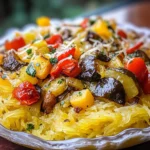
- Combine and Serve: Add the roasted vegetables to the bowl with the spaghetti squash noodles. Pour the balsamic dressing over the spaghetti squash and roasted vegetables. Toss gently to combine everything, ensuring the noodles and vegetables are evenly coated with the dressing. Taste and adjust seasoning if needed. Garnish with fresh basil or parsley, if desired. Serve warm or at room temperature.
Nutrition
- Serving Size: one normal portion
- Calories: 250-350 kcal
- Sugar: 10-15g
- Sodium: 200-300mg
- Fat: 15-20g
- Saturated Fat: 2-3g
- Carbohydrates: 30-40g
- Fiber: 8-10g
- Protein: 5-7g