Ingredients
Scale
- Chicken:
- 6–8 bone-in, skin-on chicken thighs and/or drumsticks (approximately 2.5–3 lbs). Bone-in, skin-on chicken pieces are essential for maximum flavor and moisture in slow cooking. The bones release collagen as they cook, enriching the sauce and keeping the chicken incredibly tender. The skin, while it won’t crisp up in the slow cooker, renders its fat, contributing to the overall richness of the dish. You can use a mix of thighs and drumsticks, or even a whole chicken cut into pieces. For a leaner option, you can use boneless, skinless chicken thighs, but be aware that the sauce might be slightly less rich, and the chicken might be a bit drier. In that case, consider adding a tablespoon of olive oil to the slow cooker.
- Vegetables: The Heart of the Cacciatore
- 1 large onion, chopped. Onions form the aromatic base of many Italian dishes, and Chicken Cacciatore is no exception. As the onion slow cooks, it sweetens and mellows, adding depth and complexity to the sauce. Yellow or white onions work best.
- 2 bell peppers (any color, or a mix), seeded and sliced. Bell peppers bring sweetness, color, and a slightly smoky flavor to the dish. Red, yellow, and orange bell peppers are sweeter, while green bell peppers have a slightly more bitter edge. A mix of colors not only looks beautiful but also adds layers of flavor.
- 2 cloves garlic, minced. Garlic is a must in Italian cooking, providing a pungent, savory note that complements the other ingredients perfectly. Freshly minced garlic is always preferred for its robust flavor, but in a pinch, you can use pre-minced garlic from a jar.
- 8 oz cremini mushrooms, sliced or quartered. Mushrooms add an earthy, umami richness to the Cacciatore. Cremini mushrooms, also known as baby bellas, have a deeper flavor than white button mushrooms and hold their shape well during slow cooking. You can also use other varieties like shiitake or portobello for a different flavor profile.
- Tomatoes: The Tangy Foundation
- 28 oz can crushed tomatoes. Crushed tomatoes form the base of the flavorful sauce. Look for good quality crushed tomatoes for the best flavor. Fire-roasted crushed tomatoes will add a subtle smoky dimension.
- 14.5 oz can diced tomatoes, undrained. Diced tomatoes add texture and a brighter tomato flavor to the sauce. Undrained tomatoes ensure you capture all the flavorful juices.
- Flavor Boosters: Herbs, Wine, and More
- 1 cup dry red wine (such as Chianti, Merlot, or Cabernet Sauvignon). Red wine adds depth and complexity to the sauce. As it simmers, the alcohol cooks off, leaving behind a rich, fruity, and slightly acidic flavor that balances the sweetness of the tomatoes and peppers. If you prefer not to use wine, you can substitute with chicken broth or vegetable broth, but the flavor will be slightly less complex.
- 1/4 cup tomato paste. Tomato paste is a concentrated form of tomatoes that adds a deep, umami richness and intensifies the tomato flavor of the sauce.
- 2 tablespoons olive oil. Olive oil is used for browning the chicken and vegetables, which adds an extra layer of flavor. It also contributes to the richness of the sauce.
- 2 teaspoons dried oregano. Oregano is a classic Italian herb that brings a warm, slightly peppery, and aromatic flavor to the dish.
- 1 teaspoon dried basil. Basil adds a sweet, slightly peppery, and fragrant note that complements the oregano and tomatoes beautifully.
- 1/2 teaspoon dried thyme. Thyme adds a subtle earthy and slightly minty flavor that rounds out the herb blend.
- 1/2 teaspoon red pepper flakes (optional, for a touch of heat). Red pepper flakes add a gentle warmth and a touch of spice. Adjust the amount to your preference, or omit if you prefer a completely mild dish.
- Salt and freshly ground black pepper to taste. Seasoning is crucial! Salt enhances the flavors of all the ingredients, and black pepper adds a subtle bite. Be sure to season generously at each stage of the cooking process.
- Fresh parsley, chopped (for garnish, optional). Fresh parsley adds a bright, fresh, and herbaceous touch to the finished dish, both visually and flavor-wise.
Instructions
Step 1: Sear the Chicken (Optional but Highly Recommended)
- While searing the chicken is an optional step, it significantly enhances the flavor and texture of the final dish. Searing creates a beautiful golden-brown crust on the chicken skin, adding depth of flavor and visual appeal. This process, known as the Maillard reaction, develops complex flavors that simply simmering in the slow cooker cannot achieve.
- Heat olive oil in a large skillet over medium-high heat. Make sure the skillet is large enough to accommodate the chicken pieces without overcrowding. Working in batches if necessary is better than overcrowding the pan, which will steam the chicken instead of searing it.
- Season chicken pieces generously with salt and pepper. Don’t be shy with the seasoning! This is your chance to build flavor from the very beginning.
- Place chicken pieces skin-side down in the hot skillet and sear for 3-4 minutes per side, or until nicely browned. You are not cooking the chicken through at this stage, just browning the exterior. The goal is to develop color and flavor. Remove chicken from skillet and set aside.
Step 2: Sauté the Vegetables (Enhancing Aromatics)
- In the same skillet used for searing the chicken (don’t wipe it clean – those browned bits at the bottom, called fond, are packed with flavor!), add chopped onions and bell peppers. Sauté over medium heat for 5-7 minutes, or until softened and slightly caramelized. Stir occasionally to prevent burning and ensure even cooking.
- Add minced garlic and sliced mushrooms to the skillet. Cook for another 3-5 minutes, or until mushrooms are softened and have released their moisture. Stir frequently to prevent garlic from burning. The vegetables should be fragrant and slightly tender at this stage.
- Stir in tomato paste and red pepper flakes (if using). Cook for 1 minute more, stirring constantly. Cooking the tomato paste briefly intensifies its flavor and removes any raw taste. The red pepper flakes will bloom in the heat, releasing their subtle spice.
Step 3: Deglaze the Skillet (Capturing Flavor)
- Pour red wine into the skillet, scraping up any browned bits from the bottom of the pan. This process, called deglazing, is crucial for capturing all the flavorful fond created during searing and sautéing. The wine will lift these flavorful bits and incorporate them into the sauce.
- Bring the wine to a simmer and let it reduce slightly for 2-3 minutes. Reducing the wine concentrates its flavors and removes some of the alcohol.
Step 4: Combine Ingredients in the Slow Cooker
- Transfer the sautéed vegetable mixture from the skillet to the slow cooker.
- Add crushed tomatoes, diced tomatoes (undrained), dried oregano, dried basil, and dried thyme to the slow cooker. Stir to combine all the ingredients and create a flavorful sauce base.
- Place the seared chicken pieces on top of the vegetable and tomato mixture in the slow cooker. Arrange the chicken so that it is mostly submerged in the sauce.
Step 5: Slow Cook to Perfection
- Cover the slow cooker and cook on low heat for 6-8 hours, or on high heat for 3-4 hours. The cooking time will depend on your slow cooker and the size of your chicken pieces. The chicken is done when it is cooked through and easily pulls apart with a fork. The sauce will thicken and become richly flavorful as it slow cooks.
- If cooking on high, check the chicken for doneness after 3 hours. If cooking on low, check after 6 hours. You want the chicken to be incredibly tender and falling off the bone.
Step 6: Shred Chicken and Thicken Sauce (If Needed)
- Once the chicken is cooked through, carefully remove it from the slow cooker using tongs or a slotted spoon. Place the chicken on a cutting board.
- Using two forks, shred the chicken, discarding the bones and skin (if desired). You can leave some larger pieces of chicken for texture if you prefer.
- Return the shredded chicken to the slow cooker and stir it into the sauce.
- If you prefer a thicker sauce, you can thicken it at this stage. There are a few options:
- Cornstarch Slurry: In a small bowl, whisk together 1-2 tablespoons of cornstarch with 2-3 tablespoons of cold water until smooth. Stir the slurry into the slow cooker. Cook on high for another 15-20 minutes, or until the sauce has thickened to your desired consistency, stirring occasionally.
- Remove Liquid and Reduce: Alternatively, you can remove about 1 cup of liquid from the slow cooker and transfer it to a saucepan. Bring the liquid to a simmer over medium-high heat and cook until it has reduced and thickened slightly. Return the reduced liquid to the slow cooker and stir.
Step 7: Season and Serve
- Taste the Chicken Cacciatore and adjust seasoning as needed. Add more salt, pepper, or red pepper flakes to taste. A squeeze of fresh lemon juice can also brighten the flavors.
- Garnish with fresh parsley, if desired.
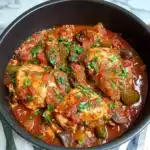
- Serve hot and enjoy your homemade Slow Cooker Chicken Cacciatore!
Nutrition
- Serving Size: one normal portion
- Calories: 350-450
- Sugar: 8-12 grams
- Sodium: 500-700 mg
- Fat: 15-25 grams
- Saturated Fat: 4-8 grams
- Carbohydrates: 15-20 grams
- Fiber: 4-6 grams
- Protein: 35-45 grams
- Cholesterol: 150-200 mg.