
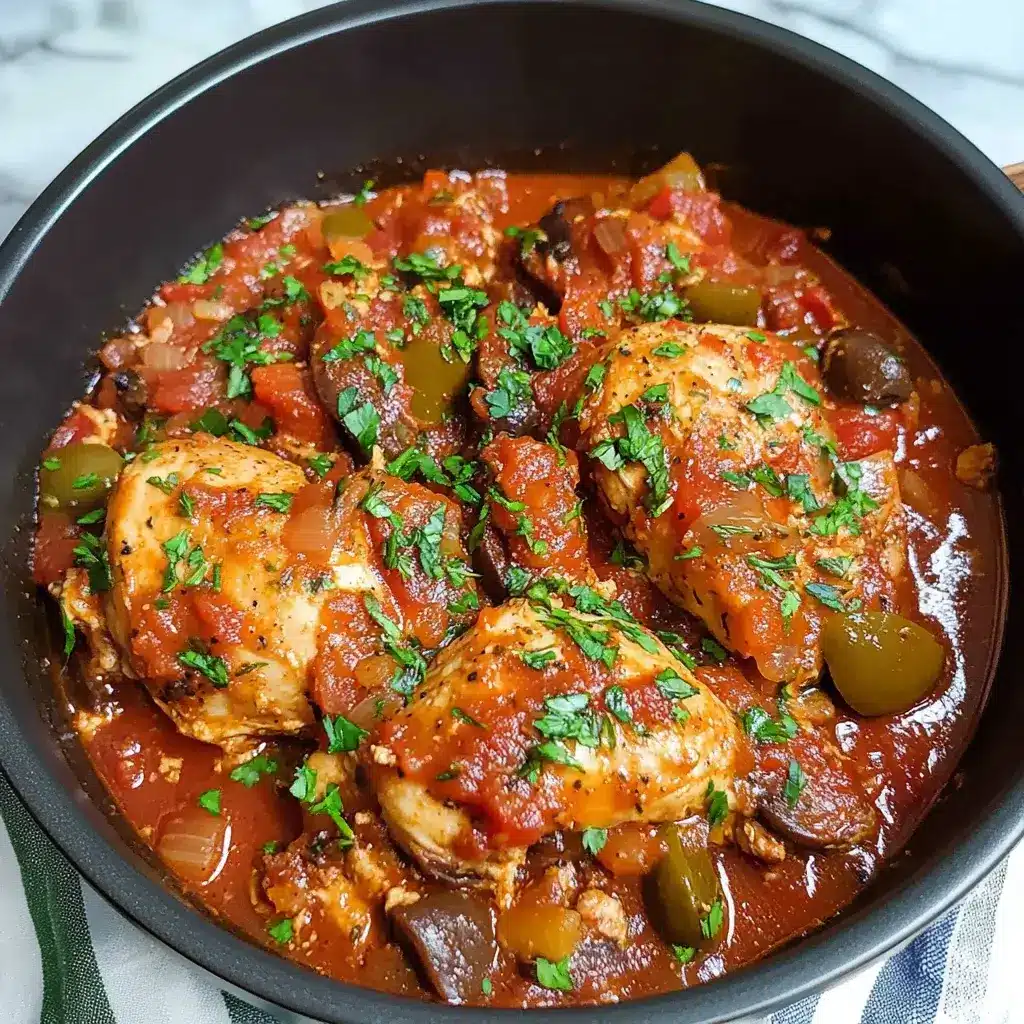

After a long day, there’s nothing quite like walking into a home filled with the rich, savory aroma of dinner practically cooking itself. That’s the magic of this Slow Cooker Chicken Cacciatore recipe. For years, weeknight dinners at our house were a chaotic dance of chopping, sautéing, and simmering, but then I discovered the slow cooker, and recipes like this became game-changers. This Chicken Cacciatore, in particular, has become a family favorite. The chicken emerges incredibly tender, practically falling off the bone, infused with the vibrant flavors of tomatoes, peppers, onions, and herbs. Even my pickiest eater, who usually shies away from vegetables, happily devours this dish, especially when served over a bed of creamy polenta or fluffy mashed potatoes. It’s hearty, healthy, and unbelievably easy – a true weeknight win that feels like a weekend feast. If you’re looking for a comforting, flavorful meal that practically cooks itself, look no further. This Slow Cooker Chicken Cacciatore is about to become your new go-to recipe.
Ingredients: Your Shopping List for Flavorful Slow Cooker Chicken Cacciatore
To create this delectable Slow Cooker Chicken Cacciatore, you’ll need a collection of fresh, flavorful ingredients that come together beautifully in the slow cooker. Let’s break down each component and why it plays a crucial role in building the rich, savory character of this classic Italian dish.
- Chicken:
- 6-8 bone-in, skin-on chicken thighs and/or drumsticks (approximately 2.5-3 lbs). Bone-in, skin-on chicken pieces are essential for maximum flavor and moisture in slow cooking. The bones release collagen as they cook, enriching the sauce and keeping the chicken incredibly tender. The skin, while it won’t crisp up in the slow cooker, renders its fat, contributing to the overall richness of the dish. You can use a mix of thighs and drumsticks, or even a whole chicken cut into pieces. For a leaner option, you can use boneless, skinless chicken thighs, but be aware that the sauce might be slightly less rich, and the chicken might be a bit drier. In that case, consider adding a tablespoon of olive oil to the slow cooker.
- Vegetables: The Heart of the Cacciatore
- 1 large onion, chopped. Onions form the aromatic base of many Italian dishes, and Chicken Cacciatore is no exception. As the onion slow cooks, it sweetens and mellows, adding depth and complexity to the sauce. Yellow or white onions work best.
- 2 bell peppers (any color, or a mix), seeded and sliced. Bell peppers bring sweetness, color, and a slightly smoky flavor to the dish. Red, yellow, and orange bell peppers are sweeter, while green bell peppers have a slightly more bitter edge. A mix of colors not only looks beautiful but also adds layers of flavor.
- 2 cloves garlic, minced. Garlic is a must in Italian cooking, providing a pungent, savory note that complements the other ingredients perfectly. Freshly minced garlic is always preferred for its robust flavor, but in a pinch, you can use pre-minced garlic from a jar.
- 8 oz cremini mushrooms, sliced or quartered. Mushrooms add an earthy, umami richness to the Cacciatore. Cremini mushrooms, also known as baby bellas, have a deeper flavor than white button mushrooms and hold their shape well during slow cooking. You can also use other varieties like shiitake or portobello for a different flavor profile.
- Tomatoes: The Tangy Foundation
- 28 oz can crushed tomatoes. Crushed tomatoes form the base of the flavorful sauce. Look for good quality crushed tomatoes for the best flavor. Fire-roasted crushed tomatoes will add a subtle smoky dimension.
- 14.5 oz can diced tomatoes, undrained. Diced tomatoes add texture and a brighter tomato flavor to the sauce. Undrained tomatoes ensure you capture all the flavorful juices.
- Flavor Boosters: Herbs, Wine, and More
- 1 cup dry red wine (such as Chianti, Merlot, or Cabernet Sauvignon). Red wine adds depth and complexity to the sauce. As it simmers, the alcohol cooks off, leaving behind a rich, fruity, and slightly acidic flavor that balances the sweetness of the tomatoes and peppers. If you prefer not to use wine, you can substitute with chicken broth or vegetable broth, but the flavor will be slightly less complex.
- 1/4 cup tomato paste. Tomato paste is a concentrated form of tomatoes that adds a deep, umami richness and intensifies the tomato flavor of the sauce.
- 2 tablespoons olive oil. Olive oil is used for browning the chicken and vegetables, which adds an extra layer of flavor. It also contributes to the richness of the sauce.
- 2 teaspoons dried oregano. Oregano is a classic Italian herb that brings a warm, slightly peppery, and aromatic flavor to the dish.
- 1 teaspoon dried basil. Basil adds a sweet, slightly peppery, and fragrant note that complements the oregano and tomatoes beautifully.
- 1/2 teaspoon dried thyme. Thyme adds a subtle earthy and slightly minty flavor that rounds out the herb blend.
- 1/2 teaspoon red pepper flakes (optional, for a touch of heat). Red pepper flakes add a gentle warmth and a touch of spice. Adjust the amount to your preference, or omit if you prefer a completely mild dish.
- Salt and freshly ground black pepper to taste. Seasoning is crucial! Salt enhances the flavors of all the ingredients, and black pepper adds a subtle bite. Be sure to season generously at each stage of the cooking process.
- Fresh parsley, chopped (for garnish, optional). Fresh parsley adds a bright, fresh, and herbaceous touch to the finished dish, both visually and flavor-wise.
This carefully selected combination of ingredients, from the hearty chicken to the vibrant vegetables, tangy tomatoes, and aromatic herbs, is what makes this Slow Cooker Chicken Cacciatore recipe truly exceptional. Gather your ingredients, and get ready to create a meal that will fill your kitchen with delicious aromas and your family with happy smiles.
Instructions: Step-by-Step Guide to Perfect Slow Cooker Chicken Cacciatore
Creating this flavorful Slow Cooker Chicken Cacciatore is easier than you might think. While the slow cooker does most of the work, a few key steps at the beginning will ensure maximum flavor and delicious results. Follow these detailed instructions to make a Chicken Cacciatore that’s sure to impress.
Step 1: Sear the Chicken (Optional but Highly Recommended)
- While searing the chicken is an optional step, it significantly enhances the flavor and texture of the final dish. Searing creates a beautiful golden-brown crust on the chicken skin, adding depth of flavor and visual appeal. This process, known as the Maillard reaction, develops complex flavors that simply simmering in the slow cooker cannot achieve.
- Heat olive oil in a large skillet over medium-high heat. Make sure the skillet is large enough to accommodate the chicken pieces without overcrowding. Working in batches if necessary is better than overcrowding the pan, which will steam the chicken instead of searing it.
- Season chicken pieces generously with salt and pepper. Don’t be shy with the seasoning! This is your chance to build flavor from the very beginning.
- Place chicken pieces skin-side down in the hot skillet and sear for 3-4 minutes per side, or until nicely browned. You are not cooking the chicken through at this stage, just browning the exterior. The goal is to develop color and flavor. Remove chicken from skillet and set aside.
Step 2: Sauté the Vegetables (Enhancing Aromatics)
- In the same skillet used for searing the chicken (don’t wipe it clean – those browned bits at the bottom, called fond, are packed with flavor!), add chopped onions and bell peppers. Sauté over medium heat for 5-7 minutes, or until softened and slightly caramelized. Stir occasionally to prevent burning and ensure even cooking.
- Add minced garlic and sliced mushrooms to the skillet. Cook for another 3-5 minutes, or until mushrooms are softened and have released their moisture. Stir frequently to prevent garlic from burning. The vegetables should be fragrant and slightly tender at this stage.
- Stir in tomato paste and red pepper flakes (if using). Cook for 1 minute more, stirring constantly. Cooking the tomato paste briefly intensifies its flavor and removes any raw taste. The red pepper flakes will bloom in the heat, releasing their subtle spice.
Step 3: Deglaze the Skillet (Capturing Flavor)
- Pour red wine into the skillet, scraping up any browned bits from the bottom of the pan. This process, called deglazing, is crucial for capturing all the flavorful fond created during searing and sautéing. The wine will lift these flavorful bits and incorporate them into the sauce.
- Bring the wine to a simmer and let it reduce slightly for 2-3 minutes. Reducing the wine concentrates its flavors and removes some of the alcohol.
Step 4: Combine Ingredients in the Slow Cooker
- Transfer the sautéed vegetable mixture from the skillet to the slow cooker.
- Add crushed tomatoes, diced tomatoes (undrained), dried oregano, dried basil, and dried thyme to the slow cooker. Stir to combine all the ingredients and create a flavorful sauce base.
- Place the seared chicken pieces on top of the vegetable and tomato mixture in the slow cooker. Arrange the chicken so that it is mostly submerged in the sauce.
Step 5: Slow Cook to Perfection
- Cover the slow cooker and cook on low heat for 6-8 hours, or on high heat for 3-4 hours. The cooking time will depend on your slow cooker and the size of your chicken pieces. The chicken is done when it is cooked through and easily pulls apart with a fork. The sauce will thicken and become richly flavorful as it slow cooks.
- If cooking on high, check the chicken for doneness after 3 hours. If cooking on low, check after 6 hours. You want the chicken to be incredibly tender and falling off the bone.
Step 6: Shred Chicken and Thicken Sauce (If Needed)
- Once the chicken is cooked through, carefully remove it from the slow cooker using tongs or a slotted spoon. Place the chicken on a cutting board.
- Using two forks, shred the chicken, discarding the bones and skin (if desired). You can leave some larger pieces of chicken for texture if you prefer.
- Return the shredded chicken to the slow cooker and stir it into the sauce.
- If you prefer a thicker sauce, you can thicken it at this stage. There are a few options:
- Cornstarch Slurry: In a small bowl, whisk together 1-2 tablespoons of cornstarch with 2-3 tablespoons of cold water until smooth. Stir the slurry into the slow cooker. Cook on high for another 15-20 minutes, or until the sauce has thickened to your desired consistency, stirring occasionally.
- Remove Liquid and Reduce: Alternatively, you can remove about 1 cup of liquid from the slow cooker and transfer it to a saucepan. Bring the liquid to a simmer over medium-high heat and cook until it has reduced and thickened slightly. Return the reduced liquid to the slow cooker and stir.
Step 7: Season and Serve
- Taste the Chicken Cacciatore and adjust seasoning as needed. Add more salt, pepper, or red pepper flakes to taste. A squeeze of fresh lemon juice can also brighten the flavors.
- Garnish with fresh parsley, if desired.
- Serve hot and enjoy your homemade Slow Cooker Chicken Cacciatore!
By following these detailed instructions, including the optional but highly recommended searing and sautéing steps, you’ll create a Slow Cooker Chicken Cacciatore that is bursting with flavor, incredibly tender, and a true weeknight dinner champion.
Nutrition Facts: A Hearty and Wholesome Meal
This Slow Cooker Chicken Cacciatore is not only delicious and easy to prepare but also offers a good balance of nutrients. Here’s a general overview of the nutritional information per serving. Please note that these are estimates and can vary based on specific ingredient brands, portion sizes, and whether you include skin on the chicken and serving suggestions.
- Servings: Approximately 6-8 servings (depending on portion size and number of chicken pieces used)
- Calories per Serving (estimated): 350-450 calories
Approximate Nutritional Breakdown per Serving (estimated):
- Protein: 35-45 grams. Chicken is a lean source of protein, essential for building and repairing tissues, supporting muscle mass, and promoting satiety.
- Fat: 15-25 grams. The fat content will vary depending on whether you use skin-on or skinless chicken and the amount of olive oil used. Using skin-on chicken will result in a higher fat content. Healthy fats from olive oil are beneficial for heart health.
- Saturated Fat: 4-8 grams (primarily from chicken skin if used).
- Cholesterol: 150-200 mg.
- Sodium: 500-700 mg. Sodium content can be adjusted by using low-sodium canned tomatoes and controlling added salt.
- Carbohydrates: 15-20 grams. Carbohydrates primarily come from the vegetables and tomatoes.
- Fiber: 4-6 grams. A good source of dietary fiber from vegetables, which aids digestion and promotes feelings of fullness.
- Sugar: 8-12 grams (naturally occurring sugars from tomatoes and vegetables).
Vitamins and Minerals:
This Chicken Cacciatore is a good source of various vitamins and minerals, including:
- Vitamin C: Bell peppers and tomatoes are excellent sources of Vitamin C, an antioxidant that supports immune function.
- Vitamin A: Carotenoids in tomatoes and bell peppers convert to Vitamin A in the body, important for vision, immune function, and cell growth.
- Potassium: Tomatoes and mushrooms contribute potassium, an electrolyte important for heart health and blood pressure regulation.
- Iron: Chicken is a source of heme iron, which is easily absorbed by the body and is essential for oxygen transport.
- B Vitamins: Chicken and mushrooms provide B vitamins, which are important for energy metabolism and nerve function.
Health Considerations:
- Heart-Healthy: This recipe can be part of a heart-healthy diet, especially when using skinless chicken and limiting added salt. The olive oil and vegetables provide beneficial fats and fiber.
- Weight Management: Chicken Cacciatore is a relatively satisfying and protein-rich meal that can be helpful for weight management when portion sizes are controlled.
- Gluten-Free: This recipe is naturally gluten-free. Ensure that any serving suggestions, like polenta or pasta, are also gluten-free if needed.
Disclaimer: Nutritional information is an estimate and should be used as a general guideline. For precise nutritional values, you can use online nutrition calculators and input the specific brands and quantities of ingredients used in your recipe.
Preparation Time: From Prep to Plate
One of the beauties of slow cooker recipes is their hands-off approach, but understanding the total time commitment helps in meal planning. Here’s a breakdown of the preparation and cooking times for this Slow Cooker Chicken Cacciatore.
- Prep Time: 20-30 minutes. This includes:
- Chopping vegetables (onion, bell peppers, garlic, mushrooms).
- Searing the chicken (optional but recommended).
- Sautéing the vegetables.
- Measuring out spices and other ingredients.
- Combining ingredients in the slow cooker.
- Cook Time:
- Low Setting: 6-8 hours. This is the recommended setting for maximum flavor development and tender chicken. The longer cooking time on low allows the flavors to meld and deepen beautifully.
- High Setting: 3-4 hours. If you are short on time, you can cook on high. However, cooking on low is generally preferred for slow cooker recipes as it results in more tender and flavorful results. Keep in mind that cooking on high may make the chicken slightly drier.
- Total Time (excluding optional searing/sautéing): Approximately 6 hours 15 minutes to 8 hours 15 minutes (including minimal prep time and low setting cook time) or 3 hours 15 minutes to 4 hours 15 minutes (including minimal prep time and high setting cook time).
- Total Time (including searing/sautéing): Approximately 6 hours 30 minutes to 8 hours 30 minutes (including full prep time and low setting cook time) or 3 hours 30 minutes to 4 hours 30 minutes (including full prep time and high setting cook time).
Time-Saving Tips:
- Prep Vegetables in Advance: Chop the onions, bell peppers, garlic, and mushrooms the day before and store them in airtight containers in the refrigerator. This can significantly reduce your prep time on the day of cooking.
- Use Pre-Minced Garlic: While freshly minced garlic is best, using pre-minced garlic from a jar can save a few minutes.
- Skip Searing and Sautéing (for a quicker meal): While it will impact the flavor slightly, you can skip the searing and sautéing steps if you are extremely short on time. Simply combine all ingredients directly in the slow cooker.
Planning Ahead:
- Morning Prep for Evening Dinner: Prepare the Chicken Cacciatore in the morning before work, set the slow cooker to low, and come home to a delicious, ready-to-eat dinner.
- Weekend Batch Cooking: Make a large batch of Slow Cooker Chicken Cacciatore on the weekend and enjoy leftovers throughout the week for easy lunches and dinners.
This Slow Cooker Chicken Cacciatore is designed to be a convenient and time-saving meal option, especially on busy weeknights. The minimal hands-on time and the slow cooker doing most of the work make it a perfect choice for anyone looking for a flavorful and satisfying meal without spending hours in the kitchen.
How to Serve Slow Cooker Chicken Cacciatore: Perfect Pairings and Serving Suggestions
Slow Cooker Chicken Cacciatore is a versatile dish that pairs beautifully with a variety of sides and accompaniments. Its rich, savory sauce and tender chicken make it a comforting and satisfying meal on its own, but the right pairings can elevate the dining experience even further. Here are some delicious ways to serve your Chicken Cacciatore:
Classic Italian Sides:
- Creamy Polenta: Polenta, a creamy cornmeal porridge, is a classic Italian side dish that is perfect for soaking up the rich Cacciatore sauce. Its smooth texture and mild flavor complement the savory chicken and vegetables beautifully. You can serve it creamy and soft or allow it to set and then grill or bake it for a firmer texture.
- Pasta: Serve over your favorite pasta. Classic choices include:
- Linguine: Long, flat noodles that are excellent for capturing the sauce.
- Spaghetti: Another popular choice, versatile and readily available.
- Penne: Tube-shaped pasta with ridges that hold the sauce well.
- Tagliatelle: Ribbon-like pasta, similar to fettuccine, perfect for rich sauces.
- Orzo: Rice-shaped pasta, a lighter option that still pairs well with the sauce.
- Mashed Potatoes: Fluffy mashed potatoes are a comforting and familiar side that works wonderfully with Chicken Cacciatore. The creamy potatoes provide a lovely contrast to the savory sauce. Consider adding garlic or herbs to your mashed potatoes for extra flavor.
- Risotto: A creamy and flavorful risotto, such as a simple Parmesan risotto or mushroom risotto, is a more elegant side dish option that complements the Italian flavors of Cacciatore.
Bread for Sopping Up the Sauce:
- Crusty Italian Bread: A loaf of crusty Italian bread, sliced and served warm, is essential for sopping up every last drop of the delicious Cacciatore sauce. Ciabatta or baguette would also be excellent choices.
- Garlic Bread: Elevate your bread game with garlic bread. Brush slices of Italian bread with garlic butter and bake until golden and crispy.
- Focaccia: Soft and flavorful focaccia bread, with its olive oil and herb-infused crust, is another fantastic option for dipping into the sauce.
Vegetable Sides for Balance:
- Roasted Vegetables: Roasted vegetables provide a healthy and flavorful side dish. Consider roasting:
- Asparagus: Tender and slightly bitter, asparagus provides a nice contrast to the richness of the Cacciatore.
- Broccoli: Roasted broccoli florets, seasoned with olive oil, salt, and pepper, are a simple and healthy side.
- Green Beans: Roasted green beans, perhaps with a squeeze of lemon, offer a crisp and vibrant side.
- Brussels Sprouts: Roasted Brussels sprouts, especially when caramelized, add a slightly sweet and nutty flavor.
- Simple Green Salad: A light and refreshing green salad, dressed with a simple vinaigrette, provides a welcome contrast to the hearty Chicken Cacciatore. Arugula or mixed greens would work well.
- Steamed Greens: Steamed spinach, kale, or Swiss chard are healthy and quick side dish options that complement the flavors of the Cacciatore.
Wine Pairings:
- Red Wine: Since red wine is used in the recipe, it’s a natural pairing for serving. Choose a medium-bodied red wine like:
- Chianti: A classic Italian red wine that complements tomato-based dishes.
- Merlot: Smooth and fruity, Merlot is a versatile red wine that pairs well with chicken and tomato sauces.
- Cabernet Sauvignon: A slightly bolder red wine that can stand up to the rich flavors of the Cacciatore.
- Rosé Wine: A dry rosé wine can also be a refreshing and food-friendly pairing, especially in warmer weather.
Topping and Garnishes:
- Fresh Parsley: Chopped fresh parsley is a classic garnish that adds a pop of color and fresh herbaceousness.
- Grated Parmesan Cheese: Offer grated Parmesan cheese at the table for those who want to add a salty and savory finish to their dish.
- Fresh Basil: If you have fresh basil on hand, a sprinkle of chopped basil can also enhance the Italian flavors.
With these serving suggestions, you can create a complete and satisfying meal around your Slow Cooker Chicken Cacciatore, whether you’re looking for a classic Italian feast or a more balanced and lighter dinner. Enjoy experimenting with different pairings to find your favorite combinations!
Additional Tips for Perfect Slow Cooker Chicken Cacciatore
To ensure your Slow Cooker Chicken Cacciatore is a resounding success every time, here are five additional tips to keep in mind:
- Don’t Skip the Browning (If You Have Time): While slow cookers are all about convenience, taking the extra 10-15 minutes to sear the chicken and sauté the vegetables in a skillet beforehand makes a world of difference in flavor depth. Browning creates those delicious caramelized notes that simmering alone simply can’t replicate. If you’re short on time, even browning just the chicken skin-side down can make a noticeable improvement.
- Layer Flavors and Season Generously: Seasoning is key at every step. Don’t just season at the end. Season the chicken before searing, season the vegetables as they sauté, and season the sauce as it cooks. Taste and adjust seasoning throughout the cooking process. Layering flavors, by sautéing aromatics and using tomato paste, wine, and herbs, builds a more complex and delicious final dish.
- Control the Liquid: Slow cookers can sometimes produce a lot of liquid. While this recipe is designed to have a saucy consistency, you don’t want it to be watery. Using the recommended amount of tomatoes and wine should result in a nicely thickened sauce. However, if you find the sauce is too thin at the end, you can thicken it using a cornstarch slurry or by reducing some of the liquid in a separate saucepan as described in the instructions. Conversely, if the sauce becomes too thick during long cooking, you can add a splash of chicken broth or water to thin it out.
- Choose the Right Chicken Pieces: Bone-in, skin-on chicken thighs and drumsticks are ideal for slow cooking. They are more forgiving and less likely to dry out than chicken breasts. The bones and skin also contribute to a richer, more flavorful sauce. If you prefer to use boneless, skinless chicken thighs, they will work, but be mindful of potentially shorter cooking times and the sauce might be slightly less rich.
- Don’t Overcook (Especially on High): While slow cookers are generally forgiving, it is possible to overcook chicken, especially on the high setting. Overcooked chicken can become dry and stringy. Check for doneness after the minimum cooking time recommended (3 hours on high, 6 hours on low). The chicken is done when it is easily shredded with a fork and the internal temperature reaches 165°F (74°C). Once the chicken is cooked through, you can keep it warm in the slow cooker on the “warm” setting for a while, but prolonged overcooking should be avoided.
By following these additional tips, along with the recipe instructions, you’ll be well on your way to creating perfect Slow Cooker Chicken Cacciatore that’s flavorful, tender, and a crowd-pleaser every time.
FAQ: Your Questions Answered About Slow Cooker Chicken Cacciatore
Got questions about making Slow Cooker Chicken Cacciatore? Here are answers to some frequently asked questions to help you navigate the recipe with confidence:
Q1: Can I use chicken breasts instead of thighs and drumsticks?
A1: Yes, you can use boneless, skinless chicken breasts if you prefer a leaner option. However, chicken breasts tend to be drier than thighs and drumsticks, especially when slow cooked. If using chicken breasts, consider reducing the cooking time, especially on high heat, to prevent them from drying out. You might also want to add a tablespoon of olive oil to the slow cooker to help keep the chicken moist. Bone-in, skin-on chicken thighs and drumsticks are generally recommended for slow cooker Chicken Cacciatore for their superior flavor and tenderness.
Q2: I don’t have red wine. Can I substitute something else?
A2: Yes, if you don’t have red wine or prefer not to use it, you can substitute it with chicken broth or vegetable broth. While broth will still provide liquid and moisture, it won’t contribute the same depth of flavor as red wine. For a slightly richer flavor, you could add a tablespoon of balsamic vinegar or red wine vinegar along with the broth to mimic some of the acidity and complexity that red wine provides.
Q3: Can I add other vegetables to this recipe?
A3: Absolutely! Chicken Cacciatore is very adaptable, and you can easily add other vegetables to suit your taste or what you have on hand. Good additions include:
* Carrots: Sliced carrots add sweetness and color.
* Celery: Chopped celery adds aromatic depth.
* Potatoes: Diced potatoes will cook in the slow cooker and become tender and flavorful. Add them at the beginning of the cooking process along with the other vegetables.
* Olives: Kalamata or other olives can add a briny, salty flavor. Add them in the last hour of cooking so they don’t become too soft.
* Artichoke Hearts: Canned or frozen artichoke hearts can be added for a slightly tangy and tender element. Add them in the last hour of cooking.
Q4: Can I make this recipe ahead of time?
A4: Yes, Slow Cooker Chicken Cacciatore is a great make-ahead meal. In fact, the flavors often improve after a day or two in the refrigerator. You can cook the Cacciatore completely, let it cool, and then store it in an airtight container in the refrigerator for up to 3-4 days. Reheat it gently on the stovetop or in the microwave until heated through. It’s also freezer-friendly. Let it cool completely, then transfer it to freezer-safe containers or freezer bags and freeze for up to 2-3 months. Thaw overnight in the refrigerator before reheating.
Q5: My sauce is too thin. How can I thicken it?
A5: If your Chicken Cacciatore sauce is thinner than you’d like, there are a couple of easy ways to thicken it:
* Cornstarch Slurry: In a small bowl, whisk together 1-2 tablespoons of cornstarch with 2-3 tablespoons of cold water until smooth. Stir this slurry into the slow cooker and cook on high for another 15-20 minutes, or until the sauce thickens, stirring occasionally.
* Reduce Liquid: Remove about 1 cup of liquid from the slow cooker and transfer it to a saucepan. Bring the liquid to a simmer over medium-high heat and cook until it has reduced and thickened slightly. Return the reduced liquid to the slow cooker and stir.
* Tomato Paste: Stir in another tablespoon or two of tomato paste. This will add a richer tomato flavor and help thicken the sauce slightly.
These FAQs should help address common questions and concerns you might have while making Slow Cooker Chicken Cacciatore. Don’t be afraid to experiment and adapt the recipe to your preferences. Enjoy cooking and savoring this delicious and easy meal!
Print
Slow Cooker Chicken Cacciatore recipe
Ingredients
- Chicken:
- 6–8 bone-in, skin-on chicken thighs and/or drumsticks (approximately 2.5–3 lbs). Bone-in, skin-on chicken pieces are essential for maximum flavor and moisture in slow cooking. The bones release collagen as they cook, enriching the sauce and keeping the chicken incredibly tender. The skin, while it won’t crisp up in the slow cooker, renders its fat, contributing to the overall richness of the dish. You can use a mix of thighs and drumsticks, or even a whole chicken cut into pieces. For a leaner option, you can use boneless, skinless chicken thighs, but be aware that the sauce might be slightly less rich, and the chicken might be a bit drier. In that case, consider adding a tablespoon of olive oil to the slow cooker.
- Vegetables: The Heart of the Cacciatore
- 1 large onion, chopped. Onions form the aromatic base of many Italian dishes, and Chicken Cacciatore is no exception. As the onion slow cooks, it sweetens and mellows, adding depth and complexity to the sauce. Yellow or white onions work best.
- 2 bell peppers (any color, or a mix), seeded and sliced. Bell peppers bring sweetness, color, and a slightly smoky flavor to the dish. Red, yellow, and orange bell peppers are sweeter, while green bell peppers have a slightly more bitter edge. A mix of colors not only looks beautiful but also adds layers of flavor.
- 2 cloves garlic, minced. Garlic is a must in Italian cooking, providing a pungent, savory note that complements the other ingredients perfectly. Freshly minced garlic is always preferred for its robust flavor, but in a pinch, you can use pre-minced garlic from a jar.
- 8 oz cremini mushrooms, sliced or quartered. Mushrooms add an earthy, umami richness to the Cacciatore. Cremini mushrooms, also known as baby bellas, have a deeper flavor than white button mushrooms and hold their shape well during slow cooking. You can also use other varieties like shiitake or portobello for a different flavor profile.
- Tomatoes: The Tangy Foundation
- 28 oz can crushed tomatoes. Crushed tomatoes form the base of the flavorful sauce. Look for good quality crushed tomatoes for the best flavor. Fire-roasted crushed tomatoes will add a subtle smoky dimension.
- 14.5 oz can diced tomatoes, undrained. Diced tomatoes add texture and a brighter tomato flavor to the sauce. Undrained tomatoes ensure you capture all the flavorful juices.
- Flavor Boosters: Herbs, Wine, and More
- 1 cup dry red wine (such as Chianti, Merlot, or Cabernet Sauvignon). Red wine adds depth and complexity to the sauce. As it simmers, the alcohol cooks off, leaving behind a rich, fruity, and slightly acidic flavor that balances the sweetness of the tomatoes and peppers. If you prefer not to use wine, you can substitute with chicken broth or vegetable broth, but the flavor will be slightly less complex.
- 1/4 cup tomato paste. Tomato paste is a concentrated form of tomatoes that adds a deep, umami richness and intensifies the tomato flavor of the sauce.
- 2 tablespoons olive oil. Olive oil is used for browning the chicken and vegetables, which adds an extra layer of flavor. It also contributes to the richness of the sauce.
- 2 teaspoons dried oregano. Oregano is a classic Italian herb that brings a warm, slightly peppery, and aromatic flavor to the dish.
- 1 teaspoon dried basil. Basil adds a sweet, slightly peppery, and fragrant note that complements the oregano and tomatoes beautifully.
- 1/2 teaspoon dried thyme. Thyme adds a subtle earthy and slightly minty flavor that rounds out the herb blend.
- 1/2 teaspoon red pepper flakes (optional, for a touch of heat). Red pepper flakes add a gentle warmth and a touch of spice. Adjust the amount to your preference, or omit if you prefer a completely mild dish.
- Salt and freshly ground black pepper to taste. Seasoning is crucial! Salt enhances the flavors of all the ingredients, and black pepper adds a subtle bite. Be sure to season generously at each stage of the cooking process.
- Fresh parsley, chopped (for garnish, optional). Fresh parsley adds a bright, fresh, and herbaceous touch to the finished dish, both visually and flavor-wise.
Instructions
Step 1: Sear the Chicken (Optional but Highly Recommended)
- While searing the chicken is an optional step, it significantly enhances the flavor and texture of the final dish. Searing creates a beautiful golden-brown crust on the chicken skin, adding depth of flavor and visual appeal. This process, known as the Maillard reaction, develops complex flavors that simply simmering in the slow cooker cannot achieve.
- Heat olive oil in a large skillet over medium-high heat. Make sure the skillet is large enough to accommodate the chicken pieces without overcrowding. Working in batches if necessary is better than overcrowding the pan, which will steam the chicken instead of searing it.
- Season chicken pieces generously with salt and pepper. Don’t be shy with the seasoning! This is your chance to build flavor from the very beginning.
- Place chicken pieces skin-side down in the hot skillet and sear for 3-4 minutes per side, or until nicely browned. You are not cooking the chicken through at this stage, just browning the exterior. The goal is to develop color and flavor. Remove chicken from skillet and set aside.
Step 2: Sauté the Vegetables (Enhancing Aromatics)
- In the same skillet used for searing the chicken (don’t wipe it clean – those browned bits at the bottom, called fond, are packed with flavor!), add chopped onions and bell peppers. Sauté over medium heat for 5-7 minutes, or until softened and slightly caramelized. Stir occasionally to prevent burning and ensure even cooking.
- Add minced garlic and sliced mushrooms to the skillet. Cook for another 3-5 minutes, or until mushrooms are softened and have released their moisture. Stir frequently to prevent garlic from burning. The vegetables should be fragrant and slightly tender at this stage.
- Stir in tomato paste and red pepper flakes (if using). Cook for 1 minute more, stirring constantly. Cooking the tomato paste briefly intensifies its flavor and removes any raw taste. The red pepper flakes will bloom in the heat, releasing their subtle spice.
Step 3: Deglaze the Skillet (Capturing Flavor)
- Pour red wine into the skillet, scraping up any browned bits from the bottom of the pan. This process, called deglazing, is crucial for capturing all the flavorful fond created during searing and sautéing. The wine will lift these flavorful bits and incorporate them into the sauce.
- Bring the wine to a simmer and let it reduce slightly for 2-3 minutes. Reducing the wine concentrates its flavors and removes some of the alcohol.
Step 4: Combine Ingredients in the Slow Cooker
- Transfer the sautéed vegetable mixture from the skillet to the slow cooker.
- Add crushed tomatoes, diced tomatoes (undrained), dried oregano, dried basil, and dried thyme to the slow cooker. Stir to combine all the ingredients and create a flavorful sauce base.
- Place the seared chicken pieces on top of the vegetable and tomato mixture in the slow cooker. Arrange the chicken so that it is mostly submerged in the sauce.
Step 5: Slow Cook to Perfection
- Cover the slow cooker and cook on low heat for 6-8 hours, or on high heat for 3-4 hours. The cooking time will depend on your slow cooker and the size of your chicken pieces. The chicken is done when it is cooked through and easily pulls apart with a fork. The sauce will thicken and become richly flavorful as it slow cooks.
- If cooking on high, check the chicken for doneness after 3 hours. If cooking on low, check after 6 hours. You want the chicken to be incredibly tender and falling off the bone.
Step 6: Shred Chicken and Thicken Sauce (If Needed)
- Once the chicken is cooked through, carefully remove it from the slow cooker using tongs or a slotted spoon. Place the chicken on a cutting board.
- Using two forks, shred the chicken, discarding the bones and skin (if desired). You can leave some larger pieces of chicken for texture if you prefer.
- Return the shredded chicken to the slow cooker and stir it into the sauce.
- If you prefer a thicker sauce, you can thicken it at this stage. There are a few options:
- Cornstarch Slurry: In a small bowl, whisk together 1-2 tablespoons of cornstarch with 2-3 tablespoons of cold water until smooth. Stir the slurry into the slow cooker. Cook on high for another 15-20 minutes, or until the sauce has thickened to your desired consistency, stirring occasionally.
- Remove Liquid and Reduce: Alternatively, you can remove about 1 cup of liquid from the slow cooker and transfer it to a saucepan. Bring the liquid to a simmer over medium-high heat and cook until it has reduced and thickened slightly. Return the reduced liquid to the slow cooker and stir.
Step 7: Season and Serve
- Taste the Chicken Cacciatore and adjust seasoning as needed. Add more salt, pepper, or red pepper flakes to taste. A squeeze of fresh lemon juice can also brighten the flavors.
- Garnish with fresh parsley, if desired.
- Serve hot and enjoy your homemade Slow Cooker Chicken Cacciatore!
Nutrition
- Serving Size: one normal portion
- Calories: 350-450
- Sugar: 8-12 grams
- Sodium: 500-700 mg
- Fat: 15-25 grams
- Saturated Fat: 4-8 grams
- Carbohydrates: 15-20 grams
- Fiber: 4-6 grams
- Protein: 35-45 grams
- Cholesterol: 150-200 mg.