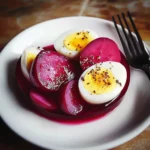
Ingredients
-
- Eggs: The foundation of our recipe, eggs need to be of good quality and properly hard-boiled. 1 dozen large eggs is a standard batch size, yielding a generous amount for snacking or serving. Consider using fresh, high-quality eggs whenever possible as their flavor and texture will be superior. Large eggs are ideal as they provide a good ratio of white to yolk, ensuring a satisfying bite.
-
- Beets: Beets bring earthy sweetness, vibrant color, and a delightful texture to the pickled combination. You’ll need 1 pound of fresh beets, about 2-3 medium-sized beets. Choose firm, smooth beets without blemishes. While fresh beets are highly recommended for their superior flavor and texture, you can use canned beets in a pinch, but be aware that the flavor and texture will be softer and less intense. If using canned beets, opt for whole beets without added salt or sugar and drain them well before pickling. Golden beets or Chioggia beets can also be used for visual variety and slightly different flavor profiles.
-
- Vinegar: The heart of the pickling brine, vinegar provides the essential acidity that preserves and flavors the eggs and beets. 3 cups of vinegar will form the base of your brine. Distilled white vinegar is the most common choice for pickling due to its neutral flavor and high acidity (typically 5% acetic acid), ensuring proper preservation and a clean, tangy taste. However, you can experiment with other vinegars for nuanced flavor profiles. Apple cider vinegar adds a slightly fruity and mellow tang, while red wine vinegar offers a richer, more robust flavor. Using a combination of vinegars can also create interesting complexity. For example, a mix of white vinegar and apple cider vinegar can balance sharpness with fruity notes. Ensure your vinegar has at least 5% acidity for safe and effective pickling.
-
- Water: Water dilutes the vinegar, moderating its intensity and creating a more balanced brine. 1 cup of water is the standard ratio to vinegar in this recipe. Using filtered water is recommended to avoid any off-flavors from tap water affecting the pickled eggs and beets.
-
- Sugar: Sugar balances the acidity of the vinegar and adds a touch of sweetness that complements the earthy beets and savory eggs. ½ cup of granulated sugar is a good starting point. You can adjust the amount to your sweetness preference. Other sweeteners can also be used. Brown sugar adds a molasses-like depth, while honey or maple syrup can provide a more complex sweetness. For a sugar-free option, you can use sugar substitutes like erythritol or stevia, but be mindful that they may alter the flavor profile slightly.
-
- Salt: Salt is crucial for flavor enhancement and also plays a role in the pickling process. 2 tablespoons of pickling salt are recommended. Pickling salt, also known as canning salt or pure salt, is preferred because it is free of iodine and anti-caking agents that can cloud the brine and affect the flavor. If pickling salt is unavailable, you can use kosher salt as a suitable substitute. Avoid using iodized table salt as it can impart a metallic taste and darken the pickled eggs and beets.
-
- Spices: Spices elevate pickled eggs and beets from simple to sensational, adding layers of aroma and flavor complexity. A blend of spices creates a warm and inviting pickling brine. Essential spices include:
-
- Bay Leaves: 2-3 bay leaves add a subtle herbaceous and slightly floral note.
-
- Black Peppercorns: 1 tablespoon of black peppercorns provide a pungent and peppery kick. You can use whole black peppercorns for a milder pepper flavor or cracked peppercorns for more intensity.
-
- Mustard Seeds: 1 tablespoon of mustard seeds (yellow or brown) contribute a tangy and slightly pungent flavor, along with a pleasant pop when you bite into them.
-
- Optional Spices: Feel free to customize your spice blend with other additions to tailor the flavor to your liking. Consider:
-
- Allspice berries: ½ teaspoon of allspice berries add a warm, clove-like note.
-
- Clove: 2-3 whole cloves provide a strong, warm, and aromatic flavor. Use sparingly as cloves can be overpowering.
-
- Cinnamon stick: 1 small cinnamon stick adds a subtle sweet and warm spice.
-
- Dried chili flakes: ½ – 1 teaspoon of dried chili flakes add a spicy kick. Adjust the amount to your heat preference.
-
- Juniper berries: 1 teaspoon of juniper berries offer a piney and slightly peppery flavor, often used in pickling.
-
- Dill seeds: 1 teaspoon of dill seeds provide a classic pickling flavor, especially if you enjoy dill pickles.
-
- Optional Spices: Feel free to customize your spice blend with other additions to tailor the flavor to your liking. Consider:
-
- Spices: Spices elevate pickled eggs and beets from simple to sensational, adding layers of aroma and flavor complexity. A blend of spices creates a warm and inviting pickling brine. Essential spices include:
-
- Optional Additions: Enhance your pickled eggs and beets further with these flavorful additions:
-
- Onion: 1 medium onion, sliced into rings or wedges, adds a pungent and slightly sweet pickled onion component. Red onion is particularly visually appealing.
-
- Garlic: 2-3 cloves of garlic, smashed or sliced, infuse the brine with a savory garlic flavor.
-
- Fresh Dill: A few sprigs of fresh dill added to the jars provide a fresh, herbaceous aroma and flavor.
-
- Jalapeño slices: For a spicy kick, add a few slices of fresh jalapeño pepper to each jar.
-
- Optional Additions: Enhance your pickled eggs and beets further with these flavorful additions:
Instructions
Step 1: Prepare the Eggs
-
- Hard-Boil the Eggs: Place the 1 dozen large eggs in a saucepan and cover them with cold water by about an inch. Bring the water to a rolling boil over high heat. Once boiling, remove the pan from the heat, cover it, and let it stand for 12 minutes for perfectly hard-boiled eggs.
-
- Ice Bath: While the eggs are standing, prepare an ice bath by filling a bowl with ice and cold water.
-
- Cool and Peel: After 12 minutes, carefully transfer the eggs to the ice bath to stop the cooking process and cool them down quickly. Once cooled, gently peel the eggs under cold running water. Starting to peel from the wider end of the egg often makes it easier. Set the peeled eggs aside.
Step 2: Cook the Beets
-
- Prepare Beets: Wash the 1 pound of fresh beets thoroughly. Trim off the beet greens, leaving about an inch of stem attached to prevent color bleeding during cooking. You can peel the beets before cooking, but it’s often easier to peel them after they are cooked.
-
- Boil, Roast, or Steam Beets (Boiling Method – Most Common):
-
- Boiling: Place the beets in a saucepan and cover them with cold water. Bring to a boil over high heat, then reduce heat and simmer for 30-45 minutes, or until the beets are tender when pierced with a fork. Cooking time will vary depending on the size of the beets.
-
- Roasting (Optional for Deeper Flavor): Preheat oven to 400°F (200°C). Wrap each beet individually in foil and roast for 45-60 minutes, or until tender. Roasting brings out a more concentrated, sweeter flavor in beets.
-
- Steaming (Optional for Nutrient Retention): Steam beets over boiling water for 30-45 minutes, or until tender. Steaming preserves more nutrients than boiling.
-
- Boil, Roast, or Steam Beets (Boiling Method – Most Common):
-
- Cool Beets: Once cooked, let the beets cool slightly until they are cool enough to handle.
-
- Peel and Slice Beets: Peel the cooked beets. The skins should slip off easily once cooked. Slice the beets into ¼-inch thick slices or wedges. Wear gloves if you want to avoid staining your hands pink.
Step 3: Prepare the Pickling Brine
-
- Combine Brine Ingredients: In a non-reactive saucepan (stainless steel or enamel-coated), combine the 3 cups of vinegar, 1 cup of water, ½ cup of sugar, 2 tablespoons of pickling salt, 2-3 bay leaves, 1 tablespoon of black peppercorns, and 1 tablespoon of mustard seeds. Add any optional spices like allspice berries, cloves, cinnamon stick, chili flakes, or juniper berries at this stage.
-
- Boil the Brine: Bring the brine mixture to a boil over medium-high heat, stirring to dissolve the sugar and salt. Once boiling, reduce heat and simmer for 5 minutes to allow the spices to infuse the brine.
-
- Cool the Brine: Remove the brine from the heat and let it cool completely to room temperature. It’s crucial to use cooled brine for pickling to prevent cooking the eggs and beets further and to ensure proper preservation.
Step 4: Assemble and Pickle
-
- Prepare Jars: Sterilize clean pint or quart-sized jars and lids by boiling them in water for 10 minutes or running them through a dishwasher’s sanitize cycle. Sterilizing jars is important for preventing spoilage, especially if you plan to store the pickled eggs and beets for an extended period.
-
- Layer Eggs and Beets in Jars: Arrange the peeled hard-boiled eggs and sliced beets in the sterilized jars, alternating layers for visual appeal. You can also add sliced onion, garlic cloves, or fresh dill sprigs to the jars at this stage.
-
- Pour Brine Over Eggs and Beets: Once the brine is completely cooled, carefully pour it over the eggs and beets in the jars, ensuring that the eggs and beets are fully submerged in the brine. Leave about ½ inch of headspace at the top of each jar.
-
- Remove Air Bubbles (Optional but Recommended): Gently tap the jars on the counter to release any trapped air bubbles. You can also use a clean utensil like a chopstick or a non-metallic spatula to gently poke around and release air bubbles.
-
- Seal Jars: Wipe the jar rims clean with a damp cloth, place the lids on the jars, and screw on the bands fingertip-tight.
-
- Refrigerate: Refrigerate the pickled eggs and beets for at least 24-48 hours before serving to allow the flavors to develop and meld. For the best flavor, allow them to pickle for at least 3-5 days. The longer they pickle, the more intense the flavor will become.
Step 5: Enjoy!
-
- Serve Chilled: Pickled eggs and beets are best served chilled straight from the refrigerator.
-
- Storage: Store pickled eggs and beets in the refrigerator for up to 3-4 weeks. Properly pickled and refrigerated eggs and beets are safe to consume for this period.
Nutrition
- Serving Size: one normal portion
- Calories: 100-150
- Sugar: 3-7 grams
- Sodium: 200-300 mg
- Fat: 6-8 grams
- Saturated Fat: 2-3 grams
- Unsaturated Fat: 3-5 grams
- Carbohydrates: 5-10 grams
- Fiber: 2-3 grams
- Protein: 6-7 grams
- Cholesterol: 200-220 mg