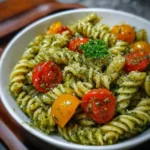
Ingredients
For the Homemade Basil Pesto:
-
Fresh Basil: 2 packed cups of fresh basil leaves. This is the heart of your pesto. Look for vibrant, green leaves with no dark spots. Genovese basil is the classic choice for its sweet, slightly peppery flavor. The term “packed” means you should press the leaves firmly into the measuring cup.
-
Pine Nuts: ⅓ cup. Pine nuts are traditional for a reason; they provide a subtle, buttery sweetness and a creamy texture when blended. Due to their cost, you can easily substitute them with untoasted walnuts for a more robust, earthy flavor or almonds for a milder profile. Toasting the nuts beforehand (see tips section) will deepen their flavor significantly.
-
Garlic: 2-3 cloves, peeled. The amount of garlic is a matter of personal taste. Two cloves will give you a pleasant, warm garlic note, while three will provide a more assertive, spicy punch. Always use fresh cloves, as their flavor is far superior to pre-minced or powdered versions.
-
Parmigiano-Reggiano Cheese: ½ cup, freshly grated. This is the soul of the pesto’s savory flavor. Please, use a wedge of authentic Parmigiano-Reggiano and grate it yourself. Its complex, nutty, and salty flavor is incomparable. Pre-grated cheese often contains anti-caking agents that can affect the texture and will lack the same depth of flavor. Pecorino Romano, a sheep’s milk cheese, is a traditional and slightly tangier alternative.
-
Extra Virgin Olive Oil: ½ cup. Since pesto is an uncooked sauce, the flavor of your olive oil will shine through. Use a good quality, flavorful extra virgin olive oil. A fruity, slightly peppery oil will add wonderful complexity.
-
Lemon Juice: 1 tablespoon, freshly squeezed. This is a crucial, though sometimes overlooked, ingredient. A squeeze of fresh lemon juice brightens all the other flavors and, importantly, helps the basil retain its vibrant green color by preventing oxidation.
-
Salt and Black Pepper: ½ teaspoon of salt and ¼ teaspoon of freshly ground black pepper (or to taste). Essential for seasoning and bringing all the flavors into balance.
For the Pasta and Assembly:
-
Pasta: 1 lb (16 ounces) of your favorite pasta. Long shapes like spaghetti, linguine, or fettuccine are classic for twirling with pesto. Short shapes like fusilli, rotini, or farfalle are also excellent choices, as their nooks and crannies are perfect for capturing the sauce.
-
Cherry Tomatoes: 1 pint (about 2 cups). Cherry or grape tomatoes are ideal for this recipe. Their small size allows them to cook quickly, and their high sugar content means they become incredibly sweet and jammy when blistered.
-
Olive Oil: 1 tablespoon. For sautéing the tomatoes.
-
Garlic: 2 cloves, thinly sliced. A little extra garlic sautéed with the tomatoes adds another layer of fragrant, savory flavor to the final dish.
-
Optional Garnish: Extra Parmesan cheese, fresh basil leaves, toasted pine nuts, and red pepper flakes.
Instructions
Part 1: Making the Fresh Basil Pesto
You can make pesto using a food processor for speed or a mortar and pestle for a more traditional texture.
Food Processor Method (Quick & Easy):
-
Combine Dry Ingredients: In the bowl of a food processor, combine the fresh basil leaves, pine nuts (toasted, if desired), peeled garlic cloves, and freshly grated Parmigiano-Reggiano cheese.
-
Pulse: Pulse the mixture 5-10 times until the ingredients are coarsely chopped and well combined.
-
Stream in the Oil: With the food processor running on low, slowly stream in the extra virgin olive oil until the pesto is smooth but still has some texture. Scrape down the sides of the bowl as needed to ensure everything is incorporated.
-
Final Seasoning: Turn off the processor. Add the fresh lemon juice, salt, and black pepper. Pulse a few more times to combine. Taste and adjust seasoning if necessary. It might need another pinch of salt or a bit more lemon juice to brighten it up.
Mortar and Pestle Method (Traditional & Textured):
-
Grind the Aromatics: Place the garlic cloves and a pinch of salt in the mortar. Grind with the pestle until a smooth paste forms. The salt acts as an abrasive.
-
Add the Nuts: Add the pine nuts and continue grinding until they are broken down and incorporated into the garlic paste.
-
Incorporate the Basil: Add the basil leaves a handful at a time, grinding with a firm, circular motion against the sides of the mortar. Continue until all the basil is added and has formed a thick, green paste. This takes patience but yields a wonderful texture.
-
Stir in Cheese and Oil: Add the grated Parmesan cheese and stir to combine. Then, slowly drizzle in the olive oil while stirring with the pestle until a creamy, emulsified sauce forms.
-
Season: Stir in the lemon juice and black pepper. Taste and adjust salt as needed.
Part 2: Cooking and Assembling the Pesto Pasta
-
Cook the Pasta: Bring a large pot of heavily salted water to a rolling boil. The water should taste like the sea. Add the pasta and cook according to package directions until it is al dente—tender with a slight bite.
-
Reserve Pasta Water: Before draining the pasta, reserve about 1 cup of the starchy cooking water. This liquid gold is the key to creating a creamy sauce. Drain the pasta.
-
Blister the Tomatoes: While the pasta is cooking, heat 1 tablespoon of olive oil in a large skillet or pan over medium-high heat. Add the thinly sliced garlic and cook for about 30 seconds until fragrant. Add the whole cherry tomatoes to the skillet.
-
Cook the Tomatoes: Let the tomatoes cook, shaking the pan occasionally, for about 5-7 minutes. They will start to soften, wrinkle, and “blister.” Some will burst open, releasing their sweet juices. You can gently press a few with the back of a spoon to help them along. Season with a small pinch of salt and pepper.
-
Combine Everything: Reduce the heat under the skillet to low. Add the drained pasta directly to the skillet with the blistered tomatoes. Add about ½ cup of the prepared pesto and ¼ cup of the reserved pasta water.
-
Toss to Emulsify: Toss everything together vigorously. The starchy pasta water will help the pesto cling to the pasta and emulsify with the tomato juices, creating a light, creamy sauce that coats every noodle. If the sauce seems too thick, add another splash of pasta water until it reaches your desired consistency.
-
Serve Immediately: Divide the pesto pasta among bowls. Garnish with a sprinkle of extra Parmesan cheese, a few fresh basil leaves, and a pinch of red pepper flakes if you like a little heat.
Nutrition
- Serving Size: one normal portion
- Calories: 650-750 kcal