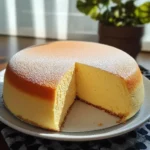
Ingredients
Scale
- 6 large Eggs, separated (at room temperature): Eggs are the backbone of this cheesecake, providing structure, richness, and, most importantly, the airy lightness that makes it jiggle. Separating the eggs is absolutely essential. The yolks contribute richness and flavor, while the egg whites, when whipped to stiff peaks, create the airy volume that is crucial for the cheesecake’s texture. Using room temperature eggs is also important, as they whip to a greater volume and create a more stable meringue. Ensure your eggs are fresh for the best results.
- 120g Cream Cheese, softened (full-fat, Philadelphia recommended): Cream cheese provides the quintessential cheesecake flavor and a touch of richness, but in a much lighter way than traditional cheesecakes. Full-fat cream cheese is recommended for the best flavor and texture. Philadelphia brand cream cheese is a widely recognized and reliable choice for cheesecakes. Softening the cream cheese to room temperature is crucial for ensuring a smooth batter without lumps. If your cream cheese is not softened enough, it can be difficult to incorporate evenly and may result in a grainy texture.
- 50g Unsalted Butter, melted: Melted unsalted butter adds richness, moisture, and a tender crumb to the cheesecake. Unsalted butter is recommended to control the salt level in the recipe. Melt the butter completely and let it cool slightly before adding it to the batter to prevent it from cooking the egg yolks. Butter contributes to the cheesecake’s delicate texture and subtle buttery flavor.
- 100ml Whole Milk: Whole milk adds moisture and helps to create a smooth and creamy batter. Whole milk is recommended for its richness, but you can use 2% milk as a slightly lighter alternative. The milk contributes to the overall lightness and tenderness of the cheesecake. You can use room temperature or slightly warmed milk.
- 60g Cake Flour (sifted): Cake flour is crucial for achieving the light and airy texture of Japanese Cheesecake. Cake flour has a lower protein content than all-purpose flour, resulting in a more tender and delicate crumb. Sifting the cake flour is important to remove any lumps and ensure it is light and airy, contributing to the cheesecake’s overall lightness. If you must substitute, you can use all-purpose flour, but your cheesecake will be slightly denser and less airy.
- 40g Cornstarch (sifted): Cornstarch also contributes to the delicate texture of Japanese Cheesecake and helps to stabilize the meringue, preventing it from collapsing during baking. Sifting the cornstarch is important to remove any lumps and ensure it is evenly distributed in the batter. Cornstarch also helps to create a slightly smoother and more refined texture.
- 80g Granulated Sugar (divided): Granulated sugar provides sweetness to the cheesecake and is divided into two portions. One portion is used to sweeten the yolk batter, and the larger portion is used to whip the egg whites into a meringue. Dividing the sugar ensures that the meringue is properly stabilized and achieves stiff peaks, which is essential for the cheesecake’s airy texture. Using the correct amount of sugar is important for both sweetness and structure.
- ¼ teaspoon Cream of Tartar: Cream of tartar is an acid that is added to the egg whites when whipping them into a meringue. It helps to stabilize the meringue, increase its volume, and prevent it from collapsing. Cream of tartar is crucial for creating a stable and voluminous meringue that is essential for the jiggly texture of the cheesecake. If you don’t have cream of tartar, you can substitute with a few drops of lemon juice or white vinegar, but cream of tartar is preferred for its effectiveness and neutral flavor.
- 1 teaspoon Vanilla Extract: Vanilla extract enhances the overall flavor of the cheesecake, adding a warm and aromatic note that complements the subtle sweetness and citrusy hints. Use pure vanilla extract for the best flavor. You can also use vanilla bean paste for a more intense vanilla flavor and visual appeal (vanilla bean specks).
- ¼ teaspoon Lemon Juice (freshly squeezed): Fresh lemon juice adds a bright, zesty note that balances the richness of the cream cheese and butter and enhances the overall flavor profile. Use freshly squeezed lemon juice for the best flavor. The acidity of the lemon juice also helps to tenderize the cheesecake slightly.
Instructions
- Preheat Oven and Prepare Water Bath: Preheat your oven to 300°F (150°C). This lower baking temperature is crucial for the gentle cooking required for Japanese Cheesecake. Prepare a water bath. You will need a larger baking pan (like a roasting pan or a 9×13 inch baking dish) that is deep enough to hold your cheesecake pan and hot water. Fill the larger pan with about 1 inch of hot water. The water bath creates a humid environment in the oven, which helps the cheesecake bake evenly, prevents cracking, and contributes to its moist and jiggly texture.
- Prepare Springform Pan: Grease a 6-inch springform pan with butter and line the bottom with parchment paper. You can also line the sides with parchment paper extending slightly above the rim to help the cheesecake rise evenly. Greasing and lining the pan ensures the cheesecake releases easily after baking. Using a 6-inch springform pan is recommended for this recipe to achieve the desired height and jiggle.
- Separate Eggs: Carefully separate the eggs, placing the yolks in a large bowl and the whites in a separate, clean, and grease-free bowl. Ensure no yolk gets into the egg whites, as this can prevent them from whipping properly. Separating eggs carefully is crucial for whipping egg whites to stiff peaks.
- Prepare Yolk Batter: In the bowl with the egg yolks, add the softened cream cheese and melted butter. Whisk together until smooth and well combined. Ensure the cream cheese is softened to room temperature for smooth mixing. Whisking until smooth ensures a lump-free batter. Gradually whisk in the whole milk until the batter is smooth and creamy. Gradually adding milk prevents curdling and ensures a smooth emulsion.
- Sift in Dry Ingredients: Sift together the cake flour and cornstarch into a separate bowl. Sifting removes lumps and aerates the dry ingredients, contributing to a lighter texture. Gradually sift the dry ingredients into the yolk batter, whisking continuously until just combined. Be careful not to overmix at this stage, as overmixing can develop gluten and make the cheesecake tougher. Whisk until just combined to avoid overmixing.
- Whip Egg Whites into Meringue: In the clean, grease-free bowl with the egg whites, add cream of tartar. Using an electric mixer (hand mixer or stand mixer), beat the egg whites on medium speed until foamy. Gradually add granulated sugar, a tablespoon at a time, while continuing to beat on medium-high speed. Beat until stiff, glossy peaks form. The meringue should be firm enough to hold its shape when you lift the beaters. Whipping egg whites to stiff peaks is crucial for the airy texture of the cheesecake. Cream of tartar stabilizes the meringue. Gradually adding sugar ensures a stable and glossy meringue.
- Fold Meringue into Yolk Batter (in Batches): Gently fold one-third of the meringue into the yolk batter to lighten it. Then, gently fold in the remaining meringue in two additions, being careful not to deflate the meringue. Fold until just combined and no streaks of egg white remain. Folding gently preserves the airiness of the meringue and ensures a light and airy cheesecake texture. Fold until just combined to avoid deflating the meringue.
- Add Vanilla Extract and Lemon Juice: Gently fold in the vanilla extract and lemon juice until just combined. These flavorings enhance the overall taste of the cheesecake. Fold in gently to avoid deflating the batter.
- Pour Batter into Prepared Pan: Pour the batter into the prepared 6-inch springform pan. Gently tap the pan on the counter a few times to release any large air bubbles. Tapping removes air bubbles and ensures a smoother cheesecake surface.
- Bake in Water Bath: Place the springform pan in the larger baking pan with hot water (water bath). Carefully transfer the entire setup to the preheated oven. Bake for 60-70 minutes, or until the cheesecake is set around the edges but still jiggly in the center. The top should be lightly golden brown. Baking in a water bath ensures even baking and prevents cracking. Baking until set around the edges but jiggly in the center is key to achieving the signature jiggly texture.
- Turn Off Oven, Crack Door, and Cool Gradually: Once baked, turn off the oven and crack the oven door slightly open. Let the cheesecake cool in the oven with the door ajar for 30 minutes. This gradual cooling helps to prevent the cheesecake from collapsing or cracking due to sudden temperature changes. Cooling gradually is crucial for preventing cracks and maintaining texture.
- Remove from Oven and Water Bath, Cool Completely: Remove the cheesecake from the oven and the water bath. Let it cool completely at room temperature on a wire rack. Cooling completely at room temperature allows the cheesecake to set further.
- Chill in Refrigerator (Minimum 4 Hours, Preferably Overnight): Once cooled to room temperature, cover the cheesecake loosely with plastic wrap and chill in the refrigerator for at least 4 hours, or preferably overnight. Chilling is essential for the cheesecake to fully set, firm up, and develop its signature jiggly texture. Chilling overnight is highly recommended for the best texture and flavor.
- Release from Springform Pan and Serve: Before serving, carefully release the cheesecake from the springform pan. Run a thin knife or spatula around the edges of the pan to loosen the cheesecake if needed. Gently remove the sides of the springform pan. Transfer the cheesecake to a serving plate. Slice and serve chilled. Serve chilled for the best texture and refreshing taste.
Nutrition
- Serving Size: one normal portion
- Calories: 250-350 kcal
- Sugar: 15-20g
- Sodium: 150-200mg
- Fat: 15-20g
- Saturated Fat: 8-12g
- Unsaturated Fat: 7-8g
- Carbohydrates: 20-30g
- Fiber: 1g
- Protein: 5-7g
- Cholesterol: 100-150mg