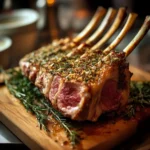
Ingredients
-
- Rack of Lamb: 1 whole rack (about 2-2.5 lbs, 8-10 ribs). The star of the show! When selecting your rack of lamb, look for one that is well-trimmed, meaning excess fat has been removed, leaving a manageable fat cap. A good rack should have a consistent thickness of meat covering the ribs. French-trimmed racks, where the rib bones are exposed (frenched), are visually stunning and often preferred for presentation, but a standard rack will work just as well flavor-wise. Source your rack from a reputable butcher or grocery store to ensure quality and freshness. Consider the size when purchasing, as a standard rack typically serves 2-3 people generously. If you are serving a larger crowd, you may need to prepare multiple racks. For optimal tenderness and flavor, choose a rack that is well-marbled with fat within the meat itself, not just on the fat cap.
-
- Fresh Herbs: A generous handful, finely chopped – a mix of Rosemary, Thyme, and Parsley. Fresh herbs are absolutely essential for the vibrant, aromatic herb crust that defines this dish. Dried herbs simply won’t deliver the same bright, fresh flavor. A combination of rosemary, thyme, and parsley creates a classic and balanced herb profile that complements lamb beautifully.
-
- Rosemary: About 2 tablespoons, finely chopped. Rosemary provides a pungent, piney, and slightly peppery flavor that is particularly well-suited to lamb. Its robust flavor stands up well to the richness of the meat. Choose fresh rosemary sprigs and strip the leaves from the woody stem before chopping finely.
-
- Thyme: About 2 tablespoons, finely chopped. Thyme offers a more delicate, earthy, and slightly lemony flavor that adds complexity to the herb blend. Like rosemary, use fresh thyme sprigs and strip the tiny leaves from the stems before chopping.
-
- Parsley: About 1/4 cup, finely chopped. Parsley brings a fresh, clean, and slightly peppery note to the herb mix. It brightens the overall flavor and adds a touch of green color to the crust. Flat-leaf parsley (Italian parsley) is preferred for its more robust flavor compared to curly parsley.
-
- Fresh Herbs: A generous handful, finely chopped – a mix of Rosemary, Thyme, and Parsley. Fresh herbs are absolutely essential for the vibrant, aromatic herb crust that defines this dish. Dried herbs simply won’t deliver the same bright, fresh flavor. A combination of rosemary, thyme, and parsley creates a classic and balanced herb profile that complements lamb beautifully.
-
- Garlic: 4-5 cloves, minced. Garlic is a foundational flavor in savory cooking and adds a pungent, aromatic depth to the herb crust and the lamb itself. Freshly minced garlic is crucial for the best flavor. You can use a garlic press or finely mince the garlic with a knife. For a milder garlic flavor, you can roast the garlic cloves before mincing them and adding them to the herb mixture.
-
- Breadcrumbs: 1/2 cup, Panko breadcrumbs or fresh breadcrumbs. Breadcrumbs are the binding agent for the herb crust, helping it adhere to the lamb and creating a delightful crispy texture. Panko breadcrumbs are Japanese-style breadcrumbs that are coarser and lighter than traditional breadcrumbs, resulting in a particularly crispy crust. Fresh breadcrumbs, made from day-old crusty bread pulsed in a food processor, also work well and offer a slightly softer, more rustic texture. Avoid using fine, dry breadcrumbs, as they can become dense and less crispy.
-
- Dijon Mustard: 2 tablespoons. Dijon mustard serves two key purposes in this recipe. First, it acts as a flavorful base for the herb crust, adding a tangy and slightly spicy note that complements the lamb and herbs. Second, it helps the herb crust adhere to the rack of lamb, creating a sticky surface for the breadcrumbs to cling to. Choose a good quality Dijon mustard for the best flavor.
-
- Olive Oil: 3 tablespoons, extra virgin olive oil. Olive oil adds richness and moisture to the herb crust, helping it bind together and become beautifully golden brown and crispy during roasting. Extra virgin olive oil is preferred for its flavor and health benefits, but any good quality olive oil will work. You can also use melted butter for an even richer flavor, but olive oil contributes a more herbaceous note that complements the overall dish.
-
- Lemon Zest: 1 tablespoon, from about 1 lemon. Lemon zest adds a bright, citrusy note that cuts through the richness of the lamb and enhances the freshness of the herbs. Use a microplane or fine grater to zest the lemon, being careful to only zest the yellow part of the peel and avoid the bitter white pith underneath. The zest of one medium lemon is usually sufficient to yield about a tablespoon.
-
- Salt: 1 1/2 teaspoons, kosher salt or sea salt. Salt is essential for seasoning both the lamb itself and the herb crust. Kosher salt or sea salt are recommended for their cleaner taste and coarser texture, which helps distribute flavor more evenly. Season generously, but be mindful of your dietary needs. You can always add more salt at the end if needed, but it’s difficult to remove salt once it’s added.
-
- Black Pepper: 1 teaspoon, freshly ground black pepper. Freshly ground black pepper adds a subtle spice and depth of flavor. Adjust the amount to your preference. White pepper can also be used for a milder peppery flavor. Grinding the pepper fresh right before using ensures the most potent and aromatic flavor.
Instructions
-
- Preheat Your Oven and Prepare the Rack of Lamb: Preheat your oven to 400°F (200°C). Ensuring your oven is properly preheated is crucial for even cooking and achieving a beautifully browned crust. While the oven preheats, prepare the rack of lamb. Pat the rack of lamb dry with paper towels. This step is important for removing excess moisture, which helps the lamb sear properly and allows the herb crust to adhere better.
-
- Score the Fat Cap (Optional but Recommended): Using a sharp knife, lightly score the fat cap of the rack of lamb in a crosshatch pattern. Be careful not to cut into the meat itself, just the fat. Scoring the fat cap helps render the fat during roasting, making it crispier and allowing the seasonings to penetrate the meat more effectively. This step also helps prevent the fat cap from shrinking excessively and distorting the shape of the rack.
-
- Season the Lamb: Season the rack of lamb generously on all sides with salt and black pepper. Don’t be shy with the seasoning, as this is the primary flavor base for the lamb itself. Ensure you season all surfaces, including the meaty sides and the bone side.
-
- Prepare the Herb Crust Mixture: In a medium bowl, combine the finely chopped fresh rosemary, thyme, parsley, minced garlic, panko breadcrumbs (or fresh breadcrumbs), Dijon mustard, olive oil, and lemon zest. Mix well with your hands or a spoon until all ingredients are evenly combined and the mixture is slightly moist and crumbly. Taste the herb crust mixture and adjust seasonings if needed, adding a pinch more salt, pepper, or lemon zest to your liking.
-
- Apply the Herb Crust: Using your hands, firmly press the herb crust mixture evenly over the fat cap of the rack of lamb. Ensure the entire fat cap is covered with a generous layer of the herb crust, pressing it firmly to help it adhere during roasting. You want a thick, even layer that will become crispy and flavorful in the oven.
-
- Roast the Rack of Lamb: Place the herb-crusted rack of lamb in a roasting pan, bone-side down. If you have a roasting rack, you can place the lamb on the rack inside the roasting pan to promote better air circulation around the lamb. Roast in the preheated oven for 20-25 minutes for medium-rare, or 25-30 minutes for medium. The exact roasting time will depend on the thickness of your rack of lamb and your desired level of doneness.
-
- Check for Doneness with a Meat Thermometer: The most accurate way to determine when the rack of lamb is cooked to your liking is to use a meat thermometer. Insert the thermometer into the thickest part of the meat, avoiding the bone.
- Medium-Rare: 130-135°F (54-57°C)
- Medium: 135-140°F (57-60°C)
- Medium-Well: 140-145°F (60-63°C)
- Well-Done: 145°F+ (63°C+) (Not recommended for rack of lamb, as it will become less tender)
For rack of lamb, medium-rare to medium is generally recommended for optimal tenderness and flavor.
- Check for Doneness with a Meat Thermometer: The most accurate way to determine when the rack of lamb is cooked to your liking is to use a meat thermometer. Insert the thermometer into the thickest part of the meat, avoiding the bone.
-
- Sear for Extra Color and Crispness (Optional but Recommended): For an even more golden brown and crispy herb crust, you can broil the rack of lamb for the last 2-3 minutes of cooking. After roasting, turn the oven to broil (high heat). Keep a very close eye on the lamb while broiling to prevent the herb crust from burning. Broil just until the crust is nicely browned and crispy. This step is optional but enhances the visual appeal and textural contrast.
-
- Rest the Rack of Lamb: Once the rack of lamb reaches your desired internal temperature, remove it from the oven and transfer it to a cutting board. Tent it loosely with foil and let it rest for 10-15 minutes before carving. Resting is crucial for allowing the juices to redistribute throughout the meat, resulting in more tender and flavorful lamb. Do not skip this step!
-
- Make a Pan Sauce (Optional but Recommended): While the lamb is resting, you can make a simple pan sauce using the pan drippings. Place the roasting pan over medium heat on the stovetop. If using, add the red wine and minced shallot to the pan. Scrape up any browned bits from the bottom of the pan with a wooden spoon or spatula. Let the wine reduce slightly, about 2-3 minutes, scraping occasionally. Taste the sauce and adjust seasonings if needed, adding a pinch of salt, pepper, or a knob of butter for richness. Strain the sauce through a fine-mesh sieve into a small bowl or gravy boat, if desired, to remove any solids.
-
- Carve and Serve: After resting, carve the rack of lamb into individual chops by slicing between the ribs. Arrange the herb-crusted lamb chops on a serving platter. Drizzle with the optional pan sauce, if made. Garnish with fresh rosemary sprigs or lemon wedges, if desired. Serve immediately and enjoy this elegant and flavorful dish!
Nutrition
- Serving Size: one normal portion
- Calories: 500-700
- Sugar: 1-2 grams
- Sodium: 400-600 mg
- Fat: 30-50 grams
- Saturated Fat: 15-25 grams
- Unsaturated Fat: 10-20 grams
- Carbohydrates: 5-10 grams
- Fiber: 1-2 grams
- Protein: 40-50 grams
- Cholesterol: 150-200 mg