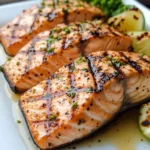
Ingredients
For the Salmon:
- Salmon Fillets (4, about 6 oz / 170g each, skin-on or skinless): Choose high-quality, fresh salmon. Wild-caught varieties like Sockeye, Coho, or King salmon offer robust flavor and firmer texture. Farm-raised Atlantic salmon is milder and often fattier, which can be forgiving on the grill. Skin-on fillets are generally recommended for grilling as the skin helps hold the fish together and gets wonderfully crispy.
- Olive Oil (2 tablespoons / 30ml): For coating the fish and helping to prevent sticking. Avocado oil or another high smoke point oil also works.
For the Simple Lemon-Herb Marinade/Glaze (Optional but Recommended):
- Olive Oil (1/4 cup / 60ml): Extra virgin for best flavor.
- Fresh Lemon Juice (2 tablespoons / 30ml): Brightens the flavor of the salmon.
- Garlic (2 cloves, minced): Adds aromatic depth.
- Fresh Dill (1 tablespoon, chopped) or Fresh Parsley (1 tablespoon, chopped): Classic herbs that pair beautifully with salmon. You can use a combination or other herbs like thyme or oregano.
- Salt (1/2 teaspoon / 3g, or to taste): Kosher salt or sea salt.
- Black Pepper (1/4 teaspoon / 0.5g, freshly ground, or to taste):
- Optional: Dijon Mustard (1 teaspoon / 5ml): Adds a subtle tang and helps emulsify the marinade.
- Optional: Honey or Maple Syrup (1 teaspoon / 5ml): For a touch of sweetness and better caramelization.
Instructions
Phase 1: Prepare the Salmon and Marinade
- Inspect and Prepare Salmon:
- If using frozen salmon, thaw it completely in the refrigerator overnight.
- Pat the salmon fillets thoroughly dry with paper towels on all sides. This is crucial for achieving a good sear and preventing sticking.
- If your fillets have pin bones, remove them using clean tweezers or small pliers. Run your finger against the grain along the center line of the fillet to feel for them.
- Make the Marinade/Glaze (if using):
- In a small bowl, whisk together the olive oil, fresh lemon juice, minced garlic, chopped fresh dill or parsley, salt, and black pepper.
- If using, whisk in the Dijon mustard and/or honey/maple syrup.
- Set aside about 1/4 of the marinade to use as a glaze while grilling or for drizzling over the cooked salmon.
- Marinate the Salmon (Optional, short time):
- Place the salmon fillets in a shallow dish or a resealable plastic bag.
- Pour the remaining 3/4 of the marinade over the salmon, ensuring it’s evenly coated.
- Let the salmon marinate at room temperature for 15-30 minutes. Do not marinate for longer than 30 minutes if using an acidic marinade (like one with lemon juice), as the acid can start to “cook” the fish (ceviche-style) and alter its texture, making it mushy.
- If you prefer not to marinate, you can simply brush the salmon with olive oil and season generously with salt and pepper just before grilling.
Phase 2: Prepare the Grill
- Clean the Grates Thoroughly: A clean grill is paramount for preventing fish from sticking. Preheat your grill for a few minutes, then use a stiff grill brush to scrub off any old debris.
- Oil the Grates VERY Well: This is the most critical step to prevent sticking.
- Fold a few paper towels into a small pad, dip them in a high smoke point oil (like canola, vegetable, or avocado oil) using tongs, and rub the hot grill grates generously until they are well-coated and glossy.
- Alternatively, you can use an oil spray designed for grilling, but applying with a paper towel often gives better coverage.
- Do this just before you place the salmon on the grill.
- Preheat the Grill to Medium-High Heat:
- Gas Grill: Preheat to medium-high, around 400-450°F (200-230°C).
- Charcoal Grill: Prepare a two-zone fire. Bank hot coals on one side for direct heat, leaving the other side cooler for indirect heat if needed (though salmon cooks quickly and is often done entirely over direct heat). The grill is ready when you can hold your hand about 5 inches above the grates over the hot zone for only 3-4 seconds.
Phase 3: Grill the Salmon
- Remove Salmon from Marinade (if used): Gently lift the salmon fillets from the marinade, allowing any excess to drip off. Discard the used marinade.
- Oil the Salmon (if not marinated or if marinade was very light on oil): Lightly brush the salmon fillets on all sides with olive oil, even if they were marinated. This provides an extra barrier against sticking.
- Season (if not marinated): If you didn’t marinate, season the salmon generously with salt and pepper on both sides.
- Grilling Skin-On Salmon (Recommended Method):
- Place the salmon fillets skin-side down on the well-oiled, hot grill grates over direct medium-high heat.
- Resist the Urge to Move It! Let the salmon cook undisturbed for 4-6 minutes, or until the skin is crispy, well-browned, and releases easily from the grates. You should see the fish turning opaque about halfway up the sides.
- Using your fish spatula, carefully flip the salmon fillets. If it sticks, give it another 30-60 seconds; it usually releases when it’s ready.
- Cook on the flesh side for another 2-5 minutes, or until the salmon is cooked through to your desired doneness. Baste with the reserved marinade/glaze during the last couple of minutes of cooking on this side if desired.
- Grilling Skinless Salmon:
- Place the salmon fillets directly on the well-oiled, hot grill grates.
- Cook for 3-5 minutes per side, depending on thickness, or until cooked through. Be extra gentle when flipping skinless fillets as they are more delicate.
- Check for Doneness:
- Visual Cue: The salmon should be opaque and flake easily with a fork when gently pressed. The color will change from translucent raw pink to a more opaque pink.
- Internal Temperature (Most Accurate): Use an instant-read thermometer inserted into the thickest part of the fillet.
- Medium-Rare: 125-130°F (52-54°C) – Center will be slightly translucent and very moist.
- Medium: 130-135°F (54-57°C) – Mostly opaque with a hint of translucency, moist.
- Medium-Well/Well-Done: 140-145°F (60-63°C) – Fully opaque and flaky. The USDA recommends 145°F for safety, but many prefer salmon cooked to a lower temperature for better moisture. Salmon will continue to cook slightly after being removed from the grill (carryover cooking).
- Remove from Grill: Carefully transfer the cooked salmon to a clean platter or plates using your fish spatula.
- Rest Briefly: Let the salmon rest for a few minutes before serving. This allows the juices to redistribute, resulting in a more tender and flavorful fillet. Drizzle with any remaining reserved glaze if desired.
Nutrition
- Serving Size: one normal portion
- Calories: 300-450