Ingredients
Scale
For the Dough:
-
- 1 cup (240ml) lukewarm milk: Milk is the liquid base of our dough, contributing moisture, richness, and a softer texture to the final bread. Lukewarm milk, ideally between 100-110°F (38-43°C), is crucial for activating the yeast. Whole milk will result in a richer, more tender Tsoureki, but 2% milk can also be used. For a dairy-free option, you can substitute with plant-based milk like almond milk, soy milk, or oat milk, although these may slightly alter the texture and flavor profile. Ensure the milk is fresh and not overheated, as excessively hot milk can kill the yeast.
-
- 2 ¼ teaspoons (1 packet) active dry yeast: Yeast is the leavening agent that makes Tsoureki rise and become light and airy. Active dry yeast is readily available and works reliably. Ensure your yeast is fresh and within its expiration date for optimal rising power. If using instant yeast (also called rapid-rise yeast), you can skip the proofing step and add it directly to the dry ingredients. However, active dry yeast is traditionally used and contributes to the classic flavor development. Storing yeast in the refrigerator or freezer can prolong its shelf life.
-
- ½ cup (100g) granulated sugar, plus 1 teaspoon for proofing yeast: Sugar not only sweetens the Tsoureki but also feeds the yeast, aiding in its activation and contributing to the bread’s rise and browning. Granulated sugar is commonly used. The 1 teaspoon of sugar added to the lukewarm milk is specifically for proofing the yeast, ensuring it’s active and ready to leaven the dough. You can adjust the ½ cup sugar slightly based on your desired sweetness, but Tsoureki is traditionally subtly sweet, not overly sugary.
-
- 5 large eggs, lightly beaten: Eggs add richness, color, and structure to the Tsoureki dough. They contribute to the bread’s tender crumb and golden crust. Use large eggs for the recipe as specified. Lightly beating the eggs before adding them to the dough ensures they incorporate smoothly and evenly. Fresh, high-quality eggs will enhance the overall flavor and texture.
-
- ½ cup (1 stick/113g) unsalted butter, melted and cooled slightly: Butter adds flavor, richness, and tenderness to the Tsoureki. Unsalted butter is preferred to control the salt content of the bread. Melt the butter and allow it to cool slightly before adding it to the dough. Hot butter can cook the eggs and affect the yeast activity. Cooled, but still liquid, butter is ideal for incorporation.
-
- 1 teaspoon salt: Salt is essential for controlling yeast activity, enhancing flavor, and strengthening the gluten in the dough. It balances the sweetness and brings out the complex flavors of the other ingredients. Use regular table salt or fine sea salt.
-
- 6 cups (750g) all-purpose flour, plus more for dusting: All-purpose flour forms the structure of the Tsoureki. Use good quality all-purpose flour. The amount of flour may need to be adjusted slightly depending on humidity and the exact measurements of other ingredients. Start with 6 cups and add more gradually if the dough is too sticky, aiming for a soft, slightly sticky dough that is manageable to knead. Having extra flour on hand for dusting your work surface and hands during kneading and shaping is crucial to prevent the dough from sticking.
For the Signature Aromatics:
-
- 2 teaspoons mahlepi (mahlab) powder: Mahlepi is the secret ingredient that gives Tsoureki its distinctive, unique flavor. It is a spice made from the ground pits of St. Lucie cherries, offering a warm, slightly nutty, and subtly cherry-almond flavor. Mahlepi is essential for authentic Tsoureki. You can find it at Greek or Middle Eastern markets, specialty spice shops, or online. Ensure your mahlepi is fresh and fragrant for the best flavor.
-
- ½ teaspoon mastic (mastiha) gum, powdered: Mastic gum is another key aromatic ingredient that contributes to Tsoureki’s characteristic flavor and texture. Mastic is a resin from the mastic tree, offering a piney, slightly resinous, and unique flavor. It also acts as a dough enhancer, contributing to the bread’s elasticity and chewiness. Mastic gum needs to be powdered before use. You can powder it yourself by freezing the mastic gum pieces for about 30 minutes, then grinding them with a teaspoon of sugar in a spice grinder or mortar and pestle until finely powdered. Like mahlepi, mastic gum can be found at Greek or Middle Eastern markets, specialty food stores, or online.
For the Egg Wash and Decoration:
-
- 1 egg, beaten with 1 tablespoon milk: Egg wash gives the Tsoureki its beautiful glossy, golden-brown crust. Beat one egg with a tablespoon of milk to create a smooth, even egg wash.
-
- Sesame seeds or sliced almonds (optional, for topping): Sesame seeds or sliced almonds can be sprinkled on top of the Tsoureki before baking for added texture and visual appeal. These are optional but traditional toppings.
-
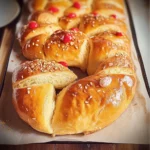
- Red dyed eggs (for decoration): Red dyed eggs are a symbolic and essential decoration for Greek Easter Bread. Traditionally, hard-boiled eggs are dyed red to symbolize the blood of Christ and are baked directly into the Tsoureki loaves or placed in the center after baking. Prepare your red dyed eggs in advance using your preferred method.
Instructions
1. Proof the Yeast:
-
- In a large bowl, warm the milk to lukewarm (100-110°F/38-43°C). Use a thermometer to ensure the milk is at the correct temperature – too hot and it can kill the yeast, too cold and it won’t activate properly.
-
- Add 1 teaspoon of sugar and the active dry yeast to the warm milk. Sprinkle the yeast over the warm milk and sugar mixture.
-
- Gently stir and let it stand for 5-10 minutes, or until foamy. This process, called proofing, ensures that the yeast is active and viable. You should see a foamy or bubbly layer on top of the milk mixture, indicating that the yeast is working. If it doesn’t foam, your yeast may be old or inactive, and you should start with fresh yeast.
2. Combine Wet Ingredients and Aromatics:
-
- In a separate large bowl, whisk together the beaten eggs, remaining ½ cup sugar, melted and cooled butter, salt, mahlepi powder, and powdered mastic gum. Whisk until all ingredients are well combined and the sugar is mostly dissolved. The aromatics, mahlepi and mastic, should be evenly distributed throughout the wet mixture.
3. Gradually Add Dry Ingredients and Knead:
-
- Gradually add the flour to the wet ingredients, starting with about 4 cups. Add the flour in increments, mixing with a wooden spoon or dough hook attachment of a stand mixer on low speed.
-
- Continue adding flour, a little at a time, kneading until a soft, slightly sticky dough forms. As you add flour, the dough will come together. You may not need to use all 6 cups of flour, or you might need a little more, depending on humidity and flour consistency. The goal is to achieve a dough that is soft, slightly sticky to the touch, but manageable to knead.
-
- Knead the dough on a lightly floured surface for 8-10 minutes, or in a stand mixer with a dough hook for 6-8 minutes, until smooth and elastic. Kneading develops the gluten in the dough, which is essential for the bread’s structure and texture. The dough should become smooth, elastic, and springy. It will still be slightly sticky, but should pull away from the sides of the bowl or work surface as you knead.
4. First Rise (Bulk Fermentation):
-
- Place the dough in a lightly oiled large bowl, turning to coat all sides. This prevents the dough from drying out and sticking to the bowl as it rises.
-
- Cover the bowl with plastic wrap or a clean kitchen towel. Ensure the cover is airtight to create a warm, humid environment for rising.
-
- Let the dough rise in a warm place for 1 ½ – 2 hours, or until doubled in size. The rising time will depend on the warmth of your environment. A warm place (around 75-80°F/24-27°C) is ideal for yeast activity. The dough should roughly double in volume.
5. Punch Down Dough and Second Rise:
-
- Gently punch down the dough to release air bubbles. Punching down redistributes the yeast and prepares the dough for shaping.
-
- Divide the dough into 3-6 equal portions, depending on the desired size of your loaves. For larger loaves, divide into 3 portions. For smaller, individual loaves, divide into 6 or more.
-
- Shape each portion into a long rope, about 18-24 inches long. Gently roll and stretch each portion of dough into a rope shape.
-
- Braid 3 ropes together to form a loaf. To braid, pinch the ends of three ropes together at one end. Braid them together like hair, and pinch the ends together at the other end. Tuck the ends underneath the loaf for a neater appearance. You can also make individual braided rolls by braiding shorter ropes.
-
- Place the braided loaves on baking sheets lined with parchment paper. Parchment paper prevents sticking and makes it easier to transfer the baked loaves.
-
- Cover loosely with plastic wrap or a clean kitchen towel and let rise in a warm place for another 45-60 minutes, or until almost doubled in size. This second rise, called proofing, allows the shaped loaves to become light and airy before baking.
6. Preheat Oven and Prepare Egg Wash:
-
- Preheat oven to 350°F (175°C). Ensure your oven is preheated to the correct temperature for even baking.
-
- Prepare the egg wash by beating 1 egg with 1 tablespoon of milk. Whisk together until well combined.
7. Egg Wash and Bake:
-
- Gently brush the tops of the braided loaves with the egg wash. Brush evenly for a glossy, golden-brown crust.
-
- If desired, sprinkle with sesame seeds or sliced almonds. Add your chosen toppings after brushing with egg wash.
-
- If using red dyed eggs, gently press a red egg into the center of each loaf (optional, or add after baking). Traditionally, red eggs are baked into Tsoureki. If doing so, gently press them into the dough before baking. Alternatively, you can create indentations before the second rise to place the eggs after baking.
-
- Bake for 25-35 minutes, or until golden brown and the internal temperature reaches 200-210°F (93-99°C). Baking time will depend on the size of your loaves and your oven. The Tsoureki is done when it is golden brown and sounds hollow when tapped on the bottom. An instant-read thermometer inserted into the center should register 200-210°F.
8. Cool and Enjoy:
-
- Let the Tsoureki loaves cool on the baking sheets for a few minutes before transferring them to a wire rack to cool completely. Cooling on a wire rack prevents the bottom of the bread from becoming soggy.
-
- Once cooled, slice and serve. Tsoureki is delicious served warm or at room temperature.
Nutrition
- Serving Size: one normal portion
- Calories: 200-250
- Sugar: 10-12 grams
- Sodium: 150-200 mg
- Fat: 8-10 grams
- Saturated Fat: 5-7 grams
- Carbohydrates: 30-35 grams
- Fiber: 1-2 grams
- Protein: 5-6 grams
- Cholesterol: 50-60 mg