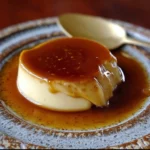
Ingredients
For the Caramel:
-
Granulated Sugar: 3/4 cup (150g)
-
Water: 3 tablespoons
For the Silky Custard:
-
Whole Milk: 1 ½ cups (360ml)
-
Heavy Cream: 1/2 cup (120ml)
-
Granulated Sugar: 1/2 cup (100g)
-
Large Eggs: 4
-
Large Egg Yolks: 2 (these are key for extra richness and a silkier texture)
-
Vanilla Extract: 2 teaspoons, or 1 whole vanilla bean for a more intense flavor
-
Salt: 1/4 teaspoon
Instructions
Part 1: Preparing the Oven and Ramekins
-
Arrange Oven Rack and Preheat: Position a rack in the center of your oven and preheat it to 325°F (165°C). A lower, slower cooking temperature is essential for a smooth, non-curdled custard.
-
Prepare the Ramekins: Have your six 6-ounce ramekins clean, dry, and ready on your countertop. Place them inside the larger baking dish. This will make it easier to transport them once they are filled.
Part 2: Making the Liquid Gold Caramel
This step requires your full attention. Caramel can go from perfect to burnt in a matter of seconds.
-
Combine Sugar and Water: In a small, heavy-bottomed saucepan, combine the 3/4 cup of sugar and 3 tablespoons of water. Stir gently just to moisten all the sugar.
-
Cook the Caramel: Place the saucepan over medium-high heat. Bring the mixture to a boil. From this point on, do not stir the mixture with a spoon. Stirring can cause the sugar to crystallize. If you need to even out the cooking, simply swirl the pan gently by its handle.
-
Watch for Color Change: Continue to cook, swirling occasionally, for about 5-8 minutes. The mixture will first be clear and bubbly, then will slowly start to turn a pale straw color, then golden, and finally a beautiful, deep amber—like the color of honey or a copper penny. This is the perfect stage. Be brave and let it get dark; a pale caramel will be overly sweet, while a deep amber caramel has a wonderful bittersweet note that perfectly balances the rich custard.
-
Stop the Cooking: As soon as it reaches the deep amber color, immediately remove the pan from the heat. The residual heat will continue to cook it, so you must act quickly.
-
Pour into Ramekins: Working carefully and swiftly (caramel is extremely hot!), divide the caramel evenly among the six ramekins. Immediately tilt and swirl each ramekin to coat the bottom surface. The caramel will begin to harden almost instantly. You may hear crackling sounds as the hot caramel hits the cooler ramekins; this is normal. Set the ramekins aside.
Part 3: Creating the Silky Custard
-
Heat the Milk and Cream: In the same saucepan (no need to wash it out completely), combine the whole milk and heavy cream. If using a vanilla bean, split it lengthwise, scrape out the seeds, and add both the pod and the seeds to the milk mixture. Heat over medium heat until it is just simmering and bubbles are forming around the edges. This is called scalding. Do not let it come to a rolling boil. Once scalded, remove from the heat.
-
Whisk Eggs and Sugar: While the milk is heating, in a separate medium-sized mixing bowl, whisk together the 4 whole eggs, 2 egg yolks, 1/2 cup of sugar, and the salt. Whisk just until the mixture is smooth and slightly pale, but do not over-whisk to the point of creating a lot of foam.
-
Temper the Eggs: This is a crucial step to prevent the eggs from scrambling. While whisking the egg mixture continuously with one hand, use your other hand to slowly pour a thin stream of the hot milk mixture into the eggs. Continue pouring and whisking until about half of the milk mixture has been incorporated. This gently raises the temperature of the eggs.
-
Combine and Add Vanilla: Now you can pour the tempered egg mixture back into the saucepan with the remaining milk. Whisk to combine everything. If you are using vanilla extract instead of a bean, stir it in now.
-
Strain for Silkiness: Position a fine-mesh sieve over a large liquid measuring cup or another bowl. Pour the entire custard mixture through the sieve. This step is non-negotiable for a perfectly smooth texture, as it removes any potential chalazae (the stringy bits from the eggs) or any small bits of egg that may have accidentally cooked. It also helps remove excess air bubbles.
Part 4: Baking, Cooling, and Chilling
-
Fill the Ramekins: Carefully pour the strained custard mixture evenly into the six caramel-lined ramekins.
-
Prepare the Water Bath (Bain-Marie): Place the baking dish containing the filled ramekins onto the preheated oven rack. Carefully pour hot or boiling water into the larger baking dish until the water level comes about halfway up the sides of the ramekins. Do not get any water into the custards. The water bath ensures that the custards bake gently and evenly, preventing them from becoming rubbery or cracking.
-
Bake: Bake for 35 to 45 minutes. The custards are done when they are set around the edges but still have a slight jiggle in the center when you gently shake the pan. They will continue to set as they cool. Do not overbake, as this can lead to a curdled texture.
-
Cool Down: Carefully remove the large baking dish from the oven. Let the ramekins cool in the water bath for about 30 minutes. Then, remove the ramekins from the water bath and place them on a wire rack to cool to room temperature.
-
Chill Thoroughly: Once at room temperature, cover each ramekin with plastic wrap. Transfer them to the refrigerator to chill for at least 4 hours, but overnight is highly recommended. This chilling period is essential for the custard to fully set and for the caramel to transform back into a liquid sauce.
Nutrition
- Serving Size: one normal portion
- Calories: 350-400 kcal