Ingredients
For the Cornish Game Hens:
- Cornish Game Hens: 4 Cornish game hens (approximately 1 to 1.5 pounds each). Look for plump hens with no blemishes. If frozen, ensure they are fully thawed before cooking.
- Olive Oil: 2 tablespoons of olive oil. This is used to lightly coat the hens and promote browning and crispy skin. Extra virgin olive oil is preferred for its flavor, but regular olive oil works well too.
- Salt: 2 teaspoons of kosher salt or sea salt. Salt is crucial for seasoning the hens and enhancing their natural flavors. Adjust to taste.
- Black Pepper: 1 teaspoon of freshly ground black pepper. Freshly ground pepper provides a more vibrant flavor than pre-ground pepper. Adjust to taste.
- Fresh Herbs (Optional): Sprigs of fresh rosemary, thyme, or sage (optional). These herbs can be placed inside the cavity of the hens to infuse them with aromatic flavors during roasting. About 2-3 sprigs per hen is ideal.
- Lemon or Orange Slices (Optional): Slices of lemon or orange (optional). Similar to herbs, citrus slices placed in the cavity add brightness and subtle citrus notes to the hens. 2-3 slices per hen is sufficient.
- Garlic Cloves (Optional): 2-3 cloves of garlic, peeled and smashed (optional). Smashed garlic cloves in the cavity add a savory depth to the hens.
For the Apricot Glaze:
- Apricot Preserves: 1 cup of apricot preserves. Use a good quality apricot preserve for the best flavor. You can choose smooth or slightly chunky preserves based on your preference.
- Dijon Mustard: 2 tablespoons of Dijon mustard. Dijon mustard adds a tangy and savory counterpoint to the sweetness of the apricot preserves and helps to balance the glaze.
- Soy Sauce: 2 tablespoons of low-sodium soy sauce. Soy sauce contributes umami and depth of flavor to the glaze. Low-sodium is recommended to control the saltiness.
- Apple Cider Vinegar: 1 tablespoon of apple cider vinegar. Apple cider vinegar provides a touch of acidity that brightens the glaze and cuts through the sweetness, adding complexity.
- Garlic Powder: 1 teaspoon of garlic powder. Garlic powder enhances the savory notes in the glaze and complements the other flavors.
- Ginger Powder (Optional): ½ teaspoon of ginger powder (optional). Ginger powder adds a warm, subtle spice note that pairs beautifully with apricot and poultry.
- Red Pepper Flakes (Optional): ¼ teaspoon of red pepper flakes (optional). A pinch of red pepper flakes adds a subtle hint of heat to balance the sweetness and create a more complex flavor profile. Omit if you prefer a completely mild glaze.
- Water: 2 tablespoons of water. Water helps to thin the glaze slightly, making it easier to brush onto the hens and ensuring even coverage.
Instructions
Step 1: Prepare the Cornish Game Hens
- Preheat Oven: Preheat your oven to 400°F (200°C). Make sure your oven rack is positioned in the center of the oven for even heat distribution.
- Thaw Hens (if frozen): If your Cornish game hens are frozen, ensure they are completely thawed. The best way to thaw them is in the refrigerator overnight. Do not thaw at room temperature for food safety reasons.
- Pat Hens Dry: Remove the hens from their packaging and pat them completely dry with paper towels, inside and out. Drying the skin is crucial for achieving crispy skin during roasting.
- Remove Giblets (if present): Check the cavity of each hen for giblets (neck, heart, liver). Remove and discard or save for making stock if desired.
- Optional: Truss the Hens: Trussing the hens is optional but recommended for more even cooking and a more attractive presentation. To truss, tuck the wing tips under the body of the hen. Then, using kitchen twine, tie the legs together at the ends. This helps the hens cook more evenly and maintain a compact shape. If you don’t have twine, you can simply tuck the legs into the cavity or leave them untrussed.
- Season the Hens: Place the hens in a roasting pan. Drizzle each hen with olive oil (about ½ tablespoon per hen) and rub it all over the skin. Season generously inside and out with salt and freshly ground black pepper. Ensure even seasoning for optimal flavor.
- Optional: Stuff the Cavities: If using fresh herbs, lemon/orange slices, or garlic cloves, place a few sprigs of herbs, 2-3 citrus slices, and a smashed garlic clove inside the cavity of each hen. These aromatics will infuse the hens with flavor from the inside out as they roast.
Step 2: Prepare the Apricot Glaze
- Combine Glaze Ingredients: In a small saucepan, combine the apricot preserves, Dijon mustard, soy sauce, apple cider vinegar, garlic powder, ginger powder (if using), and red pepper flakes (if using).
- Heat and Simmer Glaze: Place the saucepan over medium heat. Add 2 tablespoons of water to thin the glaze slightly. Stir well to combine all ingredients. Bring the mixture to a gentle simmer.
- Simmer and Thicken: Reduce the heat to low and simmer the glaze for 5-7 minutes, stirring occasionally, until it slightly thickens and the flavors meld together. The glaze should be thick enough to coat the back of a spoon.
- Remove from Heat: Once the glaze has thickened slightly, remove the saucepan from the heat and set aside.
Step 3: Roast the Cornish Game Hens
- Roast Hens Uncovered: Place the roasting pan with the seasoned Cornish game hens in the preheated oven. Roast uncovered for 30 minutes at 400°F (200°C). Roasting at this higher temperature initially helps to crisp up the skin.
- Baste with Glaze (First Time): After 30 minutes, remove the roasting pan from the oven. Using a pastry brush, generously brush each hen all over with about half of the apricot glaze. Ensure you coat the entire surface of the hens for even glazing and flavor.
- Reduce Oven Temperature and Continue Roasting: Reduce the oven temperature to 350°F (175°C). Return the roasting pan to the oven and continue roasting for another 20 minutes.
- Baste with Glaze (Second Time): After 20 minutes, remove the roasting pan from the oven again. Brush the hens with the remaining apricot glaze, ensuring they are well coated.
- Final Roast: Return the roasting pan to the oven and continue roasting for a final 15-20 minutes, or until the internal temperature of the Cornish game hens reaches 165°F (74°C). Use a meat thermometer inserted into the thickest part of the thigh, avoiding the bone, to check for doneness. The juices should run clear when pierced, and the legs should move easily at the joint.
- Check for Doneness: It’s crucial to cook the hens to the correct internal temperature to ensure they are safe to eat and perfectly cooked. Overcooking can result in dry hens, so check for doneness around the 1 hour 5-minute mark and adjust cooking time as needed.
Step 4: Rest and Serve
- Rest the Hens: Once the Cornish game hens are cooked through, remove the roasting pan from the oven. Tent the hens loosely with foil and let them rest for 10-15 minutes before carving and serving. Resting allows the juices to redistribute throughout the meat, resulting in more tender and flavorful hens.
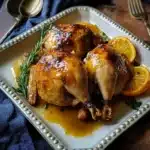
- Serve and Enjoy: After resting, the Cornish Game Hens with Apricot Glaze are ready to be served. You can serve them whole for an elegant presentation or carve them into halves or quarters. Spoon any pan juices or remaining glaze over the hens before serving for extra flavor and moisture.
Nutrition
- Serving Size: one normal portion
- Calories: 450-550
- Sugar: 25-30 grams
- Sodium: 500-700 mg
- Fat: 20-30 grams
- Saturated Fat: 6-8 grams
- Unsaturated Fat: 12-20 grams
- Carbohydrates: 30-40 grams
- Fiber: 1-2 grams
- Protein: 40-50 grams
- Cholesterol: 150-200 mg