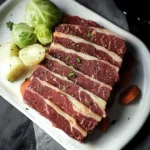
Ingredients
For the Corned Beef and Broth:
- Corned Beef Brisket: 1 (3-4 pound) flat-cut or point-cut corned beef brisket, with spice packet (if included)
- Water or Low-Sodium Beef/Vegetable Broth: Enough to cover the brisket by about 1-2 inches (approx. 10-12 cups, depending on pot size)
- Yellow Onion: 1 large, peeled and quartered
- Garlic Cloves: 3-4 large, peeled and lightly smashed
- Bay Leaves: 2
- Whole Black Peppercorns: 1 teaspoon (optional, especially if using spice packet)
- Pickling Spice Packet: (Usually included with the brisket) – If not included, use 1 tablespoon of pickling spice blend (often contains mustard seeds, coriander seeds, dill seeds, bay leaves, peppercorns, cloves, etc.)
- Celery Stalks: 2, roughly chopped (optional, for added broth flavor)
For the Vegetables:
- Small Red Potatoes or Yukon Gold Potatoes: 1.5 – 2 pounds, scrubbed clean (peeling optional), cut into 1.5-2 inch chunks if large, leave small ones whole.
- Carrots: 1 pound, peeled and cut into 1-2 inch thick rounds or chunks
- Green Cabbage: 1 medium head (about 2-2.5 lbs), outer wilted leaves removed, cut into 6-8 wedges through the core (keeping the core intact helps hold wedges together)
For Serving (Optional but Recommended):
- Fresh Parsley: Chopped, for garnish
- Butter: For serving with potatoes and cabbage
- Mustard: Dijon, spicy brown, whole grain, or horseradish sauce
Instructions
Step 1: Prepare the Corned Beef
- Rinse (Optional): Many corned beef briskets are packed in a brine solution. Some cooks prefer to rinse the brisket under cold running water for a minute or two to remove some of the excess surface saltiness. This is a matter of preference; if you like a robustly salty flavor, you can skip this step. Pat the brisket dry with paper towels if you rinse it.
- Place in Pot: Place the corned beef brisket (fat-side up, generally recommended as the fat renders down and bastes the meat) into a large stockpot or Dutch oven. Ensure the pot is large enough to comfortably hold the brisket and vegetables later, with room for the liquid.
- Add Aromatics and Spices: Add the quartered onion, smashed garlic cloves, bay leaves, and any optional celery and whole peppercorns to the pot around the brisket. Sprinkle the contents of the spice packet (or your tablespoon of pickling spice) over the top of the meat.
- Cover with Liquid: Pour in enough cold water or broth to cover the brisket by at least 1 inch, preferably 2 inches.
Step 2: Simmer the Brisket
- Bring to a Boil: Place the pot over high heat and bring the liquid to a rolling boil.
- Skim the Scum: As the liquid heats, some impurities or “scum” may rise to the surface. Use a large spoon or ladle to carefully skim this off and discard it. This results in a cleaner-tasting broth.
- Reduce to Simmer: Once the scum is removed and the liquid is boiling, immediately reduce the heat to low – just enough to maintain a gentle simmer. You should see small bubbles rising occasionally, but it should not be actively boiling hard.
- Cover and Cook: Cover the pot tightly with a lid. Let the brisket simmer gently for approximately 50-60 minutes per pound, or until it is fork-tender. For a 3-4 pound brisket, this will be around 2.5 to 4 hours. Check for tenderness by inserting a fork into the thickest part of the meat; it should slide in and out easily with little resistance. Low and slow is crucial here for tender results.
Step 3: Add the Vegetables
- Timing is Key: Vegetables cook much faster than the brisket. Add them in stages to prevent them from becoming mushy.
- Add Root Vegetables: About 30-40 minutes before the estimated end of the brisket’s cooking time (when it’s getting close to fork-tender), carefully add the prepared potatoes and carrots to the pot with the simmering liquid. Ensure they are mostly submerged. If needed, add a little more hot water or broth to keep everything covered. Replace the lid and continue simmering.
- Add Cabbage: About 15-20 minutes before serving (when the potatoes and carrots are almost tender), nestle the cabbage wedges into the pot. Try to submerge them as much as possible in the hot broth. Replace the lid. The cabbage needs just enough time to become tender-crisp, not overly soft or gray.
Step 4: Check Doneness and Rest the Meat
- Final Check: After the cabbage has simmered for 15-20 minutes, check the vegetables for tenderness with a fork or paring knife. They should be easily pierced but not falling apart. The corned beef should be very tender.
- Remove and Rest: Carefully remove the corned beef brisket from the pot and transfer it to a large cutting board. Tent it loosely with aluminum foil and let it rest for at least 10-15 minutes. Resting allows the juices to redistribute throughout the meat, making it more flavorful and easier to slice.
- Keep Vegetables Warm: While the meat rests, you can turn off the heat under the pot or keep it on the lowest setting to keep the vegetables and broth warm.
Step 5: Slice and Serve
- Slice Against the Grain: Identify the direction of the muscle fibers (the “grain”) in the corned beef. Using a sharp carving knife, slice the meat thinly against the grain. Slicing against the grain shortens the muscle fibers, ensuring each slice is tender rather than chewy.
- Arrange and Serve: Arrange the sliced corned beef on a large platter. Use a slotted spoon to remove the potatoes, carrots, and cabbage wedges from the pot, arranging them around the meat. Ladle some of the hot cooking broth over everything or serve it in a separate bowl on the side.
- Garnish and Accompany: Garnish generously with chopped fresh parsley. Serve immediately with butter for the vegetables and your choice of mustards or horseradish sauce for the corned beef.
Nutrition
- Serving Size: one normal portion
- Calories: 550-750