

There’s a certain magic that happens when a pot of corned beef and cabbage simmers on the stove. The aroma alone is enough to transport me straight to cozy kitchens and thoughts of celebratory gatherings, especially around St. Patrick’s Day. It’s more than just a meal; it’s comfort food steeped in tradition. I remember my grandmother making huge pots of it, the steam fogging up the windows, the promise of tender, salty beef and perfectly cooked, sweet vegetables filling the house. Getting the meat perfectly tender without being stringy, and the cabbage cooked through but not mushy, felt like an art form. This recipe is the culmination of years of tasting, tweaking, and aiming for that perfect balance my grandmother achieved – a hearty, flavorful, and deeply satisfying plate that warms you from the inside out. It’s become a requested favorite in my own home, a dish that signals comfort, tradition, and delicious things to come.
Understanding the Classic: What Makes Corned Beef and Cabbage Special?
Before we dive into the pot, let’s appreciate the components that make this dish a timeless classic. Corned Beef and Cabbage isn’t fancy, but its enduring appeal lies in its simplicity, hearty nature, and the wonderful alchemy that happens during the long, slow cooking process.
- The Star: Corned Beef Brisket: The term “corned” refers to the curing process, where beef (typically brisket) is treated with large-grained rock salt, or “corns” of salt, along with other pickling spices. This curing process preserves the meat and infuses it with a distinctive salty, tangy, and spiced flavor. Brisket, a cut from the lower chest of the cow, benefits immensely from the slow, moist cooking method used in this recipe, transforming a potentially tough cut into fork-tender perfection. You’ll often find two cuts: the leaner “flat cut” and the fattier, often more flavorful “point cut.” Either works well here.
- The Essential Veggies: Cabbage, Potatoes, and Carrots: This trio forms the backbone of the dish. The cabbage, often added towards the end, cooks in the flavorful broth, becoming tender and sweet, absorbing the meaty, salty essence while retaining a slight bite (if you time it right!). Potatoes add starchy substance, becoming creamy and satisfying. Carrots lend a touch of sweetness and vibrant color, balancing the savory notes. Onions and sometimes celery are also included to build a flavorful broth base.
- The Flavorful Broth: The cooking liquid isn’t just water; it becomes a rich, savory broth infused with the essence of the corned beef, its pickling spices, and the vegetables. This broth is crucial – it cooks the vegetables and is often ladled over the finished dish. Sometimes aromatics like bay leaves, peppercorns, or even a splash of beer (like a stout) are added for extra depth.
- The Process: Slow Simmering: Patience is key. The long, slow simmer over low heat gently breaks down the connective tissues in the brisket, rendering it incredibly tender. It also allows the flavors of the meat, spices, and vegetables to meld beautifully. Rushing the process with high heat will result in tough meat.
This combination of savory, cured meat and simple, broth-infused vegetables creates a comforting, complete meal that has nourished and delighted families for generations.
Gather Your Ingredients: The Foundation of Flavor
Accuracy ensures success. Here’s what you’ll need to create a traditional and delicious Corned Beef and Cabbage dinner, typically serving 6-8 people:
For the Corned Beef and Broth:
- Corned Beef Brisket: 1 (3-4 pound) flat-cut or point-cut corned beef brisket, with spice packet (if included)
- Water or Low-Sodium Beef/Vegetable Broth: Enough to cover the brisket by about 1-2 inches (approx. 10-12 cups, depending on pot size)
- Yellow Onion: 1 large, peeled and quartered
- Garlic Cloves: 3-4 large, peeled and lightly smashed
- Bay Leaves: 2
- Whole Black Peppercorns: 1 teaspoon (optional, especially if using spice packet)
- Pickling Spice Packet: (Usually included with the brisket) – If not included, use 1 tablespoon of pickling spice blend (often contains mustard seeds, coriander seeds, dill seeds, bay leaves, peppercorns, cloves, etc.)
- Celery Stalks: 2, roughly chopped (optional, for added broth flavor)
For the Vegetables:
- Small Red Potatoes or Yukon Gold Potatoes: 1.5 – 2 pounds, scrubbed clean (peeling optional), cut into 1.5-2 inch chunks if large, leave small ones whole.
- Carrots: 1 pound, peeled and cut into 1-2 inch thick rounds or chunks
- Green Cabbage: 1 medium head (about 2-2.5 lbs), outer wilted leaves removed, cut into 6-8 wedges through the core (keeping the core intact helps hold wedges together)
For Serving (Optional but Recommended):
- Fresh Parsley: Chopped, for garnish
- Butter: For serving with potatoes and cabbage
- Mustard: Dijon, spicy brown, whole grain, or horseradish sauce
Ingredient Notes:
- Brisket Cut: Flat cut is leaner and easier to slice uniformly. Point cut is generally fattier, which can mean more flavor and tenderness, but it’s less uniform in shape.
- Potatoes: Waxy potatoes like Red Bliss or Yukon Gold hold their shape better during boiling than starchy potatoes like Russets.
- Broth vs. Water: Using broth instead of water adds an extra layer of savory depth right from the start. If using water, the beef and aromatics will create their own flavorful broth as it cooks.
- Spice Packet: Don’t discard it! It contains the classic blend of spices that gives corned beef its characteristic flavor. If yours doesn’t have one, pickling spice is readily available in most supermarkets.
Step-by-Step Guide: Cooking Your Corned Beef and Cabbage
Follow these steps for a perfectly cooked, traditional Corned Beef and Cabbage dinner using the stovetop simmering method.
Step 1: Prepare the Corned Beef
- Rinse (Optional): Many corned beef briskets are packed in a brine solution. Some cooks prefer to rinse the brisket under cold running water for a minute or two to remove some of the excess surface saltiness. This is a matter of preference; if you like a robustly salty flavor, you can skip this step. Pat the brisket dry with paper towels if you rinse it.
- Place in Pot: Place the corned beef brisket (fat-side up, generally recommended as the fat renders down and bastes the meat) into a large stockpot or Dutch oven. Ensure the pot is large enough to comfortably hold the brisket and vegetables later, with room for the liquid.
- Add Aromatics and Spices: Add the quartered onion, smashed garlic cloves, bay leaves, and any optional celery and whole peppercorns to the pot around the brisket. Sprinkle the contents of the spice packet (or your tablespoon of pickling spice) over the top of the meat.
- Cover with Liquid: Pour in enough cold water or broth to cover the brisket by at least 1 inch, preferably 2 inches.
Step 2: Simmer the Brisket
- Bring to a Boil: Place the pot over high heat and bring the liquid to a rolling boil.
- Skim the Scum: As the liquid heats, some impurities or “scum” may rise to the surface. Use a large spoon or ladle to carefully skim this off and discard it. This results in a cleaner-tasting broth.
- Reduce to Simmer: Once the scum is removed and the liquid is boiling, immediately reduce the heat to low – just enough to maintain a gentle simmer. You should see small bubbles rising occasionally, but it should not be actively boiling hard.
- Cover and Cook: Cover the pot tightly with a lid. Let the brisket simmer gently for approximately 50-60 minutes per pound, or until it is fork-tender. For a 3-4 pound brisket, this will be around 2.5 to 4 hours. Check for tenderness by inserting a fork into the thickest part of the meat; it should slide in and out easily with little resistance. Low and slow is crucial here for tender results.
Step 3: Add the Vegetables
- Timing is Key: Vegetables cook much faster than the brisket. Add them in stages to prevent them from becoming mushy.
- Add Root Vegetables: About 30-40 minutes before the estimated end of the brisket’s cooking time (when it’s getting close to fork-tender), carefully add the prepared potatoes and carrots to the pot with the simmering liquid. Ensure they are mostly submerged. If needed, add a little more hot water or broth to keep everything covered. Replace the lid and continue simmering.
- Add Cabbage: About 15-20 minutes before serving (when the potatoes and carrots are almost tender), nestle the cabbage wedges into the pot. Try to submerge them as much as possible in the hot broth. Replace the lid. The cabbage needs just enough time to become tender-crisp, not overly soft or gray.
Step 4: Check Doneness and Rest the Meat
- Final Check: After the cabbage has simmered for 15-20 minutes, check the vegetables for tenderness with a fork or paring knife. They should be easily pierced but not falling apart. The corned beef should be very tender.
- Remove and Rest: Carefully remove the corned beef brisket from the pot and transfer it to a large cutting board. Tent it loosely with aluminum foil and let it rest for at least 10-15 minutes. Resting allows the juices to redistribute throughout the meat, making it more flavorful and easier to slice.
- Keep Vegetables Warm: While the meat rests, you can turn off the heat under the pot or keep it on the lowest setting to keep the vegetables and broth warm.
Step 5: Slice and Serve
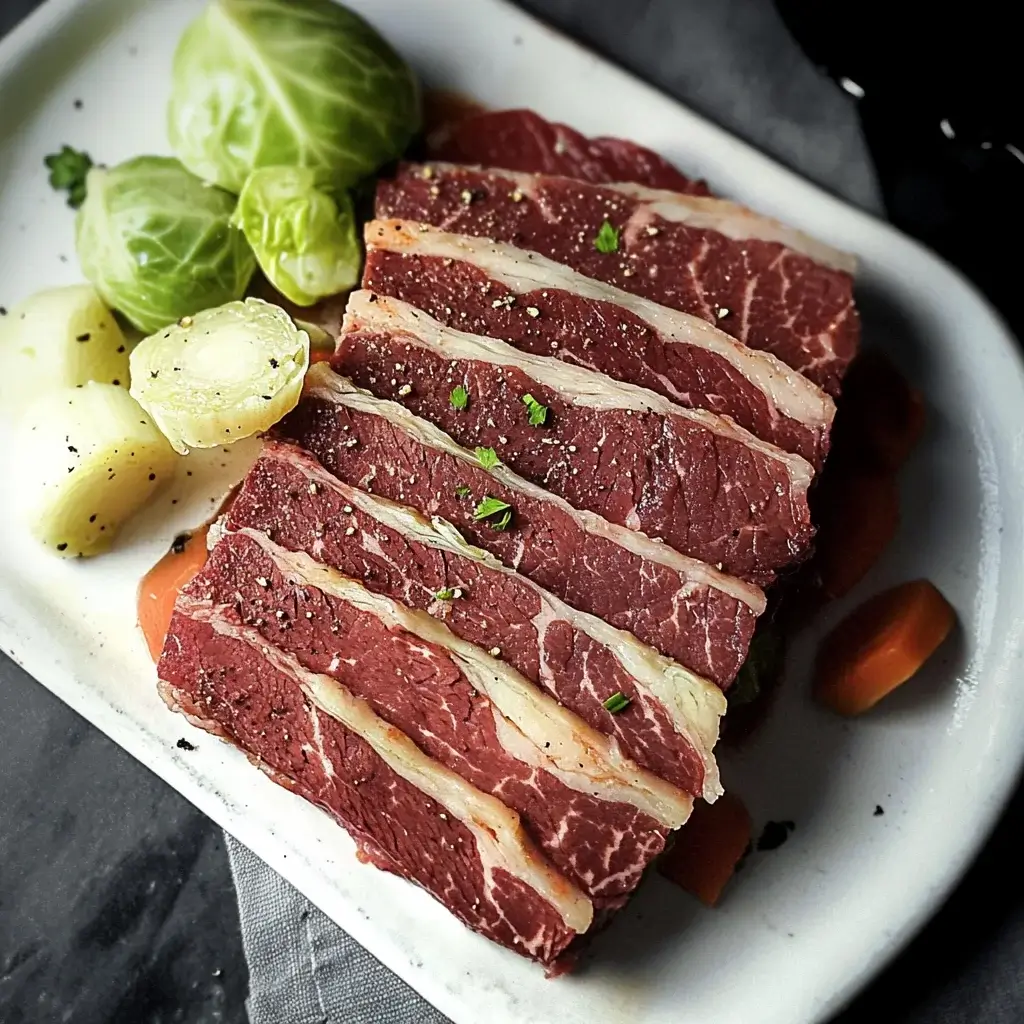
- Slice Against the Grain: Identify the direction of the muscle fibers (the “grain”) in the corned beef. Using a sharp carving knife, slice the meat thinly against the grain. Slicing against the grain shortens the muscle fibers, ensuring each slice is tender rather than chewy.
- Arrange and Serve: Arrange the sliced corned beef on a large platter. Use a slotted spoon to remove the potatoes, carrots, and cabbage wedges from the pot, arranging them around the meat. Ladle some of the hot cooking broth over everything or serve it in a separate bowl on the side.
- Garnish and Accompany: Garnish generously with chopped fresh parsley. Serve immediately with butter for the vegetables and your choice of mustards or horseradish sauce for the corned beef.
Nutrition Facts (Estimated)
- Servings: 6-8 servings
- Calories Per Serving: Approximately 550-750 kcal
Disclaimer: Nutritional information is an estimate only. Actual values vary based on the specific cut of corned beef (fat content), portion size, whether broth or water is used, amount of butter added at serving, and other factors. Corned beef is relatively high in sodium due to the curing process. This is a hearty, traditional meal best enjoyed as part of a balanced diet.
Time Commitment: Planning Your Feast
Understanding the timeline helps you plan your cooking day:
- Preparation Time: 20-25 minutes (rinsing beef, chopping vegetables)
- Cook Time (Brisket Simmering): 2.5 – 4 hours (depending on size/cut)
- Cook Time (Vegetables Added): 30-40 minutes (overlapping with final brisket simmer time)
- Resting Time (Brisket): 10-15 minutes
- Total Time: Approximately 3 hours to 4 hours 45 minutes (most of this is hands-off simmering time)
Tip: Because most of the time is passive simmering, this is a great dish to start in the early afternoon for an evening meal.
How to Serve Your Classic Corned Beef and Cabbage
Presentation and accompaniments enhance this traditional meal:
- Platter Presentation:
- Arrange the beautifully sliced corned beef down the center of a large, warmed platter.
- Surround the meat attractively with the cooked potatoes, carrot chunks, and cabbage wedges.
- Ladle a small amount of the cooking broth over the meat and vegetables to keep them moist and add flavor.
- Garnish liberally with chopped fresh parsley for a pop of color and freshness.
- Essential Accompaniments:
- Mustard: Offer a selection! Spicy brown mustard, tangy Dijon mustard, hearty whole grain mustard, or a fiery horseradish cream sauce are all excellent pairings that cut through the richness of the meat.
- Butter: Serve good quality butter alongside for guests to add to their potatoes and cabbage.
- Broth: Serve extra cooking broth in a small pitcher or gravy boat for ladling over individual servings.
- Bread: Irish Soda Bread (classic!) or crusty rye bread is perfect for soaking up the flavorful broth.
- Beverage Pairings:
- Beer: A pint of Irish Stout (like Guinness) is the quintessential pairing. An Irish Red Ale also works well.
- Wine: A dry Riesling or a light-bodied, fruity red like Beaujolais could complement the dish.
- Non-Alcoholic: Ginger ale or sparkling water with lemon.
Expert Tips for Perfect Corned Beef and Cabbage
Elevate your dish from good to great with these insider tips:
- Choose Your Cut Wisely: Understand the difference between flat cut (leaner, uniform slices) and point cut (fattier, potentially more tender/flavorful, less uniform). For classic presentation, flat cut is often preferred. For maximum richness, try the point cut.
- Master the Simmer: Do not boil the corned beef aggressively after the initial stage. A low, gentle simmer is crucial for breaking down the tough connective tissues and achieving melt-in-your-mouth tenderness. Keep the lid on and the heat low.
- Don’t Add Salt (Initially): Corned beef is cured in salt, so the meat and resulting broth will already be quite salty. Taste the broth before adding any extra salt, usually only needed right at the end if at all, or adjusted at the table.
- Time Vegetables Carefully: Add vegetables in stages based on their required cooking time. Potatoes and carrots need longer than cabbage. Add the cabbage wedges only in the last 15-20 minutes to ensure they are tender but still hold their shape and have a slight bite, avoiding the dreaded mushy, gray result.
- Slice Against the Grain – It Matters! This is perhaps the most critical tip for serving. Locate the direction of the muscle fibers in the cooked, rested brisket and slice perpendicular (across) them. This simple step makes a huge difference in the perceived tenderness of the meat.
Frequently Asked Questions (FAQ)
Answers to common queries about making Corned Beef and Cabbage:
- Q: My corned beef didn’t come with a spice packet. What should I use?
- A: No problem! You can easily substitute with 1 tablespoon of store-bought pickling spice blend. Alternatively, create your own mix using common whole spices like 1-2 bay leaves, 1 teaspoon black peppercorns, 1/2 teaspoon mustard seeds, 1/2 teaspoon coriander seeds, a few whole cloves, and maybe a pinch of dill seed or allspice berries.
- Q: Can I cook Corned Beef and Cabbage in a slow cooker?
- A: Yes, it’s an excellent method! Place the rinsed brisket, aromatics, spices, and liquid in the slow cooker. Cook on low for 8-10 hours or on high for 4-5 hours, until tender. Add the potatoes and carrots during the last 1.5-2 hours of cooking (on low) or last hour (on high). Add the cabbage during the final 30-45 minutes (on low) or 20-30 minutes (on high).
- Q: Can I cook Corned Beef and Cabbage in an Instant Pot (Pressure Cooker)?
- A: Absolutely, this significantly speeds up the process. Place brisket, aromatics, spices, and liquid in the Instant Pot (ensure liquid doesn’t exceed max fill line). Cook on high pressure for about 70-90 minutes (depending on size/thickness), followed by a natural pressure release for 10-15 minutes. Remove brisket to rest. Add potatoes and carrots to the pot, cook on high pressure for 3-5 minutes. Quick release pressure. Add cabbage wedges, cook on high pressure for another 2-3 minutes, followed by a quick release.
- Q: Why is my corned beef tough or stringy?
- A: This usually happens for two reasons: 1) It wasn’t cooked long enough at a low enough temperature (it needs that long, slow simmer to break down connective tissue), OR 2) It was sliced with the grain instead of against it. Ensure it’s fork-tender before removing from the pot and always slice against the grain.
- Q: How do I store and use leftovers?
- A: Store leftover corned beef and vegetables separately (or together) in airtight containers in the refrigerator for up to 3-4 days. Reheat gently. Leftover corned beef is fantastic diced up in Corned Beef Hash with potatoes and onions for breakfast, or thinly sliced in sandwiches (like a Reuben!). Leftover veggies can be added to soups or enjoyed as is.
Enjoy making and sharing this hearty, traditional Corned Beef and Cabbage – a truly comforting and satisfying meal!
Print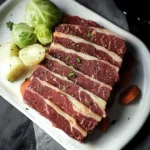
Corned Beef and Cabbage Recipe
Ingredients
For the Corned Beef and Broth:
- Corned Beef Brisket: 1 (3-4 pound) flat-cut or point-cut corned beef brisket, with spice packet (if included)
- Water or Low-Sodium Beef/Vegetable Broth: Enough to cover the brisket by about 1-2 inches (approx. 10-12 cups, depending on pot size)
- Yellow Onion: 1 large, peeled and quartered
- Garlic Cloves: 3-4 large, peeled and lightly smashed
- Bay Leaves: 2
- Whole Black Peppercorns: 1 teaspoon (optional, especially if using spice packet)
- Pickling Spice Packet: (Usually included with the brisket) – If not included, use 1 tablespoon of pickling spice blend (often contains mustard seeds, coriander seeds, dill seeds, bay leaves, peppercorns, cloves, etc.)
- Celery Stalks: 2, roughly chopped (optional, for added broth flavor)
For the Vegetables:
- Small Red Potatoes or Yukon Gold Potatoes: 1.5 – 2 pounds, scrubbed clean (peeling optional), cut into 1.5-2 inch chunks if large, leave small ones whole.
- Carrots: 1 pound, peeled and cut into 1-2 inch thick rounds or chunks
- Green Cabbage: 1 medium head (about 2-2.5 lbs), outer wilted leaves removed, cut into 6-8 wedges through the core (keeping the core intact helps hold wedges together)
For Serving (Optional but Recommended):
- Fresh Parsley: Chopped, for garnish
- Butter: For serving with potatoes and cabbage
- Mustard: Dijon, spicy brown, whole grain, or horseradish sauce
Instructions
Step 1: Prepare the Corned Beef
- Rinse (Optional): Many corned beef briskets are packed in a brine solution. Some cooks prefer to rinse the brisket under cold running water for a minute or two to remove some of the excess surface saltiness. This is a matter of preference; if you like a robustly salty flavor, you can skip this step. Pat the brisket dry with paper towels if you rinse it.
- Place in Pot: Place the corned beef brisket (fat-side up, generally recommended as the fat renders down and bastes the meat) into a large stockpot or Dutch oven. Ensure the pot is large enough to comfortably hold the brisket and vegetables later, with room for the liquid.
- Add Aromatics and Spices: Add the quartered onion, smashed garlic cloves, bay leaves, and any optional celery and whole peppercorns to the pot around the brisket. Sprinkle the contents of the spice packet (or your tablespoon of pickling spice) over the top of the meat.
- Cover with Liquid: Pour in enough cold water or broth to cover the brisket by at least 1 inch, preferably 2 inches.
Step 2: Simmer the Brisket
- Bring to a Boil: Place the pot over high heat and bring the liquid to a rolling boil.
- Skim the Scum: As the liquid heats, some impurities or “scum” may rise to the surface. Use a large spoon or ladle to carefully skim this off and discard it. This results in a cleaner-tasting broth.
- Reduce to Simmer: Once the scum is removed and the liquid is boiling, immediately reduce the heat to low – just enough to maintain a gentle simmer. You should see small bubbles rising occasionally, but it should not be actively boiling hard.
- Cover and Cook: Cover the pot tightly with a lid. Let the brisket simmer gently for approximately 50-60 minutes per pound, or until it is fork-tender. For a 3-4 pound brisket, this will be around 2.5 to 4 hours. Check for tenderness by inserting a fork into the thickest part of the meat; it should slide in and out easily with little resistance. Low and slow is crucial here for tender results.
Step 3: Add the Vegetables
- Timing is Key: Vegetables cook much faster than the brisket. Add them in stages to prevent them from becoming mushy.
- Add Root Vegetables: About 30-40 minutes before the estimated end of the brisket’s cooking time (when it’s getting close to fork-tender), carefully add the prepared potatoes and carrots to the pot with the simmering liquid. Ensure they are mostly submerged. If needed, add a little more hot water or broth to keep everything covered. Replace the lid and continue simmering.
- Add Cabbage: About 15-20 minutes before serving (when the potatoes and carrots are almost tender), nestle the cabbage wedges into the pot. Try to submerge them as much as possible in the hot broth. Replace the lid. The cabbage needs just enough time to become tender-crisp, not overly soft or gray.
Step 4: Check Doneness and Rest the Meat
- Final Check: After the cabbage has simmered for 15-20 minutes, check the vegetables for tenderness with a fork or paring knife. They should be easily pierced but not falling apart. The corned beef should be very tender.
- Remove and Rest: Carefully remove the corned beef brisket from the pot and transfer it to a large cutting board. Tent it loosely with aluminum foil and let it rest for at least 10-15 minutes. Resting allows the juices to redistribute throughout the meat, making it more flavorful and easier to slice.
- Keep Vegetables Warm: While the meat rests, you can turn off the heat under the pot or keep it on the lowest setting to keep the vegetables and broth warm.
Step 5: Slice and Serve
- Slice Against the Grain: Identify the direction of the muscle fibers (the “grain”) in the corned beef. Using a sharp carving knife, slice the meat thinly against the grain. Slicing against the grain shortens the muscle fibers, ensuring each slice is tender rather than chewy.
- Arrange and Serve: Arrange the sliced corned beef on a large platter. Use a slotted spoon to remove the potatoes, carrots, and cabbage wedges from the pot, arranging them around the meat. Ladle some of the hot cooking broth over everything or serve it in a separate bowl on the side.
- Garnish and Accompany: Garnish generously with chopped fresh parsley. Serve immediately with butter for the vegetables and your choice of mustards or horseradish sauce for the corned beef.
Nutrition
- Serving Size: one normal portion
- Calories: 550-750