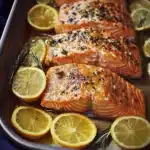
Ingredients
- 2 pounds Salmon Fillet, skin on or off: Salmon is the star of the show, and choosing the right fillet is key. You have options here:
- Types of Salmon: Consider different varieties like Sockeye, Coho, King (Chinook), or Atlantic salmon. Sockeye and King are richer in flavor and higher in fat, while Coho and Atlantic are milder. Any type will work beautifully in this recipe, so choose based on your preference and availability.
- Fresh vs. Frozen: Fresh salmon is ideal when available and in season. However, high-quality frozen salmon is an excellent alternative. If using frozen, ensure it is fully thawed before cooking.
- Skin On or Off: Skin-on salmon is generally recommended for roasting. The skin crisps up beautifully and helps to keep the salmon moist during cooking. If you prefer skinless, that works too, just be mindful that it might cook slightly faster and could be a tad drier.
- Thickness: Aim for fillets that are relatively uniform in thickness for even cooking. Thicker fillets will require slightly longer cooking times.
- 1 Lemon, thinly sliced: Lemons are essential for their bright, acidic juice and fragrant zest. They cut through the richness of the salmon and add a zesty lift. Use a Meyer lemon if you can find them for a slightly sweeter and less acidic flavor.
- 1 Orange, thinly sliced: Oranges bring a touch of sweetness and a deeper citrus note to the dish. Navel or Valencia oranges work well. Blood oranges add a beautiful color and a slightly berry-like flavor.
- 1 Grapefruit (pink or red), thinly sliced: Grapefruit adds a slightly bitter and tangy element that balances the sweetness of the orange and the acidity of the lemon, creating a complex citrus profile. Pink or red grapefruit are preferred for their sweeter and less bitter taste compared to white grapefruit.
- ¼ cup Olive Oil: Olive oil is the cooking medium and also contributes to the flavor and moisture of the salmon. Extra virgin olive oil is recommended for its superior flavor and health benefits. It helps to prevent the salmon from drying out during roasting and enhances the absorption of the citrus flavors.
- 2 cloves Garlic, minced: Garlic adds a savory depth and aromatic complexity to the citrus marinade. Freshly minced garlic is best for its pungent flavor.
- 2 tablespoons Fresh Parsley, chopped: Parsley provides a fresh, herbaceous note and a pop of green color. Flat-leaf parsley (Italian parsley) is preferred for its stronger flavor compared to curly parsley.
- 2 tablespoons Fresh Dill, chopped: Dill complements the salmon beautifully with its delicate, slightly anise-like flavor. Fresh dill is essential for its bright and aromatic quality.
- 1 teaspoon Salt: Salt enhances the flavors of all the ingredients and is crucial for seasoning the salmon properly. Kosher salt or sea salt is recommended.
- ½ teaspoon Black Pepper, freshly ground: Freshly ground black pepper adds a subtle spice and depth of flavor.
Optional additions for customized flavor:
- Fresh Thyme or Rosemary Sprigs: Add a few sprigs of thyme or rosemary alongside the citrus slices for an earthy, aromatic dimension.
- Pinch of Red Pepper Flakes: For a touch of heat, add a pinch of red pepper flakes to the marinade.
- 1 tablespoon Honey or Maple Syrup: If you prefer a slightly sweeter glaze, whisk in a tablespoon of honey or maple syrup into the olive oil mixture.
- Grated Ginger: A small amount of grated fresh ginger adds a warm, zesty kick.
- Soy Sauce or Coconut Aminos: For a savory umami boost, add a teaspoon of soy sauce or coconut aminos to the marinade.
Instructions
Step 1: Preheat Oven and Prepare Baking Sheet (5 minutes)
Preheat your oven to 400°F (200°C). Line a large baking sheet with parchment paper or foil. Parchment paper makes cleanup easier and prevents the salmon from sticking. Foil also works well and can be lightly greased if desired.
Step 2: Prepare the Citrus Fruits and Garlic (10 minutes)
Wash the lemon, orange, and grapefruit thoroughly. Thinly slice each citrus fruit into rounds, about ¼ inch thick. Mince the garlic cloves. Chopping the citrus thinly allows their juices and flavors to infuse the salmon effectively.
Step 3: Make the Citrus Marinade (5 minutes)
In a small bowl, whisk together the olive oil, minced garlic, chopped parsley, chopped dill, salt, and black pepper. This simple marinade is the flavor foundation of the dish. Ensure the ingredients are well combined.
Step 4: Arrange Citrus Slices on Baking Sheet (2 minutes)
Arrange the citrus slices in a single layer on the prepared baking sheet. You can create a bed of citrus for the salmon to rest on, or arrange them around where the salmon will be placed. Roasting the citrus alongside the salmon intensifies their flavors and creates a flavorful base.
Step 5: Place Salmon on Citrus and Brush with Marinade (3 minutes)
Place the salmon fillet skin-side down (if using skin-on) directly on top of the citrus slices. Generously brush the citrus marinade all over the salmon fillet, ensuring it’s evenly coated. The marinade will infuse the salmon with flavor and keep it moist during roasting.
Step 6: Roast the Salmon (12-18 minutes)
Roast in the preheated oven for 12-18 minutes, or until the salmon is cooked through and flakes easily with a fork. The exact cooking time will depend on the thickness of your salmon fillet.
Step 7: Check for Doneness (Visual and Temperature Cues)
- Flaking: The salmon is done when it flakes easily when gently pressed with a fork. The flesh should separate into distinct flakes.
- Color: The color of the salmon will change from translucent to opaque and a vibrant pink/orange.
- Internal Temperature (Optional but Recommended): For precise doneness, use a food thermometer to check the internal temperature. Insert the thermometer into the thickest part of the fillet. The FDA recommends an internal temperature of 145°F (63°C) for cooked salmon. However, many chefs prefer slightly less cooked salmon for optimal moistness, around 130-140°F (54-60°C). The carryover cooking will bring it up slightly after removing from the oven.
Step 8: Rest Briefly (Optional) (2-3 minutes)
While not strictly necessary, letting the salmon rest for a couple of minutes after removing it from the oven can help redistribute the juices and make it even more tender. Simply tent it loosely with foil.
Step 9: Serve and Enjoy!
Carefully transfer the Citrus-Roasted Salmon to a serving platter or individual plates, along with the roasted citrus slices. Garnish with extra fresh parsley or dill, if desired. Serve i
Nutrition
- Serving Size: one normal portion
- Calories: 300-400 calories
- Sugar: 3-5 grams
- Sodium: 300-400 mg
- Fat: 18-25 grams
- Saturated Fat: 3-5 grams
- Carbohydrates: 5-10 grams
- Fiber: 1-2 grams
- Protein: 30-40 grams
- Cholesterol: 80-100 mg