Ingredients
Scale
-
- 4 boneless, skinless chicken breasts (about 6–8 ounces each): Opt for chicken breasts that are uniform in size for even cooking. Pounding them to an even thickness is crucial for tenderness and quick cooking. Look for plump, pink chicken breasts at your grocery store or butcher.
-
- 1 cup all-purpose flour: All-purpose flour is the standard for the light dredging that gives Chicken Francese its delicate coating. For a gluten-free version, you can use a gluten-free all-purpose blend, but be aware it may slightly alter the texture.
-
- 3 large eggs: Eggs are essential for the classic eggy batter that coats the chicken. They provide richness, structure, and that beautiful golden-brown color when sautéed. Use fresh, large eggs for the best results.
-
- 1/2 cup grated Parmesan cheese: Parmesan cheese adds a subtle savory note and helps create a flavorful crust when mixed with the egg batter. Use freshly grated Parmesan for optimal flavor and melting quality. Avoid pre-shredded Parmesan as it often contains cellulose and may not melt as smoothly.
-
- Salt and freshly ground black pepper to taste: Seasoning is key! Use kosher salt and freshly ground black pepper to enhance the flavors of the chicken and the sauce. Season generously at each stage of the recipe.
-
- 1/4 cup olive oil: Olive oil is used for sautéing the chicken. Its higher smoke point makes it suitable for pan-frying. Extra virgin olive oil adds a fruity flavor, but light olive oil or even canola oil can be used as well.
-
- 4 tablespoons unsalted butter: Butter is the heart of the luscious Francese sauce. Unsalted butter allows you to control the saltiness of the sauce. Using high-quality butter will significantly enhance the flavor of the sauce.
-
- 1/2 cup dry white wine (such as Pinot Grigio or Sauvignon Blanc): Dry white wine is a classic component of Francese sauce, adding acidity and depth of flavor. Choose a crisp, dry white wine like Pinot Grigio, Sauvignon Blanc, or dry Vermouth. If you prefer to omit alcohol, you can substitute with chicken broth.
-
- 1/4 cup fresh lemon juice: Freshly squeezed lemon juice is crucial for the bright, tangy flavor that defines Chicken Francese. Avoid bottled lemon juice, which often lacks the fresh, vibrant flavor of freshly squeezed juice. One to two lemons should be sufficient to yield 1/4 cup of juice.
-
- 1 cup chicken broth: Chicken broth forms the base of the sauce, adding volume and savory notes. Use low-sodium chicken broth to control the saltiness of the dish. Homemade chicken broth will elevate the flavor even further.
-
- 1/4 cup chopped fresh parsley, for garnish: Fresh parsley adds a pop of color and a fresh, herbaceous finish to the dish. Flat-leaf parsley (Italian parsley) is preferred for its stronger flavor, but curly parsley can also be used.
Instructions
Step 1: Prepare the Chicken Breasts
-
- Pound the chicken: Place each chicken breast between two sheets of plastic wrap or parchment paper. Using a meat mallet or rolling pin, pound the chicken to an even thickness of about 1/4 inch. This ensures even cooking and tenderizes the chicken. Start from the thicker part of the breast and work outwards.
-
- Season the chicken: Lightly season both sides of the pounded chicken breasts with salt and freshly ground black pepper. Don’t over-season at this stage, as the sauce will also contribute to the overall flavor.
Step 2: Set Up the Dredging Stations
-
- Flour station: Place the all-purpose flour in a shallow dish or pie plate.
-
- Egg mixture station: In a separate shallow dish, whisk together the eggs and grated Parmesan cheese until well combined. This egg mixture will form the flavorful batter for the chicken.
Step 3: Dredge the Chicken
-
- Dredge in flour: Dredge each chicken breast in the flour, ensuring it is evenly coated on both sides. Shake off any excess flour. The flour helps the egg mixture adhere to the chicken and creates a light crust.
-
- Dip in egg mixture: Dip the floured chicken breast into the egg and Parmesan mixture, making sure it is completely coated. Allow any excess egg mixture to drip back into the dish.
Step 4: Sauté the Chicken
-
- Heat olive oil: Heat the olive oil in a large skillet over medium-high heat. The skillet should be large enough to accommodate the chicken breasts without overcrowding. Use a skillet with a light-colored bottom so you can easily monitor the browning.
-
- Sauté the chicken: Once the oil is hot and shimmering, carefully place the dredged chicken breasts in the skillet in a single layer. Avoid overcrowding the pan, as this will lower the temperature and cause the chicken to steam instead of sauté. If necessary, cook the chicken in batches.
-
- Cook until golden brown and cooked through: Sauté the chicken for about 3-4 minutes per side, or until golden brown and cooked through. The internal temperature of the chicken should reach 165°F (74°C). Use a meat thermometer to ensure doneness. The coating should be crispy and golden, and the chicken should be opaque and firm to the touch.
-
- Remove and set aside: Once cooked, remove the chicken breasts from the skillet and set aside on a plate. Keep them warm while you prepare the sauce. You can loosely tent them with foil if desired.
Step 5: Prepare the Francese Sauce
-
- Melt butter in the same skillet: In the same skillet used to sauté the chicken (no need to wipe it out, as the browned bits add flavor to the sauce), melt the butter over medium heat.
-
- Add white wine: Once the butter is melted and slightly foamy, carefully pour in the dry white wine. Be cautious as it may sputter slightly.
-
- Deglaze the pan: Using a wooden spoon or spatula, scrape up any browned bits from the bottom of the skillet. These browned bits, known as fond, are packed with flavor and will enhance the sauce.
-
- Simmer and reduce slightly: Bring the wine to a simmer and let it reduce slightly for about 2-3 minutes, allowing the alcohol to evaporate and the flavors to concentrate.
-
- Add lemon juice and chicken broth: Pour in the fresh lemon juice and chicken broth. Stir to combine all the ingredients.
-
- Simmer and thicken slightly: Continue to simmer the sauce for another 5-7 minutes, or until it has slightly thickened and reduced to your desired consistency. The sauce should be slightly syrupy and able to coat the back of a spoon. If you prefer a thicker sauce, you can simmer it for a bit longer. If it becomes too thick, add a splash of chicken broth to thin it out.
Step 6: Combine Chicken and Sauce
-
- Return chicken to skillet: Gently return the sautéed chicken breasts to the skillet with the Francese sauce.
-
- Coat chicken with sauce: Spoon the sauce generously over the chicken breasts, ensuring they are well coated. You can also gently turn the chicken in the sauce to coat both sides.
-
- Simmer briefly: Let the chicken simmer in the sauce for 1-2 minutes to heat through and allow the flavors to meld together. Avoid simmering for too long, as the coating can become soggy.
Step 7: Garnish and Serve
-
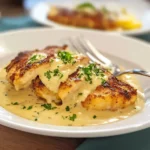
- Garnish with parsley: Sprinkle the chopped fresh parsley over the Chicken Francese. This adds a fresh, vibrant touch and visual appeal.
-
- Serve immediately: Chicken Francese is best served immediately while it’s hot and the coating is still slightly crispy. Serve over pasta, rice, or alongside your favorite side dishes.
Nutrition
- Serving Size: one normal portion
- Calories: 400-550
- Sugar: 2-3 grams
- Sodium: 500-700 mg
- Fat: 20-30 grams
- Saturated Fat: 8-12 grams
- Carbohydrates: 10-15 grams
- Fiber: 1-2 grams
- Protein: 40-50 grams
- Cholesterol: 200-250 mg