Ingredients
Scale
- 1 pound Italian Sausage (Sweet or Hot, casings removed): Italian sausage is the protein powerhouse of this dish, adding a robust, savory flavor that forms the foundation of the Alfredo sauce. You can choose between sweet or hot Italian sausage depending on your spice preference. Sweet Italian sausage offers a milder, herby flavor, while hot Italian sausage provides a spicy kick. Removing the casings is crucial as it allows the sausage to crumble nicely and brown evenly in the pan, releasing its flavorful fats and juices into the dish. For a leaner option, you can use Italian chicken or turkey sausage, but be mindful that they may have less fat, so you might need to add a little extra olive oil to help them brown and prevent sticking. The quality of the sausage significantly impacts the final flavor, so opt for a good quality sausage from your butcher or grocery store.
- 1 medium head of Cabbage (Green or Savoy), cored and shredded: Cabbage is the star vegetable, adding a subtle sweetness, a satisfying crunch when slightly undercooked, and a tender, caramelized texture when cooked longer. Green cabbage is a classic choice, offering a slightly peppery flavor. Savoy cabbage, with its crinkled leaves, is milder and sweeter, and it wilts beautifully. You can use either variety or even a combination of both. Coring and shredding the cabbage ensures it cooks evenly and incorporates well into the sauce. Shredding can be done using a sharp knife, a mandoline (with caution), or a food processor with a shredding attachment. Cabbage is also a nutritional powerhouse, packed with vitamins, fiber, and antioxidants, making this Alfredo dish a bit lighter and healthier than traditional versions.
- 1 tablespoon Olive Oil: Olive oil is used for sautéing the sausage and cabbage, providing a healthy fat base and preventing sticking. It also adds a subtle fruity flavor that complements the other ingredients. Extra virgin olive oil is preferred for its superior flavor and health benefits, but regular olive oil will also work. You can adjust the amount of olive oil depending on the fat content of your sausage – if using a fattier sausage, you may need less olive oil. For a richer flavor, you can use butter or a combination of butter and olive oil.
- 2 cloves Garlic, minced: Garlic is an essential aromatic that infuses the dish with a savory, pungent flavor. Freshly minced garlic is highly recommended for the best flavor; pre-minced garlic can be used in a pinch, but the flavor will be less intense. Minced garlic readily infuses its flavor into the olive oil and sausage as they cook, creating a fragrant base for the Alfredo sauce. You can adjust the number of garlic cloves to your preference – for a milder garlic flavor, use 1 clove; for a bolder taste, use 3 or even 4.
- 1 teaspoon Dried Italian Seasoning: Italian seasoning is a blend of dried herbs, typically including oregano, basil, rosemary, thyme, and marjoram. It provides a classic Italian flavor profile, adding herbaceous and aromatic notes that complement the sausage and Alfredo sauce. A good quality Italian seasoning blend will enhance the overall flavor complexity of the dish. If you don’t have Italian seasoning, you can use a combination of dried oregano and dried basil. For a fresher herb flavor, you can add a tablespoon of chopped fresh parsley or basil at the end of cooking.
- ½ teaspoon Salt, plus more to taste: Salt is crucial for enhancing all the flavors in the dish and balancing the richness of the Alfredo sauce. Start with ½ teaspoon and adjust to taste throughout the cooking process. Salt is essential for seasoning both the sausage and the cabbage, as well as the final Alfredo sauce. Sea salt or kosher salt are preferred for their pure flavor and ease of use.
- ¼ teaspoon Black Pepper, freshly ground, plus more to taste: Freshly ground black pepper adds a subtle warmth and a touch of spice that complements the savory flavors of the sausage and Alfredo. Freshly ground pepper is always preferred for its more pungent and aromatic flavor compared to pre-ground pepper. Adjust the amount of black pepper to your preference.
- 1 (16-ounce) jar Alfredo Sauce (High Quality): Alfredo sauce is the creamy, decadent element that binds all the ingredients together and creates the signature Alfredo flavor. Using a high-quality jarred Alfredo sauce is a convenient and time-saving option for weeknight cooking. Look for Alfredo sauces made with real cream, butter, and Parmesan cheese for the best flavor and texture. Avoid sauces with excessive amounts of thickeners or artificial ingredients. Alternatively, you can make your own homemade Alfredo sauce from scratch for a truly authentic and richer flavor, but this will add to the preparation time. Consider options like roasted garlic Alfredo for an even deeper flavor dimension.
- 1 pound Pasta (Penne, Fettuccine, or your favorite shape): Pasta serves as the base for this dish, providing substance and a vehicle for the flavorful Cabbage and Sausage Alfredo sauce. Penne, fettuccine, and other medium-sized pasta shapes work well as they hold the sauce nicely. You can use any pasta shape you prefer – rotini, rigatoni, or even spaghetti would also be delicious. For a gluten-free option, use gluten-free pasta made from rice, corn, or quinoa. Cooking the pasta al dente (slightly firm to the bite) is crucial to prevent it from becoming mushy when combined with the sauce.
- ½ cup Grated Parmesan Cheese, plus extra for serving: Parmesan cheese adds a salty, nutty, and umami-rich flavor that is essential for authentic Alfredo dishes. Freshly grated Parmesan cheese is highly recommended for the best flavor and melting quality. Pre-shredded Parmesan cheese can be used, but it may not melt as smoothly and might contain anti-caking agents that can affect the texture. Use a good quality Parmesan cheese for the best results. Reserve extra Parmesan cheese for serving, allowing everyone to add more to their individual portions as desired.
- Optional Garnishes: Fresh parsley, red pepper flakes, extra grated Parmesan cheese. Garnishes add visual appeal, freshness, and an extra layer of flavor and texture. Fresh parsley provides a pop of color and freshness. Red pepper flakes add a touch of heat for those who like a spicier dish. Extra Parmesan cheese allows for customizable cheesy goodness.
Instructions
- Cook Pasta: Bring a large pot of salted water to a boil. Add pasta and cook according to package directions until al dente. Reserve about ½ cup of pasta water before draining. Drain pasta and set aside. Cooking the pasta first ensures it’s ready to be combined with the sauce as soon as it’s finished. Reserving pasta water is crucial as it can be used to adjust the consistency of the Alfredo sauce later, making it perfectly creamy and clinging to the pasta.
- Brown Sausage: Heat olive oil in a large skillet or Dutch oven over medium-high heat. Add Italian sausage (casings removed and crumbled) and cook, breaking it up with a spoon, until browned and cooked through. Browning the sausage develops its flavor and renders out some of its fat, which will contribute to the richness of the dish. Ensure the sausage is fully cooked through, with no pink remaining.
- Sauté Garlic and Cabbage: Add minced garlic to the skillet with the sausage and cook for about 1 minute, until fragrant, being careful not to burn the garlic. Add shredded cabbage, Italian seasoning, salt, and black pepper to the skillet. Sauté cabbage, stirring occasionally, until it softens and begins to wilt, about 5-7 minutes. Sautéing the garlic after browning the sausage prevents it from burning and allows its flavor to infuse into the sausage and oil. Sautéing the cabbage softens it and allows it to absorb the flavors of the sausage and spices. Don’t overcook the cabbage; it should still have a slight bite.
- Add Alfredo Sauce and Parmesan Cheese: Reduce heat to low. Pour in Alfredo sauce and stir to combine with the sausage and cabbage. Add grated Parmesan cheese and stir until melted and sauce is smooth and creamy. Reducing the heat to low before adding the Alfredo sauce prevents it from scorching or separating. Stirring in the Parmesan cheese at the end ensures it melts smoothly into the sauce, creating a rich and cheesy Alfredo.
- Combine Pasta and Sauce: Add cooked pasta to the skillet with the Alfredo sauce mixture. Toss to coat pasta evenly with the sauce. If the sauce is too thick, add a little reserved pasta water, a tablespoon at a time, until desired consistency is reached. Tossing the pasta immediately after adding it to the sauce ensures it absorbs the creamy Alfredo goodness while it’s still warm. Adding pasta water helps to loosen the sauce and create a silky, emulsified sauce that coats the pasta perfectly.
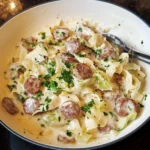
- Serve Immediately: Serve Cabbage and Sausage Alfredo hot, garnished with fresh parsley, red pepper flakes (optional), and extra grated Parmesan cheese, if desired. Serve immediately for the best flavor and texture, while the pasta is hot and the sauce is creamy. Garnishes add visual appeal and allow for customization of flavor.
Nutrition
- Serving Size: one normal portion
- Calories: 550-650 kcal
- Sugar: 5-7g
- Sodium: 800-1000mg
- Fat: 30-40g
- Saturated Fat: 15-20g
- Carbohydrates: 50-60g
- Fiber: 4-5g
- Protein: 20-25g
- Cholesterol: 100-130mg