
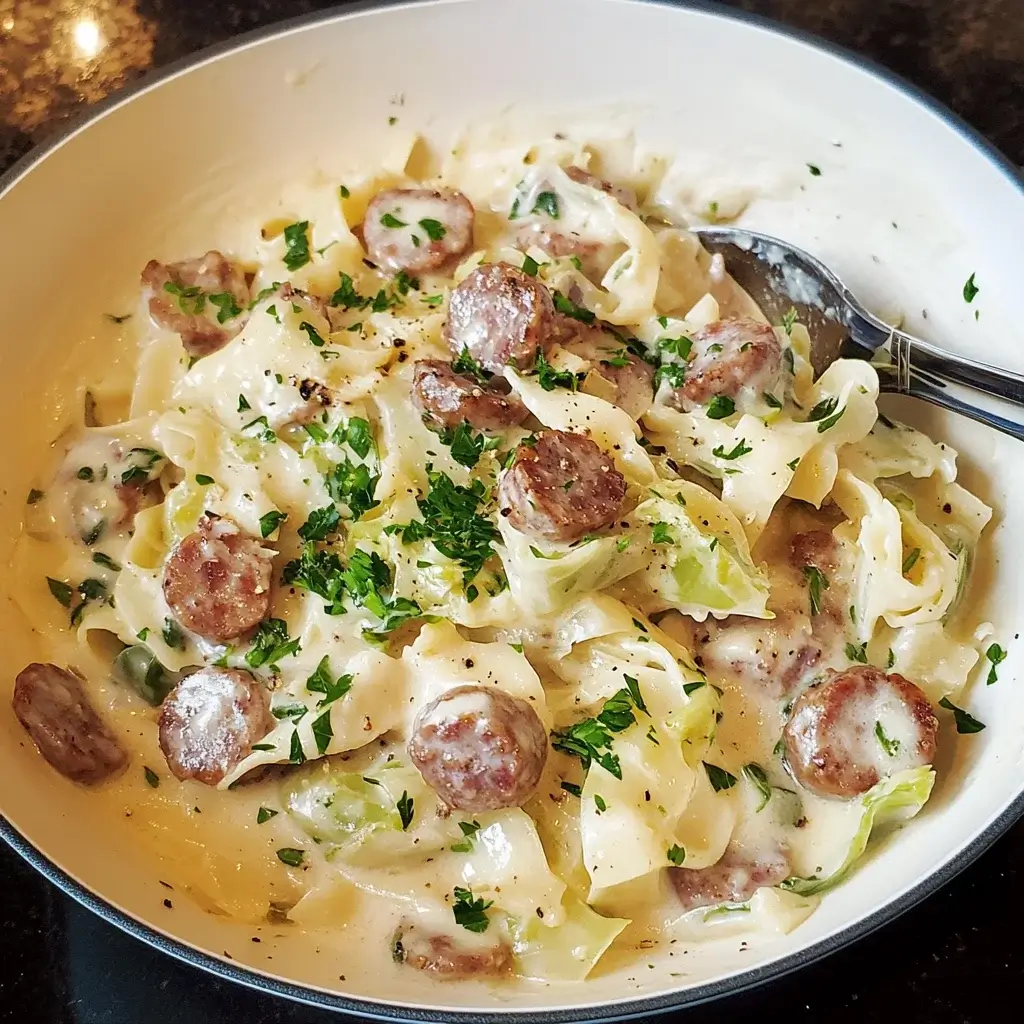

It was one of those busy weeknights where time seemed to evaporate the moment I stepped into the kitchen. Dinner needed to be quick, comforting, and satisfying – the trifecta of weeknight meal requirements. Rummaging through the fridge, I spotted a head of cabbage, some Italian sausage, and the ever-reliable jar of Alfredo sauce in the pantry. An idea sparked: Cabbage and Sausage Alfredo! It sounded a bit unconventional, perhaps, but the combination of savory sausage, slightly sweet cabbage, and creamy Alfredo sauce intrigued me. Let me tell you, this impromptu creation turned out to be an absolute winner! The cabbage, instead of being bland, absorbed the rich flavors of the sausage and Alfredo, becoming tender and slightly caramelized. The sausage added a hearty protein punch, and the Alfredo sauce brought everything together in a creamy, comforting embrace. My family devoured it, declaring it a new favorite. It’s now become a regular in our rotation – a surprisingly delicious and easy meal that’s perfect for busy weeknights or a cozy weekend dinner. If you’re looking for a unique twist on Alfredo pasta that’s both flavorful and budget-friendly, you have to try this Cabbage and Sausage Alfredo. Prepare to be surprised at how wonderfully these seemingly simple ingredients come together to create a truly satisfying dish.
Ingredients for Delicious Cabbage and Sausage Alfredo: Building Blocks of Flavor
Creating a truly exceptional Cabbage and Sausage Alfredo hinges on selecting quality ingredients that complement each other perfectly. Each component plays a vital role in building the layers of flavor and achieving the desired creamy, savory, and satisfying dish. Let’s explore each ingredient in detail and understand why they are essential.
- 1 pound Italian Sausage (Sweet or Hot, casings removed): Italian sausage is the protein powerhouse of this dish, adding a robust, savory flavor that forms the foundation of the Alfredo sauce. You can choose between sweet or hot Italian sausage depending on your spice preference. Sweet Italian sausage offers a milder, herby flavor, while hot Italian sausage provides a spicy kick. Removing the casings is crucial as it allows the sausage to crumble nicely and brown evenly in the pan, releasing its flavorful fats and juices into the dish. For a leaner option, you can use Italian chicken or turkey sausage, but be mindful that they may have less fat, so you might need to add a little extra olive oil to help them brown and prevent sticking. The quality of the sausage significantly impacts the final flavor, so opt for a good quality sausage from your butcher or grocery store.
- 1 medium head of Cabbage (Green or Savoy), cored and shredded: Cabbage is the star vegetable, adding a subtle sweetness, a satisfying crunch when slightly undercooked, and a tender, caramelized texture when cooked longer. Green cabbage is a classic choice, offering a slightly peppery flavor. Savoy cabbage, with its crinkled leaves, is milder and sweeter, and it wilts beautifully. You can use either variety or even a combination of both. Coring and shredding the cabbage ensures it cooks evenly and incorporates well into the sauce. Shredding can be done using a sharp knife, a mandoline (with caution), or a food processor with a shredding attachment. Cabbage is also a nutritional powerhouse, packed with vitamins, fiber, and antioxidants, making this Alfredo dish a bit lighter and healthier than traditional versions.
- 1 tablespoon Olive Oil: Olive oil is used for sautéing the sausage and cabbage, providing a healthy fat base and preventing sticking. It also adds a subtle fruity flavor that complements the other ingredients. Extra virgin olive oil is preferred for its superior flavor and health benefits, but regular olive oil will also work. You can adjust the amount of olive oil depending on the fat content of your sausage – if using a fattier sausage, you may need less olive oil. For a richer flavor, you can use butter or a combination of butter and olive oil.
- 2 cloves Garlic, minced: Garlic is an essential aromatic that infuses the dish with a savory, pungent flavor. Freshly minced garlic is highly recommended for the best flavor; pre-minced garlic can be used in a pinch, but the flavor will be less intense. Minced garlic readily infuses its flavor into the olive oil and sausage as they cook, creating a fragrant base for the Alfredo sauce. You can adjust the number of garlic cloves to your preference – for a milder garlic flavor, use 1 clove; for a bolder taste, use 3 or even 4.
- 1 teaspoon Dried Italian Seasoning: Italian seasoning is a blend of dried herbs, typically including oregano, basil, rosemary, thyme, and marjoram. It provides a classic Italian flavor profile, adding herbaceous and aromatic notes that complement the sausage and Alfredo sauce. A good quality Italian seasoning blend will enhance the overall flavor complexity of the dish. If you don’t have Italian seasoning, you can use a combination of dried oregano and dried basil. For a fresher herb flavor, you can add a tablespoon of chopped fresh parsley or basil at the end of cooking.
- ½ teaspoon Salt, plus more to taste: Salt is crucial for enhancing all the flavors in the dish and balancing the richness of the Alfredo sauce. Start with ½ teaspoon and adjust to taste throughout the cooking process. Salt is essential for seasoning both the sausage and the cabbage, as well as the final Alfredo sauce. Sea salt or kosher salt are preferred for their pure flavor and ease of use.
- ¼ teaspoon Black Pepper, freshly ground, plus more to taste: Freshly ground black pepper adds a subtle warmth and a touch of spice that complements the savory flavors of the sausage and Alfredo. Freshly ground pepper is always preferred for its more pungent and aromatic flavor compared to pre-ground pepper. Adjust the amount of black pepper to your preference.
- 1 (16-ounce) jar Alfredo Sauce (High Quality): Alfredo sauce is the creamy, decadent element that binds all the ingredients together and creates the signature Alfredo flavor. Using a high-quality jarred Alfredo sauce is a convenient and time-saving option for weeknight cooking. Look for Alfredo sauces made with real cream, butter, and Parmesan cheese for the best flavor and texture. Avoid sauces with excessive amounts of thickeners or artificial ingredients. Alternatively, you can make your own homemade Alfredo sauce from scratch for a truly authentic and richer flavor, but this will add to the preparation time. Consider options like roasted garlic Alfredo for an even deeper flavor dimension.
- 1 pound Pasta (Penne, Fettuccine, or your favorite shape): Pasta serves as the base for this dish, providing substance and a vehicle for the flavorful Cabbage and Sausage Alfredo sauce. Penne, fettuccine, and other medium-sized pasta shapes work well as they hold the sauce nicely. You can use any pasta shape you prefer – rotini, rigatoni, or even spaghetti would also be delicious. For a gluten-free option, use gluten-free pasta made from rice, corn, or quinoa. Cooking the pasta al dente (slightly firm to the bite) is crucial to prevent it from becoming mushy when combined with the sauce.
- ½ cup Grated Parmesan Cheese, plus extra for serving: Parmesan cheese adds a salty, nutty, and umami-rich flavor that is essential for authentic Alfredo dishes. Freshly grated Parmesan cheese is highly recommended for the best flavor and melting quality. Pre-shredded Parmesan cheese can be used, but it may not melt as smoothly and might contain anti-caking agents that can affect the texture. Use a good quality Parmesan cheese for the best results. Reserve extra Parmesan cheese for serving, allowing everyone to add more to their individual portions as desired.
- Optional Garnishes: Fresh parsley, red pepper flakes, extra grated Parmesan cheese. Garnishes add visual appeal, freshness, and an extra layer of flavor and texture. Fresh parsley provides a pop of color and freshness. Red pepper flakes add a touch of heat for those who like a spicier dish. Extra Parmesan cheese allows for customizable cheesy goodness.
Instructions: Step-by-Step Guide to Creamy Cabbage and Sausage Alfredo
Now that we have all our ingredients prepped, let’s dive into the step-by-step instructions to create this comforting and flavorful Cabbage and Sausage Alfredo. Follow these instructions carefully for a guaranteed delicious outcome!
- Cook Pasta: Bring a large pot of salted water to a boil. Add pasta and cook according to package directions until al dente. Reserve about ½ cup of pasta water before draining. Drain pasta and set aside. Cooking the pasta first ensures it’s ready to be combined with the sauce as soon as it’s finished. Reserving pasta water is crucial as it can be used to adjust the consistency of the Alfredo sauce later, making it perfectly creamy and clinging to the pasta.
- Brown Sausage: Heat olive oil in a large skillet or Dutch oven over medium-high heat. Add Italian sausage (casings removed and crumbled) and cook, breaking it up with a spoon, until browned and cooked through. Browning the sausage develops its flavor and renders out some of its fat, which will contribute to the richness of the dish. Ensure the sausage is fully cooked through, with no pink remaining.
- Sauté Garlic and Cabbage: Add minced garlic to the skillet with the sausage and cook for about 1 minute, until fragrant, being careful not to burn the garlic. Add shredded cabbage, Italian seasoning, salt, and black pepper to the skillet. Sauté cabbage, stirring occasionally, until it softens and begins to wilt, about 5-7 minutes. Sautéing the garlic after browning the sausage prevents it from burning and allows its flavor to infuse into the sausage and oil. Sautéing the cabbage softens it and allows it to absorb the flavors of the sausage and spices. Don’t overcook the cabbage; it should still have a slight bite.
- Add Alfredo Sauce and Parmesan Cheese: Reduce heat to low. Pour in Alfredo sauce and stir to combine with the sausage and cabbage. Add grated Parmesan cheese and stir until melted and sauce is smooth and creamy. Reducing the heat to low before adding the Alfredo sauce prevents it from scorching or separating. Stirring in the Parmesan cheese at the end ensures it melts smoothly into the sauce, creating a rich and cheesy Alfredo.
- Combine Pasta and Sauce: Add cooked pasta to the skillet with the Alfredo sauce mixture. Toss to coat pasta evenly with the sauce. If the sauce is too thick, add a little reserved pasta water, a tablespoon at a time, until desired consistency is reached. Tossing the pasta immediately after adding it to the sauce ensures it absorbs the creamy Alfredo goodness while it’s still warm. Adding pasta water helps to loosen the sauce and create a silky, emulsified sauce that coats the pasta perfectly.
- Serve Immediately: Serve Cabbage and Sausage Alfredo hot, garnished with fresh parsley, red pepper flakes (optional), and extra grated Parmesan cheese, if desired. Serve immediately for the best flavor and texture, while the pasta is hot and the sauce is creamy. Garnishes add visual appeal and allow for customization of flavor.
Nutrition Facts: Indulge Responsibly in Comfort Food
(Per serving, approximately based on recipe and standard ingredients – Note: These are estimates and can vary based on specific ingredients, serving size, and pasta type)
- Serving Size: 1 ½ cups
- Servings per Recipe: Approximately 6 servings
- Calories per Serving: 550-650 kcal
- Total Fat: 30-40g
- Saturated Fat: 15-20g
- Cholesterol: 100-130mg
- Sodium: 800-1000mg (depending on Alfredo sauce and sausage)
- Total Carbohydrates: 50-60g
- Dietary Fiber: 4-5g
- Sugars: 5-7g (naturally occurring and from Alfredo sauce)
- Protein: 20-25g
Nutritional Highlights:
- Source of Protein: Italian sausage provides a significant amount of protein, essential for muscle building and satiety.
- Good Source of Fiber: Cabbage and whole wheat pasta (if used) contribute to dietary fiber intake, promoting digestive health.
- Calcium-Rich: Alfredo sauce and Parmesan cheese provide calcium, important for bone health.
- Comfort Food Satisfaction: Provides a satisfying and comforting meal experience.
Please note that these nutrition facts are estimations. For precise nutritional information, use a nutrition calculator with the specific brands and ingredients you use in the recipe. This dish, while delicious, is higher in calories and fat due to the Alfredo sauce and sausage. Enjoy in moderation as part of a balanced diet.
Preparation Time: Weeknight Dinner Savior
- Prep Time: 15 minutes (This includes chopping cabbage, mincing garlic, and gathering ingredients)
- Cook Time: 25 minutes (This includes cooking pasta, browning sausage, and sautéing cabbage)
- Total Time: 40 minutes
Cabbage and Sausage Alfredo is a relatively quick and easy meal to prepare, making it perfect for busy weeknights. The cooking process is straightforward, and the dish comes together in under 40 minutes from start to finish.
How to Serve: Elevating Your Cabbage and Sausage Alfredo Experience
Serving is your opportunity to enhance the Cabbage and Sausage Alfredo experience and make it even more enjoyable. Here are some serving suggestions to elevate your meal:
Classic Serving Style:
- Pasta Bowls: Serve in individual pasta bowls for a comforting and traditional presentation.
- Large Family Platter: For family-style dining, serve the Alfredo in a large serving platter or bowl in the center of the table.
- Warm Plates: Warm your plates before serving to keep the pasta hot for longer.
Side Dish Pairings:
- Garlic Bread or Breadsticks: Classic Italian bread accompaniments perfect for soaking up the creamy Alfredo sauce.
- Side Salad: A simple green salad with a light vinaigrette provides a refreshing contrast to the rich Alfredo.
- Roasted Vegetables: Roasted broccoli, asparagus, or Brussels sprouts add a healthy and flavorful side.
- Caprese Salad: Fresh mozzarella, tomatoes, and basil salad offer a light and vibrant Italian side.
Topping Ideas for Extra Flavor and Texture:
- Fresh Parsley: Chopped fresh parsley adds a pop of color and freshness.
- Red Pepper Flakes: Sprinkle red pepper flakes for a touch of heat.
- Extra Grated Parmesan Cheese: Offer extra Parmesan cheese for those who want an even cheesier experience.
- Crispy Breadcrumbs: Toasted breadcrumbs add a delightful crunch and texture contrast.
- Lemon Zest: A sprinkle of lemon zest brightens the dish with a citrusy note.
- Fresh Basil or Oregano: Chopped fresh basil or oregano enhances the Italian herb flavor.
- Drizzle of Olive Oil: A drizzle of high-quality olive oil adds richness and visual appeal.
Wine Pairing Suggestions:
- Dry White Wine: Pinot Grigio, Sauvignon Blanc, or Chardonnay pair well with creamy Alfredo sauces.
- Light-bodied Red Wine: Pinot Noir or Chianti Classico can also complement the dish.
- Rosé Wine: A dry Rosé wine is a versatile option that can work well with both the creamy sauce and the sausage.
Additional Tips for Cabbage and Sausage Alfredo Perfection
Here are five essential tips to ensure your Cabbage and Sausage Alfredo is a resounding success every time:
- Don’t Overcook the Cabbage: Sauté the cabbage until it’s just softened and wilted, but still has a slight bite. Overcooked cabbage can become mushy and lose its pleasant texture. Aim for tender-crisp cabbage that retains some of its structure.
- Use High-Quality Alfredo Sauce: The Alfredo sauce is a key component of this dish. Opt for a high-quality jarred sauce or make your own from scratch for the best flavor. A good Alfredo sauce will be creamy, rich, and flavorful, enhancing the overall dish.
- Season Generously: Don’t be shy with seasoning! Salt and pepper are crucial for bringing out the flavors of all the ingredients. Taste and adjust seasoning throughout the cooking process, especially after adding the Alfredo sauce and Parmesan cheese.
- Reserve Pasta Water: Always reserve pasta water before draining the pasta. Pasta water is starchy and helps to emulsify the Alfredo sauce, creating a smoother, creamier, and perfectly clinging sauce. Add pasta water gradually to adjust the sauce consistency.
- Serve Immediately: Alfredo dishes are best served immediately while they are hot and creamy. The sauce can thicken as it cools, so serve promptly for the best texture and flavor. If you need to hold it for a short time, keep it warm over low heat, stirring occasionally and adding a little extra pasta water if needed to maintain creaminess.
FAQ: Your Cabbage and Sausage Alfredo Questions Answered
Q1: Can I make Cabbage and Sausage Alfredo with different types of sausage?
A: Yes, absolutely! While Italian sausage is classic, you can experiment with other types of sausage. Consider using:
- Chicken Sausage: For a leaner option, use Italian chicken sausage or other flavored chicken sausages.
- Turkey Sausage: Another leaner alternative, turkey sausage can be used in place of Italian sausage.
- Spicy Chorizo: For a spicier dish, use chorizo sausage (remove casings).
- Andouille Sausage: For a smoky and slightly spicy flavor, try Andouille sausage.
Adjust cooking times as needed depending on the type of sausage you choose.
Q2: Can I add other vegetables to Cabbage and Sausage Alfredo?
A: Yes, you can definitely add other vegetables to this dish! Some good additions include:
- Onions: Sliced onions can be sautéed with the sausage for added flavor.
- Bell Peppers: Diced bell peppers (any color) can be sautéed with the cabbage for sweetness and color.
- Mushrooms: Sliced mushrooms sautéed with the garlic add an earthy flavor.
- Spinach or Kale: Stir in spinach or kale at the end of cooking for added greens.
- Sun-dried Tomatoes: Chopped sun-dried tomatoes add a chewy texture and intense flavor.
Add vegetables along with the cabbage or towards the end of cooking depending on their cooking time.
Q3: Can I make Cabbage and Sausage Alfredo vegetarian?
A: To make a vegetarian version, you would need to replace the sausage and Alfredo sauce. Consider using:
- Vegetarian Sausage Crumbles: Use plant-based sausage crumbles for a vegetarian protein source.
- Mushroom or Lentil “Sausage”: Explore recipes for homemade vegetarian “sausage” using mushrooms or lentils.
- Vegetarian Alfredo Sauce: Use a store-bought vegetarian Alfredo sauce or make your own using cashews, cauliflower, or other plant-based ingredients to create a creamy sauce.
While it won’t be the same dish, you can adapt the concept to be vegetarian-friendly.
Q4: Can I make Cabbage and Sausage Alfredo ahead of time?
A: While Alfredo dishes are best served fresh, you can prepare components ahead of time to save time on busy days. You can:
- Cook the Sausage and Cabbage Mixture: Prepare the sausage and cabbage mixture ahead of time and store it in the refrigerator for up to 2 days. Reheat in a skillet before adding the Alfredo sauce and pasta.
- Cook Pasta Ahead: Cook the pasta al dente ahead of time, toss it with a little olive oil to prevent sticking, and store it in the refrigerator. Reheat briefly in boiling water before adding to the sauce.
However, it’s best to assemble and serve the final dish fresh for optimal creaminess and texture.
Q5: Can I make Cabbage and Sausage Alfredo spicier?
A: Yes, easily! To make it spicier, you can:
- Use hot Italian sausage instead of sweet Italian sausage.
- Add red pepper flakes to the dish.
- Include a pinch of cayenne pepper.
- Add a dash of hot sauce.
- Include sliced jalapeños or other hot peppers when sautéing the cabbage.
Adjust the amount of spice to your preference.
Enjoy creating and savoring this comforting and flavorful Cabbage and Sausage Alfredo!
Print
Cabbage and Sausage Alfredo recipe
Ingredients
- 1 pound Italian Sausage (Sweet or Hot, casings removed): Italian sausage is the protein powerhouse of this dish, adding a robust, savory flavor that forms the foundation of the Alfredo sauce. You can choose between sweet or hot Italian sausage depending on your spice preference. Sweet Italian sausage offers a milder, herby flavor, while hot Italian sausage provides a spicy kick. Removing the casings is crucial as it allows the sausage to crumble nicely and brown evenly in the pan, releasing its flavorful fats and juices into the dish. For a leaner option, you can use Italian chicken or turkey sausage, but be mindful that they may have less fat, so you might need to add a little extra olive oil to help them brown and prevent sticking. The quality of the sausage significantly impacts the final flavor, so opt for a good quality sausage from your butcher or grocery store.
- 1 medium head of Cabbage (Green or Savoy), cored and shredded: Cabbage is the star vegetable, adding a subtle sweetness, a satisfying crunch when slightly undercooked, and a tender, caramelized texture when cooked longer. Green cabbage is a classic choice, offering a slightly peppery flavor. Savoy cabbage, with its crinkled leaves, is milder and sweeter, and it wilts beautifully. You can use either variety or even a combination of both. Coring and shredding the cabbage ensures it cooks evenly and incorporates well into the sauce. Shredding can be done using a sharp knife, a mandoline (with caution), or a food processor with a shredding attachment. Cabbage is also a nutritional powerhouse, packed with vitamins, fiber, and antioxidants, making this Alfredo dish a bit lighter and healthier than traditional versions.
- 1 tablespoon Olive Oil: Olive oil is used for sautéing the sausage and cabbage, providing a healthy fat base and preventing sticking. It also adds a subtle fruity flavor that complements the other ingredients. Extra virgin olive oil is preferred for its superior flavor and health benefits, but regular olive oil will also work. You can adjust the amount of olive oil depending on the fat content of your sausage – if using a fattier sausage, you may need less olive oil. For a richer flavor, you can use butter or a combination of butter and olive oil.
- 2 cloves Garlic, minced: Garlic is an essential aromatic that infuses the dish with a savory, pungent flavor. Freshly minced garlic is highly recommended for the best flavor; pre-minced garlic can be used in a pinch, but the flavor will be less intense. Minced garlic readily infuses its flavor into the olive oil and sausage as they cook, creating a fragrant base for the Alfredo sauce. You can adjust the number of garlic cloves to your preference – for a milder garlic flavor, use 1 clove; for a bolder taste, use 3 or even 4.
- 1 teaspoon Dried Italian Seasoning: Italian seasoning is a blend of dried herbs, typically including oregano, basil, rosemary, thyme, and marjoram. It provides a classic Italian flavor profile, adding herbaceous and aromatic notes that complement the sausage and Alfredo sauce. A good quality Italian seasoning blend will enhance the overall flavor complexity of the dish. If you don’t have Italian seasoning, you can use a combination of dried oregano and dried basil. For a fresher herb flavor, you can add a tablespoon of chopped fresh parsley or basil at the end of cooking.
- ½ teaspoon Salt, plus more to taste: Salt is crucial for enhancing all the flavors in the dish and balancing the richness of the Alfredo sauce. Start with ½ teaspoon and adjust to taste throughout the cooking process. Salt is essential for seasoning both the sausage and the cabbage, as well as the final Alfredo sauce. Sea salt or kosher salt are preferred for their pure flavor and ease of use.
- ¼ teaspoon Black Pepper, freshly ground, plus more to taste: Freshly ground black pepper adds a subtle warmth and a touch of spice that complements the savory flavors of the sausage and Alfredo. Freshly ground pepper is always preferred for its more pungent and aromatic flavor compared to pre-ground pepper. Adjust the amount of black pepper to your preference.
- 1 (16-ounce) jar Alfredo Sauce (High Quality): Alfredo sauce is the creamy, decadent element that binds all the ingredients together and creates the signature Alfredo flavor. Using a high-quality jarred Alfredo sauce is a convenient and time-saving option for weeknight cooking. Look for Alfredo sauces made with real cream, butter, and Parmesan cheese for the best flavor and texture. Avoid sauces with excessive amounts of thickeners or artificial ingredients. Alternatively, you can make your own homemade Alfredo sauce from scratch for a truly authentic and richer flavor, but this will add to the preparation time. Consider options like roasted garlic Alfredo for an even deeper flavor dimension.
- 1 pound Pasta (Penne, Fettuccine, or your favorite shape): Pasta serves as the base for this dish, providing substance and a vehicle for the flavorful Cabbage and Sausage Alfredo sauce. Penne, fettuccine, and other medium-sized pasta shapes work well as they hold the sauce nicely. You can use any pasta shape you prefer – rotini, rigatoni, or even spaghetti would also be delicious. For a gluten-free option, use gluten-free pasta made from rice, corn, or quinoa. Cooking the pasta al dente (slightly firm to the bite) is crucial to prevent it from becoming mushy when combined with the sauce.
- ½ cup Grated Parmesan Cheese, plus extra for serving: Parmesan cheese adds a salty, nutty, and umami-rich flavor that is essential for authentic Alfredo dishes. Freshly grated Parmesan cheese is highly recommended for the best flavor and melting quality. Pre-shredded Parmesan cheese can be used, but it may not melt as smoothly and might contain anti-caking agents that can affect the texture. Use a good quality Parmesan cheese for the best results. Reserve extra Parmesan cheese for serving, allowing everyone to add more to their individual portions as desired.
- Optional Garnishes: Fresh parsley, red pepper flakes, extra grated Parmesan cheese. Garnishes add visual appeal, freshness, and an extra layer of flavor and texture. Fresh parsley provides a pop of color and freshness. Red pepper flakes add a touch of heat for those who like a spicier dish. Extra Parmesan cheese allows for customizable cheesy goodness.
Instructions
- Cook Pasta: Bring a large pot of salted water to a boil. Add pasta and cook according to package directions until al dente. Reserve about ½ cup of pasta water before draining. Drain pasta and set aside. Cooking the pasta first ensures it’s ready to be combined with the sauce as soon as it’s finished. Reserving pasta water is crucial as it can be used to adjust the consistency of the Alfredo sauce later, making it perfectly creamy and clinging to the pasta.
- Brown Sausage: Heat olive oil in a large skillet or Dutch oven over medium-high heat. Add Italian sausage (casings removed and crumbled) and cook, breaking it up with a spoon, until browned and cooked through. Browning the sausage develops its flavor and renders out some of its fat, which will contribute to the richness of the dish. Ensure the sausage is fully cooked through, with no pink remaining.
- Sauté Garlic and Cabbage: Add minced garlic to the skillet with the sausage and cook for about 1 minute, until fragrant, being careful not to burn the garlic. Add shredded cabbage, Italian seasoning, salt, and black pepper to the skillet. Sauté cabbage, stirring occasionally, until it softens and begins to wilt, about 5-7 minutes. Sautéing the garlic after browning the sausage prevents it from burning and allows its flavor to infuse into the sausage and oil. Sautéing the cabbage softens it and allows it to absorb the flavors of the sausage and spices. Don’t overcook the cabbage; it should still have a slight bite.
- Add Alfredo Sauce and Parmesan Cheese: Reduce heat to low. Pour in Alfredo sauce and stir to combine with the sausage and cabbage. Add grated Parmesan cheese and stir until melted and sauce is smooth and creamy. Reducing the heat to low before adding the Alfredo sauce prevents it from scorching or separating. Stirring in the Parmesan cheese at the end ensures it melts smoothly into the sauce, creating a rich and cheesy Alfredo.
- Combine Pasta and Sauce: Add cooked pasta to the skillet with the Alfredo sauce mixture. Toss to coat pasta evenly with the sauce. If the sauce is too thick, add a little reserved pasta water, a tablespoon at a time, until desired consistency is reached. Tossing the pasta immediately after adding it to the sauce ensures it absorbs the creamy Alfredo goodness while it’s still warm. Adding pasta water helps to loosen the sauce and create a silky, emulsified sauce that coats the pasta perfectly.
- Serve Immediately: Serve Cabbage and Sausage Alfredo hot, garnished with fresh parsley, red pepper flakes (optional), and extra grated Parmesan cheese, if desired. Serve immediately for the best flavor and texture, while the pasta is hot and the sauce is creamy. Garnishes add visual appeal and allow for customization of flavor.
Nutrition
- Serving Size: one normal portion
- Calories: 550-650 kcal
- Sugar: 5-7g
- Sodium: 800-1000mg
- Fat: 30-40g
- Saturated Fat: 15-20g
- Carbohydrates: 50-60g
- Fiber: 4-5g
- Protein: 20-25g
- Cholesterol: 100-130mg