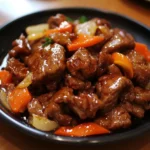
Ingredients
Scale
- 1.5 pounds flank steak, thinly sliced against the grain: Flank steak is the classic choice for Beijing Beef due to its robust beefy flavor and ability to become wonderfully tender when sliced thinly and cooked quickly. Slicing against the grain is crucial for tenderness, as it shortens the muscle fibers.
- Flank Steak Alternatives: If you can’t find flank steak, you can use skirt steak, sirloin steak, or even flap meat (also known as sirloin tip or bavette). These cuts are also flavorful and benefit from thin slicing and quick cooking. Avoid using tougher cuts like chuck roast or brisket, as they require longer cooking times and are not ideal for stir-frying.
- Slicing Technique: To slice against the grain, identify the direction of the muscle fibers (they will run lengthwise). Slice perpendicular to these fibers into thin strips, about 1/8 to 1/4 inch thick. Thinner slices will crisp up more easily.
- Freezing for Easier Slicing (Optional): Partially freezing the flank steak for about 30-45 minutes before slicing can make it firmer and easier to slice thinly and evenly. Do not freeze solid, just until it is firm but still sliceable.
- Vegetarian/Vegan Beef Alternatives: For a vegetarian or vegan Beijing “Beef,” you can substitute with firm or extra-firm tofu (pressed and cubed), seitan (wheat gluten), or large portobello mushrooms (sliced into strips). Tofu and seitan will mimic the texture well, while portobello mushrooms offer an earthy and umami-rich alternative.
- For the Marinade:
- 1/4 cup soy sauce: Soy sauce is the foundation of the marinade, providing saltiness, umami depth, and helping to tenderize the beef. Low-sodium soy sauce is recommended to control the overall salt level of the dish.
- Soy Sauce Variations: You can use regular soy sauce, light soy sauce (for a less intense flavor), or tamari (gluten-free soy sauce). Dark soy sauce is not recommended for the marinade as it is thicker and sweeter and can make the beef too dark.
- 2 tablespoons rice wine (Shaoxing wine recommended): Rice wine, particularly Shaoxing wine, adds a characteristic Chinese flavor and helps to tenderize the beef. It also contributes a subtle sweetness and complexity.
- Rice Wine Alternatives: If you don’t have Shaoxing wine, you can substitute dry sherry or dry white wine. If avoiding alcohol, you can use chicken broth or apple juice as a less ideal but still acceptable substitute.
- 1 tablespoon cornstarch: Cornstarch is crucial for creating a velvety texture on the beef and helping the sauce cling to it. It acts as a tenderizer in the marinade and as a thickening agent during cooking.
- 1 teaspoon sesame oil: Sesame oil adds a nutty aroma and distinct Asian flavor to the marinade and the dish as a whole. Toasted sesame oil is recommended for its more intense flavor.
- 1/2 teaspoon ground ginger: Ground ginger adds a warm, spicy, and aromatic note to the marinade, complementing the other flavors and enhancing the overall complexity. Freshly grated ginger can also be used (about 1 tablespoon).
- 1/4 teaspoon white pepper: White pepper provides a subtle heat and a slightly different flavor profile than black pepper. It is often used in Chinese cooking for its delicate spiciness. Black pepper can be used as a substitute if white pepper is not available.
- 1/4 cup soy sauce: Soy sauce is the foundation of the marinade, providing saltiness, umami depth, and helping to tenderize the beef. Low-sodium soy sauce is recommended to control the overall salt level of the dish.
- For the Breading:
- 1/2 cup cornstarch: Cornstarch is the key ingredient for creating the crispy coating on the Beijing Beef. It provides a light, airy, and incredibly crispy texture when fried.
- 1/4 cup all-purpose flour: All-purpose flour adds a bit of structure to the breading and helps it to adhere to the beef. It also contributes to the overall crispiness.
- Gluten-Free Breading Options: For gluten-free Beijing Beef, you can use all cornstarch for the breading, or use a gluten-free all-purpose flour blend. Rice flour, tapioca starch, or potato starch can also be used in combination with cornstarch for a gluten-free breading.
- For the Sauce:
- 1/2 cup rice vinegar: Rice vinegar is essential for the tangy and slightly acidic component of the Beijing Beef sauce. It provides a crucial counterpoint to the sweetness.
- Rice Vinegar Variations: You can use regular rice vinegar or seasoned rice vinegar. If using seasoned rice vinegar, reduce or omit the added sugar in the sauce to avoid it becoming overly sweet.
- 1/2 cup sugar: Sugar provides the sweetness that is characteristic of Beijing Beef sauce. Granulated sugar is typically used.
- Sugar Variations: You can use brown sugar for a slightly richer, molasses-like sweetness, or honey or maple syrup for a more natural sweetener. Adjust the amount of sweetener to your preference.
- 1/4 cup ketchup: Ketchup adds a tangy tomato flavor, sweetness, and a vibrant red color to the sauce. It also contributes to the sauce’s glossy texture.
- 1/4 cup soy sauce: Soy sauce reinforces the savory umami base of the sauce and adds saltiness and depth. Low-sodium soy sauce is recommended to control the overall salt level.
- Soy Sauce Variations: As with the marinade, you can use regular soy sauce, light soy sauce, or tamari (gluten-free).
- 2 tablespoons hoisin sauce: Hoisin sauce is a key ingredient in Beijing Beef sauce, providing a complex sweet, savory, and slightly fermented flavor. It adds depth and richness that is hard to replicate with other ingredients.
- Hoisin Sauce Alternatives: There is no perfect substitute for hoisin sauce. However, you can try a combination of soy sauce, peanut butter (or tahini for nut-free), honey or maple syrup, and a touch of rice vinegar or black bean sauce to try and mimic some of its flavor components.
- 2 tablespoons cornstarch: Cornstarch is used to thicken the sauce to that signature sticky, glossy consistency that coats the beef perfectly.
- 1 tablespoon sesame oil: Sesame oil is added to the sauce for its nutty aroma and distinct Asian flavor, enhancing the overall complexity and fragrance.
- 1 tablespoon minced garlic: Freshly minced garlic adds pungent and savory notes to the sauce, complementing the other flavors and providing a noticeable garlic kick.
- 1 tablespoon minced fresh ginger: Freshly minced ginger adds a warm, spicy, and aromatic element to the sauce, enhancing its complexity and providing a fresh, vibrant note.
- 1/2 teaspoon red pepper flakes (optional, for heat): Red pepper flakes add a touch of heat to the sauce for those who prefer a spicier Beijing Beef. Adjust the amount to your spice preference or omit entirely for a milder version.
- 1/2 cup rice vinegar: Rice vinegar is essential for the tangy and slightly acidic component of the Beijing Beef sauce. It provides a crucial counterpoint to the sweetness.
- Vegetable oil, for frying: Vegetable oil, or another neutral oil with a high smoke point (like canola oil, peanut oil, or grapeseed oil), is needed for frying the beef to crispy perfection. You will need enough oil for shallow frying or deep frying, depending on your preferred method.
- Air Fryer Option (Healthier Alternative): For a healthier, less oily version of Beijing Beef, you can air fry the breaded beef instead of deep-frying or shallow frying. See air fryer instructions below.
- For Garnish (Optional):
- Sesame seeds: Sesame seeds, toasted or untoasted, add a nutty flavor and visual appeal as a garnish.
- Chopped green onions: Chopped green onions (scallions) add a fresh, mild oniony flavor and a pop of green color as a garnish.
Instructions
1. Marinate the Beef:
- In a medium bowl, combine the thinly sliced flank steak, soy sauce, rice wine (Shaoxing wine), cornstarch, sesame oil, ground ginger, and white pepper.
- Toss to coat the beef evenly with the marinade.
- Marinate in the refrigerator for at least 30 minutes, or up to 2 hours. Marinating for longer will tenderize the beef further and allow the flavors to penetrate deeply.
2. Prepare the Breading:
- In a separate shallow dish or bowl, whisk together the cornstarch and all-purpose flour for the breading.
3. Bread the Beef:
- Remove the marinated beef from the refrigerator.
- Working in batches, dredge each piece of marinated beef in the cornstarch-flour mixture, ensuring it is fully coated on all sides. Shake off any excess breading. The breading should be a thin, even coating.
4. Fry the Beef (Deep-Frying or Shallow Frying):
- Deep Frying (Traditional and Crispiest):
- Heat vegetable oil in a deep fryer or large pot to 350°F (175°C). You will need enough oil to fully submerge the beef pieces for deep frying.
- Carefully add the breaded beef to the hot oil in batches, being careful not to overcrowd the fryer. Overcrowding will lower the oil temperature and result in soggy beef.
- Fry for 2-3 minutes per batch, or until golden brown and crispy. The beef cooks quickly due to the thin slices.
- Remove the crispy beef from the oil using a slotted spoon or spider strainer and drain on paper towels to remove excess oil.
- Shallow Frying (Less Oil, Still Crispy):
- Heat about 1/2 inch of vegetable oil in a large skillet or wok over medium-high heat.
- Once the oil is hot (shimmering but not smoking), carefully add the breaded beef in a single layer, again being careful not to overcrowd the skillet.
- Fry for 2-3 minutes per side, or until golden brown and crispy.
- Flip the beef pieces halfway through cooking to ensure even browning and crisping.
- Remove the crispy beef from the skillet and drain on paper towels.
5. Air Fry the Beef (Healthier Option):
- Preheat Air Fryer: Preheat your air fryer to 400°F (200°C).
- Lightly Oil Air Fryer Basket (Optional): You can lightly spray the air fryer basket with cooking spray to prevent sticking (though not always necessary with cornstarch breading).
- Arrange Beef in Air Fryer: Arrange the breaded beef in a single layer in the air fryer basket. Do not overcrowd. You may need to cook in batches.
- Air Fry: Air fry at 400°F (200°C) for 8-12 minutes, flipping halfway through, or until golden brown and crispy. Air fryer models vary, so cooking times may need to be adjusted. Check for doneness around 8 minutes and adjust time as needed.
- Crispness Check: The beef is done when it is golden brown and crispy and cooked through.
6. Make the Beijing Beef Sauce:
- While the beef is frying (or air frying), prepare the sauce.
- In a small bowl, whisk together the rice vinegar, sugar, ketchup, soy sauce, hoisin sauce, and cornstarch. Set aside.
- Heat sesame oil in a large wok or skillet over medium-high heat.
- Add minced garlic and minced fresh ginger to the hot oil and sauté for about 30 seconds, or until fragrant. Be careful not to burn the garlic and ginger.
- Pour the sauce mixture into the wok or skillet and bring to a simmer, stirring constantly.
- Cook the sauce, stirring continuously, until it thickens and becomes glossy, about 1-2 minutes. The cornstarch will thicken the sauce quickly.
- If using red pepper flakes for heat, stir them into the sauce now.
7. Combine Beef and Sauce & Serve:
- Add the crispy fried (or air fried) beef to the wok or skillet with the thickened Beijing Beef sauce.
- Toss quickly and gently to coat the beef evenly with the sauce. Work quickly to keep the beef crispy.
- Cook for another 30 seconds to 1 minute, just to heat the beef through and allow the sauce to cling to it.
- Remove from heat and transfer the Beijing Beef to a serving platter or individual plates.
- Garnish with sesame seeds and chopped green onions (if desired).
- Serve immediately while hot and crispy. Beijing Beef is best enjoyed fresh, as the crispiness of the beef will diminish over time as it sits in the sauce.
Nutrition
- Serving Size: one normal portion
- Calories: 600-750 calories
- Sugar: 40-50g
- Sodium: 1000-1500mg
- Fat: 30-40g
- Saturated Fat: 8-12g
- Carbohydrates: 50-60g
- Fiber: 1-2g
- Protein: 35-45g
- Cholesterol: 100-120mg