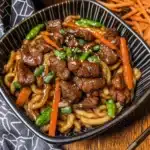
Ingredients
- Udon Noodles (1 lb): The heart of our dish, udon noodles provide a delightful chewy texture that perfectly complements the stir-fry.
- Types of Udon Noodles:
- Fresh Udon Noodles (Pre-cooked): These are typically found in refrigerated sections and are often vacuum-packed. They are pre-cooked and require minimal preparation, usually just a quick rinse or brief boiling to loosen them. Fresh udon offers the best texture, being wonderfully soft and chewy.
- Frozen Udon Noodles (Pre-cooked): Frozen udon is another excellent option, often very convenient and readily available. They are also pre-cooked. Simply thaw them slightly under warm water or microwave briefly to separate the noodles before adding them to the stir-fry. Frozen udon retains a good chewy texture after cooking.
- Dried Udon Noodles: Dried udon noodles need to be cooked according to package directions before stir-frying. They generally take longer to cook than fresh or frozen udon and may have a slightly firmer texture. Ensure you don’t overcook them, as they can become mushy.
- Considerations for Udon Noodles:
- Salt Content: Some pre-cooked udon noodles can be quite salty. Taste them before adding to the stir-fry and adjust the amount of soy sauce in your sauce accordingly. Rinsing pre-cooked udon under cold water can help remove excess starch and salt.
- Texture: Fresh or frozen udon generally yields the best chewy texture for stir-fries. Dried udon can be a good substitute if fresh or frozen isn’t available, but pay close attention to cooking time to avoid overcooking.
- Types of Udon Noodles:
- Beef (1 lb): Beef provides the protein and savory depth to our Yaki Udon. Choosing the right cut and preparing it properly is key for tender and flavorful results.
- Best Beef Cuts for Stir-Fry:
- Sirloin Steak: Sirloin is a lean and flavorful cut that is excellent for stir-frying. It cooks quickly and remains tender if not overcooked. Slice it thinly against the grain for maximum tenderness.
- Flank Steak: Flank steak is another flavorful option, known for its slightly coarser grain. It’s important to slice flank steak thinly against the grain to ensure it’s tender and easy to chew in a stir-fry.
- Ribeye Steak (Boneless): Ribeye is a more marbled and richer cut, offering fantastic flavor. While slightly more expensive, it can elevate your Yaki Udon to a more decadent level. Slice thinly and trim excess fat if desired.
- Skirt Steak: Skirt steak is very flavorful and cooks quickly. Like flank steak, it should be sliced thinly against the grain.
- Beef Preparation:
- Slicing: Regardless of the cut you choose, slicing the beef thinly, against the grain, is crucial for tenderness. This breaks down the muscle fibers, making the beef more enjoyable to eat in a stir-fry.
- Marinating (Optional but Recommended): Marinating the beef for even just 15-30 minutes can significantly enhance its flavor and tenderness. A simple marinade of soy sauce, a touch of sesame oil, and cornstarch (for tenderizing) works wonders.
- Best Beef Cuts for Stir-Fry:
- Vegetables (3-4 cups, mixed): Vegetables add color, texture, and essential nutrients to Beef Yaki Udon. Choose a variety of vegetables that stir-fry well and complement the other flavors.
- Excellent Vegetable Choices:
- Onions: Yellow or white onions provide a foundational savory flavor. Slice them thinly or into wedges.
- Bell Peppers: Red, yellow, or green bell peppers add sweetness and crunch. Slice into strips.
- Carrots: Carrots contribute sweetness and a satisfying crunch. Julienne or thinly slice them.
- Broccoli Florets: Broccoli adds a slightly bitter and earthy note, along with great texture. Use small florets for even cooking.
- Mushrooms: Shiitake, cremini, or button mushrooms add umami depth and a meaty texture. Slice them or quarter larger mushrooms.
- Snap Peas or Snow Peas: These add sweetness and a delightful crisp-tender texture.
- Cabbage (Napa or Green): Cabbage adds a mild sweetness and slightly crunchy texture. Shred or thinly slice it.
- Bean Sprouts: Bean sprouts provide a delicate crunch and freshness, often added towards the end of cooking.
- Vegetable Preparation:
- Uniform Size: Cut vegetables into similar sizes to ensure even cooking in the stir-fry.
- Staggered Addition: Add vegetables to the stir-fry in order of cooking time, starting with harder vegetables like carrots and broccoli, and adding softer vegetables like bell peppers and snap peas later. Leafy greens and bean sprouts are typically added last.
- Excellent Vegetable Choices:
- Yaki Udon Sauce: The sauce is what brings everything together, creating that signature savory and slightly sweet Yaki Udon flavor.
- Core Sauce Ingredients:
- Soy Sauce (¼ cup): Soy sauce provides the foundational salty and umami flavor. Use low-sodium soy sauce to control the salt level.
- Oyster Sauce (2 tablespoons): Oyster sauce adds richness, depth, and a subtle sweetness and umami. If vegetarian, you can substitute with vegetarian oyster sauce (made from mushrooms) or hoisin sauce.
- Mirin (2 tablespoons): Mirin (sweet rice wine) adds sweetness and a subtle tang. If you don’t have mirin, you can use a dry sherry or rice vinegar with a pinch of sugar.
- Brown Sugar (1 tablespoon): Brown sugar enhances the sweetness and adds a molasses-like depth to the sauce.
- Sesame Oil (1 tablespoon): Toasted sesame oil adds a distinct nutty aroma and flavor that is crucial for Asian stir-fries.
- Optional Sauce Enhancements:
- Ginger (1 teaspoon, grated): Fresh ginger adds warmth and a spicy aromatic note.
- Garlic (1-2 cloves, minced): Garlic provides a pungent and savory base flavor.
- Rice Vinegar (1 teaspoon): Rice vinegar adds a touch of acidity to balance the sweetness and richness of the sauce.
- Sriracha or Chili Garlic Sauce (to taste): For a spicy kick, add sriracha or chili garlic sauce. Adjust the amount to your spice preference.
- Cornstarch (1 teaspoon, optional): Cornstarch can be mixed with a tablespoon of water to create a slurry and added to the sauce to thicken it slightly, creating a glossier finish.
- Core Sauce Ingredients:
Instructions
- Prepare the Beef (If Marinating): If you are marinating the beef, do this first. In a bowl, combine thinly sliced beef with your chosen marinade ingredients (e.g., soy sauce, sesame oil, cornstarch). Toss to coat evenly and let it marinate for at least 15-30 minutes, or longer if time allows, in the refrigerator. Marinating enhances the flavor and tenderness of the beef.
- Prepare the Udon Noodles: Prepare the udon noodles according to the package directions.
- Fresh Pre-cooked Udon: Usually just needs to be rinsed under warm water to loosen the noodles. Some packages may recommend a quick dip in boiling water. Follow package instructions.
- Frozen Pre-cooked Udon: Thaw slightly under warm water or microwave briefly to separate the noodles.
- Dried Udon: Cook in boiling water until al dente, according to package directions. Drain well after cooking.
Once cooked (if necessary), rinse the udon noodles under cold water to stop the cooking process and remove excess starch. Drain thoroughly and set aside. Tossing the cooked noodles with a little sesame oil can prevent them from sticking together.
- Prepare the Vegetables: Wash and chop all your chosen vegetables into uniform sizes. Slice onions, bell peppers, carrots, mushrooms, broccoli florets, snap peas, etc., ensuring they are ready to be added to the stir-fry. Mince garlic and grate ginger if using fresh.
- Make the Yaki Udon Sauce: In a small bowl, whisk together all the sauce ingredients: soy sauce, oyster sauce, mirin, brown sugar, sesame oil, and any optional additions like grated ginger, minced garlic, rice vinegar, sriracha, or cornstarch slurry (if using). Whisk until well combined and set aside. Tasting the sauce at this stage allows you to adjust seasonings to your preference – add more soy sauce for saltiness, brown sugar for sweetness, or sriracha for heat.
- Stir-Fry the Beef: Heat a large wok or large, heavy-bottomed skillet over high heat. Add about 1-2 tablespoons of oil. Once the oil is hot and shimmering (but not smoking), add the marinated beef (or plain beef if not marinating) in a single layer. Stir-fry the beef quickly, breaking it up as it cooks, until it is browned and cooked through. This should only take a few minutes as the beef is thinly sliced. Remove the cooked beef from the wok and set aside. Avoid overcrowding the wok; if necessary, cook the beef in batches to ensure proper browning.
- Stir-Fry the Vegetables: Add another 1-2 tablespoons of oil to the wok. Add the onions and carrots first, and stir-fry for 2-3 minutes until they start to soften. Then, add the bell peppers, broccoli, and mushrooms (or other harder vegetables you are using). Continue to stir-fry for another 3-5 minutes, until the vegetables are crisp-tender. Add garlic and ginger (if using) during the last minute of stir-frying the vegetables to prevent burning. Stir-fry vegetables in order of their cooking time, starting with harder vegetables and adding softer ones later.
- Add Noodles and Sauce: Add the cooked udon noodles to the wok with the vegetables. Pour the prepared Yaki Udon sauce over the noodles and vegetables. Toss and stir-fry everything together, ensuring the noodles and vegetables are evenly coated with the sauce. Cook for another 2-3 minutes, until the sauce has thickened slightly and heated through, and the noodles are heated through and well combined with the vegetables and sauce.
- Combine Beef and Serve: Return the cooked beef to the wok and toss to combine with the noodles, vegetables, and sauce. Heat through for another minute. Taste and adjust seasoning if needed (add more soy sauce for salt, or a touch more brown sugar for sweetness).
- Garnish and Serve Immediately: Serve Beef Yaki Udon Noodle Stir Fry immediately while it’s hot. Garnish with your choice of toppings, such as toasted sesame seeds, chopped green onions, red pepper flakes, or bonito flakes (katsuobushi). Serve in bowls and enjoy!
Nutrition
- Serving Size: one normal portion
- Calories: 450-550 kcal
- Sugar: 10-15g
- Sodium: 800-1200mg
- Fat: 15-20g
- Saturated Fat: 4-6g
- Carbohydrates: 50-60g
- Fiber: 5-7g
- Protein: 30-35g
- Cholesterol: 70-90mg