
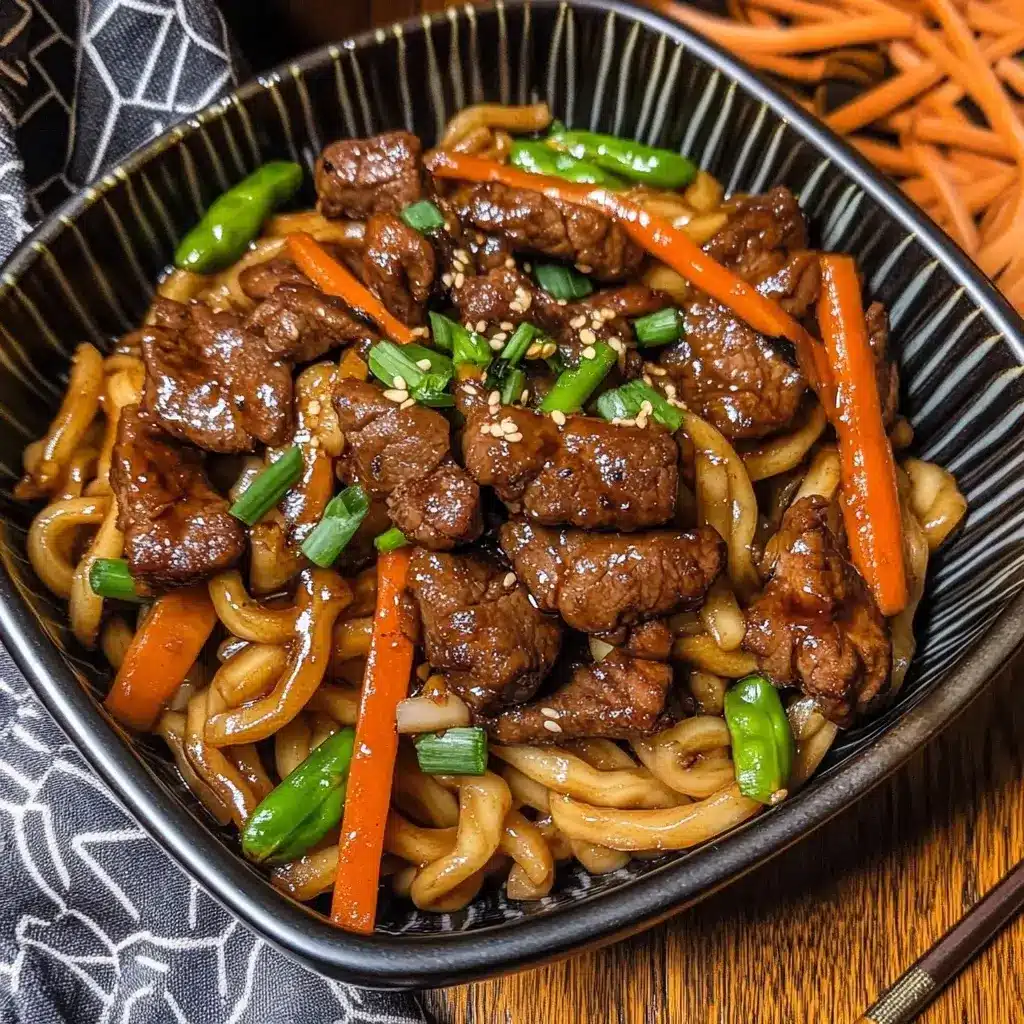

Beef Yaki Udon has become a weeknight staple in our house, and for good reason. It’s fast, flavorful, and incredibly satisfying – everything you could want in a quick dinner. The first time I made it, I was aiming for something that would please both my noodle-loving kids and my husband who craves savory, hearty meals. Let me tell you, this recipe was a home run. The chewy udon noodles, the tender beef, the vibrant vegetables all coated in a luscious, umami-rich sauce… it’s a symphony of textures and flavors that’s simply irresistible. Even my pickiest eater devoured it, asking for seconds (a rare and glorious occurrence!). Since then, Beef Yaki Udon has become a regular rotation dish, easily adaptable to whatever vegetables we have on hand and always delivering a delicious, comforting meal. If you’re looking for a quick, crowd-pleasing dinner that’s bursting with flavor, look no further than this Beef Yaki Udon Noodle Stir Fry – it’s a guaranteed winner!
Ingredients for Beef Yaki Udon Noodle Stir Fry
Crafting a truly exceptional Beef Yaki Udon Noodle Stir Fry starts with selecting high-quality ingredients. Each component plays a vital role in building the overall flavor profile and texture of this beloved dish. Let’s delve into each ingredient, exploring options and considerations to help you achieve stir-fry perfection.
- Udon Noodles (1 lb): The heart of our dish, udon noodles provide a delightful chewy texture that perfectly complements the stir-fry.
- Types of Udon Noodles:
- Fresh Udon Noodles (Pre-cooked): These are typically found in refrigerated sections and are often vacuum-packed. They are pre-cooked and require minimal preparation, usually just a quick rinse or brief boiling to loosen them. Fresh udon offers the best texture, being wonderfully soft and chewy.
- Frozen Udon Noodles (Pre-cooked): Frozen udon is another excellent option, often very convenient and readily available. They are also pre-cooked. Simply thaw them slightly under warm water or microwave briefly to separate the noodles before adding them to the stir-fry. Frozen udon retains a good chewy texture after cooking.
- Dried Udon Noodles: Dried udon noodles need to be cooked according to package directions before stir-frying. They generally take longer to cook than fresh or frozen udon and may have a slightly firmer texture. Ensure you don’t overcook them, as they can become mushy.
- Considerations for Udon Noodles:
- Salt Content: Some pre-cooked udon noodles can be quite salty. Taste them before adding to the stir-fry and adjust the amount of soy sauce in your sauce accordingly. Rinsing pre-cooked udon under cold water can help remove excess starch and salt.
- Texture: Fresh or frozen udon generally yields the best chewy texture for stir-fries. Dried udon can be a good substitute if fresh or frozen isn’t available, but pay close attention to cooking time to avoid overcooking.
- Types of Udon Noodles:
- Beef (1 lb): Beef provides the protein and savory depth to our Yaki Udon. Choosing the right cut and preparing it properly is key for tender and flavorful results.
- Best Beef Cuts for Stir-Fry:
- Sirloin Steak: Sirloin is a lean and flavorful cut that is excellent for stir-frying. It cooks quickly and remains tender if not overcooked. Slice it thinly against the grain for maximum tenderness.
- Flank Steak: Flank steak is another flavorful option, known for its slightly coarser grain. It’s important to slice flank steak thinly against the grain to ensure it’s tender and easy to chew in a stir-fry.
- Ribeye Steak (Boneless): Ribeye is a more marbled and richer cut, offering fantastic flavor. While slightly more expensive, it can elevate your Yaki Udon to a more decadent level. Slice thinly and trim excess fat if desired.
- Skirt Steak: Skirt steak is very flavorful and cooks quickly. Like flank steak, it should be sliced thinly against the grain.
- Beef Preparation:
- Slicing: Regardless of the cut you choose, slicing the beef thinly, against the grain, is crucial for tenderness. This breaks down the muscle fibers, making the beef more enjoyable to eat in a stir-fry.
- Marinating (Optional but Recommended): Marinating the beef for even just 15-30 minutes can significantly enhance its flavor and tenderness. A simple marinade of soy sauce, a touch of sesame oil, and cornstarch (for tenderizing) works wonders.
- Best Beef Cuts for Stir-Fry:
- Vegetables (3-4 cups, mixed): Vegetables add color, texture, and essential nutrients to Beef Yaki Udon. Choose a variety of vegetables that stir-fry well and complement the other flavors.
- Excellent Vegetable Choices:
- Onions: Yellow or white onions provide a foundational savory flavor. Slice them thinly or into wedges.
- Bell Peppers: Red, yellow, or green bell peppers add sweetness and crunch. Slice into strips.
- Carrots: Carrots contribute sweetness and a satisfying crunch. Julienne or thinly slice them.
- Broccoli Florets: Broccoli adds a slightly bitter and earthy note, along with great texture. Use small florets for even cooking.
- Mushrooms: Shiitake, cremini, or button mushrooms add umami depth and a meaty texture. Slice them or quarter larger mushrooms.
- Snap Peas or Snow Peas: These add sweetness and a delightful crisp-tender texture.
- Cabbage (Napa or Green): Cabbage adds a mild sweetness and slightly crunchy texture. Shred or thinly slice it.
- Bean Sprouts: Bean sprouts provide a delicate crunch and freshness, often added towards the end of cooking.
- Vegetable Preparation:
- Uniform Size: Cut vegetables into similar sizes to ensure even cooking in the stir-fry.
- Staggered Addition: Add vegetables to the stir-fry in order of cooking time, starting with harder vegetables like carrots and broccoli, and adding softer vegetables like bell peppers and snap peas later. Leafy greens and bean sprouts are typically added last.
- Excellent Vegetable Choices:
- Yaki Udon Sauce: The sauce is what brings everything together, creating that signature savory and slightly sweet Yaki Udon flavor.
- Core Sauce Ingredients:
- Soy Sauce (¼ cup): Soy sauce provides the foundational salty and umami flavor. Use low-sodium soy sauce to control the salt level.
- Oyster Sauce (2 tablespoons): Oyster sauce adds richness, depth, and a subtle sweetness and umami. If vegetarian, you can substitute with vegetarian oyster sauce (made from mushrooms) or hoisin sauce.
- Mirin (2 tablespoons): Mirin (sweet rice wine) adds sweetness and a subtle tang. If you don’t have mirin, you can use a dry sherry or rice vinegar with a pinch of sugar.
- Brown Sugar (1 tablespoon): Brown sugar enhances the sweetness and adds a molasses-like depth to the sauce.
- Sesame Oil (1 tablespoon): Toasted sesame oil adds a distinct nutty aroma and flavor that is crucial for Asian stir-fries.
- Optional Sauce Enhancements:
- Ginger (1 teaspoon, grated): Fresh ginger adds warmth and a spicy aromatic note.
- Garlic (1-2 cloves, minced): Garlic provides a pungent and savory base flavor.
- Rice Vinegar (1 teaspoon): Rice vinegar adds a touch of acidity to balance the sweetness and richness of the sauce.
- Sriracha or Chili Garlic Sauce (to taste): For a spicy kick, add sriracha or chili garlic sauce. Adjust the amount to your spice preference.
- Cornstarch (1 teaspoon, optional): Cornstarch can be mixed with a tablespoon of water to create a slurry and added to the sauce to thicken it slightly, creating a glossier finish.
- Core Sauce Ingredients:
- Oil for Stir-Frying: A neutral, high-smoke point oil is best for stir-frying.
- Recommended Oils:
- Vegetable Oil: A neutral flavor and high smoke point make it a great all-purpose stir-fry oil.
- Canola Oil: Similar to vegetable oil, canola oil is neutral and has a high smoke point.
- Peanut Oil: Peanut oil has a slightly nutty flavor and a high smoke point, often preferred in Asian cooking.
- Avocado Oil: Avocado oil has a mild flavor and a very high smoke point, making it a healthy and effective option for stir-frying.
- Recommended Oils:
- Garnishes (Optional): Garnishes add visual appeal, freshness, and an extra layer of flavor.
- Suggested Garnishes:
- Sesame Seeds (Toasted): Toasted sesame seeds add a nutty flavor and visual texture.
- Chopped Green Onions: Green onions provide a fresh, mild oniony flavor and vibrant green color.
- Red Pepper Flakes: For an extra touch of heat.
- Benito Flakes (Katsuobushi): For an authentic Japanese touch, bonito flakes (dried, shaved bonito) add a smoky, umami flavor and delicate texture.
- Suggested Garnishes:
By carefully selecting your ingredients and understanding their roles, you are well on your way to creating a truly delicious and authentic Beef Yaki Udon Noodle Stir Fry.
Instructions for Making Beef Yaki Udon Noodle Stir Fry
Making Beef Yaki Udon Noodle Stir Fry at home is a surprisingly quick and rewarding process. Follow these step-by-step instructions to create a flavorful and satisfying meal:
- Prepare the Beef (If Marinating): If you are marinating the beef, do this first. In a bowl, combine thinly sliced beef with your chosen marinade ingredients (e.g., soy sauce, sesame oil, cornstarch). Toss to coat evenly and let it marinate for at least 15-30 minutes, or longer if time allows, in the refrigerator. Marinating enhances the flavor and tenderness of the beef.
- Prepare the Udon Noodles: Prepare the udon noodles according to the package directions.
- Fresh Pre-cooked Udon: Usually just needs to be rinsed under warm water to loosen the noodles. Some packages may recommend a quick dip in boiling water. Follow package instructions.
- Frozen Pre-cooked Udon: Thaw slightly under warm water or microwave briefly to separate the noodles.
- Dried Udon: Cook in boiling water until al dente, according to package directions. Drain well after cooking.
Once cooked (if necessary), rinse the udon noodles under cold water to stop the cooking process and remove excess starch. Drain thoroughly and set aside. Tossing the cooked noodles with a little sesame oil can prevent them from sticking together.
- Prepare the Vegetables: Wash and chop all your chosen vegetables into uniform sizes. Slice onions, bell peppers, carrots, mushrooms, broccoli florets, snap peas, etc., ensuring they are ready to be added to the stir-fry. Mince garlic and grate ginger if using fresh.
- Make the Yaki Udon Sauce: In a small bowl, whisk together all the sauce ingredients: soy sauce, oyster sauce, mirin, brown sugar, sesame oil, and any optional additions like grated ginger, minced garlic, rice vinegar, sriracha, or cornstarch slurry (if using). Whisk until well combined and set aside. Tasting the sauce at this stage allows you to adjust seasonings to your preference – add more soy sauce for saltiness, brown sugar for sweetness, or sriracha for heat.
- Stir-Fry the Beef: Heat a large wok or large, heavy-bottomed skillet over high heat. Add about 1-2 tablespoons of oil. Once the oil is hot and shimmering (but not smoking), add the marinated beef (or plain beef if not marinating) in a single layer. Stir-fry the beef quickly, breaking it up as it cooks, until it is browned and cooked through. This should only take a few minutes as the beef is thinly sliced. Remove the cooked beef from the wok and set aside. Avoid overcrowding the wok; if necessary, cook the beef in batches to ensure proper browning.
- Stir-Fry the Vegetables: Add another 1-2 tablespoons of oil to the wok. Add the onions and carrots first, and stir-fry for 2-3 minutes until they start to soften. Then, add the bell peppers, broccoli, and mushrooms (or other harder vegetables you are using). Continue to stir-fry for another 3-5 minutes, until the vegetables are crisp-tender. Add garlic and ginger (if using) during the last minute of stir-frying the vegetables to prevent burning. Stir-fry vegetables in order of their cooking time, starting with harder vegetables and adding softer ones later.
- Add Noodles and Sauce: Add the cooked udon noodles to the wok with the vegetables. Pour the prepared Yaki Udon sauce over the noodles and vegetables. Toss and stir-fry everything together, ensuring the noodles and vegetables are evenly coated with the sauce. Cook for another 2-3 minutes, until the sauce has thickened slightly and heated through, and the noodles are heated through and well combined with the vegetables and sauce.
- Combine Beef and Serve: Return the cooked beef to the wok and toss to combine with the noodles, vegetables, and sauce. Heat through for another minute. Taste and adjust seasoning if needed (add more soy sauce for salt, or a touch more brown sugar for sweetness).
- Garnish and Serve Immediately: Serve Beef Yaki Udon Noodle Stir Fry immediately while it’s hot. Garnish with your choice of toppings, such as toasted sesame seeds, chopped green onions, red pepper flakes, or bonito flakes (katsuobushi). Serve in bowls and enjoy!
Following these instructions will guide you to create a delicious and authentic Beef Yaki Udon Noodle Stir Fry that is perfect for a quick and satisfying weeknight meal. Enjoy the process and the flavorful results!
Nutrition Facts for Beef Yaki Udon Noodle Stir Fry
(Estimated, per serving. Nutritional values can vary based on specific ingredients and portion sizes.)
Serving Size: Approximately 1.5-2 cups (about 300-400g)
Servings per Recipe: 4-6 servings
Approximate Nutritional Information per Serving (estimated for 5 servings):
- Calories: 450-550 kcal
- Total Fat: 15-20g
- Saturated Fat: 4-6g
- Monounsaturated Fat: 7-9g
- Polyunsaturated Fat: 2-3g
- Cholesterol: 70-90mg
- Sodium: 800-1200mg (depending on soy sauce and oyster sauce used)
- Total Carbohydrates: 50-60g
- Dietary Fiber: 5-7g
- Sugars: 10-15g
- Protein: 30-35g
Key Nutritional Highlights (per serving):
- Moderate Calories: Provides a substantial and satisfying meal within a moderate calorie range.
- Good Source of Protein: Beef contributes a significant amount of high-quality protein, essential for muscle building and satiety.
- Source of Fiber: Vegetables and udon noodles contribute dietary fiber, promoting digestive health and fullness.
- Iron Rich: Beef is a good source of iron, important for energy levels and oxygen transport.
- Vitamins and Minerals: Vegetables provide various vitamins and minerals, depending on the types used (e.g., Vitamin C, Vitamin A, Vitamin K, potassium).
- Sodium Content: Can be moderately high in sodium due to soy sauce and oyster sauce. Using low-sodium soy sauce and being mindful of portion sizes can help manage sodium intake.
Important Notes:
- These are estimates and can vary significantly based on the specific types and amounts of beef, vegetables, noodles, sauce ingredients, and oil used.
- Using leaner cuts of beef and less oil will reduce the fat content.
- Increasing the amount of vegetables will increase fiber and vitamin content while slightly reducing calorie density.
- Sodium content can be reduced by using low-sodium soy sauce and oyster sauce, or adjusting the amount used.
- For more precise nutritional information, use online nutritional calculators and input the exact ingredients and quantities you use in your recipe.
- Enjoy in moderation as part of a balanced diet.
Preparation Time for Beef Yaki Udon Noodle Stir Fry
Beef Yaki Udon Noodle Stir Fry is prized for its speed and efficiency, making it a fantastic option for busy weeknights. Here’s a breakdown of the estimated preparation and cooking times:
- Prep Time: 20-25 minutes
- This includes slicing beef, chopping vegetables, preparing the sauce, and cooking noodles (if using dried udon).
- Marinating time for beef (optional, but add 15-30 minutes if marinating).
- Cook Time: 15-20 minutes
- Stir-frying beef, vegetables, and noodles.
- Simmering sauce and combining all ingredients.
- Total Time: 35-45 minutes (or 50-75 minutes if including beef marinating time)
Time Breakdown:
- Active Time: Approximately 30-40 minutes (this is the time you are actively working in the kitchen).
- Inactive Time: Minimal, mostly during beef marinating (optional).
Tips to Speed Up Preparation:
- Pre-cut Vegetables: Purchase pre-cut vegetables from the grocery store to save chopping time.
- Use Pre-cooked Noodles: Fresh or frozen pre-cooked udon noodles significantly reduce cooking time compared to dried udon.
- Prepare Sauce Ahead: The Yaki Udon sauce can be made a day or two in advance and stored in the refrigerator.
- Marinate Beef Quickly: If you want to marinate beef but are short on time, even a 15-minute marinade will provide some benefit.
- Efficient Stir-Frying: Have all your ingredients prepped and ready to go before you start stir-frying. This “mise en place” approach streamlines the cooking process, allowing you to quickly add ingredients to the hot wok in the correct order.
Beef Yaki Udon is designed to be a fast and flavorful meal. With efficient preparation and quick stir-frying, you can have a delicious and satisfying dinner on the table in under an hour, even with beef marinating time included.
How to Serve Beef Yaki Udon Noodle Stir Fry
Beef Yaki Udon Noodle Stir Fry is a complete and satisfying meal on its own, but there are many ways to enhance your serving experience and create a delightful Asian-inspired feast. Here are some serving suggestions:
Serving Styles:
- Individual Bowls: The most common and convenient way to serve Yaki Udon. Portion the stir-fry into individual bowls for each person.
- Family Style Platter: For a more communal and visually appealing presentation, serve the Yaki Udon on a large platter in the center of the table. Let everyone help themselves.
- Bento Boxes: For lunch or a fun, organized meal, pack Yaki Udon into bento boxes along with other sides like edamame, pickled ginger, or a small salad.
Garnishes (Beyond the basics):
- Katsuobushi (Bonito Flakes): For an authentic Japanese touch, sprinkle bonito flakes over the hot Yaki Udon just before serving. The heat will make them dance and release a smoky, umami flavor.
- Nori Strips (Seaweed): Thin strips of roasted nori seaweed add a slightly salty and umami flavor and a crispy texture.
- Japanese Mayonnaise (Kewpie Mayo): Drizzle Kewpie mayonnaise (Japanese mayonnaise) over the Yaki Udon for extra richness and tanginess. It pairs especially well with the savory sauce.
- Shichimi Togarashi: For a sprinkle of Japanese chili spice blend, shichimi togarashi adds a complex heat and citrusy aroma.
- Pickled Ginger (Gari): Serve a side of pickled ginger (gari) to cleanse the palate between bites and add a refreshing contrast.
Side Dishes to Complement Beef Yaki Udon:
- Edamame: Steamed or boiled edamame (soybeans in pods), lightly salted, is a classic and healthy Japanese side dish.
- Miso Soup: A warm bowl of miso soup provides a comforting and umami-rich accompaniment.
- Japanese Salad (Sunomono): A refreshing cucumber and seaweed salad with a sweet vinegar dressing (sunomono) offers a light and tangy contrast to the rich Yaki Udon.
- Gyoza or Spring Rolls: Serve with pan-fried gyoza (Japanese dumplings) or crispy spring rolls as appetizers or side dishes for a more substantial meal.
- Kimchi: For a spicy and fermented Korean side dish, kimchi adds a pungent and flavorful kick.
Drink Pairings:
- Japanese Beer (e.g., Asahi, Sapporo, Kirin): A crisp Japanese beer pairs perfectly with the savory flavors of Yaki Udon.
- Sake (Rice Wine): Serve chilled or warm sake for a traditional Japanese beverage pairing.
- Green Tea (Hot or Iced): Green tea, especially Japanese green tea like Sencha or Genmaicha, is a refreshing and palate-cleansing option.
- Sparkling Water with Lemon or Lime: A light and refreshing non-alcoholic option.
Serving Temperature:
- Best Served Hot: Beef Yaki Udon Noodle Stir Fry is always best enjoyed hot and fresh from the wok. Serve immediately after cooking to ensure the noodles are chewy, the vegetables are crisp-tender, and the beef is tender and flavorful.
By considering these serving suggestions, you can elevate your Beef Yaki Udon Noodle Stir Fry from a simple weeknight meal to a more elaborate and enjoyable dining experience.
Additional Tips for Perfect Beef Yaki Udon Noodle Stir Fry
To consistently create restaurant-quality Beef Yaki Udon Noodle Stir Fry, keep these additional tips in mind:
- High Heat is Key for Stir-Frying: Stir-frying is a high-heat cooking method. Ensure your wok or skillet is properly heated before adding oil and ingredients. High heat is essential for achieving that signature stir-fry “wok hei” (wok aroma) and for quickly cooking the ingredients while maintaining their texture and flavor.
- Prepare All Ingredients Beforehand (Mise en Place): Stir-frying is a fast-paced cooking process. Having all your ingredients prepped, chopped, measured, and sauces mixed before you start cooking is crucial for efficiency and preventing ingredients from burning while you are still prepping.
- Don’t Overcrowd the Wok: Overcrowding the wok lowers the temperature and leads to steaming rather than stir-frying. Cook ingredients in batches if necessary to maintain high heat and ensure proper searing and stir-frying. For example, cook the beef in batches, then vegetables, and then combine everything at the end.
- Use the Right Type of Wok or Pan: A wok is ideal for stir-frying due to its shape, which allows for even heat distribution and easy tossing of ingredients. If you don’t have a wok, use a large, heavy-bottomed skillet with high sides. Cast iron skillets or carbon steel skillets are good options. Non-stick pans are less ideal for achieving true stir-fry results but can be used if necessary.
- Taste and Adjust Seasoning: After combining all ingredients and sauce, always taste your Yaki Udon and adjust seasoning as needed. You may want to add more soy sauce for saltiness, a touch of brown sugar for sweetness, rice vinegar for acidity, or sriracha for heat. Taste and adjust to your personal preference.
Bonus Tip: Experiment with Proteins and Vegetables! While this recipe focuses on beef, you can easily adapt it to use other proteins like chicken, pork, shrimp, or tofu. Similarly, feel free to experiment with different combinations of vegetables based on your preferences and what’s in season. Yaki Udon is a very versatile dish!
By following these tips and focusing on proper technique, you’ll be able to consistently make delicious and authentic Beef Yaki Udon Noodle Stir Fry at home that rivals your favorite restaurant versions.
FAQ – Frequently Asked Questions About Beef Yaki Udon Noodle Stir Fry
Here are answers to some common questions you might have about making Beef Yaki Udon Noodle Stir Fry:
Q1: Can I make Beef Yaki Udon vegetarian or vegan?
A: Yes, absolutely! To make it vegetarian, simply omit the beef and use firm or extra-firm tofu, tempeh, or more vegetables as your protein source. For a vegan version, ensure you use vegetarian oyster sauce (made from mushrooms) or substitute it with hoisin sauce or a combination of soy sauce and a touch of maple syrup for sweetness and umami. Double-check that your udon noodles are also vegan-friendly (some may contain egg).
Q2: Can I prepare Beef Yaki Udon ahead of time?
A: While Beef Yaki Udon is best enjoyed fresh and hot, you can prepare some components ahead of time to save time on the day of cooking. You can slice the beef, chop the vegetables, and make the sauce a day or two in advance and store them separately in the refrigerator. Cook the noodles just before stir-frying. Stir-frying is best done just before serving for optimal texture and flavor. Leftovers can be stored in the refrigerator for up to 2 days, but the noodles may become softer upon reheating.
Q3: What if I don’t have oyster sauce? Can I substitute it?
A: Oyster sauce is a key ingredient for the authentic Yaki Udon flavor, but if you don’t have it, you can substitute it. Hoisin sauce is a good alternative, as it provides a similar sweet and savory profile. You can also try a combination of soy sauce with a touch of brown sugar and a dash of fish sauce (if not vegetarian/vegan) to mimic some of the umami depth. Vegetarian oyster sauce (made from mushrooms) is also a great option for both vegetarians and meat-eaters.
Q4: My Yaki Udon noodles are sticky and clumpy, how can I prevent this?
A: Sticky noodles are a common issue. To prevent this:
- Rinse Noodles After Cooking: After cooking udon noodles (especially dried or pre-cooked), rinse them under cold water to remove excess starch, which is the main cause of stickiness.
- Drain Thoroughly: Ensure the noodles are well-drained after rinsing. Excess water contributes to stickiness.
- Toss with Sesame Oil: After draining, toss the cooked noodles with a little sesame oil to prevent them from sticking together.
- Don’t Overcook: Overcooked noodles tend to be stickier. Cook udon noodles to al dente or according to package directions.
Q5: Can I make Beef Yaki Udon spicier?
A: Yes, easily! To make your Beef Yaki Udon spicier, you can:
- Add Sriracha or Chili Garlic Sauce: Add more sriracha or chili garlic sauce to the Yaki Udon sauce, adjusting to your spice preference.
- Include Chili Flakes (Red Pepper Flakes): Add red pepper flakes during the stir-frying of vegetables or as a garnish.
- Use Fresh Chili Peppers: Add thinly sliced fresh chili peppers like Thai chilies or jalapeños during the vegetable stir-frying stage.
- Chili Oil: Drizzle chili oil over the finished dish for extra heat and flavor.
We hope these FAQs are helpful! Enjoy making your delicious Beef Yaki Udon Noodle Stir Fry and feel free to experiment and customize it to your liking!
Print
Beef Yaki Udon Noodle Stir Fry recipe
Ingredients
- Udon Noodles (1 lb): The heart of our dish, udon noodles provide a delightful chewy texture that perfectly complements the stir-fry.
- Types of Udon Noodles:
- Fresh Udon Noodles (Pre-cooked): These are typically found in refrigerated sections and are often vacuum-packed. They are pre-cooked and require minimal preparation, usually just a quick rinse or brief boiling to loosen them. Fresh udon offers the best texture, being wonderfully soft and chewy.
- Frozen Udon Noodles (Pre-cooked): Frozen udon is another excellent option, often very convenient and readily available. They are also pre-cooked. Simply thaw them slightly under warm water or microwave briefly to separate the noodles before adding them to the stir-fry. Frozen udon retains a good chewy texture after cooking.
- Dried Udon Noodles: Dried udon noodles need to be cooked according to package directions before stir-frying. They generally take longer to cook than fresh or frozen udon and may have a slightly firmer texture. Ensure you don’t overcook them, as they can become mushy.
- Considerations for Udon Noodles:
- Salt Content: Some pre-cooked udon noodles can be quite salty. Taste them before adding to the stir-fry and adjust the amount of soy sauce in your sauce accordingly. Rinsing pre-cooked udon under cold water can help remove excess starch and salt.
- Texture: Fresh or frozen udon generally yields the best chewy texture for stir-fries. Dried udon can be a good substitute if fresh or frozen isn’t available, but pay close attention to cooking time to avoid overcooking.
- Types of Udon Noodles:
- Beef (1 lb): Beef provides the protein and savory depth to our Yaki Udon. Choosing the right cut and preparing it properly is key for tender and flavorful results.
- Best Beef Cuts for Stir-Fry:
- Sirloin Steak: Sirloin is a lean and flavorful cut that is excellent for stir-frying. It cooks quickly and remains tender if not overcooked. Slice it thinly against the grain for maximum tenderness.
- Flank Steak: Flank steak is another flavorful option, known for its slightly coarser grain. It’s important to slice flank steak thinly against the grain to ensure it’s tender and easy to chew in a stir-fry.
- Ribeye Steak (Boneless): Ribeye is a more marbled and richer cut, offering fantastic flavor. While slightly more expensive, it can elevate your Yaki Udon to a more decadent level. Slice thinly and trim excess fat if desired.
- Skirt Steak: Skirt steak is very flavorful and cooks quickly. Like flank steak, it should be sliced thinly against the grain.
- Beef Preparation:
- Slicing: Regardless of the cut you choose, slicing the beef thinly, against the grain, is crucial for tenderness. This breaks down the muscle fibers, making the beef more enjoyable to eat in a stir-fry.
- Marinating (Optional but Recommended): Marinating the beef for even just 15-30 minutes can significantly enhance its flavor and tenderness. A simple marinade of soy sauce, a touch of sesame oil, and cornstarch (for tenderizing) works wonders.
- Best Beef Cuts for Stir-Fry:
- Vegetables (3-4 cups, mixed): Vegetables add color, texture, and essential nutrients to Beef Yaki Udon. Choose a variety of vegetables that stir-fry well and complement the other flavors.
- Excellent Vegetable Choices:
- Onions: Yellow or white onions provide a foundational savory flavor. Slice them thinly or into wedges.
- Bell Peppers: Red, yellow, or green bell peppers add sweetness and crunch. Slice into strips.
- Carrots: Carrots contribute sweetness and a satisfying crunch. Julienne or thinly slice them.
- Broccoli Florets: Broccoli adds a slightly bitter and earthy note, along with great texture. Use small florets for even cooking.
- Mushrooms: Shiitake, cremini, or button mushrooms add umami depth and a meaty texture. Slice them or quarter larger mushrooms.
- Snap Peas or Snow Peas: These add sweetness and a delightful crisp-tender texture.
- Cabbage (Napa or Green): Cabbage adds a mild sweetness and slightly crunchy texture. Shred or thinly slice it.
- Bean Sprouts: Bean sprouts provide a delicate crunch and freshness, often added towards the end of cooking.
- Vegetable Preparation:
- Uniform Size: Cut vegetables into similar sizes to ensure even cooking in the stir-fry.
- Staggered Addition: Add vegetables to the stir-fry in order of cooking time, starting with harder vegetables like carrots and broccoli, and adding softer vegetables like bell peppers and snap peas later. Leafy greens and bean sprouts are typically added last.
- Excellent Vegetable Choices:
- Yaki Udon Sauce: The sauce is what brings everything together, creating that signature savory and slightly sweet Yaki Udon flavor.
- Core Sauce Ingredients:
- Soy Sauce (¼ cup): Soy sauce provides the foundational salty and umami flavor. Use low-sodium soy sauce to control the salt level.
- Oyster Sauce (2 tablespoons): Oyster sauce adds richness, depth, and a subtle sweetness and umami. If vegetarian, you can substitute with vegetarian oyster sauce (made from mushrooms) or hoisin sauce.
- Mirin (2 tablespoons): Mirin (sweet rice wine) adds sweetness and a subtle tang. If you don’t have mirin, you can use a dry sherry or rice vinegar with a pinch of sugar.
- Brown Sugar (1 tablespoon): Brown sugar enhances the sweetness and adds a molasses-like depth to the sauce.
- Sesame Oil (1 tablespoon): Toasted sesame oil adds a distinct nutty aroma and flavor that is crucial for Asian stir-fries.
- Optional Sauce Enhancements:
- Ginger (1 teaspoon, grated): Fresh ginger adds warmth and a spicy aromatic note.
- Garlic (1-2 cloves, minced): Garlic provides a pungent and savory base flavor.
- Rice Vinegar (1 teaspoon): Rice vinegar adds a touch of acidity to balance the sweetness and richness of the sauce.
- Sriracha or Chili Garlic Sauce (to taste): For a spicy kick, add sriracha or chili garlic sauce. Adjust the amount to your spice preference.
- Cornstarch (1 teaspoon, optional): Cornstarch can be mixed with a tablespoon of water to create a slurry and added to the sauce to thicken it slightly, creating a glossier finish.
- Core Sauce Ingredients:
Instructions
- Prepare the Beef (If Marinating): If you are marinating the beef, do this first. In a bowl, combine thinly sliced beef with your chosen marinade ingredients (e.g., soy sauce, sesame oil, cornstarch). Toss to coat evenly and let it marinate for at least 15-30 minutes, or longer if time allows, in the refrigerator. Marinating enhances the flavor and tenderness of the beef.
- Prepare the Udon Noodles: Prepare the udon noodles according to the package directions.
- Fresh Pre-cooked Udon: Usually just needs to be rinsed under warm water to loosen the noodles. Some packages may recommend a quick dip in boiling water. Follow package instructions.
- Frozen Pre-cooked Udon: Thaw slightly under warm water or microwave briefly to separate the noodles.
- Dried Udon: Cook in boiling water until al dente, according to package directions. Drain well after cooking.
Once cooked (if necessary), rinse the udon noodles under cold water to stop the cooking process and remove excess starch. Drain thoroughly and set aside. Tossing the cooked noodles with a little sesame oil can prevent them from sticking together.
- Prepare the Vegetables: Wash and chop all your chosen vegetables into uniform sizes. Slice onions, bell peppers, carrots, mushrooms, broccoli florets, snap peas, etc., ensuring they are ready to be added to the stir-fry. Mince garlic and grate ginger if using fresh.
- Make the Yaki Udon Sauce: In a small bowl, whisk together all the sauce ingredients: soy sauce, oyster sauce, mirin, brown sugar, sesame oil, and any optional additions like grated ginger, minced garlic, rice vinegar, sriracha, or cornstarch slurry (if using). Whisk until well combined and set aside. Tasting the sauce at this stage allows you to adjust seasonings to your preference – add more soy sauce for saltiness, brown sugar for sweetness, or sriracha for heat.
- Stir-Fry the Beef: Heat a large wok or large, heavy-bottomed skillet over high heat. Add about 1-2 tablespoons of oil. Once the oil is hot and shimmering (but not smoking), add the marinated beef (or plain beef if not marinating) in a single layer. Stir-fry the beef quickly, breaking it up as it cooks, until it is browned and cooked through. This should only take a few minutes as the beef is thinly sliced. Remove the cooked beef from the wok and set aside. Avoid overcrowding the wok; if necessary, cook the beef in batches to ensure proper browning.
- Stir-Fry the Vegetables: Add another 1-2 tablespoons of oil to the wok. Add the onions and carrots first, and stir-fry for 2-3 minutes until they start to soften. Then, add the bell peppers, broccoli, and mushrooms (or other harder vegetables you are using). Continue to stir-fry for another 3-5 minutes, until the vegetables are crisp-tender. Add garlic and ginger (if using) during the last minute of stir-frying the vegetables to prevent burning. Stir-fry vegetables in order of their cooking time, starting with harder vegetables and adding softer ones later.
- Add Noodles and Sauce: Add the cooked udon noodles to the wok with the vegetables. Pour the prepared Yaki Udon sauce over the noodles and vegetables. Toss and stir-fry everything together, ensuring the noodles and vegetables are evenly coated with the sauce. Cook for another 2-3 minutes, until the sauce has thickened slightly and heated through, and the noodles are heated through and well combined with the vegetables and sauce.
- Combine Beef and Serve: Return the cooked beef to the wok and toss to combine with the noodles, vegetables, and sauce. Heat through for another minute. Taste and adjust seasoning if needed (add more soy sauce for salt, or a touch more brown sugar for sweetness).
- Garnish and Serve Immediately: Serve Beef Yaki Udon Noodle Stir Fry immediately while it’s hot. Garnish with your choice of toppings, such as toasted sesame seeds, chopped green onions, red pepper flakes, or bonito flakes (katsuobushi). Serve in bowls and enjoy!
Nutrition
- Serving Size: one normal portion
- Calories: 450-550 kcal
- Sugar: 10-15g
- Sodium: 800-1200mg
- Fat: 15-20g
- Saturated Fat: 4-6g
- Carbohydrates: 50-60g
- Fiber: 5-7g
- Protein: 30-35g
- Cholesterol: 70-90mg