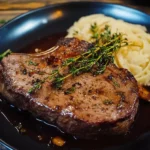
Ingredients
For the Star of the Show: The Beef
-
Boneless Beef Chuck Steak: 1 large steak, approximately 2 to 2.5 pounds and 1.5 to 2 inches thick. Look for a “chuck eye steak” or a “top blade chuck steak” if you can find them, as they are often more tender. The key is a nice, thick cut with good marbling (the little white flecks of fat), as this fat will render down during the long cooking process, basting the meat from the inside and keeping it moist and flavorful.
-
Kosher Salt and Coarsely Ground Black Pepper: For a generous seasoning of the steak.
-
High-Smoke-Point Oil: 2 tablespoons (such as avocado, grapeseed, or canola oil), for searing.
For the Aromatic Foundation and Braising Liquid:
-
Yellow Onions: 2 large, peeled and thickly sliced. They will melt down into the sauce, providing a sweet, savory base.
-
Garlic: 6-8 cloves, peeled and lightly smashed. Using whole, smashed cloves allows the garlic to release its flavor slowly without burning.
-
Carrots: 2 medium, peeled and roughly chopped into 1-inch pieces. (Optional, but adds sweetness and body to the gravy).
-
Celery: 2 stalks, roughly chopped into 1-inch pieces. (Optional, but adds a classic savory note).
-
Tomato Paste: 2 tablespoons. This adds a deep, umami-richness and helps to thicken the final sauce.
-
Dry Red Wine: 1/2 cup, for deglazing. A Cabernet Sauvignon, Merlot, or Shiraz works wonderfully. If you prefer not to use wine, you can substitute with an equal amount of additional beef broth and a tablespoon of balsamic vinegar.
-
Low-Sodium Beef Broth: 3 cups. Using low-sodium broth allows you to control the final saltiness of the dish.
-
Worcestershire Sauce: 2 tablespoons. A secret weapon for adding complex, savory depth.
-
Fresh Herbs: 3 sprigs of fresh thyme and 1 sprig of fresh rosemary, or 1 teaspoon of dried thyme and 1/2 teaspoon of dried rosemary.
-
Bay Leaf: 1.
For the Optional Gravy Slurry:
-
Cornstarch: 2 tablespoons.
-
Cold Water: 1/4 cup.
Instructions
First, preheat your oven to 325°F (165°C). Take the chuck steak out of the refrigerator about 30 minutes before cooking to allow it to come to room temperature. Pat the steak completely dry with paper towels. This step is critical—a dry surface is essential for achieving a deep, brown crust. Season the steak very generously on all sides with kosher salt and black pepper.
Place a large, heavy-bottomed, oven-safe pot or Dutch oven over medium-high heat. Add the 2 tablespoons of oil. Once the oil is shimmering hot, carefully place the seasoned chuck steak in the pot. Let it sear, undisturbed, for 4-5 minutes per side, until a deep, dark brown crust forms. This Maillard reaction is not about cooking the steak through; it’s about developing a massive amount of flavor. Once both sides are deeply browned, use tongs to transfer the steak to a plate and set it aside.
Reduce the heat under the pot to medium. Add the sliced onions, chopped carrots, and celery to the pot, stirring to coat them in the beef drippings. Sauté for 6-8 minutes, stirring occasionally, until the onions have softened and are beginning to caramelize.
Add the smashed garlic cloves and the tomato paste to the pot. Stir constantly for about 1-2 minutes, until the garlic is fragrant and the tomato paste has darkened slightly in color. This step “toasts” the tomato paste, deepening its flavor.
Pour the 1/2 cup of red wine (or broth/vinegar substitute) into the hot pot. Using a wooden spoon or spatula, scrape up all the browned bits (the “fond”) from the bottom of the pot. These little bits are packed with concentrated flavor. Let the wine bubble and reduce by about half, which should take 2-3 minutes.
Pour in the beef broth and Worcestershire sauce. Add the fresh herb sprigs and the bay leaf. Stir everything together and bring the liquid to a gentle simmer.
Carefully return the seared chuck steak to the pot, nestling it down into the liquid and vegetables. The liquid should come about halfway to two-thirds of the way up the side of the steak.
Cover the pot with a tight-fitting lid. This is very important to trap the steam and moisture. Transfer the entire pot to your preheated 325°F oven. Bake for 2.5 to 3.5 hours. The steak is done when it is fork-tender, meaning a fork can be inserted and twisted to shred the meat with very little resistance.
Carefully remove the pot from the oven. Use tongs to gently transfer the cooked steak to a cutting board or serving platter. Tent it loosely with foil and let it rest for at least 10-15 minutes. This allows the juices to redistribute throughout the meat.
While the steak rests, strain the braising liquid from the pot through a fine-mesh sieve into a saucepan or fat separator, pressing on the solids to extract all the liquid. Discard the cooked-down vegetables and herbs. Skim any excess fat from the surface of the liquid.
Bring the strained liquid to a simmer over medium heat. If you want a thicker gravy, now is the time to use your slurry. In a small bowl, whisk together the 2 tablespoons of cornstarch and 1/4 cup of cold water until completely smooth. Slowly pour the slurry into the simmering liquid while whisking constantly. Continue to simmer for 1-2 minutes until the gravy has thickened to your desired consistency. Taste and adjust seasoning with salt and pepper if needed.
You can either slice the rested steak against the grain or use two forks to shred it into large, tender chunks. Arrange the beef on a platter and pour the hot, rich gravy generously over the top. Serve immediately.
Nutrition
- Serving Size: one normal portion
- Calories: 450-600 kcal