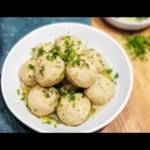
Ingredients
For the Dumpling Dough:
-
1 ½ cups super-fine blanched almond flour – This is the base of our dough. Do not substitute with almond meal (which is coarser and contains skins) or coconut flour (which has vastly different properties).
-
2 tablespoons psyllium husk powder – The essential binder for structure and texture. Make sure you are using the fine powder, not the whole husks.
-
Alternative: You can substitute with 1 ½ teaspoons of xanthan gum, though the texture will be slightly more gelatinous.
-
2 teaspoons baking powder – For lightness and a fluffy, pillowy texture. Ensure it’s fresh for the best lift.
-
½ teaspoon fine sea salt – To enhance all the flavors.
-
¼ teaspoon black pepper
-
½ teaspoon dried parsley or chives (optional) – For a hint of herby flavor within the dumpling.
-
1 large egg, lightly beaten
-
2 tablespoons melted unsalted butter or avocado oil – Adds richness and moisture.
-
¼ cup warm water or chicken broth – The liquid to activate the psyllium husk and bring the dough together. Using broth adds more flavor.
Instructions
Step 1: Combine the Dry Ingredients
-
In a medium-sized mixing bowl, add the super-fine almond flour, psyllium husk powder, baking powder, salt, pepper, and optional dried herbs.
-
Whisk everything together thoroughly. This is a crucial step to ensure the baking powder and psyllium husk are evenly distributed throughout the flour, which will lead to a consistent texture and even rise in your dumplings.
Step 2: Add the Wet Ingredients and Form the Dough
-
To the bowl of dry ingredients, add the lightly beaten egg and the melted butter or avocado oil.
-
Using a spatula or wooden spoon, begin to mix the ingredients together. The mixture will look crumbly and dry at this point.
-
Slowly pour in the warm water or chicken broth while continuing to mix. The dough will quickly transform from crumbly to a sticky, shaggy ball. Mix just until everything is combined; do not overmix.
Step 3: Let the Dough Rest (The Most Important Step!)
-
Cover the bowl with a plate or plastic wrap and let the dough rest for 10 minutes.
-
Do not skip this step! This resting period allows the psyllium husk powder to fully absorb the liquid and work its magic, transforming the sticky mixture into a firmer, workable dough. The dough will become noticeably less sticky and easier to handle after resting.
Step 4: Shape the Dumplings
-
After the dough has rested, prepare a small bowl of water to wet your hands. This will prevent the dough from sticking to your palms.
-
Scoop out portions of the dough using a tablespoon or a small cookie scoop for uniform size.
-
With wet hands, gently roll each portion into a small ball. They will be about the size of a large gumball. Don’t compact them too tightly.
Step 5: Cook the Dumplings
-
Bring your soup or broth to a full boil, then immediately reduce the heat to a gentle, consistent simmer. A rolling boil will cause the dumplings to break apart. This is the golden rule of cooking almond flour dumplings.
-
Gently drop the shaped dumplings one by one into the simmering liquid, leaving space between them as they will puff up and expand. Do not overcrowd the pot; cook in batches if necessary.
-
Cover the pot and let the dumplings simmer for 12-15 minutes. Do not lift the lid during the first 10 minutes.
-
The dumplings are done when they have puffed up significantly and are floating on the surface. To be certain, you can remove one and cut it in half; it should be cooked through and fluffy on the inside.
Nutrition
- Serving Size: one normal portion
- Calories: 90-100 kcal
- Carbohydrates: 1-2 grams