


Teriyaki Chicken Rice Bowls have become a weeknight dinner staple in our household, transforming those hectic evenings into something deliciously manageable. I remember the first time I made these – it was one of those days where time felt like it was running away from me, and the thought of cooking a proper meal felt daunting. But this recipe? It was a game-changer. The prep was surprisingly quick, the aroma of teriyaki sauce simmering on the stove filled the kitchen with warmth, and the final result? A vibrant, flavorful bowl that was both satisfying and healthy. Even my kids, who can be picky eaters, devoured it, asking for seconds (a rare and joyous occasion!). Since then, Teriyaki Chicken Rice Bowls have become a regular feature on our menu rotation. They’re incredibly versatile – you can easily swap out veggies, adjust the sauce to your liking, and use whatever rice you have on hand. If you’re searching for a dinner that is both easy to make and bursting with flavor, something that will please the whole family and can be on the table in under an hour, you absolutely must try this Teriyaki Chicken Rice Bowl recipe. It’s a weeknight winner, guaranteed to become a new favorite in your kitchen too.
Ingredients for Teriyaki Chicken Rice Bowl
Creating a flavorful and satisfying Teriyaki Chicken Rice Bowl starts with gathering the right ingredients. The beauty of this recipe lies in its balance of sweet, savory, and umami flavors, all achieved with readily available components. Here’s a detailed list of what you’ll need to assemble this delicious dish:
- Chicken Thighs (boneless, skinless): 1.5 pounds of boneless, skinless chicken thighs are the protein base of this dish. Chicken thighs are preferred over breasts for their richer flavor and ability to stay moist and tender even when cooked at higher temperatures. They also hold up well to marinating and grilling or pan-frying. You can substitute with chicken breasts if you prefer, but be mindful not to overcook them as they can dry out more easily. Cut the chicken thighs into bite-sized pieces, about 1-inch cubes, for quicker cooking and even flavor distribution.
- Soy Sauce (low sodium): ½ cup of low sodium soy sauce is a crucial component of the teriyaki marinade and sauce base. Low sodium soy sauce allows you to control the saltiness of the dish, preventing it from becoming overly salty, especially when combined with other salty ingredients. Soy sauce provides the umami depth and savory backbone of the teriyaki flavor. You can use regular soy sauce if you prefer, but adjust the amount of added salt later in the recipe if needed.
- Mirin (sweet rice wine): ¼ cup of mirin, a sweet Japanese rice wine, adds a subtle sweetness and complexity to the teriyaki sauce. Mirin has a lower alcohol content than sake and contributes a unique flavor profile that is essential for authentic teriyaki. If you cannot find mirin, you can substitute with dry sherry or rice vinegar with a teaspoon of sugar or honey added to mimic the sweetness.
- Sake (or dry sherry): ¼ cup of sake, or dry sherry as a readily available substitute, adds depth and a slightly alcoholic note to the teriyaki sauce, which cooks off during simmering. Sake enhances the overall flavor complexity and contributes to the authentic Japanese taste. Dry sherry is a good alternative if sake is not easily accessible. You can also omit it if necessary and slightly increase the mirin or soy sauce, but it does contribute to the overall flavor profile.
- Brown Sugar (packed): ¼ cup of packed light or dark brown sugar provides the signature sweetness of teriyaki sauce. Brown sugar adds a deeper, molasses-like sweetness compared to granulated sugar and also helps to thicken the sauce slightly as it simmers. You can adjust the amount of brown sugar to your preference – use less for a less sweet sauce, or more for a sweeter, more caramelized sauce.
- Garlic (minced): 2 cloves of garlic, minced, infuse the teriyaki sauce with a pungent and aromatic savory element. Freshly minced garlic is preferred for its vibrant flavor. If you don’t have fresh garlic, you can use ½ teaspoon of garlic powder, but fresh garlic will provide a more robust and authentic taste.
- Ginger (freshly grated): 1 tablespoon of freshly grated ginger adds a warm, spicy, and slightly citrusy note to the teriyaki sauce. Fresh ginger is essential for its bright and aromatic flavor. Use a microplane or fine grater to grate the ginger for a smooth texture in the sauce. If you don’t have fresh ginger, you can use ½ teaspoon of ground ginger, but fresh ginger is highly recommended for the best flavor.
- Sesame Oil (toasted): 1 teaspoon of toasted sesame oil adds a nutty, fragrant aroma and flavor to the teriyaki sauce and chicken. Toasted sesame oil has a much more intense flavor than regular sesame oil, so a little goes a long way. Add it towards the end of cooking to preserve its fragrance.
- Cornstarch: 1 tablespoon of cornstarch, mixed with 2 tablespoons of cold water (cornstarch slurry), is used to thicken the teriyaki sauce to a glossy and coating consistency. Cornstarch is an effective thickener that creates a smooth and slightly glossy sauce. Make sure to mix the cornstarch with cold water to create a slurry before adding it to the hot sauce to prevent lumps from forming.
- Sesame Seeds (for garnish): 1 tablespoon of sesame seeds, toasted or untoasted, are used for garnish, adding a nutty flavor and visual appeal to the finished rice bowls. Toasted sesame seeds offer a richer, more pronounced flavor. You can toast sesame seeds in a dry skillet over medium heat for a few minutes until fragrant and lightly golden, being careful not to burn them.
- Cooked Rice (white or brown): 4 cups of cooked rice, either white rice (like jasmine or basmati) or brown rice for a healthier option, serve as the base of the bowls. Prepare the rice according to package instructions. White rice provides a classic, fluffy base, while brown rice offers a nuttier flavor and more fiber. You can also use quinoa or other grains as alternatives if desired.
- Vegetables (optional, for serving): Assorted vegetables for serving alongside the teriyaki chicken and rice, adding color, nutrients, and texture to the bowls. Great options include:
- Broccoli florets: Steamed or roasted broccoli florets add a healthy and vibrant green element.
- Carrots (sliced or shredded): Steamed, roasted, or raw shredded carrots provide sweetness and crunch.
- Edamame (shelled): Steamed or microwaved edamame pods or shelled edamame add protein and a slightly nutty flavor.
- Bell peppers (sliced): Sautéed or raw bell peppers in various colors add sweetness and crispness.
- Green onions (sliced): Sliced green onions (scallions) are used for garnish and add a mild oniony flavor.
Ensure you have all these ingredients prepped and measured before you start cooking. Having everything ready will make the cooking process smoother and more enjoyable, allowing you to create these delicious Teriyaki Chicken Rice Bowls efficiently.
Instructions for Making Teriyaki Chicken Rice Bowl
Creating a delicious Teriyaki Chicken Rice Bowl at home is surprisingly simple and quick. Follow these step-by-step instructions to achieve perfectly cooked chicken in a flavorful teriyaki sauce, served over fluffy rice and your favorite vegetables:
Step 1: Marinate the Chicken
- Prepare Marinade: In a medium bowl, whisk together the soy sauce, mirin, sake (or dry sherry), brown sugar, minced garlic, and grated ginger. Ensure the brown sugar is fully dissolved in the liquid. This mixture forms the flavorful teriyaki marinade.
- Add Chicken: Add the bite-sized pieces of chicken thighs to the marinade. Toss to ensure all the chicken pieces are evenly coated with the marinade.
- Marinate: Cover the bowl with plastic wrap or a lid and marinate the chicken in the refrigerator for at least 30 minutes, or up to 2 hours for more intense flavor. Marinating longer than 2 hours is generally not recommended as the soy sauce can start to break down the chicken texture if marinated excessively. Thirty minutes is sufficient for good flavor penetration, but a longer marinade enhances the depth of taste.
Step 2: Cook the Chicken
- Heat Skillet or Grill Pan: Heat a large skillet or grill pan over medium-high heat. If using a skillet, add about 1 tablespoon of cooking oil (vegetable or canola oil). If using a grill pan, lightly spray it with cooking spray.
- Cook Chicken (in batches if needed): Remove the chicken pieces from the marinade, letting any excess marinade drip off (reserve the marinade – do not discard it!). Place the chicken in the hot skillet or grill pan in a single layer, being careful not to overcrowd the pan. Cook in batches if necessary to ensure even browning and searing. Overcrowding can steam the chicken instead of searing it.
- Sear and Cook Through: Sear the chicken pieces for 3-4 minutes per side, until they are nicely browned and cooked through. The internal temperature of the chicken should reach 165°F (74°C). Use a meat thermometer to ensure doneness if you are unsure. Searing creates a flavorful crust on the chicken and locks in the juices.
- Remove Chicken and Set Aside: Once the chicken is cooked through, remove it from the skillet or grill pan and set aside on a plate.
Step 3: Make the Teriyaki Sauce
- Pour in Reserved Marinade: Pour the reserved marinade into the same skillet or grill pan you used to cook the chicken (no need to clean it). The browned bits at the bottom of the pan will add extra flavor to the sauce.
- Simmer Marinade: Bring the marinade to a simmer over medium heat. Let it simmer for 5-7 minutes, allowing it to reduce slightly and concentrate the flavors. Simmering reduces the liquid and intensifies the teriyaki taste.
- Add Cornstarch Slurry: In a small bowl, whisk together the cornstarch and cold water to create a smooth slurry. Pour the cornstarch slurry into the simmering marinade.
- Thicken Sauce: Stir continuously and cook for another 1-2 minutes, or until the sauce thickens to your desired consistency. The cornstarch slurry will quickly thicken the sauce, creating a glossy teriyaki glaze. If you prefer a thicker sauce, you can add a bit more cornstarch slurry (a teaspoon at a time).
- Stir in Sesame Oil: Remove the skillet from the heat and stir in the toasted sesame oil. The sesame oil adds a final touch of nutty aroma and flavor to the sauce.
Step 4: Combine Chicken and Sauce
- Add Chicken to Sauce: Add the cooked chicken pieces back into the skillet with the teriyaki sauce.
- Toss to Coat: Toss the chicken to coat it evenly with the teriyaki sauce, ensuring every piece is glazed in the flavorful sauce.
Step 5: Assemble the Rice Bowls
- Prepare Rice Bowls: Divide the cooked rice evenly among bowls.
- Top with Teriyaki Chicken: Spoon the teriyaki chicken and sauce over the rice in each bowl.
- Add Vegetables (optional): Arrange your choice of vegetables (steamed broccoli, carrots, edamame, bell peppers, etc.) around the teriyaki chicken in each bowl.
- Garnish: Garnish each bowl with sesame seeds and sliced green onions.
Step 6: Serve and Enjoy!
- Serve Immediately: Serve the Teriyaki Chicken Rice Bowls immediately while they are warm and flavorful.
Following these detailed instructions will guide you through each step of creating delicious and satisfying Teriyaki Chicken Rice Bowls. Enjoy the combination of tender chicken, flavorful teriyaki sauce, fluffy rice, and fresh vegetables!
Nutrition Facts for Teriyaki Chicken Rice Bowl
This nutrition information is an estimate and can vary based on specific ingredients used, portion sizes, and types of rice and vegetables. It is intended as a general guideline.
Servings: 4 servings
Serving Size: Approximately 1.5 – 2 cups (depending on rice and vegetable quantity)
Approximate Nutrition Facts Per Serving:
- Calories: 500 – 600 kcal
- Total Fat: 15 – 20g
- Saturated Fat: 4 – 6g
- Trans Fat: 0g
- Monounsaturated Fat: 6 – 8g
- Polyunsaturated Fat: 3 – 4g
- Cholesterol: 150 – 180mg
- Sodium: 800 – 1000mg (can vary depending on soy sauce used and added salt)
- Total Carbohydrates: 60 – 70g
- Dietary Fiber: 2 – 4g
- Sugars: 20 – 25g
- Protein: 30 – 35g
Important Notes:
- These values are estimates and can change based on the specific brands and types of ingredients used. For example, using brown rice instead of white rice will increase the fiber content and slightly alter the carbohydrate profile. Using different vegetables will also impact the nutritional values.
- The serving size is an approximation. Actual serving sizes may vary, impacting the nutritional values consumed.
- The sodium content can be significantly reduced by using low-sodium soy sauce and being mindful of added salt.
- The sugar content comes primarily from the brown sugar and mirin in the teriyaki sauce. You can adjust the sweetness by reducing the brown sugar quantity if desired.
- This recipe provides a good source of protein from the chicken and carbohydrates from the rice, along with some vitamins and minerals depending on the vegetables you choose to include.
- For more precise nutritional information, you can use a nutrition calculator app or website and input the exact brands and quantities of ingredients you use in this recipe, especially if you are making substitutions or adding extra vegetables.
This nutritional information provides a general idea of the values per serving of Teriyaki Chicken Rice Bowls. Enjoy this balanced and flavorful meal as part of a healthy diet.
Preparation Time for Teriyaki Chicken Rice Bowl
Teriyaki Chicken Rice Bowls are designed to be a relatively quick and efficient meal, perfect for busy weeknights. Here’s a breakdown of the preparation time involved:
- Prep Time (Active): 20-25 minutes. This includes chopping the chicken, preparing the marinade, mincing garlic and ginger, measuring ingredients, cooking rice (if not pre-cooked), and prepping vegetables (if using). The most time-consuming part of the prep is usually chopping the chicken and preparing the vegetables.
- Marinating Time: 30 minutes to 2 hours (passive). While the chicken marinates, you are free to do other tasks. The minimum marinating time is 30 minutes for flavor infusion, but you can marinate longer (up to 2 hours) for a more intense teriyaki flavor.
- Cook Time: 15-20 minutes. This includes searing and cooking the chicken in the skillet or grill pan (in batches if needed), simmering and thickening the teriyaki sauce, and combining the chicken with the sauce. The actual cooking time for the chicken will depend on the size of the pieces and the heat of your pan.
Total Time (Start to Finish): Approximately 1 hour 5 minutes to 1 hour 45 minutes (including marinating time). The active hands-on time is only about 35-45 minutes, making this a manageable meal even on a weeknight. If you use pre-cooked rice, you can further reduce the total time.
The majority of the time is either passive marinating time or active cooking time, which is relatively quick. This recipe is designed for efficiency, allowing you to get a flavorful and healthy meal on the table without spending hours in the kitchen. The quick prep and cook times make Teriyaki Chicken Rice Bowls an excellent choice for a satisfying weeknight dinner.
How to Serve Teriyaki Chicken Rice Bowl
Teriyaki Chicken Rice Bowls are incredibly versatile and can be served in a variety of ways, making them adaptable to different preferences and occasions. Their balanced flavors and textures make them a satisfying and customizable meal. Here are some serving suggestions to inspire you:
Classic Bowl Style:
- Standard Rice Bowl: The most common and straightforward way to serve Teriyaki Chicken is as a rice bowl. Simply spoon the teriyaki chicken and sauce over a bed of cooked rice in bowls. This allows the sauce to soak into the rice, creating a flavorful base for the meal.
- Vegetable Additions: Enhance the nutritional value and visual appeal by adding a variety of vegetables to the bowl. Arrange steamed broccoli, carrots, edamame, bell peppers, snap peas, or any other vegetables you enjoy around the teriyaki chicken and rice. This creates a balanced and colorful bowl.
- Garnish Options: Don’t forget the garnishes! Sesame seeds and sliced green onions are classic choices that add flavor, texture, and visual appeal. Other garnish options include:
- Shredded nori (seaweed): Adds a salty and umami flavor.
- Pickled ginger: Provides a palate-cleansing and slightly spicy element.
- Sriracha or chili garlic sauce: For those who like a spicy kick.
- Avocado slices: Adds creaminess and healthy fats.
- Cilantro (chopped): For a fresh herbal note.
Deconstructed Bowl Style:
- Build-Your-Own Bowl Bar: For a fun and interactive meal, set up a “build-your-own bowl” bar. Place bowls of cooked rice, teriyaki chicken, and various vegetables (steamed, roasted, or raw) in separate serving dishes. Let everyone customize their own bowls with their preferred combinations and toppings. This is great for families or gatherings with varying preferences.
- Separate Components: Serve the teriyaki chicken and rice separately, allowing individuals to portion out their own servings. This can be useful for meal prepping or if you prefer to control the sauce-to-rice ratio.
Alternative Serving Styles:
- Lettuce Wraps: For a lower-carb option, serve the teriyaki chicken in lettuce wraps instead of rice bowls. Use large lettuce leaves (like butter lettuce or romaine) as wraps and fill them with teriyaki chicken and your choice of vegetables. This creates a light and refreshing meal.
- Teriyaki Chicken Salad: Combine the teriyaki chicken (cooled or warm) with mixed greens, your favorite salad vegetables, and a light vinaigrette dressing. This transforms the dish into a flavorful and protein-packed salad.
- Teriyaki Chicken Stir-fry: Stir-fry the teriyaki chicken with a medley of vegetables like broccoli, bell peppers, snap peas, and onions. Serve over rice or noodles for a heartier stir-fry meal.
- Teriyaki Chicken Tacos or Sliders: Shred the teriyaki chicken and use it as a filling for tacos or mini sliders. Top with slaw, pickled onions, and a drizzle of sriracha mayo for a fusion-style meal.
No matter how you choose to serve them, Teriyaki Chicken Rice Bowls are sure to be a satisfying and flavorful meal. Their versatility allows you to adapt them to your liking and create a dish that suits any occasion and preference.
Additional Tips for Perfect Teriyaki Chicken Rice Bowl
To ensure your Teriyaki Chicken Rice Bowls are absolutely perfect every time, here are five essential tips to keep in mind:
- Don’t Overcrowd the Pan When Cooking Chicken: When searing and cooking the chicken, avoid overcrowding the skillet or grill pan. Overcrowding lowers the pan temperature and steams the chicken instead of searing it, resulting in less browning and less flavorful chicken. Cook the chicken in batches, ensuring a single layer in the pan with some space between pieces. This allows for proper searing and browning, creating a delicious crust and locking in the juices.
- Simmer the Marinade to Concentrate Flavors: Don’t skip the step of simmering the reserved marinade to make the teriyaki sauce. Simmering reduces the liquid and concentrates the flavors, intensifying the teriyaki taste and creating a richer, more complex sauce. Simmering also cooks off any raw chicken juices from the marinade, making it safe to use as a sauce.
- Use a Cornstarch Slurry for Smooth Sauce Thickening: Always mix the cornstarch with cold water to create a slurry before adding it to the hot teriyaki sauce. Adding cornstarch directly to hot liquid can cause it to clump and form lumps in your sauce. The cornstarch slurry ensures smooth and even thickening, creating a glossy and velvety teriyaki sauce.
- Taste and Adjust Seasoning: Taste the teriyaki sauce after it has thickened and adjust the seasoning to your preference. You may want to add a little more soy sauce for saltiness, brown sugar for sweetness, ginger for warmth, or garlic for pungency. Personalize the sauce to your liking to create your perfect teriyaki flavor profile.
- Don’t Overcook the Chicken: Chicken thighs are more forgiving than chicken breasts, but it’s still important not to overcook them, which can make them dry and tough. Cook the chicken until it reaches an internal temperature of 165°F (74°C). Use a meat thermometer to ensure accurate doneness. Once cooked through, remove the chicken from the heat immediately to prevent carryover cooking and maintain its tenderness.
By following these tips, you’ll be well on your way to creating Teriyaki Chicken Rice Bowls that are perfectly cooked, incredibly flavorful, and a guaranteed crowd-pleaser. Enjoy the process and the delicious results!
Frequently Asked Questions (FAQ) about Teriyaki Chicken Rice Bowl
Here are some frequently asked questions about making Teriyaki Chicken Rice Bowls, along with helpful answers to guide you:
Q1: Can I use chicken breasts instead of chicken thighs?
A: Yes, you can substitute boneless, skinless chicken breasts for chicken thighs in this recipe. However, chicken breasts tend to be leaner and can dry out more easily if overcooked. If using chicken breasts, be extra careful not to overcook them. Reduce the cooking time slightly and ensure you cook them until they reach 165°F (74°C) internal temperature but no longer. Chicken thighs are generally preferred for teriyaki chicken because they are more flavorful, stay moist, and are more forgiving if slightly overcooked.
Q2: Can I make Teriyaki Chicken Rice Bowls ahead of time?
A: Yes, you can prepare components of Teriyaki Chicken Rice Bowls ahead of time. The teriyaki chicken itself can be cooked and stored in the refrigerator for up to 3-4 days. The teriyaki sauce can also be made ahead and stored separately. Cooked rice can also be prepared in advance and reheated. Store all components separately in airtight containers in the refrigerator. When ready to serve, reheat the chicken and sauce, cook fresh rice if needed, and assemble the bowls. Assembling bowls just before serving is recommended for the best texture and freshness of vegetables.
Q3: Can I grill the chicken instead of pan-frying?
A: Absolutely! Grilling is an excellent way to cook teriyaki chicken. Preheat your grill to medium-high heat. Thread the marinated chicken pieces onto skewers or place them directly on the grill grates. Grill for 3-4 minutes per side, or until cooked through and nicely grill-marked. Grilling adds a smoky flavor that complements the teriyaki sauce beautifully. You can still make the teriyaki sauce in a skillet on the stovetop using the reserved marinade.
Q4: Can I add more vegetables to the teriyaki sauce while cooking?
A: Yes, you can add vegetables directly to the skillet while simmering the teriyaki sauce for a one-pan meal approach. Good vegetable options to add to the sauce include sliced bell peppers, broccoli florets, snap peas, or sliced onions. Add them to the skillet after simmering the marinade and before adding the cornstarch slurry. Cook the vegetables until tender-crisp before thickening the sauce and adding the chicken back in.
Q5: Can I make a vegetarian version of this recipe?
A: Yes, you can easily adapt this recipe to make a vegetarian teriyaki bowl. Substitute the chicken with firm tofu, tempeh, or large portobello mushroom caps. For tofu or tempeh, press out excess water, cube, and marinate and cook them similarly to the chicken. For portobello mushrooms, marinate and grill or bake them until tender. Use vegetable broth instead of chicken broth if your risotto recipe calls for broth. The teriyaki sauce and rice bowl components remain the same, making it a versatile recipe for both meat-eaters and vegetarians.
These FAQs should help you address common questions and confidently make delicious Teriyaki Chicken Rice Bowls at home. Enjoy creating and customizing this flavorful and easy meal!
Print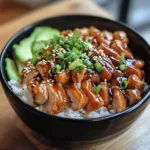
Teriyaki Chicken Rice Bowl recipe
Ingredients
- Chicken Thighs (boneless, skinless): 1.5 pounds of boneless, skinless chicken thighs are the protein base of this dish. Chicken thighs are preferred over breasts for their richer flavor and ability to stay moist and tender even when cooked at higher temperatures. They also hold up well to marinating and grilling or pan-frying. You can substitute with chicken breasts if you prefer, but be mindful not to overcook them as they can dry out more easily. Cut the chicken thighs into bite-sized pieces, about 1-inch cubes, for quicker cooking and even flavor distribution.
- Soy Sauce (low sodium): ½ cup of low sodium soy sauce is a crucial component of the teriyaki marinade and sauce base. Low sodium soy sauce allows you to control the saltiness of the dish, preventing it from becoming overly salty, especially when combined with other salty ingredients. Soy sauce provides the umami depth and savory backbone of the teriyaki flavor. You can use regular soy sauce if you prefer, but adjust the amount of added salt later in the recipe if needed.
- Mirin (sweet rice wine): ¼ cup of mirin, a sweet Japanese rice wine, adds a subtle sweetness and complexity to the teriyaki sauce. Mirin has a lower alcohol content than sake and contributes a unique flavor profile that is essential for authentic teriyaki. If you cannot find mirin, you can substitute with dry sherry or rice vinegar with a teaspoon of sugar or honey added to mimic the sweetness.
- Sake (or dry sherry): ¼ cup of sake, or dry sherry as a readily available substitute, adds depth and a slightly alcoholic note to the teriyaki sauce, which cooks off during simmering. Sake enhances the overall flavor complexity and contributes to the authentic Japanese taste. Dry sherry is a good alternative if sake is not easily accessible. You can also omit it if necessary and slightly increase the mirin or soy sauce, but it does contribute to the overall flavor profile.
- Brown Sugar (packed): ¼ cup of packed light or dark brown sugar provides the signature sweetness of teriyaki sauce. Brown sugar adds a deeper, molasses-like sweetness compared to granulated sugar and also helps to thicken the sauce slightly as it simmers. You can adjust the amount of brown sugar to your preference – use less for a less sweet sauce, or more for a sweeter, more caramelized sauce.
- Garlic (minced): 2 cloves of garlic, minced, infuse the teriyaki sauce with a pungent and aromatic savory element. Freshly minced garlic is preferred for its vibrant flavor. If you don’t have fresh garlic, you can use ½ teaspoon of garlic powder, but fresh garlic will provide a more robust and authentic taste.
- Ginger (freshly grated): 1 tablespoon of freshly grated ginger adds a warm, spicy, and slightly citrusy note to the teriyaki sauce. Fresh ginger is essential for its bright and aromatic flavor. Use a microplane or fine grater to grate the ginger for a smooth texture in the sauce. If you don’t have fresh ginger, you can use ½ teaspoon of ground ginger, but fresh ginger is highly recommended for the best flavor.
- Sesame Oil (toasted): 1 teaspoon of toasted sesame oil adds a nutty, fragrant aroma and flavor to the teriyaki sauce and chicken. Toasted sesame oil has a much more intense flavor than regular sesame oil, so a little goes a long way. Add it towards the end of cooking to preserve its fragrance.
- Cornstarch: 1 tablespoon of cornstarch, mixed with 2 tablespoons of cold water (cornstarch slurry), is used to thicken the teriyaki sauce to a glossy and coating consistency. Cornstarch is an effective thickener that creates a smooth and slightly glossy sauce. Make sure to mix the cornstarch with cold water to create a slurry before adding it to the hot sauce to prevent lumps from forming.
- Sesame Seeds (for garnish): 1 tablespoon of sesame seeds, toasted or untoasted, are used for garnish, adding a nutty flavor and visual appeal to the finished rice bowls. Toasted sesame seeds offer a richer, more pronounced flavor. You can toast sesame seeds in a dry skillet over medium heat for a few minutes until fragrant and lightly golden, being careful not to burn them.
- Cooked Rice (white or brown): 4 cups of cooked rice, either white rice (like jasmine or basmati) or brown rice for a healthier option, serve as the base of the bowls. Prepare the rice according to package instructions. White rice provides a classic, fluffy base, while brown rice offers a nuttier flavor and more fiber. You can also use quinoa or other grains as alternatives if desired.
- Vegetables (optional, for serving): Assorted vegetables for serving alongside the teriyaki chicken and rice, adding color, nutrients, and texture to the bowls. Great options include:
- Broccoli florets: Steamed or roasted broccoli florets add a healthy and vibrant green element.
- Carrots (sliced or shredded): Steamed, roasted, or raw shredded carrots provide sweetness and crunch.
- Edamame (shelled): Steamed or microwaved edamame pods or shelled edamame add protein and a slightly nutty flavor.
- Bell peppers (sliced): Sautéed or raw bell peppers in various colors add sweetness and crispness.
- Green onions (sliced): Sliced green onions (scallions) are used for garnish and add a mild oniony flavor.
Instructions
Step 1: Marinate the Chicken
- Prepare Marinade: In a medium bowl, whisk together the soy sauce, mirin, sake (or dry sherry), brown sugar, minced garlic, and grated ginger. Ensure the brown sugar is fully dissolved in the liquid. This mixture forms the flavorful teriyaki marinade.
- Add Chicken: Add the bite-sized pieces of chicken thighs to the marinade. Toss to ensure all the chicken pieces are evenly coated with the marinade.
- Marinate: Cover the bowl with plastic wrap or a lid and marinate the chicken in the refrigerator for at least 30 minutes, or up to 2 hours for more intense flavor. Marinating longer than 2 hours is generally not recommended as the soy sauce can start to break down the chicken texture if marinated excessively. Thirty minutes is sufficient for good flavor penetration, but a longer marinade enhances the depth of taste.
Step 2: Cook the Chicken
- Heat Skillet or Grill Pan: Heat a large skillet or grill pan over medium-high heat. If using a skillet, add about 1 tablespoon of cooking oil (vegetable or canola oil). If using a grill pan, lightly spray it with cooking spray.
- Cook Chicken (in batches if needed): Remove the chicken pieces from the marinade, letting any excess marinade drip off (reserve the marinade – do not discard it!). Place the chicken in the hot skillet or grill pan in a single layer, being careful not to overcrowd the pan. Cook in batches if necessary to ensure even browning and searing. Overcrowding can steam the chicken instead of searing it.
- Sear and Cook Through: Sear the chicken pieces for 3-4 minutes per side, until they are nicely browned and cooked through. The internal temperature of the chicken should reach 165°F (74°C). Use a meat thermometer to ensure doneness if you are unsure. Searing creates a flavorful crust on the chicken and locks in the juices.
- Remove Chicken and Set Aside: Once the chicken is cooked through, remove it from the skillet or grill pan and set aside on a plate.
Step 3: Make the Teriyaki Sauce
- Pour in Reserved Marinade: Pour the reserved marinade into the same skillet or grill pan you used to cook the chicken (no need to clean it). The browned bits at the bottom of the pan will add extra flavor to the sauce.
- Simmer Marinade: Bring the marinade to a simmer over medium heat. Let it simmer for 5-7 minutes, allowing it to reduce slightly and concentrate the flavors. Simmering reduces the liquid and intensifies the teriyaki taste.
- Add Cornstarch Slurry: In a small bowl, whisk together the cornstarch and cold water to create a smooth slurry. Pour the cornstarch slurry into the simmering marinade.
- Thicken Sauce: Stir continuously and cook for another 1-2 minutes, or until the sauce thickens to your desired consistency. The cornstarch slurry will quickly thicken the sauce, creating a glossy teriyaki glaze. If you prefer a thicker sauce, you can add a bit more cornstarch slurry (a teaspoon at a time).
- Stir in Sesame Oil: Remove the skillet from the heat and stir in the toasted sesame oil. The sesame oil adds a final touch of nutty aroma and flavor to the sauce.
Step 4: Combine Chicken and Sauce
- Add Chicken to Sauce: Add the cooked chicken pieces back into the skillet with the teriyaki sauce.
- Toss to Coat: Toss the chicken to coat it evenly with the teriyaki sauce, ensuring every piece is glazed in the flavorful sauce.
Step 5: Assemble the Rice Bowls
- Prepare Rice Bowls: Divide the cooked rice evenly among bowls.
- Top with Teriyaki Chicken: Spoon the teriyaki chicken and sauce over the rice in each bowl.
- Add Vegetables (optional): Arrange your choice of vegetables (steamed broccoli, carrots, edamame, bell peppers, etc.) around the teriyaki chicken in each bowl.
- Garnish: Garnish each bowl with sesame seeds and sliced green onions.
Step 6: Serve and Enjoy!
- Serve Immediately: Serve the Teriyaki Chicken Rice Bowls immediately while they are warm and flavorful.
Nutrition
- Serving Size: one normal portion
- Calories: 500 – 600
- Sugar: 20 – 25g
- Sodium: 800 – 1000mg
- Fat: 15 – 20g
- Saturated Fat: 4 – 6g
- Carbohydrates: 60 – 70g
- Fiber: 2 – 4g
- Protein: 30 – 35g
- Cholesterol: 150 – 180mg