Ingredients
The Stars of the Show (Pasta and Shrimp):
-
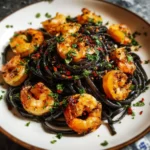
Squid Ink Pasta: 1 pound (16 ounces or 450g). Look for long strands like tagliatelle, linguine, or spaghetti, as they beautifully capture the sauce. The squid ink (nero di seppia) is infused into the pasta dough, giving it its dramatic color and a subtle, savory brininess.
-
Large Shrimp: 1 ½ pounds, peeled and deveined. Using large or jumbo shrimp (16-20 or 21-25 per pound) is ideal, as they remain plump and juicy and are less prone to overcooking. You can choose to leave the tails on for a more elegant presentation, or remove them for easier eating. Ensure they are raw, not pre-cooked.
For the Aromatic Garlic and White Wine Sauce:
-
Extra Virgin Olive Oil: ¼ cup. Use a good quality olive oil, as its flavor is a key component of the sauce base.
-
Garlic: 8 to 10 cloves, thinly sliced. This may seem like a lot, but sliced garlic provides a sweet, mellow flavor without the harsh bite of minced garlic. It is the aromatic heart of the sauce.
-
Shallot: 1 large, finely minced. Shallots provide a milder, more delicate, and slightly sweeter flavor than onions, which perfectly complements the seafood.
-
Dry White Wine: ½ cup. This is essential for deglazing the pan and adding a layer of acidity and complexity. A crisp, dry white wine like a Pinot Grigio, Sauvignon Blanc, or an unoaked Chardonnay is perfect.
-
Red Pepper Flakes: ½ to 1 teaspoon. This provides a gentle, warm hum of heat that cuts through the richness. Adjust the amount based on your preference for spiciness.
-
Unsalted Butter: 2 tablespoons, cold and cut into small pieces. Swirled in at the end, this creates a richer, glossier sauce.
-
Lemon: 1, for both zest and juice. The fresh acidity is crucial for brightening the flavors and balancing the richness of the dish.
For the Fresh Components and Garnish:
-
Cherry Tomatoes: 1 pint (about 2 cups), halved. The tomatoes add a burst of sweetness, a beautiful pop of color, and a juicy acidity that complements the seafood.
-
Fresh Italian (Flat-Leaf) Parsley: ½ cup, finely chopped, plus more for garnish. The fresh, clean, and slightly peppery flavor of parsley is essential for cutting through the richness and adding a final touch of freshness.
-
Salt: To taste, for both the pasta water and the sauce.
-
Black Pepper: Freshly ground, to taste.
Instructions
Bring a large pot of water to a rolling boil. Once it is boiling vigorously, generously salt the water. It should taste as salty as the sea. This is your only chance to season the pasta itself from the inside out.
Add the 1 pound of squid ink pasta to the boiling water and cook according to the package directions until it is al dente. “Al dente,” which means “to the tooth” in Italian, is the ideal texture—the pasta should be fully cooked but still have a firm, pleasant bite in the very center. It will continue to cook slightly when you toss it with the hot sauce.
Before you drain the pasta, carefully reserve at least 1 ½ cups of the starchy, black pasta water. This water is liquid gold and the secret to creating a perfectly emulsified, glossy sauce that clings beautifully to the pasta. Drain the cooked pasta in a colander and set it aside. Do not rinse the pasta, as this would wash away the starches that help the sauce adhere.
While the pasta is cooking, you can begin with the shrimp. First, ensure your peeled and deveined shrimp are very dry by patting them thoroughly with paper towels. Moisture is the enemy of a good sear. Season the dry shrimp lightly with salt and freshly ground black pepper.
Place a large, heavy-bottomed skillet or sauté pan over medium-high heat and add 2 tablespoons of the olive oil. Once the oil is hot and shimmering, carefully add the shrimp to the pan in a single, even layer. Do not overcrowd the pan; if necessary, cook the shrimp in two batches.
Sear the shrimp for about 1-2 minutes per side. They cook very quickly. You are looking for them to turn pink and opaque and develop a light golden sear. The moment they curl from a straight line into a loose “C” shape, they are done. Immediately remove the seared shrimp from the skillet and set them aside on a clean plate. This step is crucial to prevent them from overcooking and becoming rubbery while you build the sauce.
Reduce the heat under the skillet to medium. Add the remaining 2 tablespoons of olive oil to the same pan. Add the finely minced shallot and cook, stirring frequently, for about 2-3 minutes until it has softened and become translucent.
Add the thinly sliced garlic and the red pepper flakes to the pan. Cook, stirring constantly, for about 1-2 minutes until the garlic is fragrant and just beginning to turn a pale golden color. It is very important not to let the garlic brown or burn, as it will become bitter and ruin the flavor of your sauce.
Pour the ½ cup of dry white wine into the hot pan. It will bubble and steam vigorously. Use a wooden spoon or spatula to deglaze the pan by scraping up all the delicious browned bits (known as fond) from the bottom of the skillet. These bits are packed with concentrated flavor. Let the wine simmer and reduce by about half, which should take 2-3 minutes.
Add the halved cherry tomatoes to the skillet, along with a pinch of salt and pepper. Cook, stirring occasionally, for about 4-5 minutes, until the tomatoes begin to soften, break down slightly, and release their juices into the sauce.
Add the drained, cooked squid ink pasta directly to the skillet with the tomato and garlic sauce. Add ½ cup of the reserved starchy pasta water. Using tongs, toss everything together vigorously and continuously. The starchy water will begin to emulsify with the olive oil, creating a light but creamy sauce that coats every strand of pasta.
Add the 2 tablespoons of cold, cubed butter to the pan. Continue to toss until the butter has melted completely, making the sauce even glossier and richer. If the sauce seems too thick, add another splash of the reserved pasta water, a tablespoon at a time, until it reaches your desired consistency.
Turn off the heat. Add the seared shrimp back to the pan, along with the chopped fresh parsley, the zest of one lemon, and a generous squeeze of fresh lemon juice (about 1-2 tablespoons). Toss everything one final time to combine and gently warm the shrimp through.
Taste the pasta and adjust the seasoning if necessary, adding more salt, pepper, or lemon juice to your liking. Serve immediately in warm, shallow bowls. Garnish with an extra sprinkle of fresh parsley and perhaps a final drizzle of high-quality extra virgin olive oil.
Nutrition
- Serving Size: one normal portion
- Calories: 550 to 650