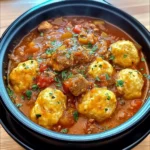
Ingredients
-
- Lamb Shoulder (2 lbs, boneless or bone-in, cut into 2-inch chunks): Lamb shoulder is the star of this stew. Its higher fat content renders beautifully during slow cooking, resulting in incredibly tender and flavorful meat. You can use boneless shoulder for convenience or bone-in for even richer flavor (just remove the bones after cooking). Look for lamb shoulder that is well-marbled for the best results. If you can’t find shoulder, lamb leg can also be used, but it tends to be leaner and may require slightly shorter cooking time.
-
- All-Purpose Flour (2 tablespoons, plus extra for dusting): Flour is used to lightly coat the lamb before browning and to thicken the stew gravy. A small amount is also used in the dumpling mixture. For a gluten-free option, you can use a gluten-free all-purpose flour blend.
-
- Olive Oil (2 tablespoons): Olive oil is used for browning the lamb and vegetables, adding depth of flavor and helping to create a rich base for the stew. You can substitute with other cooking oils like vegetable oil or canola oil if preferred.
-
- Onion (1 large, chopped): Onions form the aromatic base of the stew, adding sweetness and savory notes as they soften and caramelize during cooking. Yellow or brown onions are ideal.
-
- Carrots (2 large, peeled and chopped into 1-inch pieces): Carrots add sweetness, color, and a touch of earthy flavor to the stew. Chop them into chunky pieces so they hold their shape during slow cooking.
-
- Celery (2 stalks, chopped into 1-inch pieces): Celery contributes to the aromatic base, adding a subtle savory and slightly peppery flavor. Similar to carrots, chop them into chunks.
-
- Garlic (3-4 cloves, minced): Garlic is essential for adding pungent and savory depth to the stew. Freshly minced garlic is highly recommended for the best flavor.
-
- Beef Broth (4 cups, low sodium): Beef broth forms the liquid base of the stew, providing rich, savory flavor that complements the lamb. Low sodium broth allows you to control the salt level in the final dish. You can also use lamb broth or chicken broth as alternatives.
-
- Red Wine (1 cup, dry red wine like Merlot or Cabernet Sauvignon): Red wine adds depth, complexity, and richness to the stew gravy. The alcohol cooks off during slow cooking, leaving behind a wonderful depth of flavor. If you prefer to omit the wine, you can substitute with an equal amount of beef broth.
-
- Tomato Paste (2 tablespoons): Tomato paste adds concentrated tomato flavor, acidity, and richness to the stew, deepening the color and savory notes.
-
- Worcestershire Sauce (1 tablespoon): Worcestershire sauce provides a savory, umami-rich flavor that enhances the overall complexity of the stew.
-
- Dried Thyme (1 teaspoon): Thyme is a classic herb that pairs beautifully with lamb, adding earthy, slightly minty notes to the stew.
-
- Dried Rosemary (1/2 teaspoon): Rosemary complements thyme and lamb perfectly, adding a piney, aromatic, and slightly peppery flavor. Use dried rosemary sparingly as it can be quite strong.
-
- Bay Leaf (1): Bay leaf adds a subtle, slightly floral and herbaceous aroma to the stew. It’s important to remove the bay leaf before serving.
-
- Salt and Black Pepper (to taste): Salt and freshly ground black pepper are essential for seasoning and enhancing all the flavors in the stew. Season generously at each stage of cooking.
-
- For the Dumplings:
-
- All-Purpose Flour (1 1/2 cups): The base of the dumplings, providing structure and a slightly chewy texture.
-
- Baking Powder (2 teaspoons): Baking powder is a leavening agent that makes the dumplings light and fluffy.
-
- Salt (1/2 teaspoon): Salt seasons the dumplings and enhances their flavor.
-
- Unsalted Butter (6 tablespoons, cold and cubed): Cold butter creates pockets of air in the dumplings, resulting in a lighter and flakier texture.
-
- Fresh Parsley (2 tablespoons, chopped): Fresh parsley adds a touch of freshness and herbaceous flavor to the dumplings.
-
- Milk (1/2 cup, plus more if needed): Milk binds the dumpling dough together and provides moisture.
-
- For the Dumplings:
Instructions
-
- Prepare the Lamb: Pat the lamb chunks dry with paper towels. This helps them brown better. In a large bowl, toss the lamb with 2 tablespoons of all-purpose flour, salt, and pepper.
-
- Brown the Lamb (Important for Flavor!): Heat olive oil in a large skillet or Dutch oven over medium-high heat. Working in batches (do not overcrowd the pan), sear the lamb on all sides until nicely browned. Browning the lamb is a crucial step as it develops deep, rich flavors that will infuse the stew. Remove the browned lamb from the skillet and set aside.
-
- Sauté the Vegetables: In the same skillet (no need to clean it), add the chopped onion, carrots, and celery. Sauté over medium heat until the onions are softened and translucent, about 5-7 minutes. Add the minced garlic and cook for another minute until fragrant, being careful not to burn the garlic.
-
- Deglaze the Skillet (Optional but Recommended): Pour the red wine into the skillet, scraping up any browned bits from the bottom of the pan with a wooden spoon. These browned bits are packed with flavor and will enhance the stew. Let the wine simmer for a minute or two, allowing it to reduce slightly.
-
- Transfer to the Slow Cooker: Transfer the sautéed vegetables, deglazing liquid (if using), browned lamb, beef broth, tomato paste, Worcestershire sauce, dried thyme, dried rosemary, and bay leaf to a 6-quart or larger slow cooker.
-
- Slow Cook the Stew: Stir everything together in the slow cooker. Cover and cook on low heat for 7-8 hours, or on high heat for 3-4 hours, or until the lamb is incredibly tender and easily shreds with a fork. The longer cooking time on low heat allows the flavors to meld and deepen beautifully.
-
- Prepare the Dumplings (About 30 minutes before serving): While the stew is cooking, you can prepare the dumpling dough. In a medium bowl, whisk together the flour, baking powder, and salt. Cut in the cold, cubed butter using a pastry blender or your fingertips until the mixture resembles coarse crumbs. Stir in the chopped fresh parsley. Gradually add the milk, mixing until just combined and a soft dough forms. Do not overmix. If the dough seems too dry, add a tablespoon more milk at a time until it comes together.
-
- Shred the Lamb and Thicken the Stew (Optional): After the stew has cooked for the specified time, remove the bay leaf. If you used bone-in lamb, remove the bones now. Shred the lamb directly in the slow cooker using two forks. If you prefer a slightly thicker gravy, you can whisk together 1 tablespoon of cornstarch with 2 tablespoons of cold water to create a slurry. Stir the cornstarch slurry into the stew and cook on high for the last 15-20 minutes, or until the gravy slightly thickens. This step is optional, as the stew will naturally thicken as it cooks down.
-
- Add the Dumplings: Increase the slow cooker heat to high. Drop spoonfuls of the dumpling dough onto the surface of the simmering stew. You can use two spoons to shape the dumplings into rounds or simply drop rough spoonfuls. Leave a little space between the dumplings.
-
- Cook the Dumplings: Cover the slow cooker and cook on high for 15-20 minutes, or until the dumplings are cooked through and fluffy. The dumplings are done when they are no longer doughy in the center and have puffed up slightly. Avoid lifting the lid too often during this time, as it can release steam and prolong the cooking time.
-
- Serve and Enjoy!: Once the dumplings are cooked, ladle generous servings of the Slow Cooker Lamb Stew and Dumplings into bowls. Garnish with extra fresh parsley, if desired. Serve immediately and enjoy the ultimate comfort food experience!
Nutrition
- Serving Size: one normal portion
- Calories: 550-700
- Sugar: 8-10g
- Sodium: 600-800mg
- Fat: 30-40g
- Saturated Fat: 15-20g
- Unsaturated Fat: 10-15g
- Carbohydrates: 40-50g
- Fiber: 5-7g
- Protein: 35-45g
- Cholesterol: 150-200mg