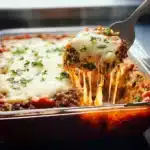
Ingredients
- Quinoa (1 cup, uncooked): Quinoa is the star of this “naked” lasagna, replacing traditional pasta noodles and offering a wealth of nutritional benefits.
- Why Quinoa? Quinoa is a complete protein, meaning it contains all nine essential amino acids. It’s also a good source of fiber, iron, and other essential nutrients. Using quinoa instead of pasta makes this lasagna naturally gluten-free and significantly boosts its nutritional profile.
- Types of Quinoa: While any type of quinoa (white, red, black, or tri-color) will work, white quinoa is often preferred for its milder flavor and fluffier texture. Red and black quinoa have slightly nuttier flavors and hold their shape a bit better, which can also be appealing in a casserole.
- Rinsing Quinoa: It’s essential to rinse quinoa thoroughly before cooking to remove saponins, a natural coating that can give it a bitter taste. Rinse quinoa in a fine-mesh sieve under cold running water for a minute or two, or until the water runs clear.
- Cooking Quinoa: Cook the quinoa according to package directions. Typically, this involves simmering 1 cup of rinsed quinoa in 2 cups of water or broth for about 15-20 minutes, or until the liquid is absorbed and the quinoa is fluffy. Using broth instead of water can add extra flavor.
- Frozen Spinach (1 pound, thawed and squeezed dry): Spinach is the key vegetable component, adding a boost of vitamins, minerals, and vibrant green color to the casserole.
- Frozen vs. Fresh Spinach: Frozen spinach is a convenient and cost-effective option for casseroles. It’s pre-washed and readily available. Fresh spinach can also be used, but you’ll need a significant amount (about 2 pounds fresh spinach, as it wilts down considerably when cooked) and it requires more prep work (washing and wilting). Frozen spinach is pre-wilted, making it ideal for this recipe.
- Thawing and Draining: It’s crucial to thaw the frozen spinach completely and squeeze out as much excess water as possible. Excess water will make the casserole watery and dilute the flavors. Thaw spinach in the refrigerator overnight or in the microwave. Once thawed, place it in a clean kitchen towel or cheesecloth and squeeze out the water. You’ll be surprised how much water frozen spinach retains!
- Ricotta Cheese (15 ounces, part-skim or whole milk): Ricotta cheese provides a creamy, slightly sweet, and cheesy layer that is essential for lasagna’s signature texture and flavor.
- Part-Skim vs. Whole Milk Ricotta: Part-skim ricotta is a lighter option, while whole milk ricotta will be richer and creamier. Choose based on your preference and dietary needs. Both work well in this recipe.
- Drain Excess Liquid (Optional): Some ricotta cheeses can be quite watery. If your ricotta seems very wet, you can drain off excess liquid by placing it in a cheesecloth-lined sieve set over a bowl and refrigerating it for an hour or two. This will result in a thicker ricotta layer.
- Dairy-Free Ricotta Alternatives (Vegan Option): For a dairy-free or vegan version, you can use plant-based ricotta alternatives made from tofu, cashews, or almonds. These are increasingly available in grocery stores.
- Mozzarella Cheese (8 ounces, shredded, part-skim or whole milk): Mozzarella cheese is the classic topping for lasagna, providing a melty, gooey, and slightly tangy cheesy finish.
- Part-Skim vs. Whole Milk Mozzarella: Similar to ricotta, part-skim mozzarella is a lighter option, while whole milk mozzarella will be richer and melt more smoothly. Again, choose based on your preference.
- Freshly Shredded vs. Pre-Shredded: Freshly shredded mozzarella generally melts better than pre-shredded mozzarella, which is often coated in cellulose to prevent clumping. However, pre-shredded mozzarella is convenient and works well for casseroles.
- Vegan Mozzarella Alternatives (Vegan Option): For a vegan version, use shredded vegan mozzarella cheese. Many brands are available and melt reasonably well.
- Marinara Sauce (24-28 ounces, jarred or homemade): Marinara sauce forms the flavorful tomato base of the lasagna, adding acidity, sweetness, and classic Italian flavors.
- Jarred Marinara Sauce (Convenience): High-quality jarred marinara sauce is a convenient and perfectly acceptable option, especially for busy weeknights. Choose a brand you enjoy and check the ingredient list for added sugars and sodium, if you are watching those.
- Homemade Marinara Sauce (Control and Freshness): Homemade marinara sauce allows for complete control over ingredients and provides the freshest flavor. If you have the time, making your own marinara sauce will elevate the dish.
- Flavor Variations: You can use different types of marinara sauce to vary the flavor profile. Spicy marinara, roasted garlic marinara, or marinara with vegetables can all be delicious options.
- Parmesan Cheese (¼ cup, grated, plus extra for topping): Parmesan cheese adds a salty, nutty, and umami-rich flavor that enhances the overall cheesy and savory notes of the lasagna.
- Freshly Grated Parmesan (Recommended): Freshly grated Parmesan cheese is always preferred for its superior flavor and melting quality. Pre-grated Parmesan often contains cellulose and doesn’t melt as smoothly.
- Pecorino Romano (Substitution for Stronger Flavor): For a sharper and saltier flavor, you can substitute Pecorino Romano cheese for Parmesan.
- Nutritional Yeast (Vegan Option): For a vegan version, use nutritional yeast instead of Parmesan cheese. Nutritional yeast has a cheesy, nutty flavor that is often used in vegan cooking as a cheese substitute.
- Egg (1 large): An egg is mixed into the ricotta cheese mixture to help bind it together and add richness.
- Binding Agent: The egg acts as a binder, helping the ricotta mixture hold its shape and preventing it from becoming too watery during baking.
- Vegan Egg Substitutes (Vegan Option): For a vegan version, you can use flax egg (1 tablespoon ground flaxseed meal mixed with 3 tablespoons water, let sit for 5 minutes to thicken) or a commercial egg replacer as a binder in the vegan ricotta mixture.
- Garlic (2-3 cloves, minced): Garlic is essential for adding a pungent, aromatic kick that enhances the savory flavors of the spinach and ricotta.
- Fresh Garlic Cloves: Fresh garlic cloves are always preferred for their superior flavor compared to pre-minced garlic. Mince the garlic finely to distribute its flavor evenly.
- Garlic Powder (Substitution – Less Desirable): In a pinch, you could use garlic powder, but fresh garlic will provide a more vibrant and aromatic flavor.
- Dried Oregano (1 teaspoon): Dried oregano is a classic Italian herb that adds a warm, slightly peppery, and aromatic note to the lasagna.
- Italian Herb Staple: Oregano is a key herb in Italian cuisine and its robust flavor is essential for creating an authentic lasagna taste.
- Fresh Oregano (Substitution – Use More): If using fresh oregano, use about 1 tablespoon, finely chopped, as fresh herbs are less concentrated in flavor than dried herbs.
- Salt and Black Pepper: Salt and black pepper are essential for seasoning and enhancing all the flavors in the casserole.
- To Taste: Adjust the amount of salt and black pepper to your personal preference. Be mindful that cheeses and marinara sauce can already contain salt, so taste and season carefully.
- Freshly Ground Black Pepper: Freshly ground black pepper is recommended for its more vibrant and aromatic flavor.
- Olive Oil (1 tablespoon): Olive oil is used to sauté the garlic, adding a subtle fruity flavor and healthy fats. Extra virgin olive oil is preferred for its richer flavor and nutritional benefits.
Instructions
Step 1: Prepare the Quinoa
- Rinse Quinoa: Rinse 1 cup of uncooked quinoa thoroughly in a fine-mesh sieve under cold running water for a minute or two, or until the water runs clear.
- Cook Quinoa: In a medium saucepan, combine the rinsed quinoa with 2 cups of water or vegetable broth. Bring to a boil, then reduce heat to low, cover, and simmer for 15-20 minutes, or until the liquid is absorbed and the quinoa is fluffy.
- Fluff Quinoa: Once cooked, remove from heat and fluff with a fork. Set aside to cool slightly.
Step 2: Prepare the Spinach Mixture
- Thaw and Drain Spinach: If using frozen spinach, thaw it completely and squeeze out as much excess water as possible.
- Sauté Garlic: Heat 1 tablespoon of olive oil in a large skillet over medium heat. Add the minced garlic and sauté for about 1 minute, until fragrant. Be careful not to burn the garlic.
- Add Spinach and Season: Add the thawed and squeezed spinach to the skillet with the sautéed garlic. Season with salt, black pepper, and dried oregano. Cook for 2-3 minutes, stirring occasionally, until the spinach is heated through and any remaining moisture has evaporated. Remove from heat and set aside.
Step 3: Prepare the Ricotta Cheese Mixture
- Combine Ricotta Ingredients: In a medium bowl, combine the ricotta cheese, egg (or vegan egg substitute), ¼ cup grated Parmesan cheese, salt, and black pepper. Mix well until all ingredients are thoroughly combined and smooth.
Step 4: Assemble the Lasagna Casserole
- Preheat Oven: Preheat oven to 375°F (190°C). Lightly grease a 9×13 inch baking dish with cooking spray or olive oil.
- Layer Casserole (Layer 1: Quinoa): Spread half of the cooked quinoa evenly in the bottom of the prepared baking dish.
- Layer Casserole (Layer 2: Spinach): Spread the spinach mixture evenly over the quinoa layer.
- Layer Casserole (Layer 3: Ricotta): Dollop spoonfuls of the ricotta cheese mixture evenly over the spinach layer, and then gently spread it to create a relatively even layer.
- Layer Casserole (Layer 4: Marinara Sauce): Pour half of the marinara sauce evenly over the ricotta layer.
- Layer Casserole (Layer 5: Mozzarella): Sprinkle half of the shredded mozzarella cheese evenly over the marinara sauce.
- Repeat Layers: Repeat layers, starting with the remaining quinoa, then remaining spinach, then remaining ricotta, then remaining marinara sauce, and finally topping with the remaining mozzarella cheese and extra grated Parmesan cheese.
Step 5: Bake the Lasagna Casserole
- Cover and Bake: Cover the baking dish tightly with aluminum foil. Bake for 20 minutes.
- Uncover and Bake: Remove the foil and bake for another 20-25 minutes, or until the casserole is heated through, bubbly around the edges, and the cheese is melted and lightly golden brown.
- Broil for Extra Browning (Optional): For extra browning on top, you can broil the casserole for the last 1-2 minutes of baking, watching carefully to prevent burning.
Step 6: Rest and Serve
- Rest Before Serving: Let the lasagna casserole rest for 10-15 minutes before slicing and serving. This allows the casserole to set up slightly and makes it easier to slice and serve.
- Serve Hot: Serve the Naked Spinach Quinoa Lasagna Casserole hot.
Nutrition
- Serving Size: one normal portion
- Calories: 300-350 kcal
- Sugar: 8-10g
- Sodium: 400-500mg
- Fat: 12-15g
- Saturated Fat: 6-8g
- Carbohydrates: 30-35g
- Fiber: 5-7g
- Protein: 20-25g
- Cholesterol: 60-80mg