
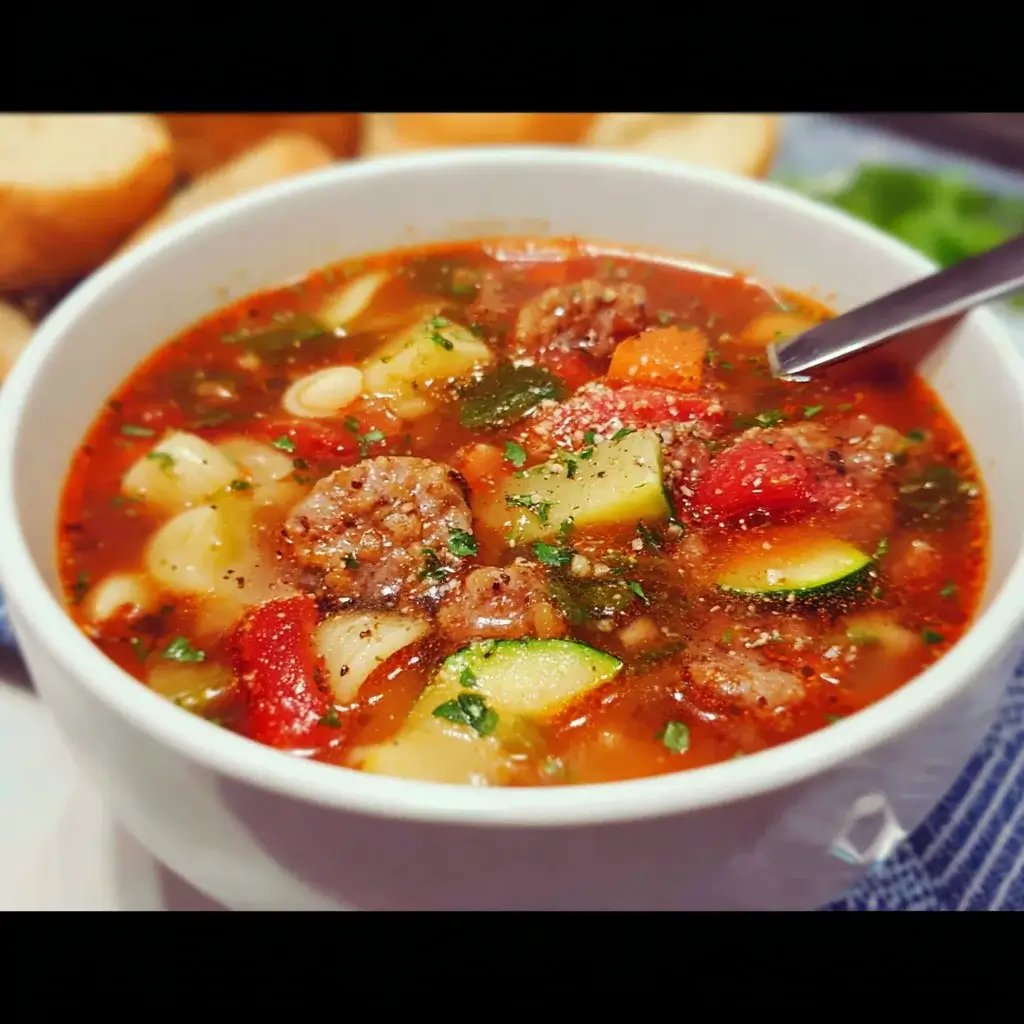
There are certain smells that instantly define a cozy home: baking bread, a roasting chicken, and for me, the rich, aromatic steam rising from a giant pot of Minestrone soup simmering on the stove. For years, my minestrone was a respectable, vegetable-forward affair. It was healthy, it was comforting, but it never quite crossed the line into “crave-worthy.” That all changed when I decided to brown some spicy Italian sausage at the start. It was a simple addition, almost an afterthought, but it transformed the entire dish. The savory, fennel-spiced richness of the sausage infused every single spoonful, creating a depth of flavor that a purely vegetarian broth couldn’t replicate. The first time I served this version, my husband, who usually considers soup a “starter,” looked up from his empty bowl and said, “Okay, this is a real meal.” My kids, who would normally pick around the beans and zucchini, devoured it without a single complaint. This isn’t just a recipe; it’s a culinary upgrade. It’s the recipe that turned a humble vegetable soup into the undisputed champion of chilly weeknights in our household, a one-pot wonder that is both rustic and robust, comforting and completely satisfying.
Hearty Minestrone with Sausage: The Ultimate One-Pot Meal
Minestrone, at its heart, is a celebration of vegetables. Its name originates from the Italian word minestra, meaning soup, with the “-one” suffix denoting its large size and substance. It has no fixed recipe; traditionally, it was a “cucina povera” (poor kitchen) dish, made with whatever vegetables were in season or left over in the pantry. This recipe honors that spirit of flexibility but builds upon it with a foundation of savory Italian sausage, turning it into a truly substantial meal that will warm you from the inside out.
A Symphony of Flavors: The Essential Ingredients
The beauty of Minestrone lies in its layers of flavor. We’ll break down the ingredients into categories to understand the role each one plays in creating this masterpiece.
The Savory Foundation: Sausage & Aromatics
- Italian Sausage: 1 lb (450g), mild or hot, casings removed. This is the star player. The fat renders out and creates an incredibly flavorful base for sautéing the vegetables, while the meat adds a hearty, savory, and often fennel-spiced element.
- Yellow Onion: 1 large, chopped. Provides a sweet, aromatic base.
- Carrots: 2 large, peeled and chopped into ½-inch pieces. Adds sweetness and color.
- Celery: 2 stalks, chopped into ½-inch pieces. Lends a fresh, slightly peppery background note.
- Garlic: 5-6 cloves, minced. For that pungent, irresistible aroma and flavor that is essential to Italian cooking.
The Vegetable Medley (The Heart of the Minestrone)
- Zucchini: 1 medium, chopped into ½-inch pieces. Adds a tender bite and soaks up the broth’s flavor.
- Green Beans: 1 cup, fresh or frozen, trimmed and cut into 1-inch pieces. They provide a pleasant snap and vibrant color.
- Baby Spinach: 5 oz (150g) fresh. Wilted in at the end, it adds nutrients, color, and a delicate earthy flavor without becoming mushy.
Pantry Powerhouses: Broth, Beans & Pasta
- Diced Tomatoes: 1 (28-ounce) can, with their juice. Canned tomatoes provide a consistent, robust tomato flavor and acidity that forms the backbone of the broth.
- Chicken or Beef Broth: 6 cups, low-sodium. Using broth instead of water adds a significant layer of savory depth.
- Cannellini Beans: 1 (15-ounce) can, rinsed and drained. These creamy white beans add substance, protein, and a wonderful texture.
- Dark Red Kidney Beans: 1 (15-ounce) can, rinsed and drained. Their firmer texture and earthy flavor provide a nice contrast to the cannellini beans.
- Small Pasta: ½ cup, such as ditalini, small shells, or elbow macaroni. Cooked directly in the soup, it thickens the broth slightly and makes the soup even heartier.
- Tomato Paste: 2 tablespoons. A concentrated burst of umami and tomato flavor that deepens the sauce.
Herbs & Seasoning: The Finishing Touches
- Dried Oregano: 1 teaspoon.
- Dried Basil: 1 teaspoon.
- Bay Leaf: 1.
- Red Pepper Flakes: ¼ to ½ teaspoon (optional, adjust to your spice preference).
- Parmesan Rind: 1 piece (optional, but highly recommended!). This is a secret weapon for incredible flavor, infusing the broth with a salty, nutty, umami depth as it simmers.
- Salt and Black Pepper: To taste.
- Fresh Parsley: ¼ cup, chopped, for garnish.
- Grated Parmesan Cheese: For serving.
Step-by-Step Guide to the Perfect Pot of Minestrone
Follow these steps for a soup that is layered with flavor and has the perfect texture. The key is to build the flavors methodically.
Part 1: Brown the Sausage and Build the Base
- Brown the Sausage: Heat a large Dutch oven or heavy-bottomed pot over medium-high heat. Add the Italian sausage (casings removed). Use a wooden spoon to break up the meat into smaller crumbles. Cook for 7-9 minutes, stirring occasionally, until the sausage is browned and cooked through.
- Drain Excess Fat (If Necessary): If your sausage has rendered a lot of fat, you can spoon some of it out, leaving about 2 tablespoons in the pot. This flavorful fat will be used to cook the vegetables. Do not drain it all!
- Sauté the Mirepoix: Add the chopped onion, carrots, and celery (the “mirepoix”) to the pot with the sausage. Sauté for 6-8 minutes, stirring frequently, until the vegetables have softened and the onion is translucent.
- Bloom the Aromatics: Add the minced garlic and tomato paste to the pot. Cook for another 1-2 minutes, stirring constantly, until the garlic is fragrant and the tomato paste has darkened slightly in color. This step, known as “blooming,” deepens their flavor.
Part 2: Simmer and Meld the Flavors
- Deglaze and Add Liquids: Pour in about a cup of the broth and use your spoon to scrape up any browned bits (the “fond”) from the bottom of the pot. This is pure flavor! Add the rest of the broth, the can of diced tomatoes (with juice), dried oregano, dried basil, bay leaf, and red pepper flakes. If you’re using a Parmesan rind, add it now.
- Bring to a Simmer: Stir everything together well and bring the soup to a boil. Once boiling, reduce the heat to low, cover the pot, and let it simmer for at least 30 minutes. An hour is even better! This simmering time is crucial for allowing all the flavors to meld together into a cohesive, delicious broth.
Part 3: Finish the Soup
- Add Hardy Vegetables and Beans: After the initial simmer, stir in the green beans and both cans of rinsed and drained beans (cannellini and kidney). Increase the heat to bring the soup back to a gentle simmer.
- Cook the Pasta: Once simmering, stir in the small pasta. Let it cook, uncovered, for about 8-12 minutes, or until the pasta is al dente (cooked through but still with a slight bite). The pasta will absorb some of the liquid and thicken the soup.
- Wilt the Greens: Turn off the heat. Stir in the chopped zucchini and the fresh spinach. The residual heat of the soup is enough to cook the zucchini to a tender-crisp texture and perfectly wilt the spinach without them becoming mushy.
- Final Seasoning: Remove the bay leaf and the Parmesan rind (it will be very soft). Taste the soup and season generously with salt and freshly ground black pepper until the flavors pop.
Nutrition Facts
- Servings: 8-10 generous bowls
- Calories per serving: Approximately 350-450 kcal
Disclaimer: The nutritional information is an estimate. Actual values will vary depending on the type of sausage used, the specific brands of ingredients, and the final serving size.
Timing Your Culinary Masterpiece
- Preparation Time: 20 minutes (for chopping vegetables)
- Cooking Time: 1 hour 15 minutes
- Total Time: 1 hour 35 minutes
How to Serve Your Hearty Minestrone Soup
Serving this minestrone is all about the toppings and accompaniments that take it from great to spectacular. Present it as a complete, rustic meal.
- Essential Toppings:
- A Generous Shower of Parmesan: Freshly grated Parmesan cheese is non-negotiable. It melts slightly into the hot soup, adding a final salty, nutty kick.
- A Drizzle of Good Olive Oil: A swirl of extra-virgin olive oil over the top of each bowl adds a fruity, peppery finish.
- Fresh Herbs: A sprinkle of fresh chopped parsley or basil adds a burst of freshness and color that cuts through the richness.
- A Dollop of Pesto: For an extra layer of herby, garlicky flavor, add a small spoonful of basil pesto to each bowl.
- The Perfect Bread for Dipping:
- Crusty Sourdough or Ciabatta: The best way to make sure no drop of the delicious broth goes to waste.
- Garlic Bread: Toasted, buttery garlic bread is a classic and crowd-pleasing pairing.
- Focaccia: A soft, olive-oil-rich focaccia is perfect for soaking up the soup.
- Simple Side Salad:
- If you want to add some greens, a simple arugula salad with a lemon vinaigrette provides a fresh, peppery contrast to the hearty soup.
Pro Tips for an Unforgettable Minestrone
- Don’t Skip the Parmesan Rind: This is a classic Italian grandmother’s trick. The hard, seemingly useless rind of a block of Parmesan cheese is packed with concentrated umami flavor. Tossing it into the pot while the soup simmers will infuse your broth with a savory depth that you can’t get from anything else. Just remember to fish it out before serving!
- Cook the Pasta Separately for Better Leftovers: If you plan on having leftovers, the pasta in the soup will continue to absorb liquid overnight, becoming mushy and making the soup overly thick. For the best texture, cook the pasta in a separate pot of salted water. Store the soup and pasta in separate containers in the fridge. To serve, simply add a scoop of pasta to your bowl and ladle the hot soup over it.
- Embrace Vegetable Variations: This soup is a canvas for whatever you have on hand. Don’t have green beans? Use peas or chopped asparagus. Have some kale or Swiss chard? Use it instead of spinach. Butternut squash, potatoes, or leeks are also fantastic additions. Sauté heartier vegetables like potatoes with the mirepoix, and add quicker-cooking ones later.
- Allow Time for Flavors to Meld: While the soup is technically ready after about 30 minutes of simmering, giving it a full hour allows the flavors of the sausage, vegetables, tomatoes, and herbs to truly marry and create a much deeper, more complex broth. Patience pays off!
- Make it Your Own with Sausage Choice: The type of Italian sausage you choose will have a big impact on the final flavor. Hot Italian sausage will give the soup a wonderful, spicy kick. Sweet or mild Italian sausage provides a classic, fennel-forward flavor. You can even use chicken sausage for a slightly leaner version.
Frequently Asked Questions (FAQ)
1. Can I freeze this Minestrone soup?
Yes, this soup freezes beautifully! However, for the best results, it’s highly recommended to freeze it before adding the pasta and spinach. Let the soup cool completely, then transfer it to freezer-safe containers or bags, leaving some room for expansion. It can be frozen for up to 3 months. To serve, thaw it overnight in the refrigerator, reheat it on the stove, and then proceed with the final step of cooking the pasta and wilting the spinach in the hot soup.
2. Can I make this recipe in a slow cooker or Instant Pot?
Absolutely. For a Slow Cooker: Brown the sausage and sauté the mirepoix, garlic, and tomato paste on the stovetop as directed, then transfer to the slow cooker. Add all remaining ingredients except for the zucchini, spinach, and pasta. Cook on low for 6-8 hours or on high for 3-4 hours. In the last 30 minutes, stir in the pasta, zucchini, and spinach and cook until the pasta is tender. For an Instant Pot: Use the “Sauté” function to complete Part 1 of the instructions. Add the broth, tomatoes, beans, and seasonings. Lock the lid and cook on high pressure for 10 minutes. Use a quick release, then turn the “Sauté” function back on. Stir in the pasta and zucchini and simmer for 8-10 minutes until the pasta is cooked. Turn off the heat and wilt in the spinach.
3. My soup seems too thick (or too thin). How can I fix it?
This is an easy fix! If your soup is too thick, especially after sitting, simply stir in a bit more chicken broth or even just some hot water until it reaches your desired consistency. If the soup seems too thin for your liking, you can let it simmer, uncovered, for an extra 10-15 minutes to allow some of the liquid to evaporate and concentrate the flavors.
4. How can I make a vegetarian or vegan version of this soup?
It’s very easy to adapt. For a vegetarian version, simply omit the sausage (or use a plant-based sausage substitute), use vegetable broth instead of chicken/beef broth, and make sure your Parmesan cheese is made without animal rennet (or omit it). For a fully vegan version, follow the vegetarian instructions and omit the Parmesan rind and cheese garnish entirely, or use a vegan Parmesan alternative. To compensate for the loss of flavor from the sausage, you might want to add a teaspoon of smoked paprika or a splash of soy sauce for extra umami.
5. How long will the leftovers last in the refrigerator?
Leftover Minestrone can be stored in an airtight container in the refrigerator for up to 4-5 days. The flavor actually gets even better the next day! Keep in mind that if you cooked the pasta directly in the soup, it will continue to soften and absorb broth. Reheat gently on the stovetop, adding a splash of broth if needed to thin it out.

Minestrone Soup with Sausage recipe
Ingredients
The Savory Foundation: Sausage & Aromatics
-
Italian Sausage: 1 lb (450g), mild or hot, casings removed. This is the star player. The fat renders out and creates an incredibly flavorful base for sautéing the vegetables, while the meat adds a hearty, savory, and often fennel-spiced element.
-
Yellow Onion: 1 large, chopped. Provides a sweet, aromatic base.
-
Carrots: 2 large, peeled and chopped into ½-inch pieces. Adds sweetness and color.
-
Celery: 2 stalks, chopped into ½-inch pieces. Lends a fresh, slightly peppery background note.
-
Garlic: 5-6 cloves, minced. For that pungent, irresistible aroma and flavor that is essential to Italian cooking.
The Vegetable Medley (The Heart of the Minestrone)
-
Zucchini: 1 medium, chopped into ½-inch pieces. Adds a tender bite and soaks up the broth’s flavor.
-
Green Beans: 1 cup, fresh or frozen, trimmed and cut into 1-inch pieces. They provide a pleasant snap and vibrant color.
-
Baby Spinach: 5 oz (150g) fresh. Wilted in at the end, it adds nutrients, color, and a delicate earthy flavor without becoming mushy.
Pantry Powerhouses: Broth, Beans & Pasta
-
Diced Tomatoes: 1 (28-ounce) can, with their juice. Canned tomatoes provide a consistent, robust tomato flavor and acidity that forms the backbone of the broth.
-
Chicken or Beef Broth: 6 cups, low-sodium. Using broth instead of water adds a significant layer of savory depth.
-
Cannellini Beans: 1 (15-ounce) can, rinsed and drained. These creamy white beans add substance, protein, and a wonderful texture.
-
Dark Red Kidney Beans: 1 (15-ounce) can, rinsed and drained. Their firmer texture and earthy flavor provide a nice contrast to the cannellini beans.
-
Small Pasta: ½ cup, such as ditalini, small shells, or elbow macaroni. Cooked directly in the soup, it thickens the broth slightly and makes the soup even heartier.
-
Tomato Paste: 2 tablespoons. A concentrated burst of umami and tomato flavor that deepens the sauce.
Herbs & Seasoning: The Finishing Touches
-
Dried Oregano: 1 teaspoon.
-
Dried Basil: 1 teaspoon.
-
Bay Leaf: 1.
-
Red Pepper Flakes: ¼ to ½ teaspoon (optional, adjust to your spice preference).
-
Parmesan Rind: 1 piece (optional, but highly recommended!). This is a secret weapon for incredible flavor, infusing the broth with a salty, nutty, umami depth as it simmers.
-
Salt and Black Pepper: To taste.
-
Fresh Parsley: ¼ cup, chopped, for garnish.
-
Grated Parmesan Cheese: For serving.
Instructions
Part 1: Brown the Sausage and Build the Base
-
Brown the Sausage: Heat a large Dutch oven or heavy-bottomed pot over medium-high heat. Add the Italian sausage (casings removed). Use a wooden spoon to break up the meat into smaller crumbles. Cook for 7-9 minutes, stirring occasionally, until the sausage is browned and cooked through.
-
Drain Excess Fat (If Necessary): If your sausage has rendered a lot of fat, you can spoon some of it out, leaving about 2 tablespoons in the pot. This flavorful fat will be used to cook the vegetables. Do not drain it all!
-
Sauté the Mirepoix: Add the chopped onion, carrots, and celery (the “mirepoix”) to the pot with the sausage. Sauté for 6-8 minutes, stirring frequently, until the vegetables have softened and the onion is translucent.
-
Bloom the Aromatics: Add the minced garlic and tomato paste to the pot. Cook for another 1-2 minutes, stirring constantly, until the garlic is fragrant and the tomato paste has darkened slightly in color. This step, known as “blooming,” deepens their flavor.
Part 2: Simmer and Meld the Flavors
-
Deglaze and Add Liquids: Pour in about a cup of the broth and use your spoon to scrape up any browned bits (the “fond”) from the bottom of the pot. This is pure flavor! Add the rest of the broth, the can of diced tomatoes (with juice), dried oregano, dried basil, bay leaf, and red pepper flakes. If you’re using a Parmesan rind, add it now.
-
Bring to a Simmer: Stir everything together well and bring the soup to a boil. Once boiling, reduce the heat to low, cover the pot, and let it simmer for at least 30 minutes. An hour is even better! This simmering time is crucial for allowing all the flavors to meld together into a cohesive, delicious broth.
Part 3: Finish the Soup
-
Add Hardy Vegetables and Beans: After the initial simmer, stir in the green beans and both cans of rinsed and drained beans (cannellini and kidney). Increase the heat to bring the soup back to a gentle simmer.
-
Cook the Pasta: Once simmering, stir in the small pasta. Let it cook, uncovered, for about 8-12 minutes, or until the pasta is al dente (cooked through but still with a slight bite). The pasta will absorb some of the liquid and thicken the soup.
-
Wilt the Greens: Turn off the heat. Stir in the chopped zucchini and the fresh spinach. The residual heat of the soup is enough to cook the zucchini to a tender-crisp texture and perfectly wilt the spinach without them becoming mushy.
-
Final Seasoning: Remove the bay leaf and the Parmesan rind (it will be very soft). Taste the soup and season generously with salt and freshly ground black pepper until the flavors pop.
Nutrition
- Serving Size: one normal portion
- Calories: 350-450 kcal