
The first time I encountered a Mango Pancake wasn’t at a breakfast diner, but amidst the delightful chaos of a bustling dim sum restaurant. I was expecting a fluffy, American-style pancake, perhaps with some mango on top. What arrived was something entirely different, altogether more magical: delicate, pale yellow crepes folded neatly into little parcels, promising a hidden treasure within. One bite, and I was utterly captivated. The whisper-thin, slightly chewy crepe gave way to a cloud of ethereal, lightly sweetened whipped cream and bursts of intensely sweet, fresh mango. It was cool, refreshing, and luxuriously decadent all at once. It wasn’t just a dessert; it was an experience. Since that day, I’ve been obsessed with recreating that magic at home. These Hong Kong-style Mango Pancakes have become a celebratory treat, perfect for special brunches, afternoon tea, or whenever we crave a taste of something truly special. They look impressive, taste divine, and bring back fond memories of shared dim sum lunches. Making them is a rewarding process, and sharing them brings even greater joy.
Ingredients for Heavenly Hong Kong Style Mango Pancakes
Crafting these delicate parcels requires precision, particularly with the crepes. Using the right ingredients in the correct proportions ensures the perfect texture and flavour balance. This recipe yields approximately 8-10 pancakes, depending on crepe size.
For the Crepes:
- All-Purpose Flour: 1 cup (120g), sifted (Sifting prevents lumps and creates a lighter crepe)
- Cornstarch: 2 tablespoons (15g), sifted (Adds tenderness and a slight chew to the crepe)
- Granulated Sugar: 3 tablespoons (38g) (Provides subtle sweetness)
- Salt: 1/4 teaspoon (Enhances overall flavor)
- Large Eggs: 2 (Provides structure and richness)
- Whole Milk: 1 ½ cups (360ml), at room temperature (Room temperature helps ingredients combine smoothly)
- Unsalted Butter: 2 tablespoons (28g), melted and slightly cooled (Adds flavor and richness, prevents sticking)
- Vanilla Extract: 1/2 teaspoon (optional, for flavour)
- Yellow Food Coloring: 1-2 drops (optional, for achieving the classic pale yellow hue)
For the Filling:
- Heavy Whipping Cream: 1 ½ cups (360ml), very cold (Must be cold to whip properly; fat content should be at least 35%)
- Powdered Sugar (Icing Sugar): 1/4 cup (30g), sifted (or more, to taste. Sifting prevents lumps in the cream)
- Vanilla Extract: 1 teaspoon (Enhances the cream’s flavor)
- Ripe Mangoes: 2-3 large, sweet mangoes (such as Ataulfo/Honey Mango, Kent, or Keitt variety. Avoid stringy mangoes. Should be ripe but still firm enough to hold their shape when diced)
Step-by-Step Instructions: Crafting Your Mango Pancakes
Making Hong Kong-style Mango Pancakes involves three key stages: preparing the delicate crepes, whipping the light cream filling, and assembling the final parcels. Patience, especially when cooking the crepes, is key.
Stage 1: Making the Delicate Crepes
The crepes are the foundation – they need to be thin, pliable, and cooked without browning.
- Combine Dry Ingredients: In a large bowl, whisk together the sifted all-purpose flour, sifted cornstarch, granulated sugar, and salt. Ensure they are well combined and free of lumps.
- Combine Wet Ingredients: In a separate medium bowl, whisk the large eggs lightly. Then, whisk in the room temperature whole milk and the optional vanilla extract until just combined.
- Combine Wet and Dry: Gradually pour the wet ingredients into the dry ingredients while whisking continuously. Whisk until the batter is smooth and no large lumps remain. Don’t overmix at this stage.
- Incorporate Butter & Coloring: Whisk in the melted (and slightly cooled) unsalted butter until fully incorporated. If using, whisk in 1-2 drops of yellow food coloring until the desired pale yellow shade is achieved.
- Strain the Batter: Pour the batter through a fine-mesh sieve into another clean bowl or large measuring cup (one with a spout is helpful for pouring later). This crucial step ensures an ultra-smooth batter, free from any tiny lumps of flour or egg, which is essential for thin crepes.
- Rest the Batter: Cover the bowl with plastic wrap, pressing it down onto the surface of the batter to prevent a skin from forming. Refrigerate the batter for at least 1 hour (or up to overnight). Resting allows the flour to fully hydrate and the gluten to relax, resulting in more tender and pliable crepes that are less likely to tear.
- Prepare for Cooking: Lightly grease a non-stick crepe pan or a small non-stick skillet (around 8-10 inches in diameter) with a tiny bit of butter or neutral oil, wiping away most of the excess with a paper towel. You want a very thin coating. Heat the pan over low to medium-low heat. The heat should be gentle enough that the crepe cooks through without browning quickly.
- Cook the Crepes: Give the rested batter a gentle stir. Pour about 1/4 cup of batter (adjust amount based on your pan size) into the center of the warm pan. Immediately lift and tilt/swirl the pan to spread the batter into a thin, even circle.
- Cook Gently: Cook for about 60-90 seconds, or until the surface appears set, looks matte (no longer wet), and the edges might slightly lift from the pan. The key is not to brown the crepe; it should remain pale yellow. You do not need to flip the crepe for this style of pancake.
- Remove and Cool: Carefully slide or lift the cooked crepe out of the pan onto a large plate or a wire rack lined with parchment paper. If stacking the crepes, place a piece of parchment paper or plastic wrap between each one to prevent sticking.
- Repeat: Repeat the cooking process with the remaining batter, adding a tiny bit more oil/butter to the pan only if needed (a good non-stick pan might not require re-greasing). Adjust the heat as necessary to prevent browning. Let the crepes cool completely before filling. You can speed this up by laying them out in a single layer.
Stage 2: Preparing the Cream and Mango Filling
While the crepes cool, prepare the luscious filling. Ensure your cream and equipment are cold for best results.
- Chill Equipment: Place the bowl and whisk attachment of your stand mixer (or a large bowl and hand mixer beaters) in the freezer for about 10-15 minutes before starting. Cold equipment helps the cream whip faster and higher.
- Whip the Cream: Pour the very cold heavy whipping cream into the chilled bowl. Add the sifted powdered sugar and vanilla extract.
- Beat to Stiff Peaks: Beat the cream mixture on medium-high speed until stiff peaks form. Stiff peaks mean that when you lift the whisk out of the cream, the peak holds its shape and doesn’t flop over. Be careful not to overwhip, or the cream will start to turn grainy and eventually become butter. The texture should be light, airy, but stable enough to hold its shape within the crepe. Keep the whipped cream chilled in the refrigerator until ready to assemble.
- Prepare the Mango: Wash, peel, and dice the ripe mangoes into bite-sized cubes (around 1/2 to 3/4 inch). Pat the mango pieces gently with a paper towel if they seem overly juicy, as excess moisture can make the filling watery. Choose sweet, non-stringy mangoes for the best flavour and texture.
Stage 3: Assembling the Mango Pancakes
This is where the components come together to form the delicious parcels. Work gently to avoid tearing the delicate crepes.
- Set Up: Lay one cooled crepe flat on a clean work surface, with the slightly less perfect side (the side that was facing up in the pan) facing upwards, as this will be the inside of the pancake.
- Add Cream: Spoon a generous dollop of the chilled whipped cream into the center of the crepe (about 2-3 tablespoons, depending on crepe size). Spread it slightly into a rectangular shape.
- Add Mango: Place a few pieces of diced mango (about 1-2 tablespoons) on top of the cream. Don’t overfill, or it will be difficult to fold neatly.
- Fold: Fold the crepe like a small burrito or envelope:
- Fold the left and right sides of the crepe inwards over the filling.
- Then, fold the bottom edge (closest to you) up and over the filling.
- Finally, fold the top edge down to completely enclose the filling, forming a neat rectangular parcel.
- Repeat: Repeat the process with the remaining crepes and filling.
- Chill Before Serving: Place the assembled mango pancakes seam-side down on a platter or tray. For the best texture and flavour experience, chill them in the refrigerator for at least 30 minutes (or up to 2-3 hours) before serving. This allows the filling to set slightly and the flavours to meld.
Nutritional Information (Estimated)
Mango pancakes are a delightful dessert indulgence. The nutritional values are estimates and can vary based on the size of the pancakes, the amount of filling used, the specific mango variety, and ingredient brands.
- Servings: This recipe makes approximately 8-10 mango pancakes.
- Serving Size: 1 mango pancake.
- Estimated Calories Per Serving (1 pancake): Approximately 250-350 calories.
Key Nutritional Considerations:
- Carbohydrates: Primarily from the flour and sugar in the crepe, powdered sugar in the cream, and the natural sugars in the mango.
- Fat: Significant contribution from the heavy whipping cream and the butter/eggs in the crepe. Mostly saturated fat from the cream and butter.
- Protein: Moderate amount from the eggs and milk in the crepe batter.
- Sugar: Contains both added sugars (granulated, powdered) and natural sugars (from mango and milk).
- Vitamins: Mangoes are a good source of Vitamin C and Vitamin A. Eggs provide some B vitamins and choline.
While delicious, these are best enjoyed as a treat due to their calorie density and sugar/fat content.
Preparation and Cook Time
Planning is helpful when making multi-component recipes like this. Here’s a breakdown of the time involved:
- Active Preparation Time: 45-60 minutes (Includes mixing batter, cooking crepes, whipping cream, dicing mango, assembling pancakes).
- Passive Time (Batter Resting): Minimum 1 hour (Crucial step).
- Passive Time (Crepe Cooling): Approximately 20-30 minutes.
- Passive Time (Final Chilling): Minimum 30 minutes.
- Total Time: Approximately 2 hours 45 minutes (minimum, largely due to resting/chilling).
Time-Saving Notes: The batter resting time is passive, so you can prepare the mango and potentially whip the cream during this hour (keep the cream chilled). Crepes can be made a day ahead and stored, well-wrapped, in the fridge.
How to Serve Your Delicious Mango Pancakes
These delicate treats deserve a presentation that matches their elegance. Serving them correctly enhances the experience.
- Chill Factor is Key: Always serve Mango Pancakes well-chilled. Straight from the refrigerator is ideal. The contrast between the cool cream, sweet mango, and soft crepe is part of their charm.
- Serving Platter:
- Arrange the pancakes seam-side down on a clean, attractive platter. White porcelain or clear glass often looks best, showcasing the pale yellow color.
- Leave a little space between each pancake so they don’t squash each other.
- Garnishes (Optional but Recommended):
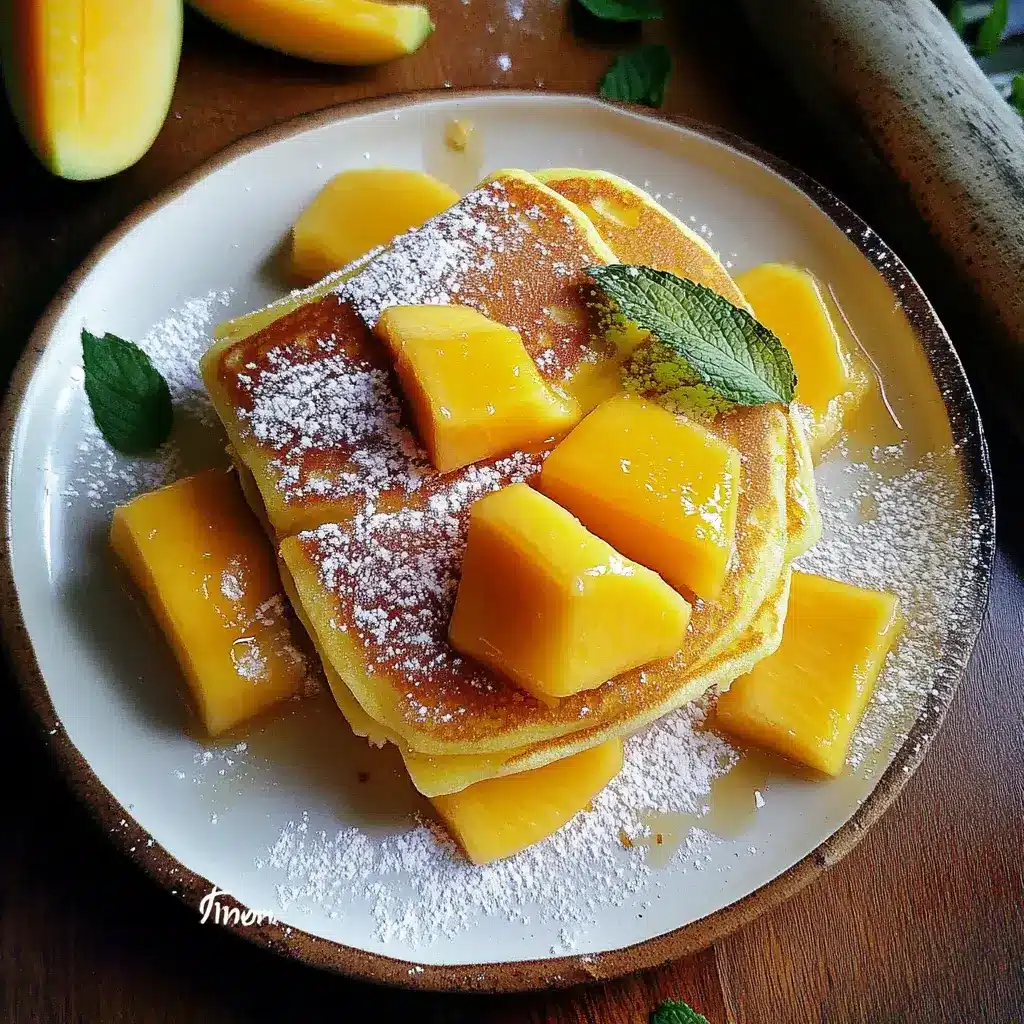
- Dusting: A light dusting of powdered sugar just before serving adds a touch of elegance.
- Fresh Mint: A small sprig of fresh mint beside each pancake or on the platter adds a pop of green colour and freshness.
- Extra Mango: A few small, perfectly diced pieces of fresh mango scattered around the platter.
- Edible Flowers: For a very special occasion, delicate edible flowers can look stunning.
- Presentation Style:
- Whole: Serve them as individual parcels. This is the classic presentation.
- Sliced: For a dramatic effect and to showcase the beautiful filling, you can carefully slice each pancake in half diagonally with a sharp knife just before serving. Arrange the halves with the cut side visible.
- Occasions for Serving:
- Dim Sum Finale: The perfect sweet ending to a savoury dim sum meal.
- Dessert Course: An elegant and light dessert after dinner.
- Afternoon Tea: A delightful addition to an afternoon tea spread alongside scones and finger sandwiches.
- Special Brunch: Elevates any brunch menu.
- Celebrations: Perfect for birthdays, holidays, or just celebrating mango season!
- Accompaniments: They are generally served plain, as the combination of crepe, cream, and mango is perfectly balanced. Avoid serving with heavy sauces that would overpower the delicate flavours. A light fruit coulis (like passion fruit) could work if used sparingly, but it’s not traditional.
Expert Tips for Perfect Mango Pancakes
Mastering these Hong Kong-style pancakes takes a little practice. These tips will help you achieve perfection every time.
- Choose the Right Mango: The star of the show! Use ripe, sweet, and non-fibrous mangoes. Ataulfo (Honey/Champagne) mangoes are ideal due to their smooth flesh and intense sweetness. Kent or Keitt varieties also work well. Taste your mango first; if it’s bland or sour, your pancakes won’t shine. Ensure it’s ripe but still firm enough to dice neatly.
- Achieve Ultra-Thin Crepes: This is crucial for the authentic texture. Use low to medium-low heat, a good non-stick pan, and only just enough batter to cover the base when swirled. Don’t aim for browning – pale yellow is perfect. Resting the batter is non-negotiable for achieving thin, pliable crepes that won’t tear easily. Straining the batter guarantees smoothness.
- Master the Whipped Cream: Use very cold heavy whipping cream (at least 35% fat) and chill your bowl and beaters. Beat until stiff peaks form – the cream should hold its shape reliably when lifted with the whisk. Under-whipped cream will be runny and ooze out; over-whipped cream will become grainy or turn to butter. Stabilized whipped cream (adding a little gelatin or cream cheese) can be used if making far ahead, but pure, freshly whipped cream offers the best flavour and texture if serving within a few hours.
- Don’t Overfill: It’s tempting to load up on the delicious cream and mango, but overfilling makes the pancakes difficult to fold neatly and prone to bursting. Aim for a balanced ratio where the crepe can comfortably enclose the filling into a tidy parcel.
- Chill Before Serving: While you can eat them right after assembly, chilling the finished pancakes for at least 30 minutes allows the cream to firm up slightly, the flavours to meld, and provides the signature cool, refreshing eating experience. Store them seam-side down to help them keep their shape.
Frequently Asked Questions (FAQ) about Mango Pancakes
Here are answers to common questions about making and enjoying these delightful treats:
- Q: Can I make Mango Pancakes ahead of time?
- A: Components can be made ahead, but assembly is best closer to serving time. Crepes can be cooked, cooled completely, stacked with parchment paper between each layer, wrapped well in plastic wrap, and stored in the refrigerator for up to 2 days. The whipped cream can be made a few hours ahead and kept chilled (it might deflate slightly over longer periods unless stabilized). Mango can be diced an hour or two ahead and kept chilled. For the best texture (crisp mango, airy cream, soft crepe), assemble the pancakes no more than 2-4 hours before serving and keep them refrigerated. They can be assembled up to a day ahead, but the crepe may soften further, and the cream might weep slightly.
- Q: What type of mango is best?
- A: Sweet, ripe, and non-fibrous mangoes are essential. Ataulfo (also known as Honey or Champagne mangoes) are widely considered the best choice due to their creamy, non-stringy texture and intense tropical sweetness. Kent and Keitt varieties are also good alternatives. Avoid mangoes known for being fibrous, like Tommy Atkins, as the strings will be unpleasant in the smooth filling. Always taste the mango first!
- Q: Why are my crepes tearing or too thick?
- A: Several factors can cause this. Tearing: The batter might not have rested long enough (gluten needs time to relax), the heat might be too high causing them to cook too fast and become brittle, or you might be handling them too roughly. Ensure they are cooked through but still pliable. Too Thick: You’re likely using too much batter per crepe or not swirling the pan quickly enough to spread it thinly before it sets. Use a measuring cup for consistent amounts and practice the swirl. Also, ensure your batter isn’t too thick; it should be the consistency of thin cream. If needed, thin slightly with a tablespoon of milk.
- Q: Can I use frozen or canned mango?
- A: Fresh, ripe mango is strongly recommended for the best flavour and texture. If using frozen mango, thaw it completely and drain it very well on paper towels to remove as much excess moisture as possible, otherwise, it can make the cream filling watery. The texture might be softer than fresh. Canned mango is generally not recommended as it’s often packed in syrup, making it overly sweet, and the texture is typically too soft and mushy for this dessert.
- Q: How can I make these dairy-free or vegan?
- A: Yes, you can make substitutions!
- For the Crepes: Use plant-based milk (like unsweetened almond, soy, or oat milk) instead of whole milk. Replace the melted butter with melted coconut oil or a neutral vegetable oil. The recipe already uses eggs, so it wouldn’t be vegan unless you also use an egg replacer (results may vary).
- For the Filling: Use a high-quality, full-fat canned coconut cream (chill the can overnight, scoop out the thick cream, leaving the water behind) whipped with powdered sugar and vanilla. Alternatively, use a commercial vegan whipping cream designed for whipping. The flavour profile will change, leaning towards coconut if using coconut cream.
- A: Yes, you can make substitutions!
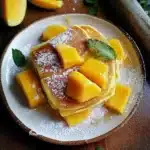
Mango Pancakes recipe
Ingredients
For the Crepes:
-
- All-Purpose Flour: 1 cup (120g), sifted (Sifting prevents lumps and creates a lighter crepe)
-
- Cornstarch: 2 tablespoons (15g), sifted (Adds tenderness and a slight chew to the crepe)
-
- Granulated Sugar: 3 tablespoons (38g) (Provides subtle sweetness)
-
- Salt: 1/4 teaspoon (Enhances overall flavor)
-
- Large Eggs: 2 (Provides structure and richness)
-
- Whole Milk: 1 ½ cups (360ml), at room temperature (Room temperature helps ingredients combine smoothly)
-
- Unsalted Butter: 2 tablespoons (28g), melted and slightly cooled (Adds flavor and richness, prevents sticking)
-
- Vanilla Extract: 1/2 teaspoon (optional, for flavour)
-
- Yellow Food Coloring: 1-2 drops (optional, for achieving the classic pale yellow hue)
For the Filling:
-
- Heavy Whipping Cream: 1 ½ cups (360ml), very cold (Must be cold to whip properly; fat content should be at least 35%)
-
- Powdered Sugar (Icing Sugar): 1/4 cup (30g), sifted (or more, to taste. Sifting prevents lumps in the cream)
-
- Vanilla Extract: 1 teaspoon (Enhances the cream’s flavor)
-
- Ripe Mangoes: 2-3 large, sweet mangoes (such as Ataulfo/Honey Mango, Kent, or Keitt variety. Avoid stringy mangoes. Should be ripe but still firm enough to hold their shape when diced)
Instructions
Stage 1: Making the Delicate Crepes
The crepes are the foundation – they need to be thin, pliable, and cooked without browning.
-
- Combine Dry Ingredients: In a large bowl, whisk together the sifted all-purpose flour, sifted cornstarch, granulated sugar, and salt. Ensure they are well combined and free of lumps.
-
- Combine Wet Ingredients: In a separate medium bowl, whisk the large eggs lightly. Then, whisk in the room temperature whole milk and the optional vanilla extract until just combined.
-
- Combine Wet and Dry: Gradually pour the wet ingredients into the dry ingredients while whisking continuously. Whisk until the batter is smooth and no large lumps remain. Don’t overmix at this stage.
-
- Incorporate Butter & Coloring: Whisk in the melted (and slightly cooled) unsalted butter until fully incorporated. If using, whisk in 1-2 drops of yellow food coloring until the desired pale yellow shade is achieved.
-
- Strain the Batter: Pour the batter through a fine-mesh sieve into another clean bowl or large measuring cup (one with a spout is helpful for pouring later). This crucial step ensures an ultra-smooth batter, free from any tiny lumps of flour or egg, which is essential for thin crepes.
-
- Rest the Batter: Cover the bowl with plastic wrap, pressing it down onto the surface of the batter to prevent a skin from forming. Refrigerate the batter for at least 1 hour (or up to overnight). Resting allows the flour to fully hydrate and the gluten to relax, resulting in more tender and pliable crepes that are less likely to tear.
-
- Prepare for Cooking: Lightly grease a non-stick crepe pan or a small non-stick skillet (around 8-10 inches in diameter) with a tiny bit of butter or neutral oil, wiping away most of the excess with a paper towel. You want a very thin coating. Heat the pan over low to medium-low heat. The heat should be gentle enough that the crepe cooks through without browning quickly.
-
- Cook the Crepes: Give the rested batter a gentle stir. Pour about 1/4 cup of batter (adjust amount based on your pan size) into the center of the warm pan. Immediately lift and tilt/swirl the pan to spread the batter into a thin, even circle.
-
- Cook Gently: Cook for about 60-90 seconds, or until the surface appears set, looks matte (no longer wet), and the edges might slightly lift from the pan. The key is not to brown the crepe; it should remain pale yellow. You do not need to flip the crepe for this style of pancake.
-
- Remove and Cool: Carefully slide or lift the cooked crepe out of the pan onto a large plate or a wire rack lined with parchment paper. If stacking the crepes, place a piece of parchment paper or plastic wrap between each one to prevent sticking.
-
- Repeat: Repeat the cooking process with the remaining batter, adding a tiny bit more oil/butter to the pan only if needed (a good non-stick pan might not require re-greasing). Adjust the heat as necessary to prevent browning. Let the crepes cool completely before filling. You can speed this up by laying them out in a single layer.
Stage 2: Preparing the Cream and Mango Filling
While the crepes cool, prepare the luscious filling. Ensure your cream and equipment are cold for best results.
-
- Chill Equipment: Place the bowl and whisk attachment of your stand mixer (or a large bowl and hand mixer beaters) in the freezer for about 10-15 minutes before starting. Cold equipment helps the cream whip faster and higher.
-
- Whip the Cream: Pour the very cold heavy whipping cream into the chilled bowl. Add the sifted powdered sugar and vanilla extract.
-
- Beat to Stiff Peaks: Beat the cream mixture on medium-high speed until stiff peaks form. Stiff peaks mean that when you lift the whisk out of the cream, the peak holds its shape and doesn’t flop over. Be careful not to overwhip, or the cream will start to turn grainy and eventually become butter. The texture should be light, airy, but stable enough to hold its shape within the crepe. Keep the whipped cream chilled in the refrigerator until ready to assemble.
-
- Prepare the Mango: Wash, peel, and dice the ripe mangoes into bite-sized cubes (around 1/2 to 3/4 inch). Pat the mango pieces gently with a paper towel if they seem overly juicy, as excess moisture can make the filling watery. Choose sweet, non-stringy mangoes for the best flavour and texture.
Stage 3: Assembling the Mango Pancakes
This is where the components come together to form the delicious parcels. Work gently to avoid tearing the delicate crepes.
-
- Set Up: Lay one cooled crepe flat on a clean work surface, with the slightly less perfect side (the side that was facing up in the pan) facing upwards, as this will be the inside of the pancake.
-
- Add Cream: Spoon a generous dollop of the chilled whipped cream into the center of the crepe (about 2-3 tablespoons, depending on crepe size). Spread it slightly into a rectangular shape.
-
- Add Mango: Place a few pieces of diced mango (about 1-2 tablespoons) on top of the cream. Don’t overfill, or it will be difficult to fold neatly.
-
- Fold: Fold the crepe like a small burrito or envelope:
-
- Fold the left and right sides of the crepe inwards over the filling.
-
- Then, fold the bottom edge (closest to you) up and over the filling.
-
- Finally, fold the top edge down to completely enclose the filling, forming a neat rectangular parcel.
-
- Fold: Fold the crepe like a small burrito or envelope:
-
- Repeat: Repeat the process with the remaining crepes and filling.
-
- Chill Before Serving: Place the assembled mango pancakes seam-side down on a platter or tray. For the best texture and flavour experience, chill them in the refrigerator for at least 30 minutes (or up to 2-3 hours) before serving. This allows the filling to set slightly and the flavours to meld.
Nutrition
- Serving Size: one normal portion
- Calories: 250-350