

Introduction
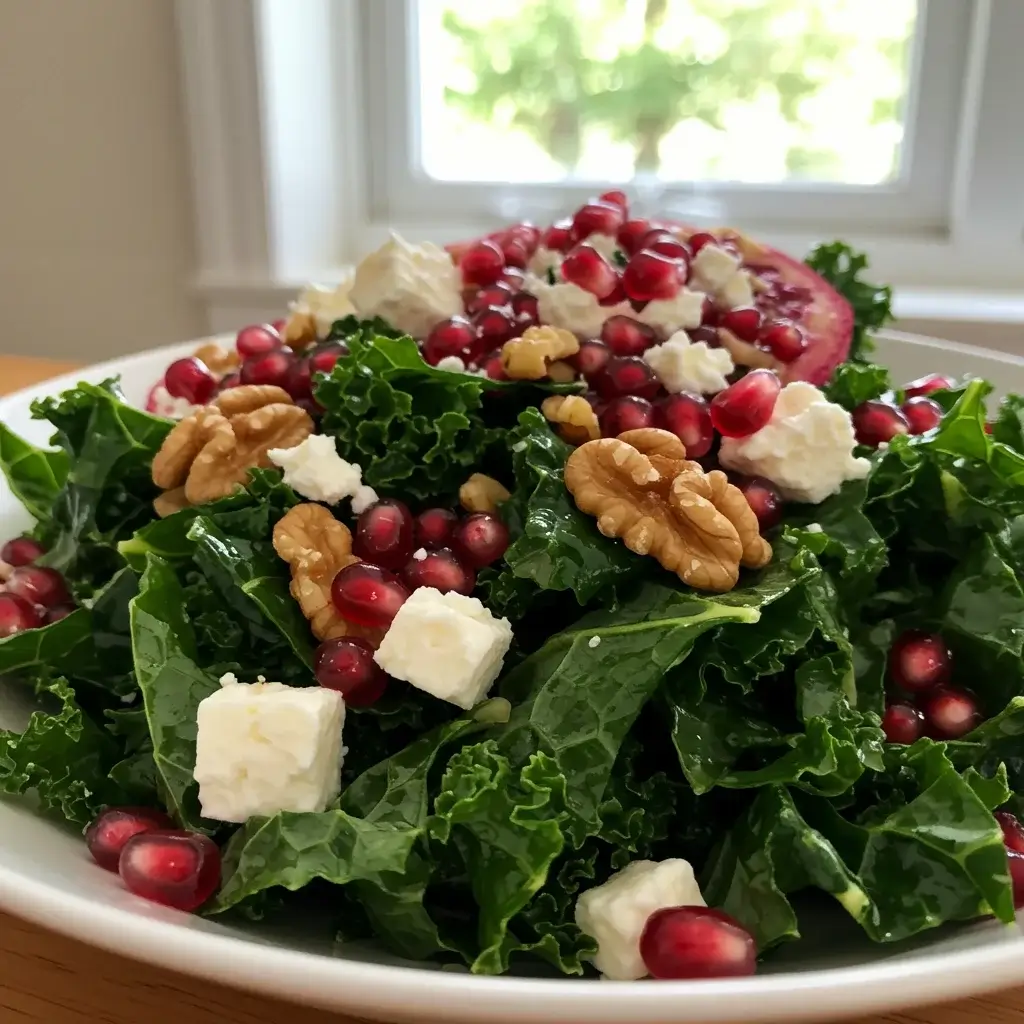
In the world of healthy eating, few dishes can compete with the vibrant and nutrient-packed kale and pomegranate salad. This salad is not just a feast for the eyes with its rich colors but also a powerhouse of health benefits. Combining the earthy tones of kale, the sweet-tart burst of pomegranate seeds, the crunch of walnuts, and the creamy touch of feta cheese, this salad makes for a perfect addition to any meal. Whether you’re preparing a quick lunch, a side dish for dinner, or a festive salad for a gathering, this recipe will surely impress. Let’s dive into how you can create this delightful dish in just 15 minutes!
Ingredients
To make this delicious kale and pomegranate salad, you will need the following ingredients:
- 4 cups kale, chopped
- 1 cup pomegranate seeds
- 1/2 cup walnuts, chopped
- 1/4 cup feta cheese, crumbled (or dairy-free alternative)
- 1/4 cup olive oil
- 2 tbsp apple cider vinegar
- 1 tbsp honey or maple syrup
- Salt and pepper, to taste
Instructions
Creating this salad is a breeze. Follow these simple steps, and you’ll have a fresh and flavorful dish ready in no time.
- Prepare the Salad Base:
In a large bowl, combine the chopped kale, pomegranate seeds, walnuts, and feta cheese. Ensure that the kale is finely chopped to make it easier to toss and eat. - Make the Dressing:
In a small bowl, whisk together the olive oil, apple cider vinegar, honey, salt, and pepper. Adjust the seasoning according to your taste preference. - Combine and Toss:
Pour the dressing over the salad ingredients. Toss gently until the salad is well-coated with the dressing. The goal is to ensure that each bite is flavorful and balanced. - Serve or Rest:
Serve the salad immediately for a crisp and fresh taste. Alternatively, let it sit for about 10 minutes to allow the kale to soften slightly, enhancing its palatability.
Nutrition Facts
This kale and pomegranate salad is not just delicious but also packed with essential nutrients. Here are the nutrition facts per serving (serves 4):
- Calories: 210
- Protein: 5g
- Fat: 16g
- Carbohydrates: 16g
- Fiber: 3g
- Sugar: 4g
How to Serve
This salad is incredibly versatile and can be served in various ways, making it suitable for a multitude of dining occasions. Below are some detailed suggestions on how to enhance your salad serving experience:
As a Main Course
Transform this salad into a hearty main dish by incorporating protein-rich toppings. Options include:
- Grilled Chicken: Marinate chicken breasts in a blend of olive oil, lemon juice, garlic, and herbs for at least 30 minutes. Grill until fully cooked and slice them over the salad for added flavor and texture.
- Shrimp: Sauté shrimp in a garlic butter sauce or grill them with your favorite spices. Their sweet and slightly briny flavor pairs well with the fresh ingredients in the salad.
- Tofu: For a plant-based option, use firm tofu. Press it to remove excess moisture, then marinate in soy sauce, sesame oil, and ginger before pan-frying or grilling until golden. This will add a pleasing crunch and a savory element to the salad.
In addition to these protein options, consider adding whole grains such as quinoa, farro, or barley to further enhance the nutritional value and give the salad a more substantial feel. This makes it suitable for lunch or dinner, ensuring that it is both satisfying and healthy.
As a Side Dish
When serving this salad as a side dish, it can elevate the overall dining experience when paired thoughtfully with other courses. Here are some ideas:
- Roasted Vegetables: The smoky, caramelized flavors of roasted vegetables like bell peppers, zucchini, and carrots complement the freshness of the salad. Drizzling a balsamic glaze over both the salad and the vegetables can tie the flavors together beautifully.
- Grilled Meats: Serve the salad alongside grilled meats such as steak, chicken, or pork chops. The rich, savory notes of the meats balance well with the salad’s brightness, creating a well-rounded meal.
- Hearty Soups: Pair the salad with a warm, hearty soup such as minestrone or a creamy tomato basil. The contrast of temperatures and textures will enhance the dining experience, making each bite enjoyable.
At a Gathering
This salad’s vibrant colors and flavors make it an excellent choice for a variety of gatherings, including holiday meals, parties, or potlucks. Here are some tips for serving it in these settings:
- Presentation: Use a large, beautiful serving bowl to showcase the salad’s colorful ingredients. Consider garnishing with fresh herbs or edible flowers to enhance its visual appeal. A sprinkle of toasted nuts or seeds on top can also add a delightful crunch.
- Make-Ahead Option: If you’re preparing for a potluck or party, you can make the salad in advance. To prevent sogginess, keep the dressing separate and add it just before serving. This way, the salad remains fresh and crisp, ensuring that guests enjoy the best texture possible.
- Serving Size: For larger gatherings, consider portioning the salad into smaller individual bowls or cups. This not only makes it easier for guests to serve themselves but also adds an elegant touch to your table setting.
- Themed Variations: For themed gatherings, adapt the salad to fit the occasion. For example, for a Mediterranean-themed party, add feta cheese, olives, and artichoke hearts. For a tropical gathering, include fresh mango, avocado, and a citrus dressing. This customization can make your dish even more appealing and memorable.
In conclusion, this salad is not only versatile but also adaptable to various occasions and preferences. Whether served as a main course, a side dish, or a party favorite, it is sure to impress with its vibrant flavors and textures. By thoughtfully selecting complementary ingredients and presentation styles, you can elevate this simple dish into a centerpiece for any meal.
Additional Tips for Elevating Your Kale and Pomegranate Salad Experience
Enhancing your kale and pomegranate salad can transform this dish into a vibrant, flavorful, and nutritious centerpiece for any meal. Below are comprehensive tips that will not only improve the texture and taste of the salad but also encourage creativity in your kitchen.
Massaging the Kale
Massaging kale is an essential step that can significantly enhance the overall texture and flavor of your salad. To do this, tear the kale leaves into smaller pieces, removing the tough stems. Place the leaves in a large bowl, then drizzle a small amount of high-quality olive oil and a pinch of sea salt over the kale. Using your hands, gently but firmly massage the leaves for about 2-3 minutes. This process helps to break down the tough cellulose structure of the kale, resulting in a more tender and palatable leaf. As you massage, you will notice the leaves darken in color and become more pliable, which makes them more enjoyable to eat and allows them to better absorb dressings and flavors.
Pomegranate Tips
Pomegranates can be tricky to work with, but with the right technique, you can extract the juicy seeds with ease. After cutting the pomegranate in half, hold one half, cut side down, over a bowl. Firmly but gently tap the back of the fruit with a wooden spoon. The seeds, or arils, will pop out effortlessly, falling into the bowl below. This method minimizes mess and maximizes yield. Additionally, to keep your kitchen clean, you may want to do this step in a sink to catch any juice splatters. For a more intense burst of flavor, consider soaking the seeds in a little lime juice before adding them to your salad.
Walnut Alternatives
While walnuts add a rich, earthy flavor and a pleasing crunch to your salad, they may not suit everyone’s taste or dietary needs. If you prefer a different option, consider using sliced almonds for a milder flavor or pecans for a sweeter, buttery crunch. For those looking for nut-free alternatives, seeds like sunflower or pumpkin seeds provide a delightful crunch and additional nutrition. Toasting these nuts or seeds lightly in a dry skillet for a few minutes can enhance their flavor profile, making them an even more appealing addition to your salad.
Vegan Option
For those following a vegan lifestyle or simply looking to reduce dairy intake, substituting feta cheese is straightforward. You can use a variety of dairy-free cheese alternatives available in stores, many of which mimic the tangy flavor and crumbly texture of traditional feta. Alternatively, consider using avocado for a creamy component, or simply omit the cheese altogether. The salad will still be hearty and satisfying with the combination of kale, pomegranates, and nuts or seeds. For an extra burst of flavor, add nutritional yeast, which provides a cheesy taste without the dairy.
Seasonal Variations
One of the joys of cooking is experimenting with seasonal ingredients, and incorporating seasonal fruits into your kale and pomegranate salad can elevate it to new heights. In the fall, crisp apples or juicy pears add a sweet crunch, while in the winter, segments of citrus fruits like oranges or grapefruit bring a refreshing brightness. In spring, consider adding sliced strawberries or fresh herbs like mint for a vibrant twist. Each seasonal fruit not only adds flavor but also introduces new colors and textures, making your salad visually appealing and nutritious. Don’t hesitate to mix and match to discover combinations that resonate with your palate.
Dressing Ideas
While the kale and pomegranate salad can shine on its own, a well-crafted dressing can elevate it further. A simple vinaigrette of olive oil, balsamic vinegar, and a touch of honey or maple syrup can complement the bitterness of the kale and the sweetness of the pomegranate. For a creamier option, consider a tahini-based dressing that adds nutty flavors and a rich texture. Experimenting with different dressings can allow you to adjust the salad to suit your taste preferences, making it a versatile dish that you can enjoy time and time again.
By incorporating these additional tips into your kale and pomegranate salad preparation, you will not only enhance its flavor and texture but also create a dish that is tailored to your personal preferences and seasonal availability. Enjoy the process of creation and the delightful experience of savoring your improved salad!
FAQs
1. Can I make this salad ahead of time?
Yes, you can prepare the salad ingredients ahead of time and store them separately in the refrigerator. Combine and dress the salad just before serving to maintain its freshness.
2. How long will the salad last in the fridge?
Once dressed, the salad is best consumed within 24 hours. If storing for later, keep the dressing separate and add it just before serving.
3. Can I use a different type of vinegar?
Absolutely! While apple cider vinegar adds a nice tang, you can substitute it with balsamic, red wine, or white wine vinegar based on your taste preference.
4. What can I use instead of honey?
Maple syrup is a great alternative to honey and provides a similar sweetness. Agave nectar can also be used for a vegan option.
5. Is this salad gluten-free?
Yes, this salad is naturally gluten-free. Just ensure that any additional toppings or dressings you use are also gluten-free.
Conclusion
The kale and pomegranate salad is more than just a dish; it’s a vibrant celebration of flavors and textures that delights the senses and nourishes the body. Each ingredient plays a pivotal role in creating a well-rounded meal that is not only visually appealing but also rich in nutrients. The robust, earthy taste of kale, often hailed as a superfood, serves as the perfect base for this salad. Its hearty leaves are packed with antioxidants, fiber, and essential vitamins A, C, and K, making it an excellent choice for those looking to boost their overall health.
Adding to the salad’s allure is the pomegranate, which brings a burst of tart sweetness and a beautiful ruby hue. Pomegranates are known for their high levels of antioxidants, particularly punicalagins, which have been linked to numerous health benefits, including reduced inflammation and improved heart health. The juicy arils not only enhance the flavor profile but also contribute to the salad’s nutritional value, offering a rich source of vitamin C, potassium, and dietary fiber.
Incorporating healthy fats into the salad, such as avocado or a sprinkle of nuts, adds creaminess and a satisfying crunch that contrasts beautifully with the tender kale and the juicy pomegranate seeds. These healthy fats are essential for the absorption of fat-soluble vitamins and provide sustained energy. Moreover, they contribute to heart health and can help reduce the risk of chronic diseases.
This salad is a testament to the idea that healthy eating can be both delicious and satisfying. The balance of sweet, tart, and savory flavors, combined with a variety of textures—from the crispness of the kale to the crunch of the nuts—creates a dining experience that is not only enjoyable but also gratifying. With its vibrant colors and fresh ingredients, this salad is sure to impress at any gathering, whether it’s a casual family dinner or a more formal occasion.
One of the best aspects of the kale and pomegranate salad is its versatility. Whether you’re a seasoned cook or a kitchen novice, this recipe is easy to prepare and customize to your liking. Feel free to experiment with additional ingredients such as feta cheese for a tangy bite, or roasted chickpeas for added protein and crunch. You can also vary the dressing, using a light vinaigrette or a creamy tahini sauce to suit your palate.
Moreover, the salad can be served as a standalone meal or as a side dish, making it a fantastic option for a variety of occasions. It’s perfect for meal prepping, as the flavors meld beautifully over time, allowing for a quick, nutritious meal during a busy week. The dish is not only a feast for the eyes but also a nourishing choice that aligns with a balanced diet.
So why wait? Gather your ingredients and treat yourself to this delightful salad today! By indulging in this kale and pomegranate salad, you’re not just nourishing your body; you’re embracing a lifestyle that celebrates health, flavor, and creativity in the kitchen. Make it a staple in your meal rotation and share it with friends and family to inspire them towards healthier eating habits. Enjoy the journey of discovering new combinations and savoring each bite of this wholesome dish—your taste buds and your body will thank you!
Print
Kale and Pomegranate Salad recipe
Ingredients
- 4 cups kale, chopped
- 1 cup pomegranate seeds
- 1/2 cup walnuts, chopped
- 1/4 cup feta cheese, crumbled (or dairy-free alternative)
- 1/4 cup olive oil
- 2 tbsp apple cider vinegar
- 1 tbsp honey or maple syrup
- Salt and pepper, to taste
Instructions
- Prepare the Salad Base:
In a large bowl, combine the chopped kale, pomegranate seeds, walnuts, and feta cheese. Ensure that the kale is finely chopped to make it easier to toss and eat. - Make the Dressing:
In a small bowl, whisk together the olive oil, apple cider vinegar, honey, salt, and pepper. Adjust the seasoning according to your taste preference. - Combine and Toss:
Pour the dressing over the salad ingredients. Toss gently until the salad is well-coated with the dressing. The goal is to ensure that each bite is flavorful and balanced. - Serve or Rest:
Serve the salad immediately for a crisp and fresh taste. Alternatively, let it sit for about 10 minutes to allow the kale to soften slightly, enhancing its palatability.
Nutrition
- Serving Size: one normal portion
- Calories: 210
- Sugar: 4g
- Fat: 16g
- Carbohydrates: 16g
- Fiber: 3g
- Protein: 5g