
There’s something truly special about sinking your teeth into a perfectly cooked ribeye roast—the rich marbling, the juicy tenderness, and that deep, savory flavor that only a well-prepared cut of beef can deliver. After trying countless recipes that either overcomplicate the process or leave me underwhelmed, I finally nailed a simple method that brings out the best in this iconic roast. Whether you’re planning a cozy family dinner or aiming to impress guests without hours in the kitchen, this ribeye roast recipe combines ease with elegance. Let me take you through a foolproof way to achieve a stunning roast that’s juicy on the inside, beautifully browned on the outside, and bursting with flavor—because homemade meals are where the heart truly is.
Why choose a Ribeye Roast?
Simplicity is key: this recipe requires minimal prep but delivers maximum flavor. Juicy tenderness comes from expert cooking techniques that keep your roast moist and succulent. Rich, savory flavor highlights the natural marbling unique to ribeye. Versatility means it’s perfect for family dinners or impressing guests. Plus, it’s a true crowd-pleaser that transforms your home cooking into a gourmet experience without stress.
Ribeye Roast Ingredients
For the Ribeye Roast
- Ribeye roast (4-5 lbs) – Choose a well-marbled cut for that signature juicy tenderness essential to a perfect ribeye roast.
- Kosher salt – Season generously to enhance natural beef flavors and create a flavorful crust.
- Freshly ground black pepper – Adds a subtle kick that complements the rich meat without overpowering it.
- Garlic cloves (4-5, smashed) – Infuses aromatic depth that sears beautifully into the ribeye roast.
- Fresh rosemary sprigs (2-3) – Locks in earthy, piney notes that elevate the roast’s savory profile.
- Olive oil – Helps the seasoning stick and promotes an even, golden-brown crust.
For Serving (Optional)
- Horseradish sauce – A zesty pairing that cuts through the richness of the ribeye roast.
- Roasted vegetables – Seasonal veggies roasted alongside make a complete, comforting meal.
How to Make Ribeye Roast
- Preheat: Preheat the oven to 450°F and let your seasoned roast rest at room temperature for 30 minutes. This ensures even cooking and helps achieve a gorgeous crust.
- Pat dry: Use paper towels to pat the roast completely dry, then generously season it with kosher salt and freshly ground black pepper, ensuring full coverage for optimal flavor and crust formation.
- Heat skillet: Warm a heavy, oven-safe skillet over high heat and add a drizzle of olive oil. Wait until oil shimmers before adding the roast to prevent sticking.
- Sear roast: Carefully place the roast fat-side down and sear 3-4 minutes per side, turning to develop a rich, golden-brown crust that locks in savory juices for ultimate tenderness.
- Add aromatics: Transfer the seared roast to a rack in a roasting pan, tuck garlic cloves and rosemary sprigs underneath and around it for fragrant, herb-infused flavor as it cooks.
- Roast: Place in preheated oven at 450°F for 15 minutes, then reduce heat to 350°F and continue roasting 60-75 minutes, until a meat thermometer reads 130°F for medium-rare.
- Rest: Remove the roast from oven, tent loosely with foil, and let rest 15-20 minutes. This crucial pause allows juices to redistribute, ensuring every slice stays moist and tender.
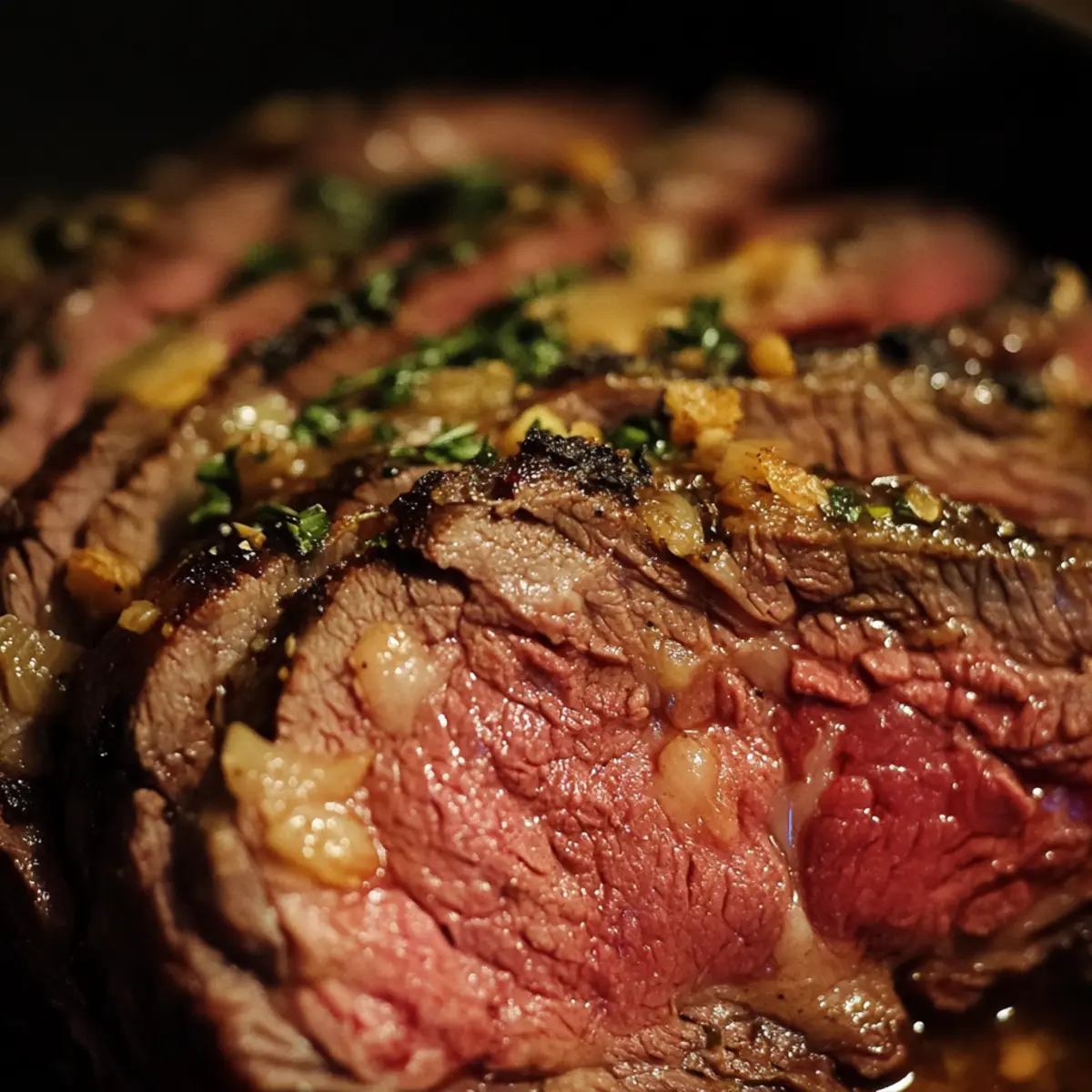
- Slice and serve: Carve the roast thinly against the grain for the most tender bites, arrange on a platter, and garnish with fresh rosemary sprigs or horseradish sauce.
Optional: Sprinkle flaky sea salt before serving for a beautiful finish.
Exact quantities are listed in the recipe card below.
Storage Tips for Ribeye Roast
- Fridge: Store any leftover ribeye roast in an airtight container for up to 3 days. This helps maintain its juicy tenderness while preventing drying out.
- Freezer: For longer storage, wrap slices tightly in plastic wrap and then in aluminum foil or use a vacuum-sealed bag. You can freeze for up to 3 months without losing flavor.
- Reheating: To reheat, place slices in a preheated 250°F oven until warmed through (about 15-20 minutes). This gentle method preserves moisture and flavor.
- Room Temperature: Always allow the roast to reach room temperature before serving or cooking to ensure even cooking and the best flavor.
Ribeye Roast Variations & Substitutions
Feel free to explore these delightful twists to personalize your ribeye roast and elevate your dining experience!
- Herb-Infused: Add fresh thyme or oregano alongside rosemary for a more complex flavor profile that enhances the roast’s aromatics.
- Spicy Kick: Rub in crushed red pepper flakes or a dash of cayenne to bring a bold heat that complements the savory beefiness. It adds a fun layer of excitement and warmth to every bite.
- Smoked Flavor: Use smoked salt instead of kosher salt to introduce a rich, smoky depth that’s utterly irresistible. This small swap makes a big difference, creating a barbecue-esque essence.
- Citrus Zing: Incorporate lemon zest or orange zest along with your garlic for a refreshing burst of brightness that balances the richness beautifully. It adds a delightful contrast and lifts the roast uniquely.
- Balsamic Glaze: Drizzle a balsamic reduction over the roast just before serving for a sweet-tangy finish that enhances flavor complexity. This touch will surprise and delight your guests!
- Red Wine Marinade: Marinate the roast overnight in red wine mixed with garlic and herbs for an added layer of depth and tenderness. This technique transforms the meat, making it melt-in-your-mouth delicious.
- Mushroom Medley: Sauté mushrooms and serve them over the roast for a rich, earthy flavor addition that pairs wonderfully with the beef. The savory mushrooms soak up the roast’s juices and elevate every bite.
- Vegetarian Option: Substitute with a large portobello mushroom cap, marinating and roasting it similarly for a hearty, plant-based alternative that doesn’t skimp on flavor. This will impress even the staunchest carnivores!
Expert Tips for Ribeye Roast
- Choose quality meat: Select a ribeye roast with abundant marbling to ensure juicy tenderness and rich flavor in your final dish.
- Room temperature matters: Let the roast sit at room temperature before cooking to promote even doneness and prevent a cold center.
- Perfect sear: Don’t rush the searing process—get a deep, golden crust by allowing each side 3-4 minutes on high heat for locked-in juices.
- Use a thermometer: Rely on a meat thermometer to hit 130°F for medium-rare; guessing can lead to overcooked or underdone results.
- Rest before carving: Always rest your ribeye roast 15-20 minutes after roasting; this step redistributes the juices and keeps every slice moist.
- Season generously: Don’t be shy with kosher salt and pepper—they form the flavorful crust that complements the roast’s natural richness perfectly.
Make Ahead Options
Preparing a ribeye roast ahead of time is a fantastic way to save precious hours on busy weeknights while still impressing family and friends! You can season the ribeye roast with kosher salt and freshly ground black pepper up to 24 hours in advance, allowing the flavors to meld beautifully. Just cover it tightly with plastic wrap and refrigerate it to maintain moisture. When you’re ready to cook, let it sit at room temperature for about 30 minutes before searing. To ensure a juicy outcome, follow the same steps for roasting after searing, and enjoy a mouthwatering ribeye roast that’s just as delicious as if you made it fresh!
What to Serve with Ribeye Roast?
Elevate your dining experience with delectable pairings that complement the rich flavors and juicy tenderness of a ribeye roast.
-
Creamy Mashed Potatoes: These buttery, smooth potatoes create a perfect canvas for savoring the roast’s rich juices. A classic match!
-
Garlic Roasted Broccoli: Crunchy yet tender, the garlic-infused broccoli adds freshness that balances the richness of the beef beautifully.
-
Caesar Salad: Crisp romaine, tangy dressing, and crunchy croutons bring a delightful contrast and a refreshing zing to your plate.
-
Red Wine: A full-bodied Cabernet Sauvignon or Malbec enhances the robust flavors of the ribeye roast, creating a harmonious dining experience.
-
Herbed Rice Pilaf: Light and fragrant, this dish subtly complements the meat while adding a lovely fluffiness to your meal.
-
Horseradish Sauce: The zesty heat of horseradish brightens up the savory flavors, making each bite of roast even more thrilling.
-
Roasted Root Vegetables: A medley of sweet carrots and earthy potatoes roasted to caramelized perfection adds depth and warmth to the table.
-
Chocolate Mousse: Finish off your feast with an indulgent, silky chocolate mousse that leaves a delightful memory with every sweet spoonful.
Ribeye Roast Recipe FAQs
How do I choose the best ribeye roast for this recipe?
Look for a ribeye roast with abundant, even marbling—those thin white streaks of fat throughout the meat. Marbling is what delivers that juicy tenderness and rich flavor you’re aiming for. Avoid pieces with large dark spots or dryness on the edges, and if possible, buy from a trusted butcher for quality you can trust!
What’s the best way to store leftover ribeye roast?
Store leftovers in an airtight container in the refrigerator for up to 3 days to keep the meat tender and flavorful. Always let the roast cool slightly before refrigerating to prevent condensation, which can make the crust soggy. For longer storage, freeze properly wrapped slices for up to 3 months.
Can I freeze the ribeye roast? How should I do it?
Absolutely! To freeze, first slice the cooled roast into portions. Wrap each slice tightly in plastic wrap, then place all wrapped slices in a heavy-duty freezer bag or vacuum-seal them. Label with the date and freeze for up to 3 months. When ready to eat, thaw overnight in the fridge and reheat gently in a low oven to retain juiciness.
My ribeye roast turned out tough; what did I do wrong?
Toughness often happens if the roast wasn’t rested after cooking or if the internal temperature was too high, causing overcooking. Always use a meat thermometer and pull the roast at 130°F for medium-rare, then tent it with foil to rest for 15-20 minutes. This resting allows juices to redistribute and the meat fibers to relax, resulting in tender slices.
Is ribeye roast safe for pets or people with dietary restrictions?
This ribeye roast is meant for human consumption and seasoned with salt, pepper, garlic, and rosemary, which aren’t suitable for pets, especially dogs or cats. For anyone with dietary restrictions, be mindful of sodium content in seasonings. If allergies exist to garlic or herbs, simply omit or substitute with safe alternatives like thyme or oregano.
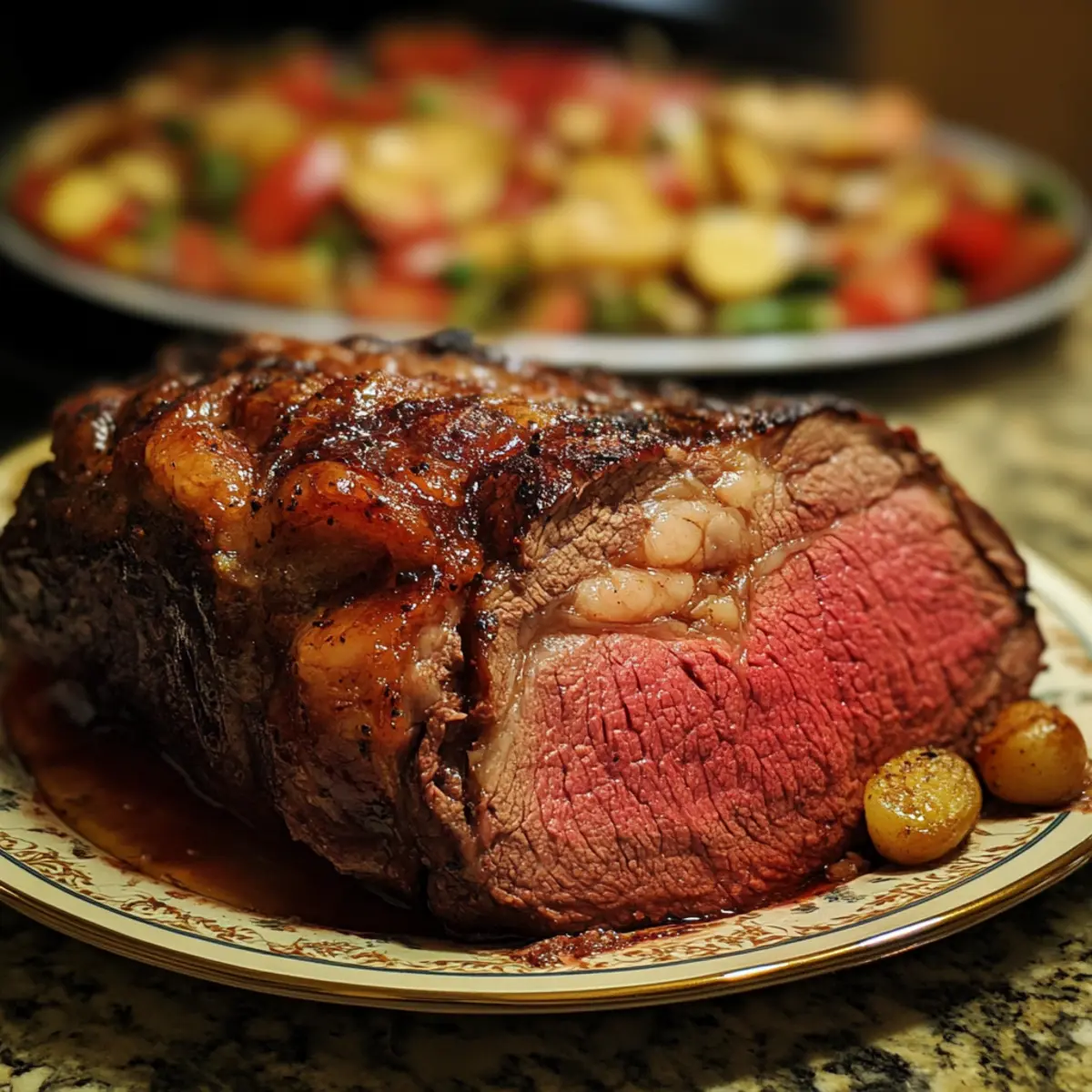
Juicy Ribeye Roast Secrets: Perfect Every Time for Home Chefs
Ingredients
Equipment
Method
- Preheat the oven to 450°F and let your seasoned roast rest at room temperature for 30 minutes.
- Use paper towels to pat the roast completely dry, then season with kosher salt and black pepper.
- Warm a heavy, oven-safe skillet over high heat and add a drizzle of olive oil.
- Place the roast fat-side down and sear 3-4 minutes per side for a golden-brown crust.
- Transfer the seared roast to a rack in a roasting pan, tucking garlic cloves and rosemary around it.
- Place in preheated oven at 450°F for 15 minutes, then reduce heat to 350°F and roast for 60-75 minutes.
- Remove the roast from the oven, tent with foil, and let rest for 15-20 minutes.
- Carve the roast thinly against the grain, arrange on a platter, and garnish with fresh rosemary.