

The first time I successfully baked a Jiggly Japanese Cheesecake felt like I had unlocked a secret level in the world of baking. For weeks, I had been mesmerized by videos of these cloud-like cakes, wobbling and jiggling with an ethereal grace that seemed almost impossible to achieve in a home kitchen. My initial attempts were… humbling. One was dense, another cracked like the desert floor, and one deflated into a sad, eggy pancake. But I was determined. I tweaked, I researched, and I finally landed on this very recipe. When I pulled this one from the oven, it had the signature pale-golden top and stood tall and proud. After the excruciatingly slow cooling process, the moment of truth arrived. I gave the plate a gentle shake, and it happened – the glorious, hypnotic jiggle. That evening, I served it to my family. The silence that fell over the table, punctuated only by the soft clink of forks, was the highest compliment. My kids, who usually clamor for frosting-laden desserts, were captivated by its light, airy texture and subtle, creamy flavor that was sweet but not overwhelmingly so. It was a triumph, and this recipe has since become my go-to for special occasions, a guaranteed showstopper that proves the most impressive desserts are often born from the simplest, most carefully handled ingredients. It’s more than a cake; it’s a delightful experience, and I’m thrilled to share the foolproof method that will bring that perfect jiggle into your own kitchen.
Your Guide to Perfect Japanese Cheesecake Ingredients
Achieving the unique texture of a Japanese Cheesecake relies on using the right ingredients at the right temperature. Precision is key, so I highly recommend using a kitchen scale for the most accurate results. Below are the components broken down into their roles in creating this masterpiece.
For the Cream Cheese Batter:
This is the foundation of your cheesecake, providing the signature tangy flavor and creamy base.
- Cream Cheese: 250g (about 8.8 oz) – Use full-fat, block-style cream cheese, not the whipped or spreadable kind. The quality of your cream cheese directly impacts the final flavor and richness. Bring it to room temperature for smooth, lump-free mixing.
- Unsalted Butter: 60g (about 4 tablespoons) – This adds richness and moisture. Again, using it at room temperature will help it incorporate seamlessly.
- Whole Milk: 100ml (about 6.75 tablespoons or 1/3 cup + 1 tbsp) – Provides necessary liquid and contributes to the soft, creamy texture. Full-fat milk is recommended.
- Large Egg Yolks: 6 – These are the heart of the custard base, providing richness, color, and structure. Separate your eggs while they are cold, as the yolks are less likely to break, but let the yolks come to room temperature before using.
- Cake Flour: 60g (about 1/2 cup) – Cake flour has a lower protein content than all-purpose flour, which is crucial for achieving the ultra-fine, tender crumb characteristic of this cake.
- Cornstarch: 20g (about 2.5 tablespoons) – Cornstarch helps stabilize the cake, giving it a bit more structure and preventing it from being too delicate to handle. It also contributes to the velvety texture.
- Vanilla Extract: 1 teaspoon – A high-quality vanilla extract enhances the subtle flavors of the cream cheese and egg.
- Salt: 1/4 teaspoon – A small amount of salt is essential to balance the sweetness and bring out all the other flavors.
For the Meringue:
The meringue is the soul of the cheesecake, responsible for its incredible lightness, volume, and that famous jiggle.
- Large Egg Whites: 6 – The whites from the same eggs as the yolks. Ensure they are at room temperature and that there is absolutely no trace of yolk in them, as any fat will prevent the whites from whipping to their full volume.
- Granulated Sugar: 130g (about 2/3 cup) – Provides sweetness and, more importantly, stabilizes the egg whites, creating a strong and glossy meringue.
- Cream of Tartar: 1/4 teaspoon – This is an acid that helps stabilize the egg whites, making them easier to whip and less likely to collapse. You can substitute it with an equal amount of lemon juice if needed.
Step-by-Step Instructions to a Flawlessly Jiggly Cheesecake
Follow these instructions carefully. The technique is just as important as the ingredients. Take your time, and don’t rush the process.
Step 1: Preparation is Everything
- Prepare Your Pan: Take an 8-inch (20cm) round cake pan that is at least 3 inches (7.5cm) tall. To create a seamless liner, cut a long strip of parchment paper that is tall enough to extend about 1-2 inches above the rim of the pan. Lightly grease the inside of the pan with butter and press this parchment strip against the sides. Cut a round piece of parchment to fit the bottom of the pan and place it inside. The parchment sling makes it easy to lift the delicate cake out later.
- Waterproof Your Pan: The cake will be baked in a water bath (bain-marie), so it’s critical to prevent water from seeping into your pan. Take a large, wide sheet of heavy-duty aluminum foil (or two sheets of regular foil) and carefully wrap the outside of the cake pan, ensuring there are no tears. The foil should come up the sides of the pan. This is a crucial step to avoid a soggy bottom.
- Preheat Your Oven: Position a rack in the lower third of your oven. Place a larger roasting pan (big enough to hold your 8-inch cake pan) on the rack. Preheat your oven to a high temperature of 400°F (200°C). We will lower this temperature later.
Step 2: Creating the Cream Cheese Batter
- Melt the Base: In a medium-sized, heatproof bowl set over a saucepan of simmering water (a double boiler), combine the room-temperature cream cheese, butter, and milk. Whisk constantly but gently until the mixture is completely melted, smooth, and lump-free. It should look like a silky, pale-yellow sauce. Remove the bowl from the heat and let it cool slightly for about 5-10 minutes.
- Incorporate the Yolks: Once the cream cheese mixture has cooled down a bit (so it doesn’t scramble the eggs), whisk in the 6 egg yolks, vanilla extract, and salt until fully combined. The mixture should be smooth and homogenous.
- Sift in the Dry Ingredients: Place a fine-mesh sieve over the bowl and sift the cake flour and cornstarch directly into the cream cheese mixture. Sifting is non-negotiable; it aerates the flour and removes lumps, which is essential for a smooth texture. Gently whisk until the flour is just combined. Be careful not to overmix at this stage. Scrape down the sides of the bowl and set the batter aside.
Step 3: Whipping the Perfect Meringue
- Start Whipping: In a large, impeccably clean, and dry mixing bowl (glass or metal is best), place your 6 room-temperature egg whites and the cream of tartar. Using an electric hand mixer or a stand mixer with the whisk attachment, begin whipping on medium-low speed until the whites become foamy and opaque.
- Add Sugar Gradually: Once foamy, increase the mixer speed to medium-high. Start adding the granulated sugar, one tablespoon at a time, while the mixer is running. This slow addition allows the sugar to dissolve properly and creates a stable, strong meringue.
- Whip to Soft Peaks: Continue whipping until the meringue is glossy, thick, and has reached the soft peak stage. This is the most critical part of the recipe. To check, lift the whisk out of the meringue. The peak that forms should hold its shape but the tip should gently curl over, like a soft bird’s beak. If you overwhip to stiff peaks (where the peak stands straight up), the cake is more likely to rise too quickly and then crack and collapse. A soft peak meringue provides lift while remaining flexible.
Step 4: Folding the Batter and Meringue
- Lighten the Batter: Take about one-third of your finished meringue and add it to the bowl of cream cheese batter. Use a spatula to fold it in gently. This first addition is for “sacrificing” – its purpose is to lighten the dense cheese batter, making it easier to incorporate the rest of the meringue without deflating it.
- Fold in the Rest: Pour the lightened cheese batter into the remaining meringue in the large bowl. Now, using a large spatula, carefully fold the two mixtures together. Use a “cut and fold” motion: cut down through the center of the mixture with the spatula, scrape along the bottom of the bowl, and then fold it over the top. Rotate the bowl a quarter turn and repeat. Continue this gentle motion just until the batter is uniform in color and no white streaks of meringue remain. Be patient and deliberate to preserve as much air as possible.
Step 5: The Baking Process (Bain-Marie)
- Fill the Pan: Pour the finished batter into your prepared and waterproofed cake pan. Tap the pan gently on the counter a few times to release any large air bubbles that may be trapped.
- Set Up the Water Bath: Carefully place the cake pan inside the larger roasting pan that is already in your preheated oven. Pull the oven rack out slightly. Carefully pour boiling or very hot water into the larger roasting pan until it comes about 1-1.5 inches up the sides of your cake pan. Do not let any water splash into the batter.
- Bake and Reduce Heat: Immediately close the oven door and reduce the oven temperature to 320°F (160°C). Bake for 25 minutes.
- Second Bake: After 25 minutes, reduce the oven temperature again to 285°F (140°C) without opening the oven door. Continue to bake for another 55-60 minutes. The cake is done when the top is golden brown, and a wooden skewer inserted into the center comes out with a few moist crumbs attached (not wet batter). The cake will have risen significantly and should have a slight jiggle.
Step 6: The Crucial Cooling Process
- Cool in the Oven: Once the baking time is complete, turn the oven off completely. Prop the oven door open slightly with a wooden spoon and let the cheesecake cool inside the oven for 1 hour. This slow, gradual cooling is the secret to preventing the cake from collapsing or shrinking dramatically.
- Cool at Room Temperature: After an hour in the oven, carefully remove the cake pan from the water bath and place it on a wire rack. Let it cool to room temperature, which will take another 1-2 hours.
- Chill: Once completely cool, cover the pan with plastic wrap and transfer it to the refrigerator. Chill for at least 4 hours, or preferably overnight. Chilling sets the cake’s structure and deepens its flavor. Do not attempt to slice it before it is fully chilled.
- Unmold and Serve: When ready to serve, carefully remove the foil from the pan. Run a thin knife around the edge if needed, then gently lift the cake out using the parchment paper sling. Peel away the parchment and place the cake on a serving platter.
Nutrition Facts
- Servings: 10-12 slices
- Calories Per Serving: Approximately 280-330 kcal
(Disclaimer: The nutritional information provided is an estimate and can vary based on the specific ingredients and brands used.)
Preparation Time
- Active Preparation Time: 35 minutes
- Baking Time: 80-85 minutes
- Cooling & Chilling Time: 6 hours (minimum)
- Total Time: Approximately 8 hours
How to Serve Your Jiggly Japanese Cheesecake
This cake is a star on its own, but a few simple accompaniments can elevate it even further. Here are some elegant and delicious ways to serve it:
- The Classic Dusting: The simplest and most traditional way. Use a small sieve to lightly dust the chilled cheesecake with powdered sugar just before serving. It adds a touch of sweetness and a beautiful, snowy finish.
- Fresh Fruit Forward: The cake’s light tanginess pairs wonderfully with fresh fruit.
- Serve each slice with a handful of fresh berries like raspberries, blueberries, or sliced strawberries.
- Create a simple fruit coulis by simmering 1 cup of berries with 2 tablespoons of sugar and a squeeze of lemon juice until thickened. Strain and drizzle over the cake.
- Creamy and Decadent: Add another layer of creamy texture.
- Serve with a dollop of lightly sweetened, soft-whipped cream on the side.
- For a more sophisticated tang, add a spoonful of crème fraîche.
- A Touch of Syrup:
- A light drizzle of high-quality maple syrup or warm honey can add a lovely, earthy sweetness.
- Asian-Inspired Pairings:
- Sprinkle the top with a fine dusting of high-quality matcha powder for a beautiful color contrast and a slightly bitter, earthy flavor.
- Serve with a small spoonful of sweet red bean paste (anko) on the side.
5 Essential Tips for Japanese Cheesecake Success
- Temperature is Not a Suggestion, It’s a Rule: This is the golden rule. Room temperature cream cheese, butter, milk, and eggs are non-negotiable. Cold ingredients will not combine smoothly, resulting in a lumpy batter and a dense cake. Cold egg whites will not whip to their full volume.
- Master the Meringue (Soft Peaks Only!): The most common mistake is over-whipping the meringue to stiff peaks. While great for pavlova, stiff meringue is too rigid for this cake. It causes the cake to expand too rapidly in the oven, leading to the dreaded crack on top, and then it deflates sadly as it cools. Aim for glossy, droopy, soft-to-medium peaks for the perfect lift and flexibility.
- The Art of the Gentle Fold: You worked hard to whip air into the meringue; don’t knock it all out. Use a large spatula and a gentle hand. The goal is to combine, not to mix. Scrape from the bottom and fold over the top, rotating the bowl. Stop as soon as the batter is uniform to preserve that precious air.
- Create a Leak-Proof Water Bath: A soggy cheesecake is a tragedy. Use a high-quality, heavy-duty aluminum foil to wrap your pan. If you only have regular foil, use at least two layers and be very careful not to create any holes or tears as you wrap. The water bath provides gentle, even, and moist heat, which is essential for the cheesecake’s steam-leavened rise and creamy, crack-free texture.
- Patience is the Final Ingredient: Rushing the cooling process is a guaranteed way to get a shrunken, sunken cake. The slow cool-down in the turned-off oven, followed by the room temperature cool-down, allows the cake’s delicate protein structure to set gradually. Chilling it for at least 4 hours is also vital for the texture and flavor to fully develop.
Your Japanese Cheesecake Questions, Answered!
1. Why did my Japanese Cheesecake crack on top?
This is the most common issue and usually has three main causes:
- Over-whipped Meringue: As mentioned in the tips, stiff peaks cause the batter to expand too quickly and violently, breaking the surface.
- Oven Temperature is Too High: If your oven runs hot, it can have the same effect as over-whipped meringue, causing a rapid rise and subsequent crack. An oven thermometer is a baker’s best friend.
- Cooling Too Quickly: Opening the oven door during baking or removing the cake from the oven immediately after it’s done can cause a drastic temperature shock, making the cake contract and crack.
2. Why is my cheesecake dense and rubbery instead of light and jiggly?
This happens when the air in the batter has been lost. The primary culprits are:
- Deflated Meringue: You may have been too vigorous when folding the meringue into the cheese batter, knocking out all the air you worked so hard to incorporate.
- Undermixed Meringue: If your meringue was not whipped enough (i.e., it was still liquidy), it wouldn’t have the structure to hold air and lift the cake.
- Overmixed Batter: After adding the flour, mixing too much can develop the gluten, leading to a tougher, more rubbery texture.
3. Can I make this recipe gluten-free?
Yes, you can. For best results, substitute the cake flour with a high-quality 1-to-1 gluten-free all-purpose baking flour blend that contains xanthan gum. The texture might be slightly different—perhaps a little less fine-crumbed—but it will still be delicious and jiggly. The cornstarch in the recipe already helps provide some of the structure that gluten normally would.
4. How do I properly store leftover Japanese Cheesecake?
Store any leftovers in an airtight container in the refrigerator. It will stay fresh and delicious for up to 3-4 days. The texture is actually best after a full day of chilling in the fridge, as the flavors meld and the crumb sets. We do not recommend freezing this cheesecake, as the delicate, airy texture does not hold up well to thawing and can become watery.
5. What is the difference between a Jiggly Japanese Cheesecake and a New York Cheesecake?
They are two completely different styles of cheesecake.
- Texture & Method: A Japanese Cheesecake is a “soufflé cheesecake.” It gets its lift from whipped egg whites (meringue) and is baked in a water bath, resulting in an incredibly light, airy, fluffy, and jiggly texture. A New York Cheesecake is a “baked custard cheesecake.” It relies on a high ratio of cream cheese and whole eggs or yolks for a very dense, rich, and firm texture.
- Ingredients: Japanese Cheesecake uses less cream cheese and incorporates flour and separated eggs. New York Cheesecake is primarily cream cheese, sugar, and whole eggs, and often includes heavy cream or sour cream for extra richness. It typically has a graham cracker crust, which Japanese Cheesecake does not.
- Flavor: Japanese Cheesecake is subtly sweet with a light tang. New York Cheesecake is much richer, sweeter, and tangier.
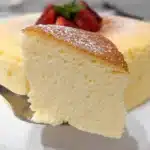
Jiggly Japanese Cheesecake recipe
Ingredients
For the Cream Cheese Batter:
This is the foundation of your cheesecake, providing the signature tangy flavor and creamy base.
-
Cream Cheese: 250g (about 8.8 oz) – Use full-fat, block-style cream cheese, not the whipped or spreadable kind. The quality of your cream cheese directly impacts the final flavor and richness. Bring it to room temperature for smooth, lump-free mixing.
-
Unsalted Butter: 60g (about 4 tablespoons) – This adds richness and moisture. Again, using it at room temperature will help it incorporate seamlessly.
-
Whole Milk: 100ml (about 6.75 tablespoons or 1/3 cup + 1 tbsp) – Provides necessary liquid and contributes to the soft, creamy texture. Full-fat milk is recommended.
-
Large Egg Yolks: 6 – These are the heart of the custard base, providing richness, color, and structure. Separate your eggs while they are cold, as the yolks are less likely to break, but let the yolks come to room temperature before using.
-
Cake Flour: 60g (about 1/2 cup) – Cake flour has a lower protein content than all-purpose flour, which is crucial for achieving the ultra-fine, tender crumb characteristic of this cake.
-
Cornstarch: 20g (about 2.5 tablespoons) – Cornstarch helps stabilize the cake, giving it a bit more structure and preventing it from being too delicate to handle. It also contributes to the velvety texture.
-
Vanilla Extract: 1 teaspoon – A high-quality vanilla extract enhances the subtle flavors of the cream cheese and egg.
-
Salt: 1/4 teaspoon – A small amount of salt is essential to balance the sweetness and bring out all the other flavors.
For the Meringue:
The meringue is the soul of the cheesecake, responsible for its incredible lightness, volume, and that famous jiggle.
-
Large Egg Whites: 6 – The whites from the same eggs as the yolks. Ensure they are at room temperature and that there is absolutely no trace of yolk in them, as any fat will prevent the whites from whipping to their full volume.
-
Granulated Sugar: 130g (about 2/3 cup) – Provides sweetness and, more importantly, stabilizes the egg whites, creating a strong and glossy meringue.
-
Cream of Tartar: 1/4 teaspoon – This is an acid that helps stabilize the egg whites, making them easier to whip and less likely to collapse. You can substitute it with an equal amount of lemon juice if needed.
Instructions
Step 1: Preparation is Everything
-
Prepare Your Pan: Take an 8-inch (20cm) round cake pan that is at least 3 inches (7.5cm) tall. To create a seamless liner, cut a long strip of parchment paper that is tall enough to extend about 1-2 inches above the rim of the pan. Lightly grease the inside of the pan with butter and press this parchment strip against the sides. Cut a round piece of parchment to fit the bottom of the pan and place it inside. The parchment sling makes it easy to lift the delicate cake out later.
-
Waterproof Your Pan: The cake will be baked in a water bath (bain-marie), so it’s critical to prevent water from seeping into your pan. Take a large, wide sheet of heavy-duty aluminum foil (or two sheets of regular foil) and carefully wrap the outside of the cake pan, ensuring there are no tears. The foil should come up the sides of the pan. This is a crucial step to avoid a soggy bottom.
-
Preheat Your Oven: Position a rack in the lower third of your oven. Place a larger roasting pan (big enough to hold your 8-inch cake pan) on the rack. Preheat your oven to a high temperature of 400°F (200°C). We will lower this temperature later.
Step 2: Creating the Cream Cheese Batter
-
Melt the Base: In a medium-sized, heatproof bowl set over a saucepan of simmering water (a double boiler), combine the room-temperature cream cheese, butter, and milk. Whisk constantly but gently until the mixture is completely melted, smooth, and lump-free. It should look like a silky, pale-yellow sauce. Remove the bowl from the heat and let it cool slightly for about 5-10 minutes.
-
Incorporate the Yolks: Once the cream cheese mixture has cooled down a bit (so it doesn’t scramble the eggs), whisk in the 6 egg yolks, vanilla extract, and salt until fully combined. The mixture should be smooth and homogenous.
-
Sift in the Dry Ingredients: Place a fine-mesh sieve over the bowl and sift the cake flour and cornstarch directly into the cream cheese mixture. Sifting is non-negotiable; it aerates the flour and removes lumps, which is essential for a smooth texture. Gently whisk until the flour is just combined. Be careful not to overmix at this stage. Scrape down the sides of the bowl and set the batter aside.
Step 3: Whipping the Perfect Meringue
-
Start Whipping: In a large, impeccably clean, and dry mixing bowl (glass or metal is best), place your 6 room-temperature egg whites and the cream of tartar. Using an electric hand mixer or a stand mixer with the whisk attachment, begin whipping on medium-low speed until the whites become foamy and opaque.
-
Add Sugar Gradually: Once foamy, increase the mixer speed to medium-high. Start adding the granulated sugar, one tablespoon at a time, while the mixer is running. This slow addition allows the sugar to dissolve properly and creates a stable, strong meringue.
-
Whip to Soft Peaks: Continue whipping until the meringue is glossy, thick, and has reached the soft peak stage. This is the most critical part of the recipe. To check, lift the whisk out of the meringue. The peak that forms should hold its shape but the tip should gently curl over, like a soft bird’s beak. If you overwhip to stiff peaks (where the peak stands straight up), the cake is more likely to rise too quickly and then crack and collapse. A soft peak meringue provides lift while remaining flexible.
Step 4: Folding the Batter and Meringue
-
Lighten the Batter: Take about one-third of your finished meringue and add it to the bowl of cream cheese batter. Use a spatula to fold it in gently. This first addition is for “sacrificing” – its purpose is to lighten the dense cheese batter, making it easier to incorporate the rest of the meringue without deflating it.
-
Fold in the Rest: Pour the lightened cheese batter into the remaining meringue in the large bowl. Now, using a large spatula, carefully fold the two mixtures together. Use a “cut and fold” motion: cut down through the center of the mixture with the spatula, scrape along the bottom of the bowl, and then fold it over the top. Rotate the bowl a quarter turn and repeat. Continue this gentle motion just until the batter is uniform in color and no white streaks of meringue remain. Be patient and deliberate to preserve as much air as possible.
Step 5: The Baking Process (Bain-Marie)
-
Fill the Pan: Pour the finished batter into your prepared and waterproofed cake pan. Tap the pan gently on the counter a few times to release any large air bubbles that may be trapped.
-
Set Up the Water Bath: Carefully place the cake pan inside the larger roasting pan that is already in your preheated oven. Pull the oven rack out slightly. Carefully pour boiling or very hot water into the larger roasting pan until it comes about 1-1.5 inches up the sides of your cake pan. Do not let any water splash into the batter.
-
Bake and Reduce Heat: Immediately close the oven door and reduce the oven temperature to 320°F (160°C). Bake for 25 minutes.
-
Second Bake: After 25 minutes, reduce the oven temperature again to 285°F (140°C) without opening the oven door. Continue to bake for another 55-60 minutes. The cake is done when the top is golden brown, and a wooden skewer inserted into the center comes out with a few moist crumbs attached (not wet batter). The cake will have risen significantly and should have a slight jiggle.
Step 6: The Crucial Cooling Process
-
Cool in the Oven: Once the baking time is complete, turn the oven off completely. Prop the oven door open slightly with a wooden spoon and let the cheesecake cool inside the oven for 1 hour. This slow, gradual cooling is the secret to preventing the cake from collapsing or shrinking dramatically.
-
Cool at Room Temperature: After an hour in the oven, carefully remove the cake pan from the water bath and place it on a wire rack. Let it cool to room temperature, which will take another 1-2 hours.
-
Chill: Once completely cool, cover the pan with plastic wrap and transfer it to the refrigerator. Chill for at least 4 hours, or preferably overnight. Chilling sets the cake’s structure and deepens its flavor. Do not attempt to slice it before it is fully chilled.
-
Unmold and Serve: When ready to serve, carefully remove the foil from the pan. Run a thin knife around the edge if needed, then gently lift the cake out using the parchment paper sling. Peel away the parchment and place the cake on a serving platter.
Nutrition
- Serving Size: one normal portion
- Calories: 280-330 kcal