
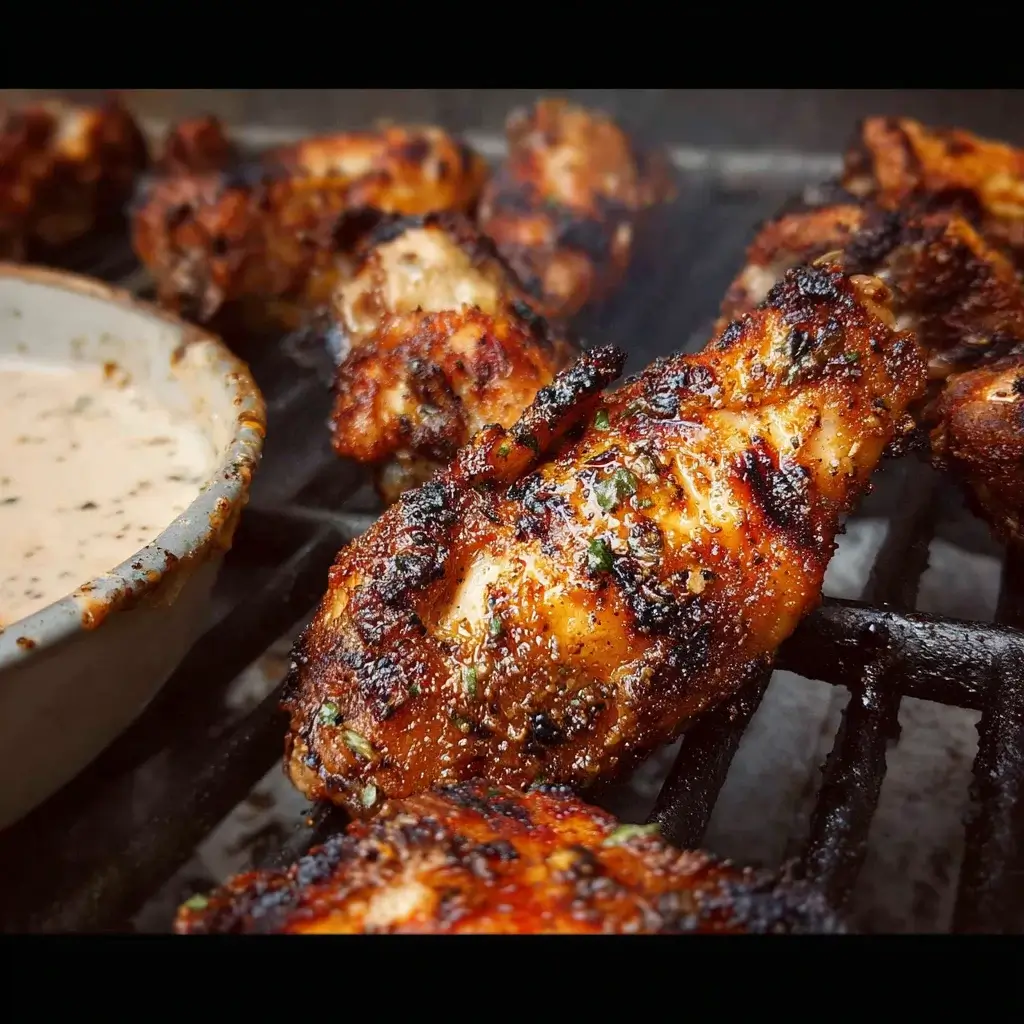

There’s something truly primal and satisfying about the sizzle and aroma of chicken wings cooking over an open flame. In our family, that sound is the official starting pistol for summer, the mandatory soundtrack for any major sporting event, and the ultimate comfort food. It’s a signal that we’re about to gather, share, and get our hands a little messy in the best way possible. For years, my personal quest was to master the art of the grilled chicken wing, a pursuit filled with more than a few culinary tragedies. I can still vividly recall the smoky disappointment of presenting a platter of wings that looked the part—charred and glistening—only to have my guests bite into rubbery skin and undercooked meat. I remember the frustration of my carefully crafted sauces turning into a bitter, burnt-on crust under the grill’s unforgiving flame.
But with every failed batch, I learned something. Each rubbery wing taught me about rendering fat. Each burnt piece taught me about sugar and direct heat. I tinkered, I researched, and I relentlessly tweaked my method, treating each cookout like a delicious experiment. This recipe is the culmination of that journey. It’s the holy grail of grilled wings that emerged from the smoke and fire of my trials. It’s the recipe that made my kids declare our backyard the “best wing spot in town,” a title I wear with immense pride. It’s the dish our friends now expect, and frankly demand, at every single cookout. The magic isn’t in some exotic, impossible-to-find ingredient; it’s in the technique. It lies in a simple but profound understanding of how to treat the chicken skin to achieve that shatteringly crispy texture, and how to manage the heat of the grill to create a wing that is smoky, succulent, and cooked to perfection from tip to bone. This isn’t just a list of ingredients and instructions; it’s a foolproof roadmap to creating those joyful, delicious, finger-licking moments that make life a little more wonderful.
The Philosophy of the Perfect Grilled Wing
Before we dive into the recipe itself, it’s important to understand the core principles that separate a mediocre wing from a transcendent one. Achieving wing perfection is a balancing act, a delicious dance between three key elements: texture, flavor, and cooking method. To truly master the craft, we must become students of the wing itself.
The Anatomy of a Wing
A whole chicken wing is composed of three parts:
- The Drumette: This is the meatiest part, attached to the body of the chicken. It looks like a miniature chicken drumstick and is rich in dark meat. Its thicker size means it can take slightly longer to cook.
- The Flat (or Wingette): This is the middle section. It’s flatter, with two small bones running through it, and a higher ratio of skin to meat. Many wing connoisseurs argue this is the perfect part, as that extra skin gets incredibly crispy and holds sauce beautifully.
- The Tip (or Flapper): This is the pointed end of the wing. It contains very little meat and is mostly skin, bone, and cartilage. While some enjoy nibbling on the super-crispy tip, it’s prone to burning and is most often removed and saved for making chicken stock.
This recipe uses “party wings,” which are pre-separated drumettes and flats.
Crispiness vs. Juiciness: The Ultimate Goal
The paradox of the perfect wing is achieving a skin that is incredibly crisp and rendered, while the meat inside remains tender, moist, and juicy. These two goals can seem at odds. High, direct heat crisps skin quickly but can dry out the meat or leave it raw. Low, slow heat keeps meat juicy but often results in soft, rubbery skin. The secret, which this recipe masters, is to do both. We use a two-stage grilling process that first cooks the wing through gently, rendering the fat from the skin slowly, before finishing it with a quick, high-heat sear to achieve that final, glorious crunch.
The Science of the Perfect Crust
Two scientific principles are at play here: the Maillard reaction and caramelization. The Maillard reaction is a chemical reaction between amino acids and reducing sugars that gives browned food its distinctive flavor. It’s responsible for the savory, roasted notes we crave. Caramelization is simply the browning of sugar. Our dry rub, with its optional touch of brown sugar and the natural sugars in the onion and garlic powder, utilizes both processes under the heat of the grill to build a complex, deeply flavorful crust.
The Power of the Dry Rub
Many wing recipes focus solely on the sauce, treating the chicken itself as a mere vessel. This is a critical mistake. The foundation of a truly spectacular wing is a flavorful dry rub. A dry rub does more than just sit on the surface; it permeates the skin and the meat, creating a complex, savory crust that is delicious in its own right. This crust not only adds a dimension of flavor that a simple sauce can’t replicate, but it also helps to create a slightly gritty, toothsome texture that is the hallmark of a great wing. Even if you plan to toss your wings in sauce later, starting with a phenomenal dry rub provides a baseline of flavor that will elevate the final product from good to unforgettable.
Why the Grill Reigns Supreme
You can bake wings. You can air-fry wings. You can deep-fry wings. All of these methods can produce a tasty result. But only the grill can impart that irreplaceable, smoky flavor known as char. That subtle kiss of smoke and flame is what makes a grilled wing so special. It adds a rustic, elemental flavor that connects us to the very essence of cooking. This recipe is specifically designed to harness the power of the grill, using its unique heating properties to create a wing that is simultaneously smoky, savory, crispy, and juicy.
Ingredients: A Deeper Dive
Greatness lies in the details. Understanding the “why” behind each ingredient will not only help you execute this recipe perfectly but will also empower you to customize it and make it your own.
- For the Chicken Wings:
- 3 pounds of chicken wings: When shopping, look for packages labeled “party wings” or “wingettes and drumettes.” This means the wings have already been separated. If you can only find whole wings, you can easily separate them yourself (see instructions below). Look for wings that are plump and have an even, pale color. If possible, opt for “air-chilled” chicken. Air-chilled chicken is cooled with cold air instead of being submerged in chlorinated cold water, resulting in a skin that has less retained moisture—a huge advantage for achieving maximum crispiness.
- 2 tablespoons olive oil or vegetable oil: The oil serves two purposes. First, it acts as a binder, helping the salt, baking powder, and dry rub adhere to the skin. Second, it’s a conductor of heat, helping the skin to crisp up more evenly. A neutral oil with a relatively high smoke point, like vegetable, canola, or avocado oil, is a great choice.
- 1 tablespoon aluminum-free baking powder (NOT baking soda): This is the non-negotiable secret weapon for crispy skin. Baking powder is alkaline. When applied to chicken skin, it raises the pH level, which helps to break down the proteins more efficiently. This process leads to faster browning and a crisper texture. It’s crucial to use aluminum-free baking powder, as regular baking powder can sometimes impart a faint metallic taste. Do not confuse this with baking soda, which is much stronger and will give the wings an unpleasant chemical flavor.
- 2 teaspoons kosher salt: We use kosher salt for a reason. Its larger flakes are better at drawing moisture out of the skin than fine table salt. This process, known as a dry brine, is the first step in dehydrating the skin for a better crunch. It also seasons the meat more deeply.
- For the Ultimate Dry Rub:
- 2 teaspoons smoked paprika: This is the heart of the rub, providing a deep, smoky, and slightly sweet flavor that mimics the taste of slow-smoked barbecue. It also gives the wings a beautiful, rich reddish-brown color. For a different profile, try hot smoked paprika for more heat or sweet paprika for a milder flavor.
- 2 teaspoons garlic powder: Provides a savory, aromatic base. We use powder instead of fresh garlic because fresh minced garlic would burn and turn bitter over the high heat of the grill.
- 2 teaspoons onion powder: Complements the garlic powder with a sweeter, toasted onion flavor, adding another layer to the savory foundation.
- 1 teaspoon black pepper: For a touch of pungent warmth. Use freshly ground black pepper if possible; its flavor is far more potent and complex than pre-ground pepper.
- 1 teaspoon ground mustard: This adds a subtle, tangy sharpness that cuts through the richness of the chicken fat and balances the other flavors.
- 1/2 teaspoon cayenne pepper (optional): This is for heat. Feel free to adjust the amount to your personal preference. For a smokier heat, substitute with chipotle powder. For a fruitier, milder heat, try ancho chili powder.
- 1/2 teaspoon brown sugar (optional): A small amount of sugar doesn’t make the wings taste sweet; it helps to balance the savory and spicy notes. More importantly, the sugar will aid in caramelization on the grill, contributing to a better crust and deeper color.
Instructions: The Step-by-Step Path to Perfection
Follow these instructions meticulously. Every step has a purpose, designed to build upon the last, culminating in the perfect grilled wing.
Phase 1: Preparation (The Foundation of Crisp)
- Separate the Wings (If Necessary): If you have whole wings, start by separating them. Place a wing on a cutting board. Feel for the joint between the drumette and the flat. Using a sharp chef’s knife, cut firmly through that joint. You should feel a pop as you cut through the cartilage. Do the same for the joint connecting the flat and the wingtip. The tips have very little meat; save them in a bag in the freezer to make a rich chicken stock later.
- The Drying Process: This is the most important step for crispy skin. Place the wing pieces on a baking sheet lined with paper towels. Use more paper towels to pat each wing thoroughly until the skin feels as dry as possible. Any surface moisture will create steam on the grill, which is the enemy of crispiness.
- The Crispy Skin Coating: Transfer the dry wings to a large bowl. Drizzle with the olive oil and toss until every piece has a light, even sheen. In a separate, small bowl, whisk together the baking powder and kosher salt. Sprinkle this mixture over the wings and toss with your hands or tongs until every single wing piece is evenly and thinly coated.
- The Crucial Chill: For truly spectacular, glass-like skin, arrange the coated wings in a single layer on a wire rack set inside a baking sheet. Do not let them touch. Place the baking sheet, uncovered, in the refrigerator for at least 1 hour, or ideally, up to overnight (8-24 hours). This resting period allows the salt and baking powder to work their magic, drawing out maximum moisture from the skin in a process called dry-brining. The circulating air of the fridge will further dehydrate the surface.
- Mix and Apply the Dry Rub: While the wings are chilling, combine all the dry rub ingredients in a small bowl and whisk until uniform. When you are ready to grill, remove the wings from the refrigerator. You’ll notice the skin looks tighter and drier. Sprinkle the dry rub mixture evenly over all the wings. Toss them thoroughly to ensure they are completely coated in the seasoning.
Phase 2: The Grill (Where the Magic Happens)
- Prepare Your Grill for Two-Zone Cooking: The key to perfectly cooked wings is creating two distinct heat zones on your grill: a hot side for direct heat and a cooler side for indirect heat.
- For a Gas Grill: Turn all burners to high and preheat the grill for 10-15 minutes with the lid closed until the internal temperature reaches about 400°F to 450°F. Once hot, turn off the burners on one side of the grill completely. This is now your indirect heat zone. The side with the burners still on is your direct heat zone.
- For a Charcoal Grill: Use a chimney starter for the cleanest flavor. Fill it with charcoal briquettes or lump charcoal and light it. Once the coals are hot and covered in a light grey ash (about 15-20 minutes), carefully dump them all onto one side of the grill’s charcoal grate. This creates a hot direct heat zone over the coals and a cooler indirect heat zone on the empty side. Pro-Tip: Add a chunk of smoking wood, like apple or hickory, on top of the hot coals for an extra layer of smoky flavor.
- Final Prep: Regardless of your grill type, use a grill brush to scrape the cooking grates clean. Then, dip a wadded-up paper towel in a high-heat oil (like vegetable oil), hold it with long tongs, and rub it over the grates to create a non-stick surface.
- Grill the Wings (The Two-Stage Process):
- Stage 1: Indirect Heat (The Render): Place the seasoned wings on the cooler, indirect heat side of the grill. Arrange them in a single layer, not crowded. Cover the grill and let them cook for 15 to 20 minutes. This initial phase gently cooks the wings through and, most importantly, allows the fat in the skin to render slowly. This melting fat is what will eventually “fry” the skin, making it crispy.
- Stage 2: The Flip and Finish: After 15-20 minutes, open the grill and use tongs to flip each wing. Cover the grill again and continue to cook on the indirect side for another 10-15 minutes. At this point, the wings should be opaque and starting to brown. The total time on indirect heat will be about 25-35 minutes. Use an instant-read thermometer to check for doneness. While chicken is safe to eat at 165°F, wings are actually more tender and delicious when cooked to a higher internal temperature of 175°F to 185°F. This extra heat helps to break down the collagen and connective tissue, making the meat fall-off-the-bone tender.
- Stage 3: Direct Heat (The Crisp): Once the wings are cooked through, it’s time for the final, glorious step. Move the wings from the indirect side directly over the hot coals or lit burners. This is where the magic happens. Grill them for just 2-3 minutes per side, flipping frequently. Stay right by the grill during this phase, as the rendered fat can cause flare-ups. You’re looking for lightly charred spots and unbelievably crispy skin.
- Rest and Serve: Remove the wings from the grill and place them on a clean platter. Let them rest for 5-10 minutes. This vital step allows the juices to redistribute throughout the meat, ensuring a more succulent and flavorful bite. Serve them immediately as is, or toss them in your favorite sauce while they are still hot.
Mastering the Sauce: Four Essential Options
While these wings are phenomenal with just the dry rub, sometimes you crave a classic saucy wing. The key is to toss the wings in the sauce after they come off the grill.
- Classic Buffalo Sauce: In a small saucepan, melt 1/2 cup of unsalted butter. Remove from heat and whisk in 2/3 cup of Frank’s RedHot Original, 1 tablespoon of white vinegar, 1/4 teaspoon of Worcestershire sauce, and 1/4 teaspoon of garlic powder. Toss the hot wings in the sauce until coated.
- Smoky Honey BBQ Sauce: In a bowl, mix 1 cup of your favorite BBQ sauce, 2 tablespoons of honey, 1 tablespoon of apple cider vinegar, and 1 teaspoon of chipotle powder. It’s a perfect blend of sweet, smoky, and tangy.
- Spicy Garlic Parmesan: In a bowl large enough to hold the wings, melt 1/2 cup of salted butter. Stir in 4-5 cloves of finely minced fresh garlic, 3/4 cup of freshly grated Parmesan cheese, 1 teaspoon of red pepper flakes, and 2 tablespoons of chopped fresh parsley. Add the hot wings and toss to coat.
- Sweet & Spicy Korean Gochujang Glaze: In a small saucepan, combine 3 tablespoons of gochujang (Korean chili paste), 3 tablespoons of honey, 2 tablespoons of soy sauce, 1 tablespoon of rice vinegar, and 1 teaspoon of sesame oil. Heat gently until bubbly and slightly thickened. Toss with the hot wings and sprinkle with sesame seeds.
Nutrition Facts
- Servings: This recipe makes approximately 4-6 servings.
- Calories per serving: A typical serving of 4-5 dry-rubbed wings will contain approximately 250-350 calories. This is an estimate, as wing size varies. The majority of these calories come from protein and fat. Adding sauces, particularly those with butter, sugar, or honey, will increase the calorie and carbohydrate count significantly.
Preparation Time
- Active Prep Time: 20 minutes.
- Inactive Chilling Time: 1 to 24 hours.
- Cook Time: 30-40 minutes.
- Total Time: Approximately 1 hour and 50 minutes (if chilling for 1 hour).
How to Serve: Creating the Ultimate Wing Experience
The beauty of chicken wings is their versatility. They can be an appetizer, a main course, or a party snack.
- The Classic Platter:
- Serve the wings piled high on a platter with dipping sauces on the side.
- Cooling Dips: Classic Ranch Dressing, Chunky Blue Cheese Dressing.
- Extra dipping sauces: BBQ sauce, hot sauce.
- The Full Spread (Main Course):
- Cooling Veggies: Crisp celery and carrot sticks are non-negotiable. They provide a cool, crunchy contrast to the rich, spicy wings.
- Tangy Salads: A sharp, vinegar-based coleslaw or a quick-pickled cucumber salad helps cut through the richness.
- Starchy Sides: Grilled corn on the cob, a creamy potato salad, or a basket of crispy French fries or onion rings.
- Drink Pairings:
- Beer: A crisp American lager or pilsner is a perfect palate cleanser. For spicier wings, a hop-forward IPA can stand up to the heat, while its bitterness cuts through the fat.
- Wine: Don’t be afraid to pair wine with wings! An off-dry Riesling or a sparkling Rosé can be a fantastic match, as their slight sweetness and acidity balance the fat and spice.
- Non-Alcoholic: A sharp, spicy ginger beer or a tangy lemonade provides a refreshing contrast.
Additional Tips for Wing Perfection
- Don’t Skip the Drying and Chilling: I cannot overstate this. Patting the wings dry and letting them air-chill in the refrigerator is the single most important technique for achieving truly crispy skin.
- Make Wings Ahead for a Party: You can partially cook the wings ahead of time. Follow the recipe through the indirect cooking phase. Let them cool, then store them in the refrigerator. When your guests arrive, simply fire up the grill to high and give them the final 5-6 minute crisping on the direct heat side.
- Manage Flare-Ups Safely: When you move the wings to the direct heat side, rendered fat will drip and cause flames. This is normal. Do not panic or spray water on it. Simply move the wings to a cooler part of the grill for a moment if the flames get too high.
- Don’t Overcrowd the Grill: Wings need space for hot air to circulate. If you pile them on top of each other, they will steam instead of crisp. Cook in batches if your grill is small.
- Invest in Two Key Tools: A high-quality instant-read digital thermometer to guarantee perfectly cooked chicken, and a good pair of long-handled tongs for safe and easy flipping.
FAQ: Your Grilled Wing Questions Answered
- Q1: What is the absolute best internal temperature for grilled chicken wings?
- A: While poultry is safe to eat at 165°F (74°C), wings are far better when cooked to an internal temperature between 175°F and 185°F. This higher temperature is crucial for breaking down the collagen and connective tissue, resulting in incredibly tender meat that easily pulls from the bone.
- Q2: I’m in a hurry. Do I really have to chill them for an hour?
- A: For the absolute crispiest skin, yes. The chilling and drying phase is what makes the skin shatteringly crisp. If you are in a major time crunch, you can skip it, but know that your wings will be less crispy. Pat them as dry as humanly possible with paper towels before applying the baking powder and rub.
- Q3: Can I use a wet brine instead of a dry brine?
- A: You can, but a wet brine introduces more moisture into the skin, which is counterproductive to our goal of ultimate crispiness. A dry brine (using the salt and baking powder) seasons the meat while simultaneously drawing moisture out of the skin, making it the superior method for this recipe.
- Q4: How do I get more smoke flavor on my gas grill?
- A: Use a smoker box. This is a small metal box you can fill with soaked wood chips and place directly over one of the lit burners. As the chips smolder, they will produce smoke that flavors your wings as they cook on the indirect side.
- Q5: Can I adapt this recipe for an oven or air fryer?
- A: Yes, you can achieve a similar crispy texture, though you will miss the signature smoky flavor. For an oven, follow all the prep steps and place the wings on a wire rack in a baking sheet. Bake at 425°F for 45-50 minutes, flipping halfway. For an air fryer, prep the wings the same way. Cook at 380°F for about 25 minutes, shaking the basket halfway through.
More Than a Recipe: A Tradition
This grilled chicken wing recipe has become more than just a set of instructions in our home; it’s a tradition. It’s the centerpiece of our summer celebrations and the comforting taste of a shared victory during football season. It represents the joy of creating something truly delicious with your own hands and sharing it with the people you love.
The secrets are now yours: the meticulous drying, the magic of baking powder, the patient two-zone grilling method. I encourage you to master the base recipe and then make it your own. Experiment with different spices in the rub. Create your own signature sauce. But most importantly, have fun with it. Fire up that grill, embrace the sizzle and the smoke, and get ready to create your own legendary wing night. You’re not just cooking chicken; you’re crafting memories.
Print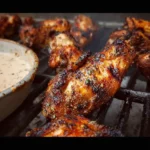
Grilled Chicken Wings recipe
Ingredients
-
For the Chicken Wings:
-
3 pounds of chicken wings: When shopping, look for packages labeled “party wings” or “wingettes and drumettes.” This means the wings have already been separated. If you can only find whole wings, you can easily separate them yourself (see instructions below). Look for wings that are plump and have an even, pale color. If possible, opt for “air-chilled” chicken. Air-chilled chicken is cooled with cold air instead of being submerged in chlorinated cold water, resulting in a skin that has less retained moisture—a huge advantage for achieving maximum crispiness.
-
2 tablespoons olive oil or vegetable oil: The oil serves two purposes. First, it acts as a binder, helping the salt, baking powder, and dry rub adhere to the skin. Second, it’s a conductor of heat, helping the skin to crisp up more evenly. A neutral oil with a relatively high smoke point, like vegetable, canola, or avocado oil, is a great choice.
-
1 tablespoon aluminum-free baking powder (NOT baking soda): This is the non-negotiable secret weapon for crispy skin. Baking powder is alkaline. When applied to chicken skin, it raises the pH level, which helps to break down the proteins more efficiently. This process leads to faster browning and a crisper texture. It’s crucial to use aluminum-free baking powder, as regular baking powder can sometimes impart a faint metallic taste. Do not confuse this with baking soda, which is much stronger and will give the wings an unpleasant chemical flavor.
-
2 teaspoons kosher salt: We use kosher salt for a reason. Its larger flakes are better at drawing moisture out of the skin than fine table salt. This process, known as a dry brine, is the first step in dehydrating the skin for a better crunch. It also seasons the meat more deeply.
-
-
For the Ultimate Dry Rub:
-
2 teaspoons smoked paprika: This is the heart of the rub, providing a deep, smoky, and slightly sweet flavor that mimics the taste of slow-smoked barbecue. It also gives the wings a beautiful, rich reddish-brown color. For a different profile, try hot smoked paprika for more heat or sweet paprika for a milder flavor.
-
2 teaspoons garlic powder: Provides a savory, aromatic base. We use powder instead of fresh garlic because fresh minced garlic would burn and turn bitter over the high heat of the grill.
-
2 teaspoons onion powder: Complements the garlic powder with a sweeter, toasted onion flavor, adding another layer to the savory foundation.
-
1 teaspoon black pepper: For a touch of pungent warmth. Use freshly ground black pepper if possible; its flavor is far more potent and complex than pre-ground pepper.
-
1 teaspoon ground mustard: This adds a subtle, tangy sharpness that cuts through the richness of the chicken fat and balances the other flavors.
-
1/2 teaspoon cayenne pepper (optional): This is for heat. Feel free to adjust the amount to your personal preference. For a smokier heat, substitute with chipotle powder. For a fruitier, milder heat, try ancho chili powder.
-
1/2 teaspoon brown sugar (optional): A small amount of sugar doesn’t make the wings taste sweet; it helps to balance the savory and spicy notes. More importantly, the sugar will aid in caramelization on the grill, contributing to a better crust and deeper color.
-
Instructions
Phase 1: Preparation (The Foundation of Crisp)
-
Separate the Wings (If Necessary): If you have whole wings, start by separating them. Place a wing on a cutting board. Feel for the joint between the drumette and the flat. Using a sharp chef’s knife, cut firmly through that joint. You should feel a pop as you cut through the cartilage. Do the same for the joint connecting the flat and the wingtip. The tips have very little meat; save them in a bag in the freezer to make a rich chicken stock later.
-
The Drying Process: This is the most important step for crispy skin. Place the wing pieces on a baking sheet lined with paper towels. Use more paper towels to pat each wing thoroughly until the skin feels as dry as possible. Any surface moisture will create steam on the grill, which is the enemy of crispiness.
-
The Crispy Skin Coating: Transfer the dry wings to a large bowl. Drizzle with the olive oil and toss until every piece has a light, even sheen. In a separate, small bowl, whisk together the baking powder and kosher salt. Sprinkle this mixture over the wings and toss with your hands or tongs until every single wing piece is evenly and thinly coated.
-
The Crucial Chill: For truly spectacular, glass-like skin, arrange the coated wings in a single layer on a wire rack set inside a baking sheet. Do not let them touch. Place the baking sheet, uncovered, in the refrigerator for at least 1 hour, or ideally, up to overnight (8-24 hours). This resting period allows the salt and baking powder to work their magic, drawing out maximum moisture from the skin in a process called dry-brining. The circulating air of the fridge will further dehydrate the surface.
-
Mix and Apply the Dry Rub: While the wings are chilling, combine all the dry rub ingredients in a small bowl and whisk until uniform. When you are ready to grill, remove the wings from the refrigerator. You’ll notice the skin looks tighter and drier. Sprinkle the dry rub mixture evenly over all the wings. Toss them thoroughly to ensure they are completely coated in the seasoning.
Phase 2: The Grill (Where the Magic Happens)
-
Prepare Your Grill for Two-Zone Cooking: The key to perfectly cooked wings is creating two distinct heat zones on your grill: a hot side for direct heat and a cooler side for indirect heat.
-
For a Gas Grill: Turn all burners to high and preheat the grill for 10-15 minutes with the lid closed until the internal temperature reaches about 400°F to 450°F. Once hot, turn off the burners on one side of the grill completely. This is now your indirect heat zone. The side with the burners still on is your direct heat zone.
-
For a Charcoal Grill: Use a chimney starter for the cleanest flavor. Fill it with charcoal briquettes or lump charcoal and light it. Once the coals are hot and covered in a light grey ash (about 15-20 minutes), carefully dump them all onto one side of the grill’s charcoal grate. This creates a hot direct heat zone over the coals and a cooler indirect heat zone on the empty side. Pro-Tip: Add a chunk of smoking wood, like apple or hickory, on top of the hot coals for an extra layer of smoky flavor.
-
Final Prep: Regardless of your grill type, use a grill brush to scrape the cooking grates clean. Then, dip a wadded-up paper towel in a high-heat oil (like vegetable oil), hold it with long tongs, and rub it over the grates to create a non-stick surface.
-
-
Grill the Wings (The Two-Stage Process):
-
Stage 1: Indirect Heat (The Render): Place the seasoned wings on the cooler, indirect heat side of the grill. Arrange them in a single layer, not crowded. Cover the grill and let them cook for 15 to 20 minutes. This initial phase gently cooks the wings through and, most importantly, allows the fat in the skin to render slowly. This melting fat is what will eventually “fry” the skin, making it crispy.
-
Stage 2: The Flip and Finish: After 15-20 minutes, open the grill and use tongs to flip each wing. Cover the grill again and continue to cook on the indirect side for another 10-15 minutes. At this point, the wings should be opaque and starting to brown. The total time on indirect heat will be about 25-35 minutes. Use an instant-read thermometer to check for doneness. While chicken is safe to eat at 165°F, wings are actually more tender and delicious when cooked to a higher internal temperature of 175°F to 185°F. This extra heat helps to break down the collagen and connective tissue, making the meat fall-off-the-bone tender.
-
Stage 3: Direct Heat (The Crisp): Once the wings are cooked through, it’s time for the final, glorious step. Move the wings from the indirect side directly over the hot coals or lit burners. This is where the magic happens. Grill them for just 2-3 minutes per side, flipping frequently. Stay right by the grill during this phase, as the rendered fat can cause flare-ups. You’re looking for lightly charred spots and unbelievably crispy skin.
-
-
Rest and Serve: Remove the wings from the grill and place them on a clean platter. Let them rest for 5-10 minutes. This vital step allows the juices to redistribute throughout the meat, ensuring a more succulent and flavorful bite. Serve them immediately as is, or toss them in your favorite sauce while they are still hot.
Nutrition
- Serving Size: one normal portion
- Calories: 250-350