
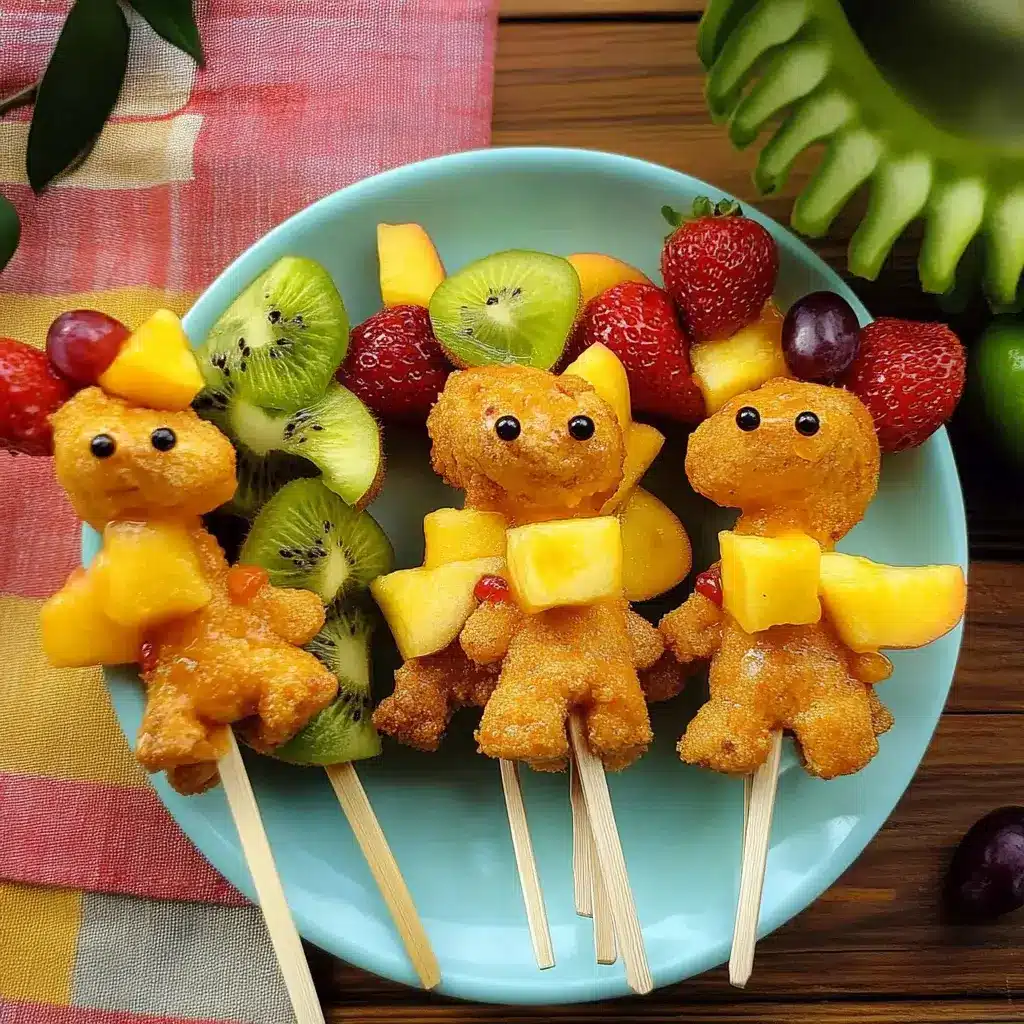

Okay, let me tell you, these Fruit-A-Saurus Skewers have become an absolute legend at our kids’ parties and even for fun weekend snacks! The first time I decided to make “dinosaur-themed” fruit skewers for my son’s birthday, I wasn’t sure if the effort would be truly appreciated beyond “yay, fruit!” But the moment those little paleontologists laid eyes on them – with vibrant fruits cut into fun, almost prehistoric shapes, threaded onto skewers like dinosaur spines or long necks – their eyes lit up! They weren’t just fruit skewers anymore; they were edible adventures. Even the pickiest eaters were suddenly eager to devour “Triceratops Berries” and “Stegosaurus Melon Slices.” It was a roaring success! They are so colorful, incredibly healthy, and the “Fruit-A-Saurus” name alone gets them excited. Plus, it’s a fantastic way to get the kids involved in the kitchen, choosing their favorite fruits and helping (safely) with assembly.
The Ultimate Fruit-A-Saurus Skewers: A Roaring Good Healthy Treat!
Get ready to transport your taste buds back to the Jurassic period with a snack that’s as fun to make as it is to eat: Fruit-A-Saurus Skewers! This delightful and healthy treat is perfect for dinosaur-themed birthday parties, a playful after-school snack, a vibrant addition to a lunchbox, or simply a creative way to encourage kids (and adults!) to enjoy a colorful array of fruits. Imagine juicy berries, sweet melon chunks, tangy kiwi, and more, all artfully arranged on skewers to resemble a friendly fruit dinosaur or simply a collection of “dino eggs” and “prehistoric plants.” This recipe is all about creativity, health, and a whole lot of fun, proving that nutritious food can indeed be exciting and incredibly appealing. They are naturally gluten-free, dairy-free, and vegan, making them an inclusive treat for almost everyone.
Ingredients: Your Prehistoric Fruit Palette
The beauty of Fruit-A-Saurus Skewers lies in their versatility. You can use almost any fruit that holds its shape well on a skewer. Aim for a variety of colors, textures, and flavors to make them extra appealing.
- Berries (Dino Eggs & Small Bites):
- Strawberries: 1 pint, hulled (can be left whole, halved, or sliced)
- Blueberries: 1 pint, washed
- Raspberries: 1 pint, washed
- Blackberries: 1 pint, washed
- Grapes: 1-2 cups, red or green, seedless (can be dinosaur “eyes” or “eggs”)
- Melons (Dino Body Parts & Scales):
- Watermelon: ½ small seedless watermelon, cubed, balled, or cut into fun shapes with cookie cutters (e.g., triangles for scales)
- Cantaloupe: 1 small, cubed, balled, or cut into fun shapes
- Honeydew Melon: 1 small, cubed, balled, or cut into fun shapes
- Tropical & Other Fruits (Dino Spikes, Necks & More):
- Kiwi: 3-4, peeled and sliced into thick rounds or cut into jagged “leaf” shapes
- Pineapple: 1 medium, cored and cubed or cut into triangles/spears for “spikes”
- Mango: 1-2 ripe but firm, peeled and cubed
- Oranges/Mandarins: 2-3, peeled and segmented
- Bananas: 2-3, sliced (best if added just before serving or treated with lemon juice to prevent browning)
- Special Equipment & Optional Additions:
- Skewers: Wooden or bamboo skewers (about 6-10 inches long). If using for very young children, consider blunt-ended skewers or alternatives.
- Small Cookie Cutters: Dinosaur shapes, stars, triangles, or circles can add extra flair.
- Lemon Juice: 1-2 tablespoons (optional, to prevent browning on fruits like apples or bananas if using).
- Optional Dip (The “Watering Hole”):
- Yogurt Dip: 1 cup plain or vanilla Greek yogurt mixed with a teaspoon of honey or maple syrup.
- Chocolate Dip: Melted dark or milk chocolate (for a more indulgent treat).
- Fruit Puree Dip: Blended strawberries or raspberries.
Instructions: Assembling Your Fruit-A-Saurus Herd
Creating these fruit skewers is a fun activity, especially with little helpers!
- Prepare Your “Paleontology Lab” (Workstation):
- Wash your hands thoroughly.
- Clean all fruits under cool running water. Pat them dry gently with paper towels.
- Set up a clean cutting board and have your skewers and any cookie cutters ready.
- Cut and Shape the Fruits:
- Berries: Hull strawberries if needed. Leave smaller berries like blueberries and raspberries whole. Grapes can be left whole or halved for smaller children (halve lengthwise to reduce choking risk).
- Melons: Cut melons in half, scoop out the seeds. Cut the flesh into 1-inch cubes, use a melon baller to create spheres (“dino eggs”), or slice thinly and use cookie cutters to create dinosaur shapes, triangles (for “Stegosaurus plates”), or other fun forms.
- Kiwi: Peel and slice into ½-inch thick rounds. You can also cut these rounds into halves or quarters, or use a small knife to create jagged “leaf” or “spike” shapes.
- Pineapple: Remove the core and tough outer skin. Cut into 1-inch chunks or long, triangular “spear” shapes for a dramatic effect.
- Mango: Peel and cut the flesh away from the pit. Dice into 1-inch cubes.
- Oranges/Mandarins: Peel and separate into segments.
- Bananas/Apples (if using): Slice just before assembling. If preparing slightly ahead, toss these fruits gently in a bowl with a tablespoon or two of lemon juice to prevent browning.
- Plan Your “Dinosaur” Designs (Optional but Fun!):
- Think about creating patterns. For example:
- Long-Neck Brontosaurus: A trail of green grapes for the neck, a chunk of melon for the body, more grapes for the tail.
- Stegosaurus Spine: Alternate melon cubes with triangular pineapple or kiwi “plates.”
- Rainbow-Saurus: Simply thread fruits in a rainbow color order (strawberry, orange segment, pineapple, kiwi, blueberry, grape).
- Dino Egg Nests: A cluster of melon balls and grapes at one end.
- Think about creating patterns. For example:
- Thread the Fruits onto Skewers:
- Safety First: If children are helping, supervise them closely, especially with pointed skewers. For younger children, an adult should do the skewering.
- Carefully thread the fruit pieces onto the skewers. Leave a little space at each end of the skewer for easier handling.
- Vary the colors, shapes, and textures on each skewer for maximum visual appeal.
- Don’t overcrowd the skewers, as this can make them harder to eat and can cause softer fruits to break.
- You can make all skewers identical or create a variety of different “Fruit-A-Saurus” species.
- Arrange and Serve:
- Once all skewers are assembled, arrange them attractively on a platter.
- If using a dip, place it in a small bowl in the center or alongside the platter.
- Serve immediately for the best freshness, or cover and refrigerate for up to a few hours.
Nutrition Facts (Approximate)
- Servings: This recipe can yield approximately 10-15 skewers, depending on the size of the skewers and how much fruit is used on each.
- Calories per Serving (1 skewer, approximate): 50-100 calories.
Disclaimer: Nutritional information is highly variable and depends heavily on the types and amounts of fruits used per skewer. The estimate above is a general guideline for a moderately loaded skewer with a mix of common fruits.
Preparation Time
The time commitment for these fun skewers is mostly in the fruit preparation.
- Prep Time (Washing & Cutting Fruit): 20-40 minutes (depending on the variety of fruits and whether you’re using cookie cutters)
- Assembly Time: 15-25 minutes
- Total Time: Approximately 35 minutes to 1 hour 5 minutes
How to Serve: Presenting Your Prehistoric Platter
Unleash your creativity when serving these Fruit-A-Saurus Skewers!
- Dinosaur Dig Site Platter:
- Arrange the skewers on a large platter.
- You can create a “landscape” using a bed of lettuce or kale as “prehistoric foliage.”
- Crushed graham crackers or brown sugar can be sprinkled around to simulate “sand” or “dirt” (use sparingly and be mindful of added sugar).
- Fossil Fruit Display:
- Use half of a large watermelon or cantaloupe (hollowed out slightly) as a base to stick the skewers into, creating a “fruit porcupine” or a “dinosaur emerging from an egg.”
- Individual “Dino Snacks”:
- Perfect for lunchboxes or individual party servings.
- Wrap the pointed end of the skewer with a small piece of decorative tape or foil if desired for easier handling.
- Themed Party Food:
- Label different skewers with fun dinosaur names: “Tricera-tops Berries,” “Stego-Melon Spikes,” “Ptero-Pineapple Wings.”
- Serve alongside other dinosaur-themed snacks like “Dino Eggs” (deviled eggs or grapes), “Prehistoric Punch,” or “Swamp Pudding” (chocolate or avocado pudding).
- Interactive Fruit Bar:
- Set out bowls of all the cut fruits and let older kids or adults assemble their own Fruit-A-Saurus Skewers. This is a great activity for a party.
- With a “Watering Hole” Dip:
- Vanilla Yogurt Dip: Mix Greek yogurt with a touch of vanilla extract and honey.
- Chocolate “Mud” Dip: Melted dark or milk chocolate.
- Strawberry “Lava” Dip: Blended fresh strawberries.
- Green “Swamp” Dip: Plain yogurt blended with a few spinach leaves and a touch of honey (surprisingly tasty and visually effective!).
Additional Tips for Roaring Success (5 Tips)
Make your Fruit-A-Saurus Skewers the talk of the Mesozoic Era with these tips:
- Choose Firm, Ripe Fruits: Select fruits that are ripe for sweetness but still firm enough to hold their shape when skewered and handled. Overly ripe or soft fruits (like very ripe peaches or plums) can fall apart easily.
- Prevent Browning Like a Pro: For fruits prone to browning like apples, pears, or bananas, toss them gently in a small amount of diluted lemon juice (1 part lemon juice to 2 parts water) or orange juice right after cutting. This will help keep them looking fresh and appetizing for longer.
- Kid-Friendly Involvement & Safety: This is a fantastic recipe for getting kids involved! Younger children can help wash berries, choose fruits, and suggest patterns. Older children can help cut softer fruits (with supervision and kid-safe knives) and thread the skewers. If using pointed wooden skewers with younger children, you can snip off the sharpest point after assembly or use lollipop sticks or coffee stirrers for a safer alternative for individual fruit pieces.
- Make-Ahead Strategy: You can wash and cut most firmer fruits (melons, pineapple, grapes) a few hours in advance and store them in separate airtight containers in the refrigerator. Berries are best washed just before use. Assemble the skewers as close to serving time as possible for optimal freshness, especially if using fruits like bananas. If assembled ahead, cover tightly with plastic wrap and refrigerate for no more than 2-3 hours.
- Presentation is Prehistoric-ally Important: Don’t underestimate the power of presentation! Using a variety of colors makes the skewers instantly more appealing. Arrange them creatively on the platter. Small dinosaur toys or figurines placed around the platter can enhance the theme. Even simply naming the skewers with dinosaur-related puns adds to the fun.
FAQ: Your Fruit-A-Saurus Skewer Questions Answered
Here are answers to some frequently asked questions about these fun fruit skewers:
- Q: What are the best fruits to use for Fruit-A-Saurus Skewers?
- A: The best fruits are those that are firm enough to stay on a skewer and offer a variety of colors and flavors. Great choices include strawberries, grapes, blueberries, melon (watermelon, cantaloupe, honeydew), pineapple, kiwi, and firm mangoes. Avoid overly soft or mushy fruits.
- Q: How can I make these skewers appealing to picky eaters?
- A: The fun “Fruit-A-Saurus” theme itself is a great start! Involve picky eaters in choosing the fruits they do like and letting them help assemble their own skewers (or a small “dino fruit salad” version). Using cookie cutters to make fun shapes can also make fruits more enticing. Offering a familiar and liked dip, like yogurt or a mild fruit puree, can also encourage them to try.
- Q: Can I make Fruit-A-Saurus Skewers the day before a party?
- A: While it’s best to assemble them on the day of the party for maximum freshness, you can do much of the prep work the day before. Wash and cut firmer fruits like melons and pineapple and store them in airtight containers in the fridge. Berries should ideally be washed and added closer to serving time. If you must assemble them fully the day before, cover them very well with plastic wrap and be mindful that some fruits might weep or soften slightly. Avoid adding bananas until just before serving.
- Q: What are some good dipping sauce ideas for these fruit skewers?
- A: Yogurt dips are a popular and healthy choice (plain, vanilla, or honey-sweetened Greek yogurt). For a sweeter treat, melted chocolate (dark, milk, or white) is always a hit. You can also make simple fruit purees (e.g., blended strawberries or raspberries) or even a light cream cheese dip sweetened with a little powdered sugar and vanilla.
- Q: Are there alternatives to skewers for very young children?
- A: Yes, safety is key for little ones. Instead of traditional pointed skewers, you can use blunt-ended lollipop sticks, coffee stirrers, or even fun-shaped food picks for larger fruit pieces. Alternatively, you can create a “Deconstructed Fruit-A-Saurus Salad” by arranging all the cut fruits in a fun way on a platter and letting kids pick their favorites, perhaps with small tongs or spoons. You could also thread just a few pieces onto very short, blunt craft sticks.
These Fruit-A-Saurus Skewers are more than just a snack; they’re an edible craft, a healthy indulgence, and a guaranteed way to bring smiles and a touch of prehistoric fun to any occasion. So, gather your fruits, sharpen your (metaphorical) claws, and get ready to create a delicious dino-mite treat!
Print
Fruit-A-Saurus Skewers recipe
Ingredients
-
- Berries (Dino Eggs & Small Bites):
-
- Strawberries: 1 pint, hulled (can be left whole, halved, or sliced)
-
- Blueberries: 1 pint, washed
-
- Raspberries: 1 pint, washed
-
- Blackberries: 1 pint, washed
-
- Grapes: 1-2 cups, red or green, seedless (can be dinosaur “eyes” or “eggs”)
-
- Berries (Dino Eggs & Small Bites):
-
- Melons (Dino Body Parts & Scales):
-
- Watermelon: ½ small seedless watermelon, cubed, balled, or cut into fun shapes with cookie cutters (e.g., triangles for scales)
-
- Cantaloupe: 1 small, cubed, balled, or cut into fun shapes
-
- Honeydew Melon: 1 small, cubed, balled, or cut into fun shapes
-
- Melons (Dino Body Parts & Scales):
-
- Tropical & Other Fruits (Dino Spikes, Necks & More):
-
- Kiwi: 3-4, peeled and sliced into thick rounds or cut into jagged “leaf” shapes
-
- Pineapple: 1 medium, cored and cubed or cut into triangles/spears for “spikes”
-
- Mango: 1-2 ripe but firm, peeled and cubed
-
- Oranges/Mandarins: 2-3, peeled and segmented
-
- Bananas: 2-3, sliced (best if added just before serving or treated with lemon juice to prevent browning)
-
- Tropical & Other Fruits (Dino Spikes, Necks & More):
-
- Special Equipment & Optional Additions:
-
- Skewers: Wooden or bamboo skewers (about 6-10 inches long). If using for very young children, consider blunt-ended skewers or alternatives.
-
- Small Cookie Cutters: Dinosaur shapes, stars, triangles, or circles can add extra flair.
-
- Lemon Juice: 1-2 tablespoons (optional, to prevent browning on fruits like apples or bananas if using).
-
- Optional Dip (The “Watering Hole”):
-
- Yogurt Dip: 1 cup plain or vanilla Greek yogurt mixed with a teaspoon of honey or maple syrup.
-
- Chocolate Dip: Melted dark or milk chocolate (for a more indulgent treat).
-
- Fruit Puree Dip: Blended strawberries or raspberries.
-
- Optional Dip (The “Watering Hole”):
-
- Special Equipment & Optional Additions:
Instructions
-
- Prepare Your “Paleontology Lab” (Workstation):
-
- Wash your hands thoroughly.
-
- Clean all fruits under cool running water. Pat them dry gently with paper towels.
-
- Set up a clean cutting board and have your skewers and any cookie cutters ready.
-
- Prepare Your “Paleontology Lab” (Workstation):
-
- Cut and Shape the Fruits:
-
- Berries: Hull strawberries if needed. Leave smaller berries like blueberries and raspberries whole. Grapes can be left whole or halved for smaller children (halve lengthwise to reduce choking risk).
-
- Melons: Cut melons in half, scoop out the seeds. Cut the flesh into 1-inch cubes, use a melon baller to create spheres (“dino eggs”), or slice thinly and use cookie cutters to create dinosaur shapes, triangles (for “Stegosaurus plates”), or other fun forms.
-
- Kiwi: Peel and slice into ½-inch thick rounds. You can also cut these rounds into halves or quarters, or use a small knife to create jagged “leaf” or “spike” shapes.
-
- Pineapple: Remove the core and tough outer skin. Cut into 1-inch chunks or long, triangular “spear” shapes for a dramatic effect.
-
- Mango: Peel and cut the flesh away from the pit. Dice into 1-inch cubes.
-
- Oranges/Mandarins: Peel and separate into segments.
-
- Bananas/Apples (if using): Slice just before assembling. If preparing slightly ahead, toss these fruits gently in a bowl with a tablespoon or two of lemon juice to prevent browning.
-
- Cut and Shape the Fruits:
-
- Plan Your “Dinosaur” Designs (Optional but Fun!):
-
- Think about creating patterns. For example:
-
- Long-Neck Brontosaurus: A trail of green grapes for the neck, a chunk of melon for the body, more grapes for the tail.
-
- Stegosaurus Spine: Alternate melon cubes with triangular pineapple or kiwi “plates.”
-
- Rainbow-Saurus: Simply thread fruits in a rainbow color order (strawberry, orange segment, pineapple, kiwi, blueberry, grape).
-
- Dino Egg Nests: A cluster of melon balls and grapes at one end.
-
- Think about creating patterns. For example:
-
- Plan Your “Dinosaur” Designs (Optional but Fun!):
-
- Thread the Fruits onto Skewers:
-
- Safety First: If children are helping, supervise them closely, especially with pointed skewers. For younger children, an adult should do the skewering.
-
- Carefully thread the fruit pieces onto the skewers. Leave a little space at each end of the skewer for easier handling.
-
- Vary the colors, shapes, and textures on each skewer for maximum visual appeal.
-
- Don’t overcrowd the skewers, as this can make them harder to eat and can cause softer fruits to break.
-
- You can make all skewers identical or create a variety of different “Fruit-A-Saurus” species.
-
- Thread the Fruits onto Skewers:
-
- Arrange and Serve:
-
- Once all skewers are assembled, arrange them attractively on a platter.
-
- If using a dip, place it in a small bowl in the center or alongside the platter.
-
- Serve immediately for the best freshness, or cover and refrigerate for up to a few hours.
-
- Arrange and Serve:
Nutrition
- Serving Size: one normal portion
- Calories: 50-100