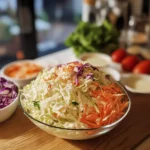
Ingredients
- Green Cabbage (1 medium head): Green cabbage is the foundation of classic coleslaw, providing that signature crisp texture and slightly peppery flavor. Choose a firm head of green cabbage that feels heavy for its size. You’ll need about 6-8 cups of shredded cabbage for this recipe.
- Carrots (2 medium): Carrots add sweetness, color, and a contrasting texture to the coleslaw. Medium-sized carrots are ideal. You’ll need about 1 cup of shredded carrots. Peel the carrots before shredding.
- Mayonnaise (½ cup to ¾ cup): Mayonnaise forms the creamy base of the coleslaw dressing. Full-fat mayonnaise is traditionally used for its rich flavor and texture, but you can use light mayonnaise to reduce calories if desired. The amount can be adjusted to your preference – use ½ cup for a slightly drier coleslaw and ¾ cup for a creamier, more heavily dressed version. Some prefer a specific brand like Duke’s or Hellmann’s, but use your favorite good quality mayonnaise.
- Apple Cider Vinegar (¼ cup): Apple cider vinegar provides the essential tanginess that balances the sweetness and richness of the mayonnaise. It also helps to slightly soften the cabbage and carrots, creating a more tender coleslaw. You can substitute with white vinegar, but apple cider vinegar offers a slightly milder and fruitier flavor that complements the other ingredients well.
- Granulated Sugar (2 tablespoons): Sugar adds a touch of sweetness to balance the vinegar and mayonnaise, creating a classic sweet-tangy coleslaw dressing. You can adjust the amount of sugar to your preference – reduce it for a less sweet coleslaw or increase it slightly if you prefer a sweeter taste. You can also substitute with other sweeteners like honey or maple syrup, but granulated sugar provides a clean, classic sweetness.
- Dijon Mustard (1 tablespoon): Dijon mustard adds a subtle savory depth and a touch of tanginess to the dressing, enhancing the overall flavor profile. Dijon mustard is preferred for its smooth texture and complex flavor, but you can substitute with yellow mustard in a pinch, though the flavor will be less nuanced.
- Celery Seed (½ teaspoon): Celery seed is a classic coleslaw ingredient, adding a distinctive aromatic and slightly bitter note that complements the other flavors beautifully. Don’t skip the celery seed – it really elevates the taste of the coleslaw.
- Salt (½ teaspoon, or to taste): Salt is essential for seasoning and enhancing all the flavors in the coleslaw. Use regular table salt or kosher salt. Start with ½ teaspoon and add more to taste as needed.
- Black Pepper (¼ teaspoon, freshly ground): Freshly ground black pepper adds a pungent and aromatic note that enhances all the other flavors and provides a subtle spicy counterpoint to the sweetness. Use freshly ground black pepper for the best flavor.
- Optional Add-ins (for variations): Consider these to customize your coleslaw:
- Red Cabbage (½ head, shredded): For added color and a slightly milder flavor than green cabbage.
- Red Onion (¼ cup, thinly sliced or minced): For a sharper onion flavor and a pop of color.
- Green Bell Pepper (½ cup, diced): For a crunchy texture and a slightly sweet and grassy flavor.
- Pineapple (½ cup, diced): For a tropical sweetness and juicy texture.
- Raisins or Dried Cranberries (¼ cup): For a chewy sweetness and textural contrast.
- Chopped Parsley or Dill (2 tablespoons): For fresh herbal notes and a pop of green.
- Buttermilk (2-3 tablespoons): For a thinner, tangier, and more Southern-style dressing.
- Hot Sauce (a few dashes): For a spicy kick.
Instructions
- Prepare the Cabbage: Remove the outer leaves of the green cabbage. Cut the cabbage head in half through the core. Cut each half again to create quarters. Remove the core from each quarter by cutting it out at an angle. Thinly slice each cabbage quarter using a sharp knife, mandoline, or food processor with a slicing attachment. You want thin, even shreds of cabbage. Place the shredded cabbage in a large bowl.
- Prepare the Carrots: Peel the carrots and shred them using a box grater or food processor with a grating attachment. Add the shredded carrots to the bowl with the cabbage.
- Make the Dressing: In a separate medium bowl, whisk together the mayonnaise, apple cider vinegar, sugar, Dijon mustard, celery seed, salt, and black pepper until smooth and well combined. Whisking ensures the sugar and salt dissolve completely and the dressing is emulsified.
- Combine Vegetables and Dressing: Pour the dressing over the shredded cabbage and carrots in the large bowl.
- Mix Well: Toss the cabbage and carrots with the dressing until everything is evenly coated. Use your hands or two large spoons to gently toss and combine. Ensure the dressing is distributed throughout the vegetables and there are no dry patches.
- Taste and Adjust Seasoning: Taste the coleslaw and adjust the seasoning to your preference. You may want to add more salt, pepper, sugar, or vinegar to achieve the perfect balance of flavors. Remember that the flavors will meld and develop as the coleslaw chills.
- Chill Before Serving (Recommended): For the best flavor and texture, cover the bowl and refrigerate the coleslaw for at least 30 minutes, or preferably 1-2 hours, before serving. Chilling allows the flavors to meld together and the cabbage to soften slightly while still retaining its crispness. Chilling also helps the dressing to thicken slightly.
- Stir Before Serving: Before serving, give the coleslaw a good stir to redistribute the dressing and ensure even coating.
- Serve and Enjoy: Your easy homemade coleslaw is ready to enjoy! Serve it as a side dish with your favorite BBQ, sandwiches, or grilled meats.
Nutrition
- Serving Size: one normal portion
- Calories: 80-100 kcal
- Sugar: 4-6 grams
- Sodium: 100-150 mg
- Fat: 6-8 grams
- Saturated Fat: 1-2 grams
- Carbohydrates: 6-8 grams
- Fiber: 1-2 grams
- Protein: <1 gram
- Cholesterol: 5-10 mg