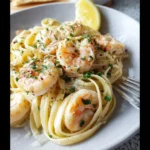
Ingredients
-
Linguine: 1 pound (or 450g) of good quality dried linguine.
-
Raw Prawns (Shrimp): 1 pound (or 450g), large or jumbo size, peeled and deveined.
-
Unsalted Butter: 4 tablespoons, divided.
-
Olive Oil: 2 tablespoons.
-
Garlic: 5-6 cloves, finely minced.
-
Shallot: 1 large, finely minced.
-
Dry White Wine: ½ cup, such as Pinot Grigio or Sauvignon Blanc.
-
Heavy Cream: 1 ½ cups.
-
Grated Parmesan Cheese: ½ cup, plus more for serving.
-
Red Pepper Flakes: ¼ to ½ teaspoon, depending on your spice preference.
-
Fresh Lemon: 1, for both juice and zest.
-
Fresh Parsley: ½ cup, finely chopped, plus more for garnish.
-
Salt and Freshly Ground Black Pepper: To taste.
Instructions
Step 1: Prepare the Prawns and Cook the Pasta
Bring a large pot of heavily salted water to a rolling boil. Add the linguine and cook according to package directions until al dente (typically 8-10 minutes). Just before draining, reserve about 1 ½ cups of the starchy pasta water. This “liquid gold” is essential for adjusting the consistency of your sauce later. While the pasta is cooking, pat your thawed prawns completely dry with paper towels and season them lightly with salt and pepper.
Step 2: Sear the Prawns
In a large skillet or Dutch oven, melt 2 tablespoons of butter with 2 tablespoons of olive oil over medium-high heat. Once the butter is foaming, add the prawns in a single layer, being careful not to crowd the pan (work in two batches if necessary). Cook for 1-2 minutes per side, just until they turn pink and opaque. They should be slightly undercooked in the very center. Immediately remove the prawns from the skillet and set them aside on a plate. This step is crucial to prevent them from overcooking.
Step 3: Build the Aromatic Base
Reduce the heat to medium. In the same skillet, add the remaining 2 tablespoons of butter. Once melted, add the finely minced shallot and cook, stirring frequently, for about 2-3 minutes until it has softened and become translucent. Add the minced garlic and red pepper flakes and cook for another minute until fragrant. Be very careful not to burn the garlic, as it will become bitter.
Step 4: Deglaze and Create the Sauce
Pour the ½ cup of dry white wine into the skillet. Increase the heat slightly and use a wooden spoon or spatula to scrape up all the browned bits from the bottom of the pan. Let the wine bubble and reduce by about half, which should take about 2-3 minutes. This cooks off the alcohol and concentrates the flavor.
Step 5: Make it Creamy
Reduce the heat to medium-low and pour in the 1 ½ cups of heavy cream. Bring the sauce to a gentle simmer (do not let it boil rapidly) and let it cook for 3-4 minutes, stirring occasionally, until it has thickened slightly and can coat the back of a spoon.
Step 6: Finish the Sauce
Stir in the ½ cup of grated Parmesan cheese until it has completely melted into the sauce. Turn off the heat. Add the juice of half a lemon and about a tablespoon of lemon zest. Stir in the ½ cup of chopped fresh parsley. Taste the sauce at this point and season generously with salt and freshly ground black pepper. Remember that the pasta and reserved water are salty, so be mindful of your initial seasoning.
Step 7: Combine Everything
Add the drained al dente linguine and the cooked prawns (along with any juices from the plate) directly into the skillet with the sauce. Use tongs to toss everything together gently but thoroughly, ensuring every strand of pasta is coated in the creamy sauce. If the sauce seems too thick, add a splash of the reserved pasta water, a little at a time, until it reaches your desired consistency. The starch in the water will help the sauce emulsify and cling perfectly to the pasta.
Step 8: Serve Immediately
Divide the Creamy Prawn Linguine among four warm bowls. Garnish with an extra sprinkle of fresh parsley, a bit more grated Parmesan cheese, and a final grating of lemon zest for a burst of freshness. Serve immediately for the best texture and temperature.
Nutrition
- Serving Size: one normal portion
- Calories: 850-950