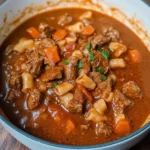
Ingredients
Scale
- 2 lbs Beef Chuck, cut into 1.5–2 inch cubes: Beef chuck is the quintessential cut for goulash. Its rich marbling and connective tissue break down beautifully during slow cooking, resulting in incredibly tender and flavorful meat. Why Chuck? Chuck is ideal for braising because it becomes meltingly tender as it cooks, releasing collagen that enriches the broth and adds a luxurious, mouth-watering texture. Avoid leaner cuts like sirloin or round, as they can become dry and tough in a long braise. Beef Prep Tips: Cut the beef into uniform cubes for even cooking. You can also trim excess fat, but leaving some fat on will contribute to flavor and moisture.
- 2 large Yellow Onions, roughly chopped: Onions are the aromatic foundation of goulash. Yellow onions are preferred for their balanced flavor, which becomes sweet and mellow as they caramelize during cooking. Roughly chopping them allows them to melt into the sauce, adding body and depth. Onion Power: Don’t skimp on the onions! They create a sweet and savory base for the goulash. Rough chopping is sufficient as they will soften and almost dissolve as they cook down.
- 3 tablespoons Sweet Hungarian Paprika: Paprika is the defining spice of Hungarian Goulash, lending its signature color, flavor, and aroma. Sweet Hungarian Paprika is essential for an authentic flavor profile – it provides a rich, fruity sweetness and vibrant red color. Paprika is King: Quality paprika is paramount. Opt for authentic Hungarian paprika, specifically sweet paprika (édesnemes). Avoid generic “paprika” as it can lack the depth and complexity of true Hungarian paprika. Paprika Bloom: “Blooming” the paprika in hot fat, as described in the instructions, is crucial to releasing its full flavor and preventing it from becoming bitter.
- 1 tablespoon Hot Hungarian Paprika (optional, for heat): If you prefer a spicier goulash, hot Hungarian paprika adds a fiery kick without sacrificing the authentic flavor. Use it in addition to, not instead of, the sweet paprika. Spice it Up: Hot paprika adds a pleasant warmth. Start with 1 tablespoon and adjust to your spice preference. You can also use a pinch of cayenne pepper as a substitute if hot Hungarian paprika is unavailable, but it will slightly alter the flavor profile.
- 2 tablespoons Caraway Seeds, lightly crushed: Caraway seeds are another essential Hungarian spice that adds a distinctive warm, anise-like flavor to goulash. Lightly crushing them releases their aroma and flavor. Caraway’s Charm: Caraway seeds provide a unique, slightly licorice-like flavor that is characteristic of authentic Hungarian goulash. Lightly crushing them in a mortar and pestle or with the flat side of a knife enhances their aroma.
- 2 tablespoons All-Purpose Flour: Flour acts as a thickening agent for the goulash, creating a rich and velvety sauce. It’s used sparingly to bind the flavors and create the desired stew-like consistency. Thickening Power: Flour helps to thicken the goulash sauce naturally as it cooks. Ensure the flour is cooked properly with the onions to avoid a raw flour taste.
- 4 cloves Garlic, minced: Garlic provides a pungent, aromatic layer of flavor that complements the beef, onions, and spices. Freshly minced garlic is always best for the most vibrant flavor. Garlic Aroma: Garlic adds a savory depth and aroma. Mince it finely so it distributes its flavor evenly throughout the goulash.
- 1 (14.5 oz) can Diced Tomatoes, undrained: Diced tomatoes add acidity, sweetness, and liquid to the goulash. Undrained tomatoes contribute extra liquid and tomato flavor to the broth. Tomato Tang: Tomatoes provide essential acidity and liquid. Undrained diced tomatoes are convenient and add both texture and liquid. You can also use fresh diced tomatoes in summer when they are in season, but canned tomatoes offer consistent flavor year-round.
- 6 cups Beef Broth: Beef broth forms the liquid base of the goulash, adding depth of beefy flavor. Use good quality beef broth or homemade broth if possible for the best results. Low-sodium broth allows you to control the salt level. Broth Base: Beef broth enhances the beefy flavor of the goulash. Using a high-quality broth or homemade broth will significantly improve the overall taste.
- 2 Bay Leaves: Bay leaves add a subtle, fragrant, and slightly peppery aroma to the goulash as it simmers. They infuse a depth of flavor that complements the other spices. Bay Leaf Infusion: Bay leaves contribute a subtle, aromatic complexity. Remember to remove them before serving.
- 1 teaspoon Dried Marjoram: Marjoram is a classic herb in Hungarian cuisine, adding a sweet, slightly floral, and subtly peppery flavor that complements the paprika and caraway seeds. Marjoram Magic: Marjoram enhances the overall herbal notes and adds a touch of sweetness. If fresh marjoram is available, use about 1 tablespoon of chopped fresh marjoram instead of dried.
- 1 lb Potatoes, peeled and cut into 1-inch cubes: Potatoes add heartiness and substance to the goulash, absorbing the flavorful broth and becoming tender and creamy. Yukon Gold or red potatoes are good choices as they hold their shape well during cooking. Potato Heartiness: Potatoes make the goulash a more substantial and filling meal. Cut them into uniform cubes so they cook evenly.
- 1 lb Carrots, peeled and sliced into ½-inch rounds: Carrots add sweetness, color, and nutritional value to the goulash. Sliced carrots cook down to tender and slightly sweet pieces that complement the savory flavors. Carrot Sweetness: Carrots add a touch of sweetness and vibrant color. Slice them into rounds or chunks.
- 2 tablespoons Vegetable Oil (or other cooking oil): Vegetable oil or another neutral cooking oil is used for browning the beef and sautéing the onions and garlic. Oil for Browning: Oil is essential for browning the beef and sautéing the aromatics, which are crucial steps for building flavor.
- Salt and freshly ground Black Pepper to taste: Salt and pepper are essential for seasoning and enhancing all the flavors in the goulash. Adjust the amounts to your preference throughout the cooking process. Seasoning is Key: Salt and pepper are crucial for bringing out the flavors of all the ingredients. Season in layers throughout the cooking process and taste and adjust at the end.
- Optional Garnishes: Fresh parsley or sour cream for serving. Finishing Touches: Fresh parsley adds a pop of color and freshness. Sour cream adds richness and a tangy counterpoint to the savory goulash.
Instructions
- Season and Brown the Beef: Pat the beef cubes dry with paper towels. Season generously with salt and freshly ground black pepper. Heat vegetable oil in a large, heavy-bottomed pot or Dutch oven over medium-high heat. Working in batches (don’t overcrowd the pot), sear the beef cubes on all sides until deeply browned. Remove the browned beef from the pot and set aside. Why Sear Beef? Searing the beef creates a rich, flavorful crust through the Maillard reaction, which significantly enhances the depth of flavor in the goulash. Browning in batches ensures proper searing and prevents steaming.
- Sauté Onions and Bloom Paprika: Reduce the heat to medium. Add the chopped onions to the pot and cook, stirring occasionally, until softened and lightly caramelized, about 8-10 minutes. Add the minced garlic and cook for another minute until fragrant. Stir in the sweet Hungarian paprika and hot paprika (if using) and cook for 1 minute more, stirring constantly, until fragrant and “bloomed.” Blooming Spices: Cooking the paprika in the hot fat releases its aromatic oils and prevents it from tasting bitter. This step is crucial for achieving the authentic paprika flavor in goulash.
- Add Flour and Cook: Sprinkle the flour over the onions and paprika mixture and cook, stirring constantly, for 1-2 minutes, until the flour is lightly toasted. This cooks out the raw flour taste and helps thicken the goulash. Cooking the Roux Base: Toasting the flour with the onions and paprika creates a light roux, which will thicken the goulash as it simmers.
- Deglaze and Add Liquids: Gradually pour in the beef broth, scraping up any browned bits from the bottom of the pot (this is called deglazing and adds flavor). Add the diced tomatoes (undrained), caraway seeds, bay leaves, and dried marjoram. Stir to combine all ingredients. Building the Broth: Deglazing the pot captures all the flavorful browned bits and incorporates them into the broth. The combination of beef broth and tomatoes creates the liquid base for the goulash.
- Return Beef and Simmer: Return the browned beef to the pot. Bring the mixture to a simmer, then reduce the heat to low, cover the pot, and simmer gently for 2-2.5 hours, or until the beef is fork-tender. Stir occasionally during simmering to prevent sticking and ensure even cooking. Slow and Low Simmer: Slow, gentle simmering is key to tenderizing the beef and allowing the flavors to meld and deepen. Patience is rewarded!
- Add Potatoes and Carrots: After 2-2.5 hours of simmering, add the cubed potatoes and sliced carrots to the pot. Stir to incorporate them into the goulash. Continue to simmer, covered, for another 30-40 minutes, or until the potatoes and carrots are tender. Adding Vegetables Later: Adding the potatoes and carrots later prevents them from becoming mushy during the long simmer. They will cook through and become tender in the final stage.
- Adjust Seasoning and Serve: Once the vegetables are tender and the beef is meltingly soft, remove the bay leaves from the goulash. Taste and adjust seasoning with salt and black pepper as needed. If the goulash is too thick, you can add a little more beef broth to reach your desired consistency. Serve hot, garnished with fresh parsley and a dollop of sour cream, if desired. Final Flavor Check: Taste and adjust seasoning at the very end. The long simmering process concentrates flavors, so a final seasoning adjustment is crucial.
Nutrition
- Serving Size: one normal portion
- Calories: 450-600 kcal
- Sugar: 8-12 grams
- Sodium: 800-1200 mg
- Fat: 20-30 grams
- Saturated Fat: 8-12 grams
- Unsaturated Fat: 10-18 grams
- Carbohydrates: 30-40 grams
- Fiber: 5-7 grams
- Protein: 35-45 grams
- Cholesterol: 120-150 mg