
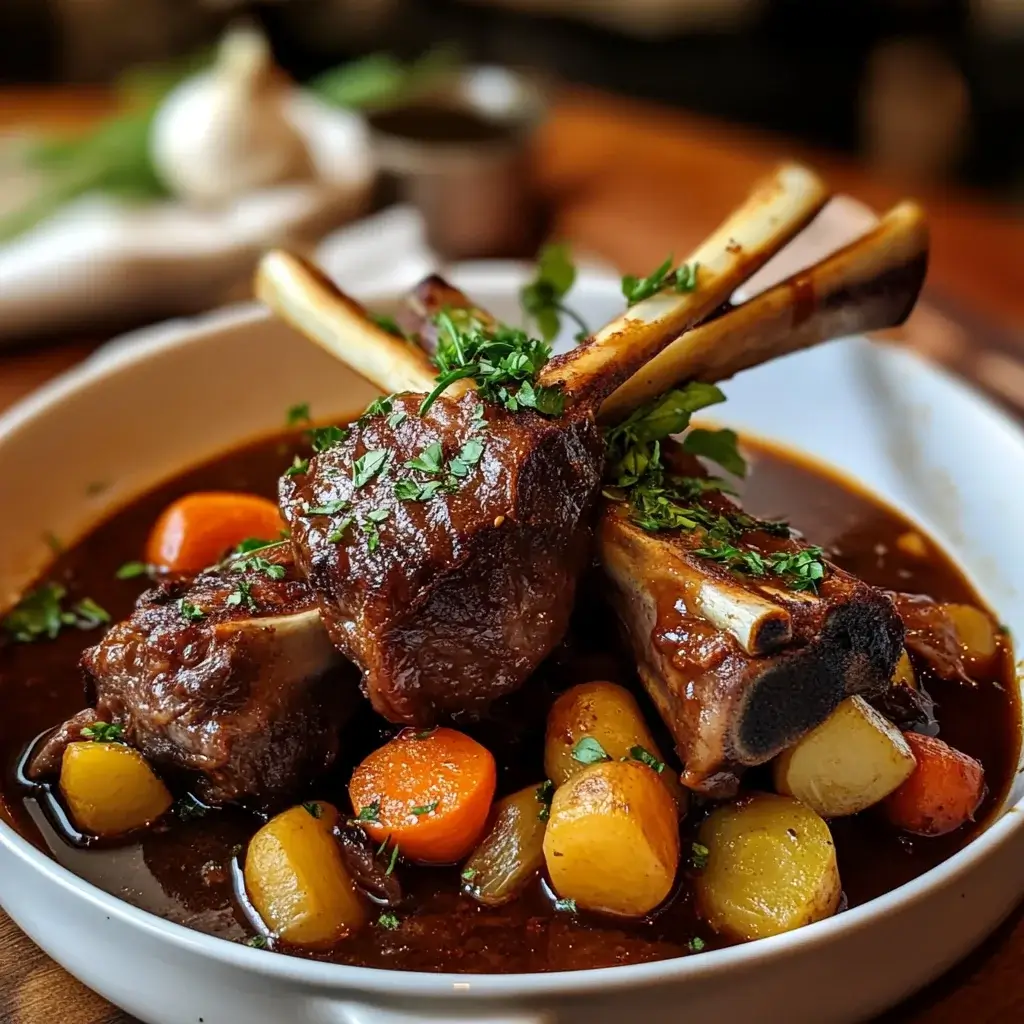
There are dishes that nourish the body, and then there are dishes that nourish the soul. For my family, Braised Lamb Shanks with Root Vegetables falls firmly into the latter category. It’s the kind of meal that fills the house with an intoxicating aroma for hours, drawing everyone to the kitchen with anticipation. I remember the first time I made this – a chilly autumn evening, leaves swirling outside, and the promise of something warm and comforting simmering on the stove. The lamb, falling-off-the-bone tender, infused with the sweetness of roasted root vegetables and the rich depth of braising liquid – it was pure culinary magic. My kids, usually picky eaters, devoured it, and my husband declared it “restaurant quality.” Since then, it’s become a cherished tradition, a go-to for special occasions and cozy weekend dinners. It’s more than just a meal; it’s an experience, a warm hug in a bowl. If you’re seeking a recipe that’s both impressive and deeply comforting, look no further. This Braised Lamb Shanks with Root Vegetables recipe is a guaranteed winner, and I’m thrilled to share my secrets for making it absolutely unforgettable.
Ingredients: The Earthy Ensemble
The beauty of Braised Lamb Shanks with Root Vegetables lies in the harmonious blend of hearty lamb and naturally sweet root vegetables, all simmered in a flavorful braising liquid. Each ingredient contributes to the depth and richness of this comforting dish. Here’s what you’ll need to create this culinary masterpiece:
- Lamb Shanks: 4 large (about 1 pound each). Lamb shanks are the star of the show, offering a rich, robust flavor and a wonderfully tender texture when braised. Look for meaty lamb shanks, preferably with the bone intact, as the bone marrow adds richness to the braising liquid. If possible, choose shanks that are relatively uniform in size for even cooking. Ask your butcher for “foreshanks” or “hindshanks”; both work well, though hindshanks tend to be meatier.
- Root Vegetables: A generous mix, about 3 pounds total. Root vegetables provide sweetness, earthy flavors, and textural contrast to the tender lamb. Feel free to mix and match your favorites, but here are some excellent choices:
- Carrots: 1 pound, peeled and cut into 2-inch chunks. Carrots add sweetness and vibrant color. Choose large carrots and cut them into substantial pieces to prevent them from becoming mushy during the long braising process.
- Potatoes: 1 pound, such as Yukon Gold or Russet, peeled and cut into 2-inch chunks. Potatoes add heartiness and absorb the flavorful braising liquid beautifully. Yukon Golds hold their shape well, while Russets become wonderfully fluffy.
- Turnips: ½ pound, peeled and cut into 1-inch chunks. Turnips offer a slightly peppery and earthy flavor that complements the lamb and other root vegetables. Smaller turnips are generally sweeter and more tender.
- Parsnips: ½ pound, peeled and cut into 2-inch chunks. Parsnips provide a sweet, slightly nutty flavor and a creamy texture when cooked. Their sweetness pairs especially well with lamb.
- Aromatics: These build the flavor base of the braise:
- Yellow Onion: 1 large, chopped. Onions form the aromatic foundation of the braise, adding sweetness and depth. Yellow onions are a good all-purpose choice.
- Garlic: 4 cloves, minced. Garlic adds pungent, savory notes that enhance the lamb and vegetables. Freshly minced garlic is essential for the best flavor.
- Celery: 2 stalks, chopped. Celery adds a subtle savory and slightly peppery flavor, contributing to the complexity of the braising liquid.
- Braising Liquid: The heart of the flavor:
- Dry Red Wine: 1 cup, such as Cabernet Sauvignon or Merlot. Red wine adds depth, richness, and acidity to the braising liquid. Choose a good quality dry red wine that you would enjoy drinking.
- Beef Broth (or Chicken Broth): 4 cups. Broth forms the main liquid component of the braise, adding savory depth. Beef broth is traditionally used with lamb, but chicken broth can be a lighter alternative. Low-sodium broth is recommended to control the salt level.
- Tomato Paste: 2 tablespoons. Tomato paste adds umami richness, depth of color, and a subtle tang to the braising liquid.
- Herbs & Spices: For aromatic complexity:
- Fresh Rosemary: 2 sprigs. Rosemary adds a piney, fragrant, and slightly resinous aroma that complements lamb beautifully. Fresh rosemary is preferred, but dried can be used in a smaller quantity (about 1 teaspoon).
- Fresh Thyme: 2 sprigs. Thyme adds a subtle earthy, lemony, and slightly minty flavor that enhances the overall aroma of the braise. Fresh thyme is recommended, but dried can be substituted (about 1 teaspoon).
- Bay Leaves: 2. Bay leaves add a subtle, tea-like aroma and a hint of bitterness that balances the richness of the lamb and vegetables.
- Salt and Freshly Ground Black Pepper: To taste. Seasoning is crucial. Use kosher salt and freshly ground black pepper for the best flavor.
- Olive Oil: 2 tablespoons. For searing the lamb shanks and sautéing the vegetables. Use good quality extra virgin olive oil.
- Optional Garnishes:
- Fresh Parsley (chopped): For a fresh, herbaceous garnish and a pop of green color.
- Gremolata: A vibrant Italian garnish made with parsley, lemon zest, and garlic, adds brightness and acidity.
- Crusty Bread: For serving alongside and soaking up the delicious braising liquid.
Ingredient Quality Matters:
Using high-quality ingredients will significantly impact the final taste of your Braised Lamb Shanks. Opt for good quality lamb shanks, fresh vegetables, and a flavorful red wine and broth. Fresh herbs are essential for the aromatic complexity of this dish.
Instructions: The Art of Slow Braising
Braising lamb shanks is a slow and gentle process that transforms tougher cuts of meat into incredibly tender and flavorful dishes. Here’s a step-by-step guide to mastering this technique and creating your Braised Lamb Shanks with Root Vegetables:
- Preheat Oven and Prepare Vegetables: Preheat your oven to 325°F (160°C). Prepare all your root vegetables by peeling and chopping them into the recommended sizes. Set aside. Chop the onion and celery, and mince the garlic.
- Season and Sear Lamb Shanks: Pat the lamb shanks dry with paper towels. Season them generously on all sides with salt and freshly ground black pepper. This step is crucial for developing a flavorful crust and enhancing the overall taste of the lamb.
- Sear Lamb Shanks: Heat olive oil in a large Dutch oven or heavy-bottomed pot over medium-high heat. Once the oil is hot and shimmering, add the lamb shanks, working in batches if necessary to avoid overcrowding the pot. Sear the lamb shanks on all sides until they are nicely browned, about 2-3 minutes per side. Searing creates a rich, flavorful crust and adds depth to the braising liquid. Remove the seared lamb shanks from the pot and set aside.
- Sauté Aromatics: Add the chopped onion and celery to the Dutch oven and sauté over medium heat until softened, about 5-7 minutes. Stir occasionally and scrape up any browned bits from the bottom of the pot – these flavorful bits (fond) will add depth to the braise. Add the minced garlic and cook for another minute until fragrant, being careful not to burn the garlic.
- Add Tomato Paste and Deglaze: Stir in the tomato paste and cook for 1-2 minutes, stirring constantly, until it darkens slightly. This step intensifies the tomato flavor. Pour in the red wine and bring to a simmer, scraping up any remaining browned bits from the bottom of the pot. Let the wine simmer for a few minutes, allowing the alcohol to evaporate and the flavors to concentrate. This process is called deglazing and is crucial for adding depth of flavor to the braising liquid.
- Add Broth, Herbs, and Lamb: Pour in the beef broth (or chicken broth). Add the rosemary sprigs, thyme sprigs, and bay leaves. Season lightly with salt and pepper, keeping in mind you’ve already seasoned the lamb. Return the seared lamb shanks to the Dutch oven, nestling them among the vegetables. The braising liquid should come about halfway up the shanks; add a little more broth if needed.
- Braise in the Oven: Bring the braising liquid to a gentle simmer on the stovetop, then cover the Dutch oven tightly with a lid. Transfer the Dutch oven to the preheated oven and braise for 3-3.5 hours, or until the lamb shanks are fork-tender and the meat is easily falling off the bone. Check the lamb shanks after 3 hours; they should be very tender. If not, continue braising for another 30 minutes. The long, slow braising process is what makes the lamb incredibly tender and flavorful.
- Add Root Vegetables: After 1.5 hours of braising, add the chopped root vegetables (carrots, potatoes, turnips, parsnips) to the Dutch oven, distributing them around the lamb shanks and in the braising liquid. Adding the root vegetables later prevents them from becoming mushy during the long braising process.
- Continue Braising with Vegetables: Return the Dutch oven to the oven, covered, and continue to braise for another 1.5-2 hours, or until the root vegetables are tender and cooked through and the lamb is falling off the bone.
- Check for Tenderness and Adjust Seasoning: After the total braising time, check the lamb shanks for tenderness. The meat should be easily pierced with a fork and practically falling off the bone. Check the root vegetables as well; they should be tender but not mushy. Taste the braising liquid and adjust seasoning with salt and pepper as needed.
- Rest and Serve: Carefully remove the Dutch oven from the oven. Let the Braised Lamb Shanks with Root Vegetables rest for about 10-15 minutes before serving. Resting allows the juices to redistribute throughout the lamb, making it even more tender and flavorful. Skim off any excess fat from the surface of the braising liquid before serving.
- Serve and Garnish: Serve the Braised Lamb Shanks and Root Vegetables hot, spooning generous amounts of the braising liquid and vegetables over each shank. Garnish with fresh parsley, gremolata, or other desired garnishes. Serve with crusty bread for soaking up the delicious sauce.
Tips for Easy Preparation:
- Prep Vegetables Ahead: You can peel and chop the root vegetables and aromatics a day ahead and store them in airtight containers in the refrigerator. This saves time on the day of cooking.
- Make it in Advance: Braised dishes are often even better the next day. You can braise the lamb shanks and root vegetables a day ahead, let them cool, and store them in the refrigerator. Reheat gently on the stovetop or in the oven before serving. The flavors will meld together even more overnight.
Nutrition Facts: A Hearty and Wholesome Meal (Per Serving)
Please note that these are approximate nutritional values and can vary depending on the specific brands and ingredients used, as well as the serving size. These values are estimated for one lamb shank with a generous portion of root vegetables and braising liquid, assuming the recipe yields 4 servings.
- Servings: This recipe yields approximately 4 servings.
- Calories per Serving: Approximately 600-800 calories.
Breakdown of Estimated Calories (per serving):
- Lamb Shank (1 shank, cooked): ~350-450 calories (depending on fat content)
- Root Vegetables (approx. ¾ cup mixed): ~150-200 calories
- Braising Liquid (approx. ½ cup): ~100-150 calories (depending on wine and broth)
Other Nutritional Considerations:
- Protein: Lamb is an excellent source of protein, essential for muscle building and satiety.
- Fat Content: Lamb shanks are a fattier cut of meat, contributing to the richness and flavor of the dish. However, braising helps to render some of the fat. You can skim off excess fat after braising.
- Carbohydrates: Root vegetables provide complex carbohydrates, fiber, and natural sweetness.
- Vitamins and Minerals: Root vegetables are rich in vitamins and minerals, including Vitamin A, Vitamin C, potassium, and fiber. Lamb provides iron, zinc, and B vitamins.
- Sodium: The sodium content will depend on the broth and seasoning used. Using low-sodium broth and controlling added salt is recommended.
Disclaimer: These nutritional facts are estimates only. For precise nutritional information, refer to the nutrition labels of the specific ingredients you use and consult with a nutritionist or dietitian if you have specific dietary concerns.
Preparation Time: Patience Rewarded
While the Braised Lamb Shanks with Root Vegetables require a longer cooking time, the active preparation time is relatively short, and the results are well worth the wait.
- Prep Time: 30-40 minutes (This includes chopping vegetables, searing lamb, and making the braising liquid).
- Cook Time: 3-3.5 hours (braising time).
- Rest Time: 10-15 minutes.
- Total Time: Approximately 4 hours to 4 hours 45 minutes.
The long braising time allows the flavors to develop deeply and the lamb to become incredibly tender. Most of the cook time is hands-off, allowing you to focus on other tasks while the dish simmers in the oven.
How to Serve: A Rustic and Elegant Presentation
Serving Braised Lamb Shanks with Root Vegetables is about showcasing the rustic charm and hearty nature of the dish. Here are some ideas to enhance the serving experience:
- Presentation:
- Large Serving Platter or Dutch Oven: For a rustic presentation, serve the lamb shanks and root vegetables directly from the Dutch oven or arrange them on a large, warmed serving platter.
- Individual Bowls: For a more elegant presentation, serve each lamb shank in a shallow bowl with a generous portion of root vegetables and braising liquid spooned over.
- Garnish Generously: Garnish with fresh parsley, gremolata, or other fresh herbs for a pop of color and freshness.
- Side Dishes – Complements and Contrasts:
- Creamy Polenta or Mashed Potatoes: To soak up the rich braising liquid.
- Green Salad with a Vinaigrette: To provide a light and refreshing contrast to the richness of the lamb.
- Sautéed Greens (Spinach, Kale, or Swiss Chard): For added vegetables and a touch of bitterness to balance the richness.
- Crusty Bread or Baguette: Essential for mopping up every last drop of the delicious braising sauce.
- Serving Occasions:
- Cozy Fall and Winter Dinners: Perfect for chilly evenings and weekend gatherings.
- Holiday Meals: A hearty and impressive dish for Thanksgiving, Christmas, or Easter.
- Special Occasions: Ideal for anniversaries, birthdays, or celebratory dinners.
- Sunday Suppers: A comforting and satisfying meal for a relaxed Sunday dinner with family and friends.
- Wine Pairings (for adult gatherings):
- Full-Bodied Red Wines: Cabernet Sauvignon, Merlot, Syrah/Shiraz. These wines have the structure and tannins to stand up to the richness of the lamb.
- Chianti Classico: An Italian red wine with earthy notes that complements braised dishes beautifully.
- ** Côtes du Rhône:** A French red blend with herbal and spicy notes that pairs well with lamb and root vegetables.
Additional Tips for Braised Lamb Shank Perfection
Here are five extra tips to ensure your Braised Lamb Shanks with Root Vegetables are absolutely perfect:
- Don’t Skip the Searing: Searing the lamb shanks is a crucial step that adds depth of flavor and richness to the dish. Don’t be tempted to skip this step. Make sure to get a good sear on all sides of the lamb.
- Use Bone-In Shanks: Bone-in lamb shanks are essential for the best flavor and texture. The bone marrow adds richness to the braising liquid, and the bone helps to keep the lamb moist during the long braising process.
- Braise Low and Slow: Braising is all about low and slow cooking. Maintain a low oven temperature and allow ample braising time for the lamb to become incredibly tender and the flavors to meld together beautifully.
- Skim Fat After Braising: After braising, skim off any excess fat from the surface of the braising liquid before serving. This will lighten the sauce and improve the overall texture.
- Adjust Vegetables to Your Liking: Feel free to customize the root vegetables to your preferences. You can add other root vegetables like celeriac, sweet potatoes, or beets. You can also adjust the quantities of each vegetable to suit your taste.
FAQ: Your Braised Lamb Shanks Questions Answered
Q1: Can I use a different cut of lamb for braising?
A: While lamb shanks are ideal for braising due to their bone-in richness and connective tissue that breaks down beautifully during long cooking, you could potentially use other bone-in lamb cuts like lamb shoulder chops or lamb neck. However, lamb shanks are the classic and most recommended choice for this recipe.
Q2: Can I make this recipe in a slow cooker?
A: Yes, you can adapt this recipe for a slow cooker. Sear the lamb shanks and sauté the aromatics as directed. Then, transfer everything to a slow cooker, add the braising liquid and herbs, and cook on low for 6-8 hours, or on high for 3-4 hours, until the lamb is fork-tender. Add the root vegetables in the last 2-3 hours of cooking on low, or 1-2 hours on high, to prevent them from becoming mushy.
Q3: Can I use different herbs?
A: Yes, you can experiment with different herbs to customize the flavor profile. Good alternatives or additions include oregano, marjoram, or bay leaves. You can also add a pinch of dried chili flakes for a touch of heat.
Q4: What if I don’t have red wine?
A: If you don’t have red wine, you can substitute with more beef broth or chicken broth. You can also add a tablespoon of balsamic vinegar or red wine vinegar to add a touch of acidity that red wine would provide. However, red wine adds significant depth of flavor, so it is recommended if possible.
Q5: Can I freeze leftover Braised Lamb Shanks?
A: Yes, you can freeze leftover Braised Lamb Shanks and Root Vegetables. Let the dish cool completely, then transfer it to freezer-safe containers. Freeze for up to 2-3 months. Thaw overnight in the refrigerator and reheat gently on the stovetop or in the oven until heated through. The texture of the vegetables may be slightly softer after freezing and thawing, but the flavor will still be delicious.
Braised Lamb Shanks with Root Vegetables is a dish that truly embodies comfort and flavor. It’s a celebration of simple, wholesome ingredients transformed through the magic of slow braising into a deeply satisfying and memorable meal. Gather your ingredients, embrace the process, and prepare to savor the rich rewards of this timeless classic!
Print
Braised Lamb Shanks with Root Vegetables recipe
Ingredients
-
- Lamb Shanks: 4 large (about 1 pound each). Lamb shanks are the star of the show, offering a rich, robust flavor and a wonderfully tender texture when braised. Look for meaty lamb shanks, preferably with the bone intact, as the bone marrow adds richness to the braising liquid. If possible, choose shanks that are relatively uniform in size for even cooking. Ask your butcher for “foreshanks” or “hindshanks”; both work well, though hindshanks tend to be meatier.
-
- Root Vegetables: A generous mix, about 3 pounds total. Root vegetables provide sweetness, earthy flavors, and textural contrast to the tender lamb. Feel free to mix and match your favorites, but here are some excellent choices:
-
- Carrots: 1 pound, peeled and cut into 2-inch chunks. Carrots add sweetness and vibrant color. Choose large carrots and cut them into substantial pieces to prevent them from becoming mushy during the long braising process.
-
- Potatoes: 1 pound, such as Yukon Gold or Russet, peeled and cut into 2-inch chunks. Potatoes add heartiness and absorb the flavorful braising liquid beautifully. Yukon Golds hold their shape well, while Russets become wonderfully fluffy.
-
- Turnips: ½ pound, peeled and cut into 1-inch chunks. Turnips offer a slightly peppery and earthy flavor that complements the lamb and other root vegetables. Smaller turnips are generally sweeter and more tender.
-
- Parsnips: ½ pound, peeled and cut into 2-inch chunks. Parsnips provide a sweet, slightly nutty flavor and a creamy texture when cooked. Their sweetness pairs especially well with lamb.
-
- Root Vegetables: A generous mix, about 3 pounds total. Root vegetables provide sweetness, earthy flavors, and textural contrast to the tender lamb. Feel free to mix and match your favorites, but here are some excellent choices:
-
- Aromatics: These build the flavor base of the braise:
-
- Yellow Onion: 1 large, chopped. Onions form the aromatic foundation of the braise, adding sweetness and depth. Yellow onions are a good all-purpose choice.
-
- Garlic: 4 cloves, minced. Garlic adds pungent, savory notes that enhance the lamb and vegetables. Freshly minced garlic is essential for the best flavor.
-
- Celery: 2 stalks, chopped. Celery adds a subtle savory and slightly peppery flavor, contributing to the complexity of the braising liquid.
-
- Aromatics: These build the flavor base of the braise:
-
- Braising Liquid: The heart of the flavor:
-
- Dry Red Wine: 1 cup, such as Cabernet Sauvignon or Merlot. Red wine adds depth, richness, and acidity to the braising liquid. Choose a good quality dry red wine that you would enjoy drinking.
-
- Beef Broth (or Chicken Broth): 4 cups. Broth forms the main liquid component of the braise, adding savory depth. Beef broth is traditionally used with lamb, but chicken broth can be a lighter alternative. Low-sodium broth is recommended to control the salt level.
-
- Tomato Paste: 2 tablespoons. Tomato paste adds umami richness, depth of color, and a subtle tang to the braising liquid.
-
- Braising Liquid: The heart of the flavor:
-
- Herbs & Spices: For aromatic complexity:
-
- Fresh Rosemary: 2 sprigs. Rosemary adds a piney, fragrant, and slightly resinous aroma that complements lamb beautifully. Fresh rosemary is preferred, but dried can be used in a smaller quantity (about 1 teaspoon).
-
- Fresh Thyme: 2 sprigs. Thyme adds a subtle earthy, lemony, and slightly minty flavor that enhances the overall aroma of the braise. Fresh thyme is recommended, but dried can be substituted (about 1 teaspoon).
-
- Bay Leaves: 2. Bay leaves add a subtle, tea-like aroma and a hint of bitterness that balances the richness of the lamb and vegetables.
-
- Salt and Freshly Ground Black Pepper: To taste. Seasoning is crucial. Use kosher salt and freshly ground black pepper for the best flavor.
-
- Herbs & Spices: For aromatic complexity:
-
- Olive Oil: 2 tablespoons. For searing the lamb shanks and sautéing the vegetables. Use good quality extra virgin olive oil.
-
- Optional Garnishes:
-
- Fresh Parsley (chopped): For a fresh, herbaceous garnish and a pop of green color.
-
- Gremolata: A vibrant Italian garnish made with parsley, lemon zest, and garlic, adds brightness and acidity.
-
- Crusty Bread: For serving alongside and soaking up the delicious braising liquid.
-
- Optional Garnishes:
Instructions
-
- Preheat Oven and Prepare Vegetables: Preheat your oven to 325°F (160°C). Prepare all your root vegetables by peeling and chopping them into the recommended sizes. Set aside. Chop the onion and celery, and mince the garlic.
-
- Season and Sear Lamb Shanks: Pat the lamb shanks dry with paper towels. Season them generously on all sides with salt and freshly ground black pepper. This step is crucial for developing a flavorful crust and enhancing the overall taste of the lamb.
-
- Sear Lamb Shanks: Heat olive oil in a large Dutch oven or heavy-bottomed pot over medium-high heat. Once the oil is hot and shimmering, add the lamb shanks, working in batches if necessary to avoid overcrowding the pot. Sear the lamb shanks on all sides until they are nicely browned, about 2-3 minutes per side. Searing creates a rich, flavorful crust and adds depth to the braising liquid. Remove the seared lamb shanks from the pot and set aside.
-
- Sauté Aromatics: Add the chopped onion and celery to the Dutch oven and sauté over medium heat until softened, about 5-7 minutes. Stir occasionally and scrape up any browned bits from the bottom of the pot – these flavorful bits (fond) will add depth to the braise. Add the minced garlic and cook for another minute until fragrant, being careful not to burn the garlic.
-
- Add Tomato Paste and Deglaze: Stir in the tomato paste and cook for 1-2 minutes, stirring constantly, until it darkens slightly. This step intensifies the tomato flavor. Pour in the red wine and bring to a simmer, scraping up any remaining browned bits from the bottom of the pot. Let the wine simmer for a few minutes, allowing the alcohol to evaporate and the flavors to concentrate. This process is called deglazing and is crucial for adding depth of flavor to the braising liquid.
-
- Add Broth, Herbs, and Lamb: Pour in the beef broth (or chicken broth). Add the rosemary sprigs, thyme sprigs, and bay leaves. Season lightly with salt and pepper, keeping in mind you’ve already seasoned the lamb. Return the seared lamb shanks to the Dutch oven, nestling them among the vegetables. The braising liquid should come about halfway up the shanks; add a little more broth if needed.
-
- Braise in the Oven: Bring the braising liquid to a gentle simmer on the stovetop, then cover the Dutch oven tightly with a lid. Transfer the Dutch oven to the preheated oven and braise for 3-3.5 hours, or until the lamb shanks are fork-tender and the meat is easily falling off the bone. Check the lamb shanks after 3 hours; they should be very tender. If not, continue braising for another 30 minutes. The long, slow braising process is what makes the lamb incredibly tender and flavorful.
-
- Add Root Vegetables: After 1.5 hours of braising, add the chopped root vegetables (carrots, potatoes, turnips, parsnips) to the Dutch oven, distributing them around the lamb shanks and in the braising liquid. Adding the root vegetables later prevents them from becoming mushy during the long braising process.
-
- Continue Braising with Vegetables: Return the Dutch oven to the oven, covered, and continue to braise for another 1.5-2 hours, or until the root vegetables are tender and cooked through and the lamb is falling off the bone.
-
- Check for Tenderness and Adjust Seasoning: After the total braising time, check the lamb shanks for tenderness. The meat should be easily pierced with a fork and practically falling off the bone. Check the root vegetables as well; they should be tender but not mushy. Taste the braising liquid and adjust seasoning with salt and pepper as needed.
-
- Rest and Serve: Carefully remove the Dutch oven from the oven. Let the Braised Lamb Shanks with Root Vegetables rest for about 10-15 minutes before serving. Resting allows the juices to redistribute throughout the lamb, making it even more tender and flavorful. Skim off any excess fat from the surface of the braising liquid before serving.
-
- Serve and Garnish: Serve the Braised Lamb Shanks and Root Vegetables hot, spooning generous amounts of the braising liquid and vegetables over each shank. Garnish with fresh parsley, gremolata, or other desired garnishes. Serve with crusty bread for soaking up the delicious sauce.
Nutrition
- Serving Size: one normal portion
- Calories: 600-800