Ingredients
Scale
For the Beef Shank:
- 2–3 Beef Shanks (about 2–3 pounds total), bone-in: Bone-in beef shanks are crucial for maximum flavor and collagen, which breaks down during slow cooking to create a rich, luscious sauce and incredibly tender meat. Look for shanks that are meaty and not just bone.
- 2 tablespoons Olive Oil: Used for searing the beef shanks and sautéing the vegetables. You can substitute with another neutral cooking oil like avocado oil or canola oil.
- 1 large Yellow Onion, chopped: Forms the aromatic base for the braise. Yellow onions are a good all-purpose choice, but white or sweet onions can also be used.
- 2 large Carrots, chopped: Adds sweetness and depth of flavor to the braise. Peeled carrots are recommended, but you can scrub and chop unpeeled carrots if preferred.
- 2 stalks Celery, chopped: Adds aromatic complexity and savory notes to the braise. Like carrots, celery contributes to the mirepoix, the flavor foundation of many braised dishes.
- 4 cloves Garlic, minced: Adds pungent flavor and aroma. Freshly minced garlic is essential for the best flavor.
- 2 tablespoons Tomato Paste: Adds depth of flavor, richness, and umami to the braising liquid. It also helps to thicken the sauce slightly.
- 4 cups Beef Broth: Forms the base of the braising liquid. Use low-sodium beef broth to control the salt level. You can also use homemade beef broth or stock for even richer flavor.
- 1 cup Dry Red Wine (optional, but highly recommended): Red wine adds depth, complexity, and acidity to the braising liquid. A dry red wine like Cabernet Sauvignon, Merlot, or Chianti works well. If omitting, substitute with additional beef broth.
- 1 tablespoon Dried Thyme: A classic herb that complements beef beautifully, adding earthy and slightly floral notes.
- 1 tablespoon Dried Rosemary: Another classic herb for beef, rosemary adds piney and aromatic notes.
- 2 Bay Leaves: Adds subtle, tea-like aroma and depth to the braising liquid. Remember to remove bay leaves before serving.
- 1 tablespoon Worcestershire Sauce (optional): Adds umami depth and a touch of tanginess to the braising liquid. Soy sauce or balsamic vinegar can be used as substitutes if needed.
- 1 teaspoon Salt: Enhances the flavors of all the ingredients. Adjust to taste, especially considering the saltiness of beef broth and Worcestershire sauce (if used).
- ½ teaspoon Black Pepper: Adds a touch of pungency. Freshly ground black pepper is always preferred.
Instructions
- Sear the Beef Shanks: Pat the beef shanks dry with paper towels. Season generously on all sides with salt and black pepper. Heat olive oil in a large skillet or Dutch oven over medium-high heat until shimmering. Sear the beef shanks in batches (do not overcrowd the pan), browning them on all sides, about 2-3 minutes per side. Searing develops a flavorful crust and adds depth to the braise. Remove the seared shanks from the skillet and set aside.
- Tip: Searing is a crucial step! Don’t skip it. Browning the beef creates Maillard reaction, which develops complex flavors that cannot be achieved simply by slow cooking. Searing in batches ensures proper browning without steaming the meat.
- Sauté the Vegetables: Add the chopped onion, carrots, and celery to the same skillet (no need to clean it, the browned bits add flavor). Sauté over medium heat until softened and lightly caramelized, about 8-10 minutes, stirring occasionally. Sautéing the vegetables softens them and releases their sweetness, creating a flavorful base for the braise.
- Add Garlic and Tomato Paste: Add the minced garlic and tomato paste to the skillet with the vegetables. Cook for 1-2 minutes, stirring constantly, until fragrant and the tomato paste slightly darkens. Cooking the garlic briefly removes its raw edge and blooming the tomato paste enhances its flavor and richness.
- Deglaze with Red Wine (Optional but Recommended): If using red wine, pour it into the skillet, scraping up any browned bits from the bottom of the pan (this is called deglazing and adds even more flavor). Let the wine simmer for 2-3 minutes, allowing it to reduce slightly and intensify in flavor. Deglazing with red wine adds a layer of complexity and depth to the braising liquid. If omitting red wine, skip this step and proceed to the next.
- Transfer to Slow Cooker: Transfer the sautéed vegetables and any liquid from the skillet to the slow cooker. Place the seared beef shanks on top of the vegetables in the slow cooker.
- Add Broth, Herbs, and Worcestershire Sauce: Pour beef broth over the beef shanks and vegetables, ensuring the shanks are mostly submerged (you may not need all 4 cups, depending on the size of your slow cooker and shanks). Add dried thyme, dried rosemary, bay leaves, and Worcestershire sauce (if using).
- Slow Cook: Cover the slow cooker and cook on LOW for 8-10 hours, or on HIGH for 4-5 hours, or until the beef shanks are fork-tender and easily shreddable. Slow cooking on low for a longer period generally yields the most tender results, but high setting can be used if you are short on time.
- Tip: Cooking times can vary slightly depending on your slow cooker and the size of the beef shanks. Check for tenderness after 8 hours on low or 4 hours on high. The beef should be easily pulled apart with a fork.
- Shred Beef and Thicken Sauce (Optional): Once the beef is cooked, remove the shanks from the slow cooker and set aside to cool slightly. Remove and discard bay leaves. If you prefer a thicker sauce, you can thicken the braising liquid. To do this, you can either:
- Slurry Method: In a small bowl, whisk together 2 tablespoons of cornstarch or all-purpose flour with ¼ cup of cold water until smooth. Stir the slurry into the braising liquid in the slow cooker. Cook on HIGH for 15-20 minutes, or until the sauce has thickened, stirring occasionally.
- Reduce Sauce: Alternatively, you can remove about 1-2 cups of the braising liquid from the slow cooker and transfer it to a saucepan. Bring to a simmer over medium heat and reduce until thickened to your desired consistency. Return the reduced sauce to the slow cooker.
- Shred Beef and Return to Sauce: Shred the beef from the bones using two forks, discarding bones and any large pieces of fat or connective tissue. Return the shredded beef to the slow cooker with the sauce. Stir to combine.
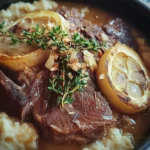
- Season to Taste and Serve: Taste the slow cooker beef shank and adjust seasoning with salt and black pepper as needed. Serve hot, garnished with fresh parsley and gremolata (if desired), over mashed potatoes, polenta, or crusty bread.
Nutrition
- Serving Size: one normal portion
- Calories: 400-600