Ingredients
Scale
-
- 2 ½ cups All-Purpose Flour: All-purpose flour forms the structural foundation of our cupcakes. It provides the gluten necessary for a tender yet sturdy crumb. When measuring your flour, be sure to use the “spoon and level” method to avoid packing it too tightly into the measuring cup, which can lead to dry cupcakes. If you prefer a slightly softer crumb, you can substitute a tablespoon or two of all-purpose flour with cake flour, but all-purpose flour works wonderfully for this recipe.
-
- 1 ½ cups Granulated Sugar: Sugar not only sweetens the cupcakes but also contributes to their moistness and tender texture. Granulated sugar is ideal for cupcakes as it dissolves smoothly into the batter and provides a clean, sweet flavor that complements the rosé.
-
- 3 ½ teaspoons Baking Powder: Baking powder is the leavening agent that makes our cupcakes light and fluffy. It’s crucial to use fresh baking powder for the best rise. To test its freshness, you can put a teaspoon of baking powder in a little hot water – if it fizzes vigorously, it’s still active.
-
- ½ teaspoon Baking Soda: While baking powder provides the primary lift, a touch of baking soda reacts with the acidity in the batter (from the rosé and potentially buttermilk if you choose to add a touch for extra tang) to further enhance the rise and create a delicate crumb.
-
- 1 teaspoon Salt: Salt is a flavor enhancer and is essential in baking to balance the sweetness and bring out the other flavors in the recipe. It also helps to control the yeast activity and gluten development. Use fine sea salt or table salt for even distribution throughout the batter.
-
- 1 cup (2 sticks) Unsalted Butter, softened: Butter is key for richness, flavor, and moistness in cupcakes. Unsalted butter allows you to control the total amount of salt in the recipe. Ensure your butter is properly softened to room temperature – it should be pliable but not melted. Softened butter creams beautifully with sugar, creating air pockets that contribute to a light and airy cupcake.
-
- 4 Large Eggs: Eggs provide structure, richness, and moisture to the cupcakes. They also contribute to the beautiful golden color and help emulsify the batter for a smooth consistency. Use large eggs at room temperature for best results. Room temperature eggs emulsify more easily and incorporate better into the batter.
-
- 1 cup Rosé Wine (Dry or Semi-Dry): This is the star ingredient that infuses our cupcakes with that signature rosé flavor and beautiful pink hue. Choose a dry or semi-dry rosé for the best flavor balance – a very sweet rosé might make the cupcakes overly sweet. The quality of the rosé will impact the flavor, so use a rosé you enjoy drinking.
-
- 1 teaspoon Vanilla Extract: Vanilla extract enhances the overall flavor profile of the cupcakes, adding a warm and comforting note that complements the rosé. Use pure vanilla extract for the best flavor; avoid imitation vanilla, which can taste artificial.
-
- Optional: Pink Food Coloring (Gel Food Coloring Recommended): While the rosé wine will impart a lovely subtle pink hue, if you desire a more vibrant pink color, a few drops of gel food coloring will do the trick. Gel food coloring is preferred over liquid food coloring as it is more concentrated and won’t thin out the batter. Start with a small amount and add more gradually until you reach your desired shade of pink.
-
-
- 1 cup (2 sticks) Unsalted Butter, softened: Just like in the cupcakes, butter is the foundation of our buttercream, providing richness, flavor, and structure. Again, ensure your butter is properly softened to room temperature – it should be pliable but not melted. Softened butter whips up beautifully into a light and airy frosting.
-
- 3–4 cups Powdered Sugar (Confectioners’ Sugar): Powdered sugar provides sweetness and structure to the buttercream. Start with 3 cups and add more gradually as needed to reach your desired consistency and sweetness. Sifting the powdered sugar before adding it to the butter is recommended to remove any lumps and ensure a smooth frosting.
-
- ¼ cup Rosé Wine (Dry or Semi-Dry): Similar to the cupcakes, rosé wine infuses the buttercream with its signature flavor. Use the same rosé you used for the cupcakes for a cohesive flavor profile. Add the rosé gradually, as too much liquid can make the buttercream too thin.
-
- 1 teaspoon Vanilla Extract: Vanilla extract enhances the flavor of the buttercream, adding a warm and comforting note that complements the rosé and butter. Use pure vanilla extract for the best flavor.
-
- Pinch of Salt: A pinch of salt balances the sweetness of the buttercream and enhances the other flavors. It also helps to prevent the buttercream from tasting overly sweet.
-
Instructions
-
- Preheat Oven and Prepare Muffin Tin: Preheat your oven to 350°F (175°C). This temperature is ideal for baking cupcakes, ensuring they bake evenly and rise properly without browning too quickly. Line a 12-cup muffin tin with cupcake liners. Paper liners work perfectly, or you can use reusable silicone liners if preferred.
-
- Combine Dry Ingredients: In a large bowl, whisk together the all-purpose flour, granulated sugar, baking powder, baking soda, and salt. Whisking ensures that the dry ingredients are evenly distributed and that there are no clumps of baking powder or baking soda.
-
- Cream Butter and Sugar: In a separate large bowl (or the bowl of a stand mixer fitted with the paddle attachment), beat the softened unsalted butter until smooth and creamy. Add the granulated sugar and beat together on medium speed until light and fluffy, about 2-3 minutes. This creaming process incorporates air into the butter and sugar mixture, which is essential for light and airy cupcakes.
-
- Incorporate Eggs: Beat in the eggs one at a time, mixing well after each addition until fully incorporated. Make sure each egg is fully emulsified into the batter before adding the next. Scrape down the sides of the bowl as needed to ensure everything is evenly mixed.
-
- Combine Wet Ingredients: In a separate small bowl, whisk together the rosé wine and vanilla extract. If using pink food coloring, add a few drops to the wet ingredients and stir until you reach your desired shade of pink.
-
- Alternate Wet and Dry Ingredients: Gradually add the dry ingredients to the wet ingredients in three additions, alternating with the rosé wine mixture in two additions, beginning and ending with the dry ingredients. Start by adding about one-third of the dry ingredients to the butter mixture and mix on low speed until just combined. Then add half of the rosé wine mixture and mix until just combined. Repeat with another third of the dry ingredients, then the remaining rosé wine mixture, and finally the last third of the dry ingredients. Mix on low speed until just combined after each addition. Be careful not to overmix the batter – overmixing can develop the gluten in the flour, resulting in tough cupcakes. Mix only until the ingredients are just incorporated and no streaks of flour remain.
-
- Fill Cupcake Liners: Using an ice cream scoop or a spoon, fill each cupcake liner about two-thirds full with batter. Filling them to about two-thirds full allows them to rise properly without overflowing.
-
- Bake Cupcakes: Bake in the preheated oven for 18-22 minutes, or until a toothpick inserted into the center of a cupcake comes out clean. The baking time may vary slightly depending on your oven. Start checking for doneness around 18 minutes. The cupcakes should be lightly golden on top and spring back lightly when gently pressed.
-
- Cool Cupcakes Completely: Remove the muffin tin from the oven and let the cupcakes cool in the tin for a few minutes before transferring them to a wire rack to cool completely. It’s crucial to let the cupcakes cool completely before frosting them, as frosting warm cupcakes will cause the buttercream to melt and slide off.
-
- Beat Softened Butter: In a large bowl (or the bowl of a stand mixer fitted with the whisk attachment), beat the softened unsalted butter on medium-high speed until light and fluffy, about 3-4 minutes. Whipping the butter incorporates air and creates a light and airy base for the buttercream.
-
- Gradually Add Powdered Sugar: Gradually add the powdered sugar, one cup at a time, beating on low speed until incorporated after each addition. Once all the powdered sugar is added, increase the speed to medium and beat until light and fluffy, about 2-3 minutes. Start with 3 cups of powdered sugar and add more as needed to reach your desired consistency. If the buttercream is too soft, add a little more powdered sugar. If it’s too stiff, add a tiny bit more rosé wine or milk, a teaspoon at a time.
-
- Incorporate Rosé Wine and Vanilla: Gradually add the rosé wine, a tablespoon at a time, mixing on low speed until incorporated after each addition. Then, add the vanilla extract and salt and beat on medium speed until light and fluffy, about 1-2 minutes. Add the rosé wine slowly to prevent the buttercream from becoming too thin. Taste and adjust sweetness or rosé flavor as needed.
-
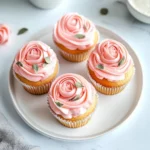
- Frost Cooled Cupcakes: Once the cupcakes are completely cooled, frost them with the rosé buttercream. You can use a knife or spatula for a simple swirl, or pipe the frosting using a piping bag and your favorite tip for a more decorative look.
-
- Cool Cupcakes Completely: Remove the muffin tin from the oven and let the cupcakes cool in the tin for a few minutes before transferring them to a wire rack to cool completely. It’s crucial to let the cupcakes cool completely before frosting them, as frosting warm cupcakes will cause the buttercream to melt and slide off.
Nutrition
- Serving Size: one normal portion
- Calories: 350-450
- Sugar: 30-40g
- Sodium: 150-200mg
- Fat: 15-20g
- Saturated Fat: 9-12g
- Carbohydrates: 45-55g
- Fiber: 1-2g
- Protein: 3-4g
- Cholesterol: 70-90mg