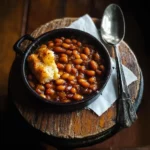
Ingredients
For the Beans – The Star of the Show:
- Dried Navy Beans or Small White Beans: 1 pound (about 2 cups). Navy beans are traditional and hold their shape well while becoming tender. Great Northern or cannellini beans can also be used, though cooking times might vary slightly.
- Water: For soaking and initial cooking (plenty needed).
- Baking Soda (Optional, for soaking): ½ teaspoon (helps soften beans, especially if you have hard water).
For the Flavor Base & Smoky Richness – The Soul of the Dish:
- Salt Beef or Thick-Cut Turkey Bacon: 6-8 ounces, rinsed if very salty, and diced into ½-inch pieces. Salt beef provides a classic, deeply savory flavor. Good quality, smoky turkey bacon is an excellent alternative. For a leaner option, consider smoked ham hock (though it won’t render as much fat).
- Yellow Onion: 1 large, finely chopped (about 1.5 cups). Yellow onions provide a sweet, foundational flavor.
- Garlic (Optional but Recommended): 2-3 cloves, minced. Adds a subtle aromatic depth.
For the Luscious Sauce – The Magic Elixir:
- Dark Molasses (Unsulphured): ½ cup (robust or blackstrap molasses for a very deep flavor, or use light molasses for a milder taste). This is key for the classic baked bean sweetness and color.
- Dark Brown Sugar (Packed): ¼ cup (can adjust to taste). Complements the molasses and adds another layer of sweetness.
- Ketchup: ½ cup. Adds tang, sweetness, and a tomatoey depth. Opt for a good quality ketchup.
- Apple Cider Vinegar: 2 tablespoons. Provides essential acidity to balance the sweetness and richness.
- Dry Mustard Powder (like Coleman’s): 1 tablespoon. Adds a characteristic tangy, slightly spicy kick.
- Worcestershire Sauce: 1 tablespoon. Boosts umami and adds complexity.
- Liquid Smoke (Optional, if not using very smoky pork): ½ – 1 teaspoon. Use sparingly to enhance smokiness if your pork isn’t providing enough.
- Kosher Salt: 1 teaspoon (adjust to taste, especially considering the saltiness of your pork).
- Freshly Ground Black Pepper: ½ teaspoon (or to taste).
- Hot Water or Reserved Bean Cooking Liquid: 1-2 cups, or as needed to keep beans moist during baking.
Instructions
Phase 1: Preparing the Beans (The Night Before & Morning Of)
- Sort and Rinse Beans: Spread the dried beans on a clean surface or baking sheet and pick out any small stones, debris, or discolored/broken beans. Rinse the beans thoroughly under cold running water in a colander.
- Soak the Beans (Crucial Step):
- Overnight Soak (Recommended): Place the rinsed beans in a large bowl or pot. Add enough cold water to cover the beans by at least 2-3 inches (they will expand significantly). If using, stir in ½ teaspoon of baking soda. Cover the bowl and let the beans soak at room temperature for at least 8 hours, or preferably overnight.
- Quick Soak (If short on time): Place rinsed beans in a large saucepan. Add water to cover by 2 inches. Bring to a rolling boil and cook for 2-3 minutes. Remove from heat, cover, and let stand for 1 hour.
- Drain and Rinse Soaked Beans: After soaking, drain the beans in a colander and rinse them thoroughly under cold running water. Discard the soaking water.
Phase 2: Initial Cooking of Beans (Parboiling)
- Cook the Beans: Place the drained and rinsed beans back into a large pot or Dutch oven. Add fresh cold water to cover the beans by about 2 inches.
- Simmer Gently: Bring the water to a boil over medium-high heat. Once boiling, reduce the heat to low, cover the pot partially (leaving a small gap for steam to escape), and simmer gently for 45-60 minutes, or until the beans are just tender but not mushy. The skins should still be intact, and they should still have a slight bite. They will finish cooking in the oven. Do not add salt at this stage, as it can toughen the beans.
- Reserve Cooking Liquid & Drain: Skim off any foam that rises to the surface during cooking. Once tender, carefully drain the beans, reserving at least 2 cups of the bean cooking liquid. This liquid is flavorful and starchy, perfect for the sauce.
Phase 3: Building the Flavor and Baking
- Preheat Oven: Preheat your oven to 300-325°F (150-160°C). A lower temperature and longer cooking time yield the best results.
- Render Pork & Sauté Aromatics: While the beans are parboiling or after they’re done:
- Place the diced salt pork or bacon in a large, oven-safe Dutch oven or a bean pot over medium heat.
- Cook slowly, stirring occasionally, for 8-12 minutes, or until the pork has rendered a good amount of its fat and is nicely browned and crispy.
- Using a slotted spoon, remove about half to two-thirds of the crispy pork bits and set them aside for garnish or to layer in the beans. Leave the remaining pork and the rendered fat (about 2-3 tablespoons; discard any excess if there’s too much) in the pot.
- Add the chopped onion to the pot with the remaining pork and rendered fat. Sauté over medium heat for 5-7 minutes, or until the onion is softened and translucent.
- If using, add the minced garlic and cook for another minute until fragrant, being careful not to burn it.
- Combine Sauce Ingredients: In a medium bowl, whisk together the molasses, brown sugar, ketchup, apple cider vinegar, dry mustard powder, Worcestershire sauce, optional liquid smoke, 1 teaspoon kosher salt, and ½ teaspoon black pepper.
- Assemble the Beans:
- Add the parboiled, drained beans to the Dutch oven with the sautéed onions and pork. Gently stir to combine.
- If you set aside some crispy pork, you can layer it with the beans.
- Pour the prepared sauce mixture evenly over the beans.
- Add about 1 cup of the reserved bean cooking liquid (or hot water if you didn’t reserve enough). The liquid should just barely cover the beans. If it seems too thick or not enough liquid, add a bit more. The beans will absorb liquid as they bake.
- If using a bay leaf, tuck it into the beans.
- Slow Bake to Perfection:
- Cover the Dutch oven or bean pot tightly with its lid (or with heavy-duty aluminum foil if your lid isn’t snug).
- Place in the preheated oven and bake for 3-4 hours.
- Check and Stir: After about 2 hours, carefully remove the pot from the oven, uncover, and gently stir the beans. Check the liquid level. If the beans seem dry, add another ½ to 1 cup of reserved bean cooking liquid or hot water. The sauce should be syrupy but not watery. Re-cover and return to the oven.
- Continue baking, checking every hour or so, until the beans are exceptionally tender and the sauce has thickened to a rich, glossy consistency. Total baking time can be anywhere from 3 to 6 hours, depending on your beans, oven, and desired tenderness.
- Final Touches (Optional):
- For a thicker sauce and slightly caramelized top, remove the lid during the last 30-45 minutes of baking. Keep a close eye to prevent them from drying out too much.
- If the sauce is too thin at the end, you can simmer the uncovered pot on the stovetop over low heat for 10-15 minutes, or in the oven uncovered, until it reaches your desired consistency.
- Rest Before Serving: Once the beans are perfectly tender and the sauce is glorious, remove the pot from the oven. Let the baked beans rest, covered, for at least 15-20 minutes before serving. This allows the flavors to meld further and the sauce to set slightly. Remove the bay leaf if used.
- Garnish and Serve: Garnish with the reserved crispy pork bits, if desired, and a sprinkle of fresh parsley for color.
Nutrition
- Serving Size: one normal portion
- Calories: 350-450
- Sugar: 20-30g
- Fat: 10-20g
- Carbohydrates: 50-65g
- Fiber: 10-15g
- Protein: 15-20g