Ingredients
Scale
- Noodles: The Foundation of Your Fast Feast
- 8 oz dried noodles (egg noodles, ramen noodles, spaghetti, linguine, or rice noodles). The beauty of this recipe lies in its versatility when it comes to noodles. You can use virtually any type of noodle you have on hand!
- Egg Noodles: These are a classic choice for their slightly chewy texture and ability to soak up sauces beautifully. Wide egg noodles are particularly good for holding onto the curry sauce.
- Ramen Noodles (without seasoning packet): Ramen noodles cook incredibly quickly, making them perfect for a 15-minute meal. Discard the seasoning packet as we’ll be building our own flavorful curry base.
- Spaghetti or Linguine: These pantry staples work surprisingly well in curry dishes. Their long strands are satisfying and readily available in most kitchens.
- Rice Noodles (vermicelli or wide rice noodles): For a gluten-free option, rice noodles are an excellent choice. Vermicelli rice noodles are very thin and cook in just minutes, while wider rice noodles offer a heartier bite. Soak them according to package directions, or often just a quick blanch in boiling water will suffice.
- 8 oz dried noodles (egg noodles, ramen noodles, spaghetti, linguine, or rice noodles). The beauty of this recipe lies in its versatility when it comes to noodles. You can use virtually any type of noodle you have on hand!
- Aromatic Curry Base: Flavor Powerhouse
- 2 tablespoons yellow curry paste. Yellow curry paste is the star of the show, providing the signature warm, aromatic, and slightly spicy flavor. Look for a good quality yellow curry paste – brands like Mae Ploy or Thai Kitchen are widely available and deliver excellent flavor. The intensity of curry paste can vary between brands, so start with 2 tablespoons and adjust to your spice preference.
- 1 tablespoon vegetable oil (or coconut oil). Oil is used to sauté the curry paste, which helps to “bloom” the spices and release their full aroma and flavor. Vegetable oil is neutral, but coconut oil adds a subtle coconut undertone that complements the curry beautifully.
- 1 clove garlic, minced. Garlic is a fundamental aromatic in many cuisines, adding a pungent and savory base note that enhances the complexity of the curry paste. Freshly minced garlic is always preferred for its robust flavor.
- 1 inch ginger, grated or finely minced. Fresh ginger brings a warm, slightly spicy, and zesty flavor that brightens the curry and adds a refreshing element. Grated or finely minced ginger ensures it incorporates evenly into the sauce.
- Creamy Coconut Milk: Richness and Body
- 1 (13.5 oz) can full-fat coconut milk. Full-fat coconut milk is crucial for achieving that signature creamy texture and rich flavor in yellow curry. The fat content is what gives the sauce its luxurious mouthfeel and balances the spice of the curry paste. Light coconut milk can be used for a slightly lighter dish, but the sauce will be less creamy and flavorful. Shake the can well before opening to ensure the coconut cream is well combined with the liquid.
- Vegetables (Optional but Recommended): Customize Your Noodles
- 1-2 cups mixed vegetables (broccoli florets, bell peppers (sliced), spinach, snap peas, carrots (sliced), mushrooms (sliced), etc.). Vegetables add nutrients, texture, and freshness to the dish. The beauty of this recipe is that you can use almost any vegetables you have on hand.
- Quick-cooking vegetables: Broccoli florets, bell peppers, spinach, snap peas, and mushrooms are all excellent choices as they cook quickly and retain some crispness.
- Heartier vegetables (require pre-cooking or longer cooking time): Carrots, denser greens like kale, or potatoes can be used, but they might require a bit of pre-cooking (like microwaving or steaming for a few minutes) or you’ll need to add them earlier in the cooking process to ensure they are tender.
- Frozen vegetables: Frozen vegetables are a convenient and budget-friendly option. Frozen peas, broccoli, or mixed vegetables can be added directly to the pan and will cook quickly.
- 1-2 cups mixed vegetables (broccoli florets, bell peppers (sliced), spinach, snap peas, carrots (sliced), mushrooms (sliced), etc.). Vegetables add nutrients, texture, and freshness to the dish. The beauty of this recipe is that you can use almost any vegetables you have on hand.
- Flavor Enhancers & Garnishes: Finishing Touches
- 1 tablespoon soy sauce (or tamari for gluten-free). Soy sauce adds umami and saltiness, enhancing the overall flavor profile of the curry. Tamari is a gluten-free alternative to soy sauce. Low-sodium soy sauce is recommended to control the salt level.
- 1 teaspoon brown sugar (or palm sugar, or honey). A touch of sweetness balances the spice and savory notes in the curry. Brown sugar, palm sugar, or honey all work well. Adjust the amount to your taste preference.
- 1 tablespoon lime juice (freshly squeezed). Fresh lime juice adds a bright, acidic note that cuts through the richness of the coconut milk and curry, adding a refreshing zing to the finished dish. Freshly squeezed lime juice is always preferred for its vibrant flavor.
- Fresh cilantro, chopped (for garnish, optional). Fresh cilantro provides a bright, herbaceous, and slightly citrusy garnish that complements the curry flavors beautifully.
- Sesame seeds (for garnish, optional). Sesame seeds add a nutty flavor and a pleasant textural crunch as a garnish.
- Red pepper flakes (optional, for extra heat). If you like your curry with a bit more heat, red pepper flakes are a great way to add a kick. Start with a pinch and add more to taste.
Instructions
Step 1: Cook the Noodles (Start Simultaneously)
- Bring a pot of salted water to a boil. While the water is heating up, you can start preparing the curry base in the next step. Starting the water boiling at the same time as you begin the curry base will ensure everything is ready around the same time, maximizing the 15-minute timeframe.
- Add your chosen noodles to the boiling water and cook according to package directions until al dente. Different types of noodles will have varying cooking times. Keep an eye on them and drain them promptly once they are cooked to prevent overcooking. Reserve about 1/2 cup of the noodle cooking water before draining – this starchy water can be used to adjust the sauce consistency later if needed. Drain the noodles and set aside.
Step 2: Sauté the Curry Paste and Aromatics (Flavor Blooming)
- While the noodles are cooking, heat vegetable oil (or coconut oil) in a large skillet or wok over medium heat. Use a large skillet or wok to ensure there’s enough surface area for the vegetables and noodles to cook evenly and for the sauce to reduce slightly.
- Add yellow curry paste to the hot oil and sauté for 1-2 minutes, stirring constantly. This step is crucial for “blooming” the curry paste, which means heating it in oil to release its aromatic oils and enhance its flavor. You’ll notice the fragrance become more intense as it cooks. Be careful not to burn the curry paste; keep the heat at medium and stir continuously.
- Add minced garlic and grated ginger to the skillet. Sauté for another minute, stirring constantly, until fragrant. The garlic and ginger will become fragrant and slightly softened, further building the aromatic base of the curry.
Step 3: Create the Curry Sauce (Creamy and Flavorful)
- Pour in the full-fat coconut milk into the skillet. Stir to combine it with the curry paste and aromatics. The coconut milk will create the creamy base of the curry sauce, diluting the curry paste and creating a luscious texture.
- Add soy sauce (or tamari) and brown sugar (or palm sugar, honey) to the skillet. Stir well to dissolve the sugar and incorporate the soy sauce. These ingredients add umami, saltiness, and sweetness, balancing the flavors of the curry paste and coconut milk.
- Bring the sauce to a gentle simmer and let it cook for 2-3 minutes, or until slightly thickened. Simmering allows the flavors to meld together and the sauce to thicken slightly. If you want a thicker sauce, you can simmer it for a bit longer, but be mindful of the 15-minute timeframe.
Step 4: Add Vegetables (Quickly Cooked)
- Add your chosen vegetables to the skillet with the simmering curry sauce. If using quick-cooking vegetables like broccoli florets, bell peppers, spinach, snap peas, or mushrooms, add them now.
- Cook the vegetables for 3-5 minutes, or until they are tender-crisp and cooked to your liking. The cooking time will depend on the type and size of your vegetables. You want them to be cooked through but still retain a bit of crispness. Spinach will wilt very quickly, while broccoli might take a bit longer. Stir occasionally to ensure even cooking.
Step 5: Combine Noodles and Finish (Almost Ready!)
- Add the cooked and drained noodles to the skillet with the curry sauce and vegetables. Toss to coat the noodles evenly with the sauce. Use tongs to gently toss and combine everything, ensuring the noodles are well coated in the flavorful curry sauce.
- If the sauce is too thick, add a splash of the reserved noodle cooking water to reach your desired consistency. The starchy noodle water will help to thin the sauce and create a silky texture that coats the noodles perfectly. Add it gradually, a tablespoon at a time, until you reach the desired consistency.
- Stir in fresh lime juice. The lime juice adds a final burst of brightness and acidity, balancing the richness of the coconut milk and curry. Stir it in right at the end to preserve its fresh flavor.
Step 6: Serve and Garnish (Enjoy in Minutes!)
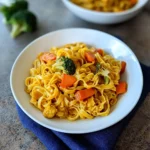
- Divide the Yellow Curry Noodles into bowls.
- Garnish with fresh cilantro, sesame seeds, and red pepper flakes (if using). These garnishes add visual appeal, fresh flavor, and optional heat.
- Serve immediately and enjoy your quick and delicious 15-Minute Yellow Curry Noodles!
Nutrition
- Serving Size: one normal portion
- Calories: 400-550
- Sugar: 5-10 grams
- Sodium: 500-800 mg
- Fat: 20-30 grams
- Saturated Fat: 15-20 grams
- Carbohydrates: 50-70 grams
- Fiber: 3-5 grams
- Protein: 10-15 grams