
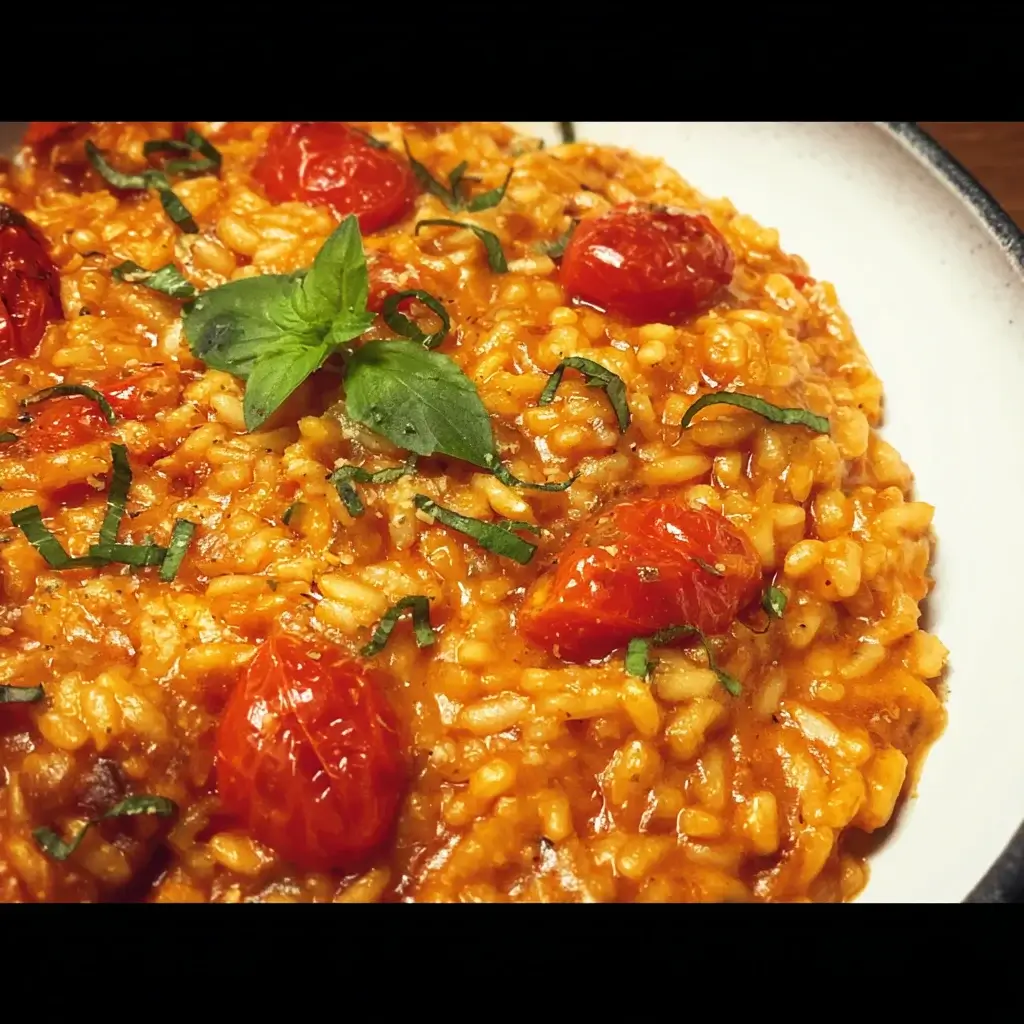

There is a rhythm to making risotto. It’s a gentle, patient dance between the stove, a pot, and a wooden spoon. For a long time, I was intimidated by it, convinced it was a fussy, restaurant-only dish that demanded professional skill and undivided attention. My first attempt was a hesitant, nervous affair. But as I stood there, slowly ladling warm broth into the pot of toasting Arborio rice, a sense of calm washed over me. The constant, gentle stirring wasn’t a chore; it was meditative. With each addition of broth, I watched the pearly grains of rice slowly plump up, releasing their starches and magically creating a sauce that was creamier than any I could imagine, without a single drop of actual cream. This Vegetarian Tomato Risotto was the recipe that made me fall in love with the process. The first time I made it, the kitchen filled with the aroma of sweet tomatoes, savory garlic, and rich parmesan. It was simple, made with ingredients I almost always have, yet the result felt deeply luxurious. Serving up bowls of this vibrant, ruby-red risotto to my family, and seeing their eyes widen at the first creamy, flavorful bite, was a moment of pure culinary joy. It’s a dish that tastes like Italian sunshine, and it has become our ultimate comfort food for cozy nights in.
Why You’ll Fall in Love with This Vegetarian Tomato Risotto
This isn’t just a recipe; it’s a technique and an experience that yields one of the most comforting and elegant dishes imaginable. Here’s why this tomato risotto will become a staple in your kitchen.
- Luxurious Creaminess Without Any Cream: The magic of a true Italian risotto is that its incredible creaminess comes entirely from the starches released by the rice during the slow cooking and stirring process. This recipe teaches you that fundamental technique, resulting in a velvety texture that feels incredibly indulgent yet is surprisingly light.
- A Celebration of Simple Ingredients: This dish proves that you don’t need a long, complicated list of ingredients to create profound flavor. High-quality canned tomatoes, good Arborio rice, flavorful vegetable broth, and a few aromatics come together to create something truly greater than the sum of its parts.
- The Perfect One-Pot Meal: Everything happens in one pot on the stovetop. It’s a self-contained dish that feels complete on its own, making for a streamlined cooking process and minimal cleanup. It’s perfect for a weeknight when you want something special without a mountain of dishes.
- Impressive for Guests, Easy for You: Risotto has a reputation for being fancy, and this vibrant tomato version is a showstopper. It looks and tastes incredibly sophisticated, making it perfect for a dinner party, but the process is straightforward and repetitive once you get the hang of it. Your guests will be impressed, and you’ll be relaxed.
- Naturally Vegetarian and Easily Made Vegan: This recipe is a vegetarian dream, and with a few simple swaps (detailed in the FAQ), it can be transformed into an equally creamy and delicious vegan masterpiece. It’s a versatile dish that can cater to multiple dietary needs without sacrificing flavor.
Complete Ingredients for a Perfect Tomato Risotto
The quality of your ingredients will shine through in this simple dish. Using a flavorful broth and high-quality tomatoes will make a significant difference. This recipe serves 4 as a main course or 6 as a first course (primo piatto).
For the Risotto:
- Olive Oil: 2 tablespoons, plus more for drizzling.
- Shallot or Small Onion: 1 large shallot or 1 small yellow onion, finely chopped.
- Garlic: 2-3 cloves, minced.
- Arborio or Carnaroli Rice: 1.5 cups. Do not rinse the rice.
- Dry White Wine: ½ cup, such as Pinot Grigio or Sauvignon Blanc (optional, see FAQ).
- Canned Tomatoes: 1 (14.5-ounce) can of high-quality crushed or puréed tomatoes (San Marzano are highly recommended).
- Vegetable Broth: 6-7 cups, warm.
- Parmesan Cheese: ½ cup, freshly grated, plus more for serving.
- Unsalted Butter: 2 tablespoons, cut into small pieces (use vegan butter for a vegan option).
- Salt: ½ teaspoon, plus more to taste.
- Freshly Ground Black Pepper: To taste.
For Garnish (Optional):
- Fresh Basil: A handful of fresh basil leaves, torn or chiffonade.
- Freshly Grated Parmesan Cheese.
- A Drizzle of High-Quality Extra-Virgin Olive Oil.
Step-by-Step Instructions
The key to risotto is patience and attention. Have all your ingredients prepped and ready next to the stove before you begin.
Step 1: Warm the Broth
This is a non-negotiable step for creamy risotto. Pour your vegetable broth into a medium saucepan and keep it at a gentle, steaming simmer over low heat on a burner next to your main risotto pot. Using warm broth ensures that the temperature of the rice doesn’t drop with each addition, allowing it to cook evenly.
Step 2: Create the Soffritto
In a large, heavy-bottomed pot, Dutch oven, or wide skillet, heat the 2 tablespoons of olive oil over medium heat. Add the finely chopped shallot or onion and a pinch of salt. Cook, stirring occasionally, for 5-7 minutes until the shallot is soft, translucent, and sweet. Do not let it brown. Add the minced garlic and cook for another minute until fragrant.
Step 3: Toast the Rice (Tostatura)
Add the Arborio rice to the pot. Stir constantly for about 2-3 minutes, until the edges of the rice grains become translucent and the centers are opaque white. This toasting step is called tostatura and it’s crucial. It helps the rice absorb the broth more evenly and prevents it from becoming mushy. You should hear a light clicking sound and smell a nutty aroma.
Step 4: Deglaze with Wine (Optional)
If using, pour in the white wine. It will bubble and steam dramatically. Stir continuously until the wine has been completely absorbed by the rice and the smell of alcohol has cooked off. This adds a crucial layer of acidity and depth. If omitting wine, simply proceed to the next step.
Step 5: The First Ladle of Broth
Add one large ladle of the warm vegetable broth to the rice. Stir until the broth is almost completely absorbed by the rice. The key is to stir frequently but not manically. A gentle, steady motion is perfect for encouraging the rice to release its starches.
Step 6: The Rhythmic Process of Adding Broth
Continue adding the warm broth one ladleful at a time, waiting until each addition is almost fully absorbed before adding the next. This slow, patient process should take about 18-20 minutes in total. Keep the risotto at a gentle, steady simmer—you want to see a few “blurps” on the surface.
Step 7: Add the Tomatoes
After about 10 minutes of adding broth (when the rice is about halfway cooked), stir in the can of crushed tomatoes. Continue the process of adding broth, one ladle at a time, stirring until it’s absorbed.
Step 8: Check for Doneness
After about 18 minutes, start tasting the rice. You are looking for a texture that is al dente—cooked through and creamy, but still with a slight bite or firmness in the very center of the grain. The risotto should be fluid and “wave-like.” If you drag your spoon through it, the path should fill in slowly behind it. It should not be a stiff, solid mass. If you run out of broth and the rice is still too firm, you can use hot water for the final additions.
Step 9: The Mantecatura (The Creamy Finish)
This is the final, most important step for creating that signature creamy texture. Remove the pot from the heat completely. Add the 2 tablespoons of cold butter and the ½ cup of grated Parmesan cheese. Stir vigorously for about a minute. This process, called the mantecatura, emulsifies the fat from the butter and cheese with the starch from the rice, creating an incredibly creamy, velvety sauce. Season generously with salt and pepper to taste.
Step 10: Serve Immediately
Risotto waits for no one! Ladle the risotto into warm, shallow bowls. Garnish with fresh basil, an extra grating of Parmesan, and a final drizzle of good olive oil. Serve immediately.
Nutrition Facts
The following is an estimate for one serving, assuming the recipe makes 4 main-course servings.
- Servings: 4
- Calories per serving: Approximately 500-550 kcal
This dish is a wonderful source of energy from carbohydrates and provides a good amount of flavor and satisfaction from simple, wholesome ingredients.
Preparation and Cooking Time
The active cooking time is focused, but the overall time is manageable for a stunning meal.
- Preparation Time: 10 minutes
- Cooking Time: 30-35 minutes
- Total Time: Approximately 45 minutes
How to Serve Your Vegetarian Tomato Risotto
This risotto is a beautiful centerpiece on its own, but a few simple additions can elevate it even further.
- The Classic Italian Way:
- Serve it simply in a warm, wide bowl, allowing its vibrant color and creamy texture to be the star.
- A generous garnish of freshly torn basil, a shower of grated Parmesan, and a drizzle of extra-virgin olive oil is all it needs.
- Make it a Luxurious Main Course:
- With Burrata: The ultimate decadent topping. Place a small ball of fresh burrata in the center of each bowl of hot risotto. When broken open, the creamy interior will melt into the tomato risotto, creating an unforgettable dish.
- With Roasted Vegetables: Serve alongside or topped with simple roasted vegetables like asparagus, zucchini, or cherry tomatoes blistered with balsamic vinegar.
- With Crispy White Beans: For an extra protein boost, toss a can of drained cannellini beans with olive oil and herbs and roast until crispy, then scatter them over the top.
- Perfect Pairings:
- Salad: A simple arugula salad with a sharp lemon vinaigrette provides a fresh, peppery contrast to the rich, creamy risotto.
- Bread: Crusty Italian bread is perfect for mopping up any remaining deliciousness from the bowl.
Additional Tips for Risotto Mastery (5 Tips)
These key tips will help you move from a good risotto maker to a great one.
- Use the Right Rice, and Do Not Rinse It: This is the most important rule. You must use a high-starch, short-grain Italian rice like Arborio or, even better, Carnaroli (often called the “king” of risotto rices for its superior texture). The powdery starch clinging to the outside of these grains is essential for creating the creamy sauce. Rinsing it would wash all that magic away.
- Warm Broth is Non-Negotiable: Pouring cold broth into the hot pan will “shock” the rice, cooling everything down and hindering the even cooking and starch release process. Keeping your broth at a gentle simmer in a separate pot is the professional secret to a smooth, continuous cooking process.
- Stir Gently, But Consistently: You don’t need to stir so vigorously that your arm falls off. The goal of stirring is to gently abrade the rice grains against each other, encouraging them to release their starches into the liquid. A steady, almost meditative stirring motion is perfect. It also prevents the rice from sticking and burning on the bottom of the pot.
- Master the Mantecatura Off the Heat: The final step of vigorously stirring in the cold butter and Parmesan cheese should always be done after you have removed the pot from the burner. The residual heat is enough to melt the butter and cheese, and performing this step off the heat allows them to emulsify into a perfect, creamy sauce rather than becoming greasy or stringy.
- Serve It Immediately: Risotto has a very short peak performance window. As it sits and cools, the starches will continue to absorb liquid and the risotto will thicken and become stodgy. Have your bowls warmed and your guests ready to eat the moment it’s done.
Frequently Asked Questions (FAQ)
Here are answers to some of the most common risotto-related questions.
1. Can I make risotto without wine? What’s a good substitute?
Yes, you absolutely can. The wine adds a traditional layer of acidity and depth, but it’s not essential. To mimic that acidic note, simply skip the wine step and, when you add your first ladle of broth, stir in 1-2 teaspoons of fresh lemon juice or white wine vinegar.
2. How can I make this tomato risotto vegan?
It’s very easy to make this recipe vegan with fantastic results.
- Butter: Use a high-quality vegan butter or an extra drizzle of olive oil during the mantecatura step.
- Parmesan: Swap the Parmesan for a good store-bought vegan parmesan alternative or use 2-3 tablespoons of nutritional yeast, which provides a nutty, “cheesy” flavor.
3. My risotto is gummy/gluey. What did I do wrong?
A gummy or gluey texture is usually caused by one of a few things:
- Overcooking: You cooked the rice past the al dente stage, causing the grains to break down completely.
- Stirring too much/too vigorously: Over-aggressive stirring can break the grains.
- Adding broth too quickly: If you drown the rice in too much liquid at once, it will simply boil instead of slowly releasing its starch.
4. Can I make risotto ahead of time?
Honestly, risotto is at its best when made fresh. However, if you are entertaining and need to save time, you can use a restaurant technique. Cook the risotto about halfway through (about 12-15 minutes), until the grain is still very firm in the center. Spread it out on a baking sheet to cool quickly. Then, just before serving, return it to a pot and finish the cooking process with the remaining warm broth and the final mantecatura. It’s not quite as perfect as fresh, but it’s a very good compromise.
5. Can I use fresh tomatoes instead of canned?
Yes, especially when tomatoes are in peak season. You will need about 1.5 pounds of ripe, flavorful tomatoes (like Roma or heirloom). To prepare them, score the bottoms with an “X,” blanch them in boiling water for 30-60 seconds, then plunge them into an ice bath. The skins should peel off easily. Roughly chop the peeled tomatoes and add them to the risotto at the same stage you would add the canned tomatoes.

Vegetarian Tomato Risotto recipe
Ingredients
For the Risotto:
-
Olive Oil: 2 tablespoons, plus more for drizzling.
-
Shallot or Small Onion: 1 large shallot or 1 small yellow onion, finely chopped.
-
Garlic: 2-3 cloves, minced.
-
Arborio or Carnaroli Rice: 1.5 cups. Do not rinse the rice.
-
Dry White Wine: ½ cup, such as Pinot Grigio or Sauvignon Blanc (optional, see FAQ).
-
Canned Tomatoes: 1 (14.5-ounce) can of high-quality crushed or puréed tomatoes (San Marzano are highly recommended).
-
Vegetable Broth: 6-7 cups, warm.
-
Parmesan Cheese: ½ cup, freshly grated, plus more for serving.
-
Unsalted Butter: 2 tablespoons, cut into small pieces (use vegan butter for a vegan option).
-
Salt: ½ teaspoon, plus more to taste.
-
Freshly Ground Black Pepper: To taste.
For Garnish (Optional):
-
Fresh Basil: A handful of fresh basil leaves, torn or chiffonade.
-
Freshly Grated Parmesan Cheese.
-
A Drizzle of High-Quality Extra-Virgin Olive Oil.
Instructions
Step 1: Warm the Broth
This is a non-negotiable step for creamy risotto. Pour your vegetable broth into a medium saucepan and keep it at a gentle, steaming simmer over low heat on a burner next to your main risotto pot. Using warm broth ensures that the temperature of the rice doesn’t drop with each addition, allowing it to cook evenly.
Step 2: Create the Soffritto
In a large, heavy-bottomed pot, Dutch oven, or wide skillet, heat the 2 tablespoons of olive oil over medium heat. Add the finely chopped shallot or onion and a pinch of salt. Cook, stirring occasionally, for 5-7 minutes until the shallot is soft, translucent, and sweet. Do not let it brown. Add the minced garlic and cook for another minute until fragrant.
Step 3: Toast the Rice (Tostatura)
Add the Arborio rice to the pot. Stir constantly for about 2-3 minutes, until the edges of the rice grains become translucent and the centers are opaque white. This toasting step is called tostatura and it’s crucial. It helps the rice absorb the broth more evenly and prevents it from becoming mushy. You should hear a light clicking sound and smell a nutty aroma.
Step 4: Deglaze with Wine (Optional)
If using, pour in the white wine. It will bubble and steam dramatically. Stir continuously until the wine has been completely absorbed by the rice and the smell of alcohol has cooked off. This adds a crucial layer of acidity and depth. If omitting wine, simply proceed to the next step.
Step 5: The First Ladle of Broth
Add one large ladle of the warm vegetable broth to the rice. Stir until the broth is almost completely absorbed by the rice. The key is to stir frequently but not manically. A gentle, steady motion is perfect for encouraging the rice to release its starches.
Step 6: The Rhythmic Process of Adding Broth
Continue adding the warm broth one ladleful at a time, waiting until each addition is almost fully absorbed before adding the next. This slow, patient process should take about 18-20 minutes in total. Keep the risotto at a gentle, steady simmer—you want to see a few “blurps” on the surface.
Step 7: Add the Tomatoes
After about 10 minutes of adding broth (when the rice is about halfway cooked), stir in the can of crushed tomatoes. Continue the process of adding broth, one ladle at a time, stirring until it’s absorbed.
Step 8: Check for Doneness
After about 18 minutes, start tasting the rice. You are looking for a texture that is al dente—cooked through and creamy, but still with a slight bite or firmness in the very center of the grain. The risotto should be fluid and “wave-like.” If you drag your spoon through it, the path should fill in slowly behind it. It should not be a stiff, solid mass. If you run out of broth and the rice is still too firm, you can use hot water for the final additions.
Step 9: The Mantecatura (The Creamy Finish)
This is the final, most important step for creating that signature creamy texture. Remove the pot from the heat completely. Add the 2 tablespoons of cold butter and the ½ cup of grated Parmesan cheese. Stir vigorously for about a minute. This process, called the mantecatura, emulsifies the fat from the butter and cheese with the starch from the rice, creating an incredibly creamy, velvety sauce. Season generously with salt and pepper to taste.
Step 10: Serve Immediately
Risotto waits for no one! Ladle the risotto into warm, shallow bowls. Garnish with fresh basil, an extra grating of Parmesan, and a final drizzle of good olive oil. Serve immediately.
Nutrition
- Serving Size: one normal portion
- Calories: 500-550 kcal